Lewis Hamilton Woke Up A Sleeping F40, And That’s A Far Bigger Job Than The Photos Suggest
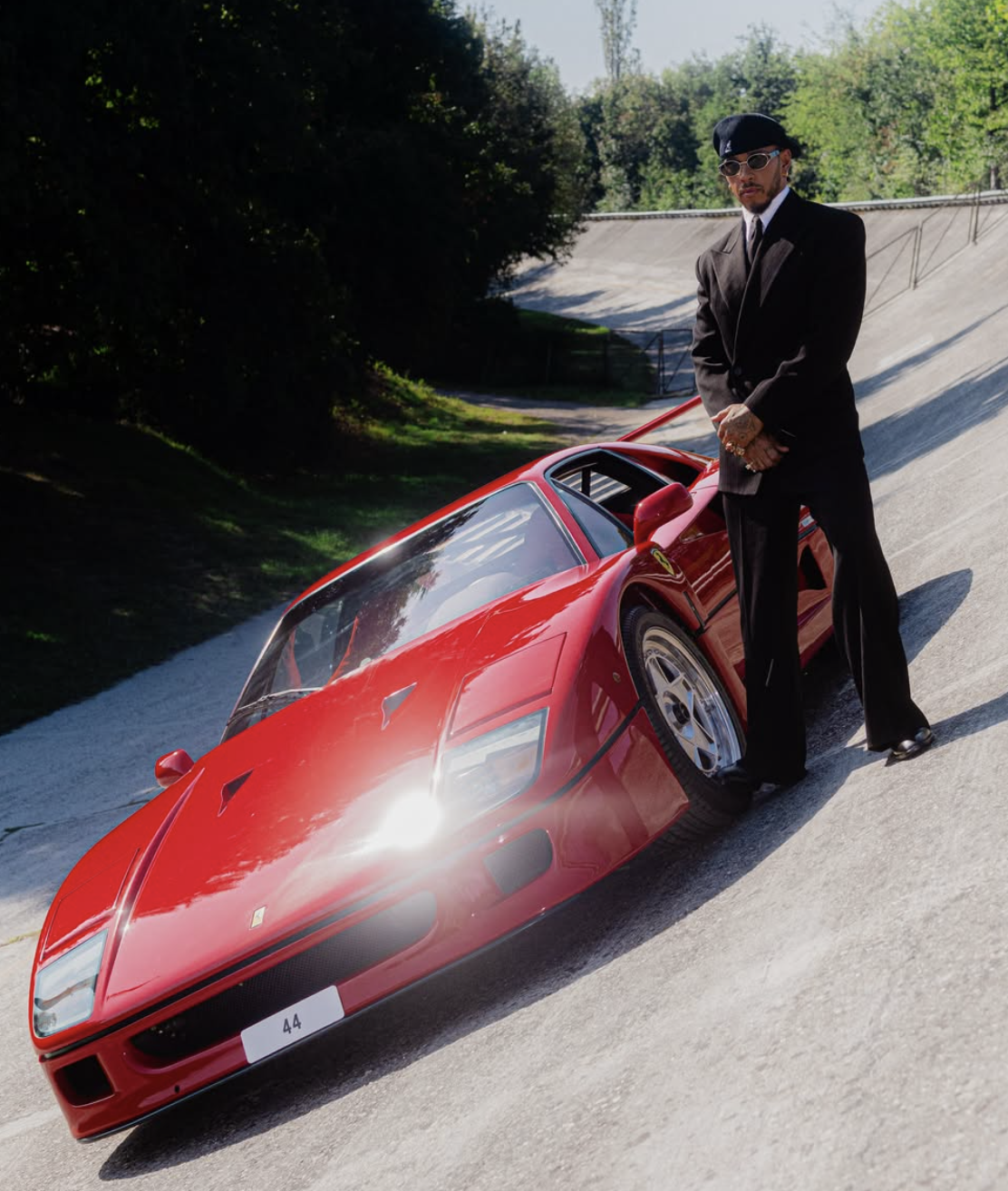
Hamilton announced it himself on 31 August, a short post to his own channels captioned with the model name and a promise of more to come. The claim attached to the car is the part enthusiasts latched onto: this F40 had been sitting in a garage for more than thirty years before he bought it, and Ferrari’s people in Maranello pulled it apart and put it back together.
Set aside the fairy-tale framing for a second. The interesting question isn’t how a seven-time champion found a dusty F40. It’s what thirty years of standing still actually does to one, because the F40 is a uniquely bad candidate for long-term storage, and the answer explains why the photos show an engine sitting on a stand rather than a man with a chamois.
The timing tells you something too
Related Articles
- Samantha Busch’s ‘Lone Queen’ Life Is Also a Full-Time Racing Job Now
- The Truth Behind That 2,700-HP Corvette Boat Coast Guard Chase Video
Do the arithmetic on “over thirty years” and you land somewhere in the mid-1990s. That is not a random date. Ferrari’s own model history notes that at the peak of the supercar boom in 1989, F40s were changing hands for around a million pounds, and that production continued through 1992 to a total of 1,311 cars in the chassis range 76624 to 95317. What Ferrari’s page doesn’t say is what happened next: the speculative bubble burst, values collapsed, and a lot of cars bought as paper assets got locked away by owners who had no intention of driving something they’d just lost a fortune on. A car parked in the mid-’90s and forgotten is a very ordinary outcome for an extraordinary machine.
Note also that Ferrari says 1,311 built while RM Sotheby’s puts the figure at 1,315 cars. When the factory and the world’s biggest auction house are four cars apart on a model this scrutinised, treat every “X of Y built” claim you read with a raised eyebrow.
Why an F40 hates sitting
Start with the architecture. Per Ferrari, the F40 uses a tubular steel chassis frame with additional stiffening braces, and the composite panels are bonded to that frame with a special adhesive. That’s the crux of the problem. The Kevlar and carbon skin doesn’t rust, doesn’t rot, and doesn’t care about damp. The steel structure it’s glued to cares enormously. Any owner or buyer looking at a long-dormant F40 should be far more worried about what’s happening underneath the panels than about the paint, and inspecting that structure means removing bodywork rather than shining a torch into a wheel arch.
Then the engine. Ferrari’s specification lists twin overhead camshafts per bank, each bank driven by its own toothed belt, dry-sump lubrication, and twin water-cooled IHI turbochargers feeding through Behr intercoolers at 1.1 bar. Rubber timing belts are a time-expired item, not a mileage-expired one. A belt that has sat under tension for three decades is scrap regardless of what the odometer says, and on this engine a belt failure at 7,000 rpm is a rebuild, not a roadside inconvenience. The same logic runs through every elastomer in the car: fuel hoses, seals, coolant lines, the flexible bits of the fuel system. Dry-sump plumbing adds more hose runs and more scavenge paths for old oil to varnish inside.
The brakes deserve a line of their own. Ferrari’s own description of the system is cross-drilled ventilated discs with twin hydraulic circuits and no servo assistance. No booster, no ABS. That means every bit of stopping performance comes from pedal pressure and the condition of the hydraulics, and thirty years of moisture in old brake fluid corrodes calipers and bores from the inside. The single-nut Rudge hubs carrying the split-rim 17-inch Speedlines are another item that wants proper inspection rather than optimism.
The number that puts it in perspective
Here’s the most useful data point available, and it comes from a completely different car. That F40 RM Sotheby’s sold at Monterey in August for $8,365,000 had covered just 320 miles from new, was originally delivered to Lee Iacocca directly from the factory, and had been mechanically freshened by a marque specialist during previous ownership. In other words, about the best-case storage scenario imaginable. Preparing it for sale still required a $40,000 major service at a Ferrari dealer, which the catalogue notes covered new spark plugs, a battery and new tyres.
Forty thousand dollars. For plugs, a battery, rubber and the labour to satisfy a dealer that the car was fit to drive. Now scale that mentally to a car that sat for three decades and needed the engine out. Whatever Hamilton paid for the F40, the invoice that followed it was not a rounding error.
What Classiche actually buys you
Ferrari’s Classiche programme gets described loosely as a restoration service. It isn’t, exactly. Per Ferrari, Classiche certification is a four-step process available to road cars over 20 years old, and the first hard requirement is verifying that the chassis is original. Bodywork, interior, mechanical and electrical systems are then checked against original specification, a Certification Report goes to a third-party Certification Committee, and if there are problems that can’t be waived, the process is suspended until the compromised parts are replaced. Pass, and you get a Certificate of Authenticity signed by Piero Ferrari.
Related Articles
- Linda Perry’s 1967 Camaro SS Sold at Barrett-Jackson — Here’s What It Fetched, and What She’s Up to Now
- Bell Recalls 400 Pit Boss Half Helmets Over Failed DOT Impact Test
Two things follow from that, and they’re the practical reason any barn-find F40 goes to Maranello rather than a good independent. First, Ferrari states that certification lets owners benefit from long-term spare parts, which on a 1980s composite-bodied turbo car is the difference between a maintainable asset and an ornament. Second, the certification is what protects value after a major mechanical intervention. A recommissioned F40 with a Red Book reads as correct. The same car with a folder of independent invoices reads as a question mark, and on a car whose model record just moved from $6.6 million to $8.365 million, question marks are expensive.
Practical notes for anyone chasing one
Ferrari is blunt about the F40’s specification: red paint, and left-hand drive only. British buyers should factor that in along with the import and registration paperwork that comes with an LHD car of this age and value.
On insurance, a car like this belongs on an agreed-value policy with a specialist, not a market-value one, and the policy should name who is permitted to repair it. Bonded composite panels are not a body shop job. Get the storage terms right too, because most classic policies impose conditions on where and how the car is kept, and the last thirty years of this particular F40’s life is a demonstration of what happens when a car is simply parked and left rather than properly laid up.
And if you’re viewing anything that’s been dormant: budget for the belts before you budget for the paint.
Images Via: Lewis Hamilton on Instagram
About the Author