Brabus Just Chopped The Roof Off An Aston Martin V12, And The Paperwork Is The Best Part
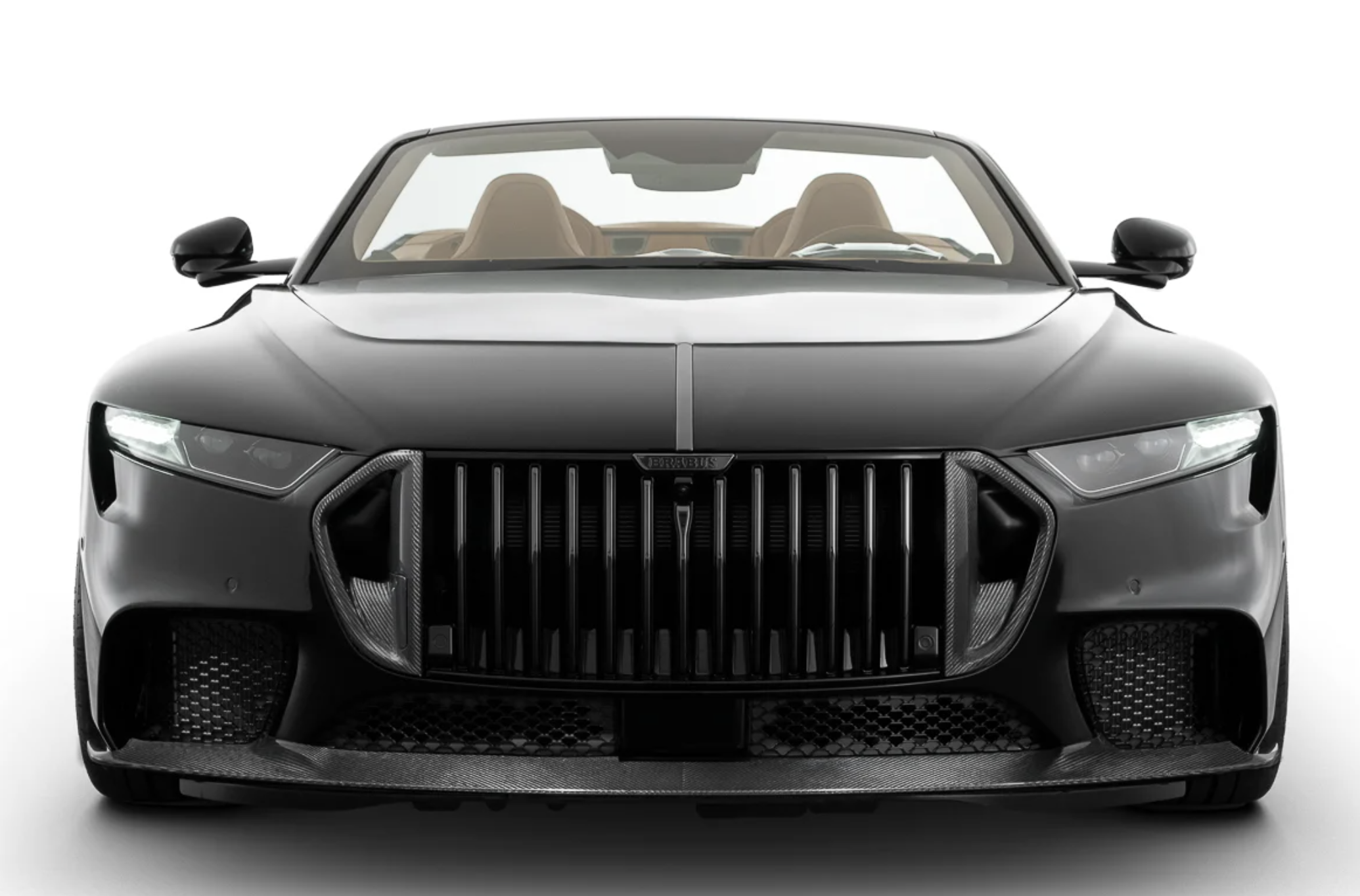
Brabus published the Bodo Cabriolet on 14 August, and the elevator pitch writes itself: 1,000 hp, 223 mph, 77 units, an all-carbon body, and a fabric roof with the number 77 woven into it. What makes it interesting isn’t the horsepower. It’s the two-page German energy label Brabus quietly parked on its own website, which lists the vehicle type as an Aston Martin Vanquish Volante and carries the VIN SCFUMCHV8TGK60778. That SCF prefix is Aston Martin’s world manufacturer identifier. Strip away the carbon and the marketing, and this thing is legally British.
Related Articles
- Kyle Busch Classic Debuts Oct. 2 On The Bullring’s New Pavement
- This 1991 Lola That Carried Both Andrettis to Victory Lane Is for Sale, and the Engine Won’t Turn Over
That matters more than it sounds. Coachbuilders live or die on donor homologation. Brabus isn’t type-approving a new car; it’s rebodying an already-approved one, which is why the Bodo can go on sale in Europe without a five-year regulatory slog. It also means registration, insurance classification, and the entire safety-systems stack trace back to Gaydon. When a Bodo owner needs an airbag module or an ESP sensor, the part number is Aston’s. When they need a rear quarter panel, they’re calling Bottrop.
The engine tells the same story in different numbers
Aston’s twin-turbo 5.2-liter V12 leaves the factory at 835PS and 1,000Nm, with peak torque arriving at 2,500 rpm. Brabus lists 735 kW (1,000 hp) at 6,400 rpm and 1,200Nm available from 2,900 to 5,000 rpm on its Bodo Cabriolet page. Read those two spec sheets side by side and you can see exactly what happened. Brabus fitted its own turbochargers, a RAM-AIR airbox, and reworked intercooling, and the torque curve moved 400 rpm to the right. Bigger compressors need more exhaust energy to spool. You gain 200Nm at the top and give up a sliver of low-rpm immediacy. That’s the trade every large-frame turbo upgrade has made since the 1980s, and Brabus has been making it longer than most.
The detail worth circling is Brabus’s own description of the 1,200Nm figure: “electronically limited.” The V12 is capable of more, but the eight-speed automatic sits in the rear axle as a transaxle, fed through a torque converter and a driveshaft running the length of the car. Every component in that chain has a torque ceiling, and 1,200Nm is almost certainly where the calibration stops to protect the weakest link. Anyone tempted to chase a Stage 2 tune later should understand that the number isn’t conservative marketing. It’s structural.
Physics still gets a vote
Brabus quotes identical performance for coupe and cabriolet: 3.0 seconds to 62 mph, 8.5 to 124 mph, 23.9 to 186 mph, limiter at 360 km/h. The fuel figures are where the roof shows up. The coupe’s page lists 13.7 l/100 km and 312 g/km. The cabriolet lists 14.1 and 321. That nine-gram delta is the honest measure of what removing a fixed roof costs in drag and mass, and it puts the car in Germany’s CO2 class G with a comfortable margin.
The label goes further than most enthusiasts ever bother to read. At €1.744 per liter it projects roughly €3,695 a year in fuel on the statutory 15,000-kilometer assumption. It also models CO2 costs across 2027 to 2036 at three carbon prices, ranging from €2,889 at the low end to €10,593 at the high end. Nobody spending seven figures on a coachbuilt V12 is checking those columns, but they exist, they’re binding, and they’re a reminder that the EU has scheduled a decade of rising running costs for exactly this kind of car.
Brabus also hasn’t said how fast its roof works. Aston’s K-fold system opens in 14 seconds and closes in 16, operable up to 31 mph, with a stowed stack height of 260mm. Brabus replaced the fabric with a two-tone Jacquard soft top with an inverted 77 motif woven into the structural cloth rather than printed on it, which is the right way to do it if you want the pattern to survive UV, abrasion, and thousands of fold cycles. Whether the heavier bespoke cloth changes the cycle time, Brabus doesn’t say. Owners should also file this under “special order”: a woven-pattern top on a 77-car run cannot be patched, re-dyed, or sourced from an aftermarket trimmer.
What an owner is actually signing up for
The cabriolet moves to 22-inch forged Monoblock Z-GT wheels wearing bespoke Pirelli P Zeros, 285/30 front and 335/25 rear, identified by a “BB” sidewall marking. The coupe runs 21s on Continentals. That’s not a styling swap. A tire developed and marked for a specific vehicle is a Pirelli Perfect Fit fitment, which means the compound and carcass are unique to this car and supply runs through the manufacturer, not your local performance shop. A 335/25 ZR22 in a bespoke construction is a phone call and a wait, not a same-day fit. Budget accordingly, and budget again for wheel damage, because a 25-series sidewall on a 22-inch rim offers almost nothing between the barrel and a pothole. The front and rear axle lift raises the car about 25mm for ramps and speed bumps and drops automatically at 45 km/h, which helps with driveways and does nothing for potholes.
Brakes are carbon-ceramic, six-piston front and four-piston rear, carried over in architecture from the donor. Aston reckons that system saves 27kg over iron and resists fade better, which is the correct hardware for a 223 mph convertible. It’s also the single largest scheduled expense in the car’s life once the discs finally wear.
Then there’s the body. Every panel is pre-preg carbon cured in an autoclave in Bottrop. A supermarket trolley strike on a steel fender is a body shop afternoon. On a laminated composite panel from a 77-unit series, it’s a mold, a cure cycle, and a paint match on a bespoke finish. Anyone buying one should be on an agreed-value policy with a named specialist repairer written into it, not a standard market-value policy, because there is no comparable sales data for a claims adjuster to reach for.
Related Articles
- Did You Know Michael Jordan Owns a $3.5 Million Hennessey Venom F5?
- Samantha Busch’s ‘Lone Queen’ Life Is Also a Full-Time Racing Job Now
One loose thread nobody has tied off
Aston’s own press release states plainly that the Vanquish Volante was designed as a two-seat configuration. Brabus calls the Bodo Cabriolet a 2+2 and lists rear trim, rear storage compartments, and quilting across all four seats. Either Brabus engineered rear seating into a car that doesn’t offer it from the factory, which would be a genuinely impressive piece of coachbuilding given the roof has to stow behind the cabin, or the copy carried over from the 2+2 coupe. Brabus hasn’t clarified, and the published photography doesn’t settle it.
Pricing is equally unresolved on Brabus’s own channels. There’s no figure anywhere on the Bodo Cabriolet page, just an enquiry form. The documentation is thin enough elsewhere that the coupe’s own energy-label download currently points to a PDF for a Bentley Continental GTC. Small-series coachbuilding is a paperwork business, and even the good ones occasionally file it in the wrong drawer.
Images Via: Brabus Bodo
About the Author