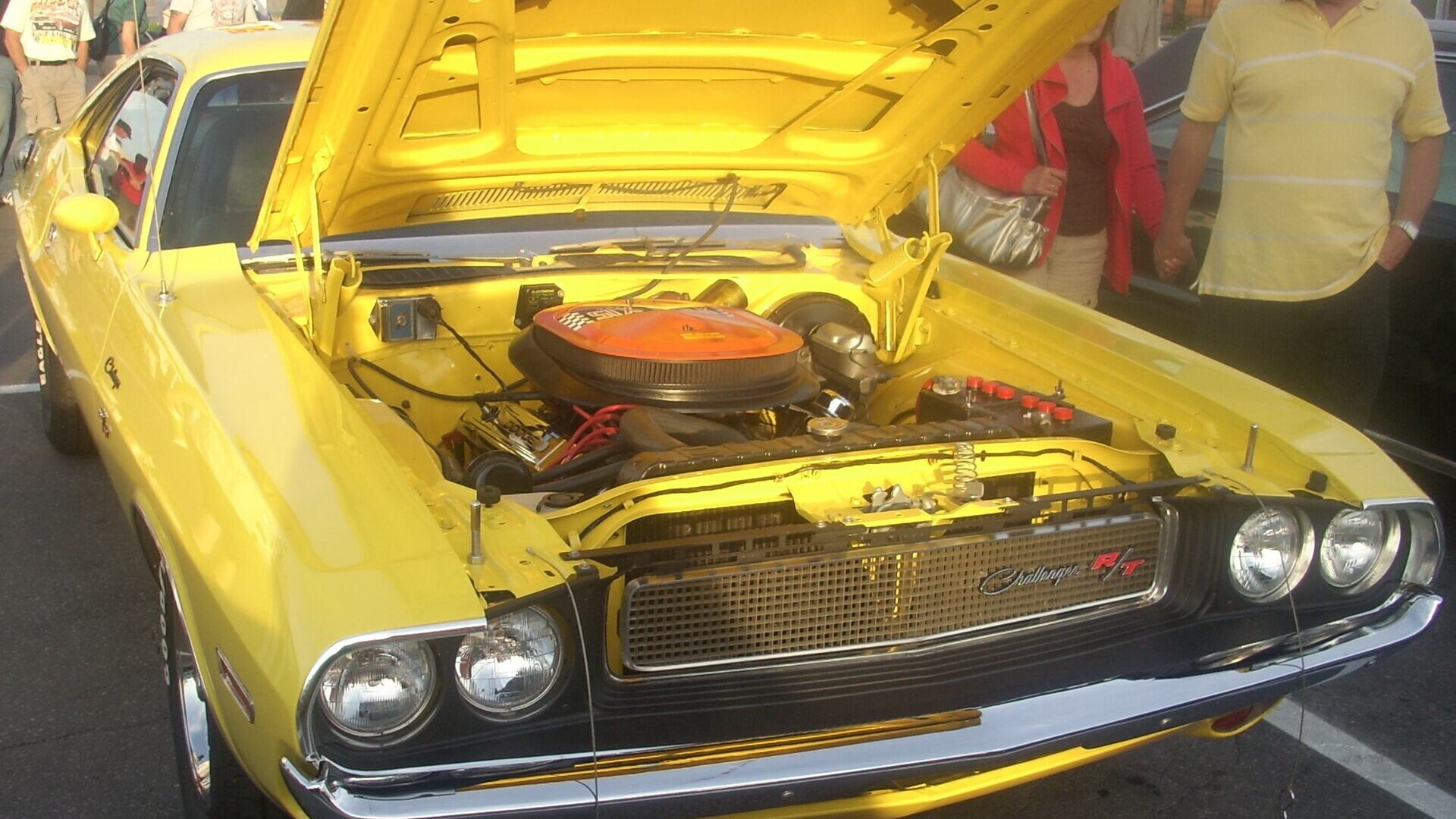
Representative image: a 1970 Dodge Challenger R/T coupe. Photo: Bull-Doser, via Wikimedia Commons (public domain). Not the car used on NCIS.
The Challenger people associate with Gibbs is listed as a yellow 1970 R/T. Ask what’s under the hood and the paper trail goes quiet. Google Trends had “ncis” above 50,000 US searches in its past-24-hours view on Nov. 3 to 4, a spike that started about 18 hours earlier and was still going. In the same window, “dodge challenger srt hellcat” sat at 10,000-plus in the Autos and Vehicles category. Trends lists the two terms separately, and nothing in the data ties one to the other.
The NCIS number tracks a night CBS did not run its usual Tuesday lineup. A Paramount Press Express release puts “CBS News America Decides: Election 2026” on CBS at 7:00 p.m. ET on Nov. 3. The release doesn’t mention NCIS or say which entertainment programs moved.
The car people associate with Leroy Jethro Gibbs is a Dodge Challenger, and the licensed version gives away the least. Greenlight’s 1:18 die-cast is listed as a 1970 Dodge Challenger R/T, yellow with a black stripe. That is year, trim and color. The listing’s feature list includes a “detailed engine,” which describes the model, not the car, and no displacement or output appears anywhere on it. We found no CBS or Paramount document that gives the show car’s engine, its build, or how many Challengers production used.
What a 1970 R/T could carry
Dodge’s own history of the nameplate says the Challenger debuted in fall 1969 as a 1970 model and that more than 83,000 were sold that first year. It lists a 383 V-8 in 290, 330 and 335 horsepower versions, the 425-horsepower 426 Hemi, and a 440 V-8 at 375 and 390 horsepower. The document doesn’t break out which of those went into the R/T, so the trim on a die-cast box doesn’t settle what sat under a given car’s hood.
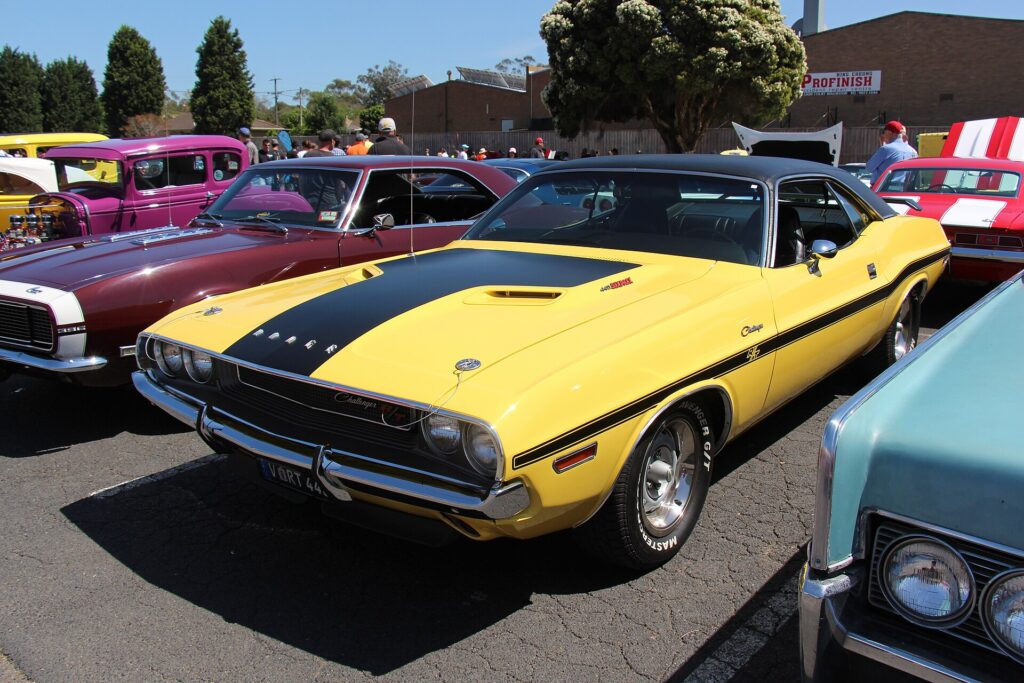
Production stopped in April 1974 after about 188,600 sales over five model years. That supply is why the cars keep turning up in different states of repair on our pages, from a 1971 Challenger wagon that came out of decades in storage to a family-held 1973 with its original 340, and into folklore like the Challenger in the cornfield. A buyer chasing a car like Gibbs’ should ask for the engine code and build paperwork before the trim badge enters the conversation.
The other Challenger in the search data
The Hellcat is a different car with a documented spec sheet. Dodge announced it on July 1, 2014 with a supercharged 6.2-liter Hemi making 707 horsepower and 650 lb-ft of torque. By the 2023 model year the Challenger SRT Hellcat was rated at 717 horsepower, and the Jailbreak version started at $70,035 before a $1,595 destination charge. Every 2023 Challenger carries an underhood plaque reading “Assembled in Brampton.” Dodge’s final-orders release says only that the Challenger and Charger were “coming to an end in their current forms” and gives no date.
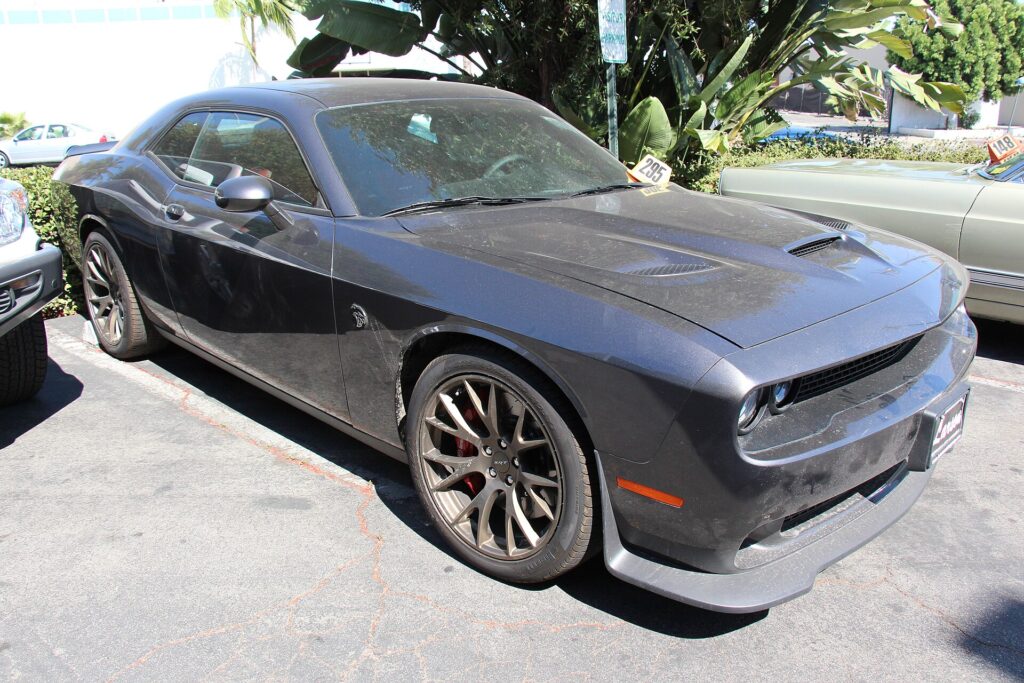
The used market has kept pricing high on that last generation: we covered Parker McCollum’s Hellcat Challenger listed at $98,900 and a Demon 170 that crashed with 116 miles. A screen car with no verified documentation sells on the story alone.
Would you buy the 1970 R/T on looks and sort out the engine later, or take the 717 horsepower that comes with a spec sheet?
Sources: Google Trends (US, past 24 hours); Paramount Press Express, CBS News election night release; Greenlight Collectibles 1:18 listing (Passion Diecast); Stellantis Media, “Dodge Challenger: 45 Years of a Dodge Muscle-car Legend,” 2015 Challenger SRT Hellcat announcement (July 1, 2014) and 2023 Challenger lineup release.
About the Author