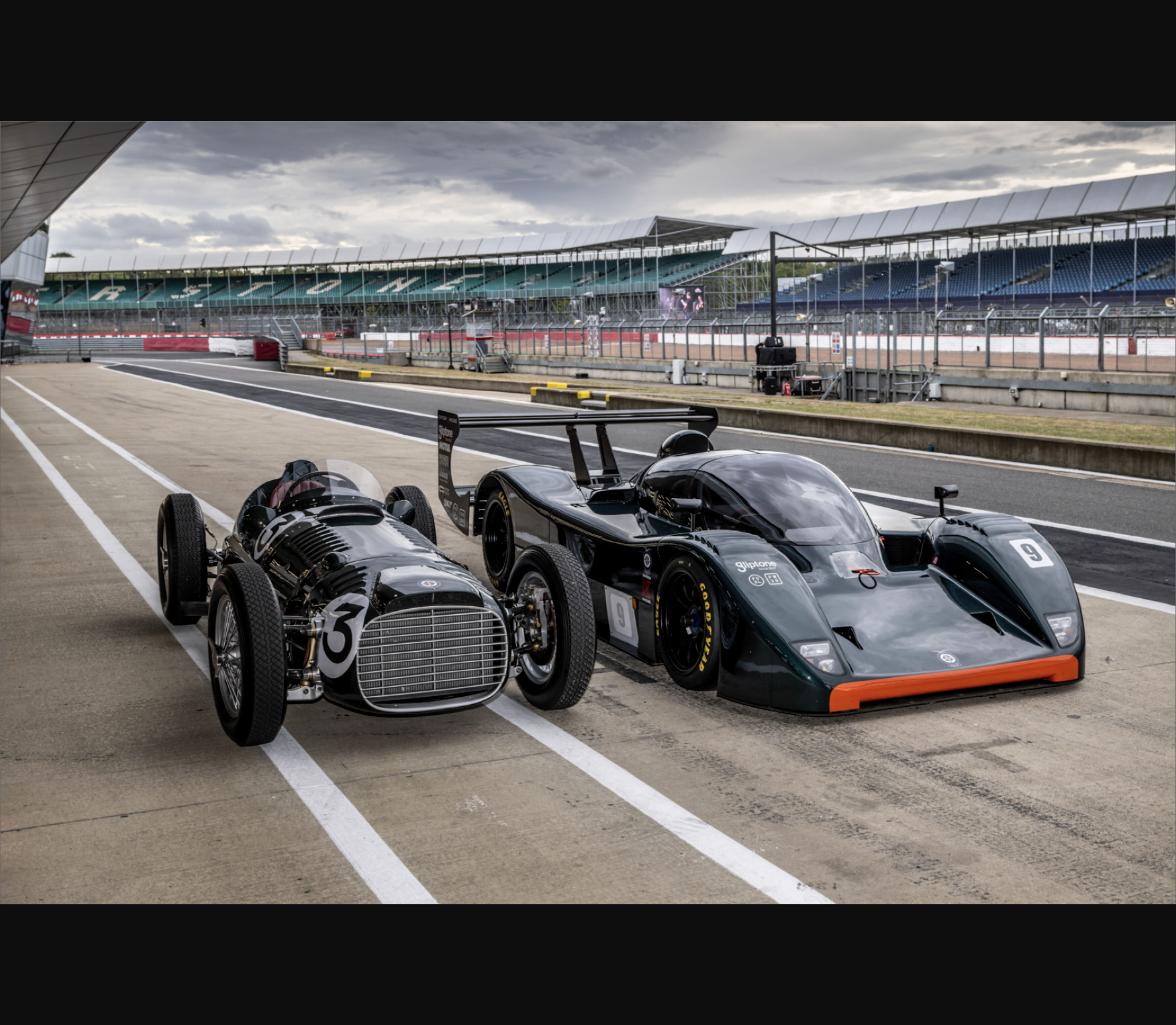
For the better part of three decades, the only BRM P351 ever built didn’t have a roof. It didn’t have its V12 either. Somewhere along the way, a Group C sports prototype built to chase Peugeot and Toyota at Le Mans got cut open, its cockpit hacked into an open-top roadster and its original British V12 yanked out in favor of a twin-turbo Nissan V6. That car — half P351, half something else entirely — is what British Racing Motors has now spent the better part of two years undoing.
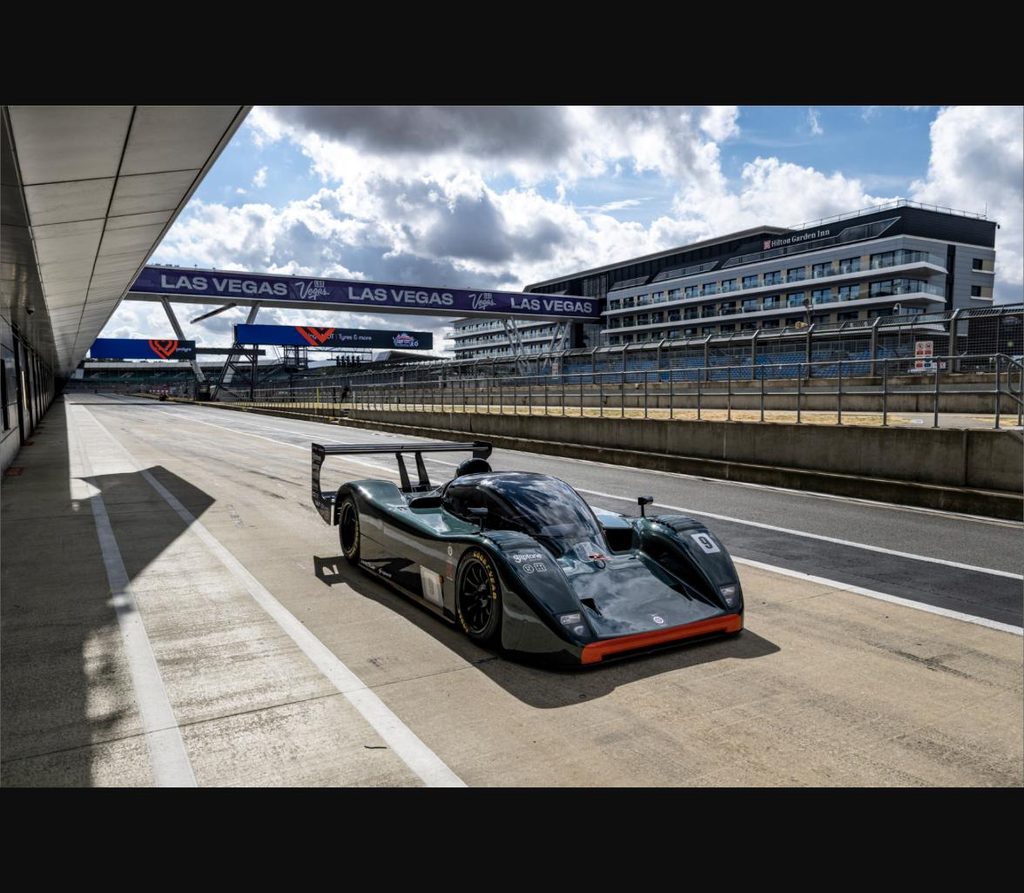
The result, seen publicly for the first time at CarFest and then brought back to the Silverstone grid on September 11th, is the P351 as it existed for exactly one season in 1992: closed cockpit, naturally aspirated BRM V12, and — for the first time in its history — running on sustainable fuel.
What the P351 Actually Was
The P351 is the newest chassis in BRM’s history, which is saying something for a marque that built its first car in 1949. It was designed for the 1992 World Sportscar Championship and the 24 Hours of Le Mans around a carbon-composite monocoque and a naturally aspirated 3.5-litre BRM V12. Only one was ever completed.
That 3.5-litre limit wasn’t arbitrary. By 1991, the FIA had rewritten the World Sportscar Championship’s top class around naturally aspirated 3.5-litre engines lifted straight from Formula 1 regulations, in an attempt to lure grand prix manufacturers into sports car racing. Peugeot answered with the V10-powered 905, Toyota with the V10 TS010, and both spent 1992 running away with the championship. BRM’s answer was a V12 — heavier than a V10 on paper, but in keeping with the marque’s own supercharged-and-atmospheric engine tradition going back to its Formula 1 days.
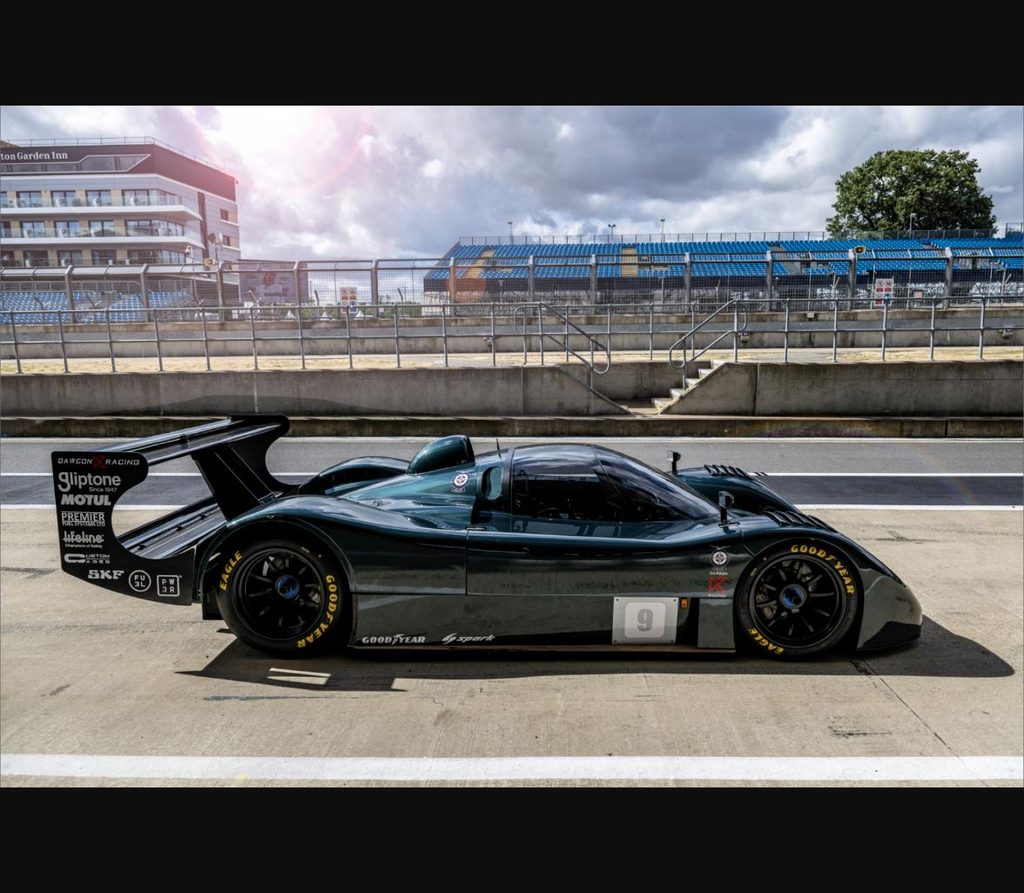
It was quick enough to prove the point. In qualifying at Le Mans, the P351 hit 216mph down the Mulsanne Straight — matching the speed of the factory Peugeot and Toyota prototypes it was built to race against. For a single, low-volume chassis to run factory pace against two of the best-funded sports car programs of the era is the kind of detail that tends to get lost in a press photo, but it’s the reason the P351 was worth rebuilding in the first place rather than just preserving as a static display piece.
Undoing Thirty Years of Butchery
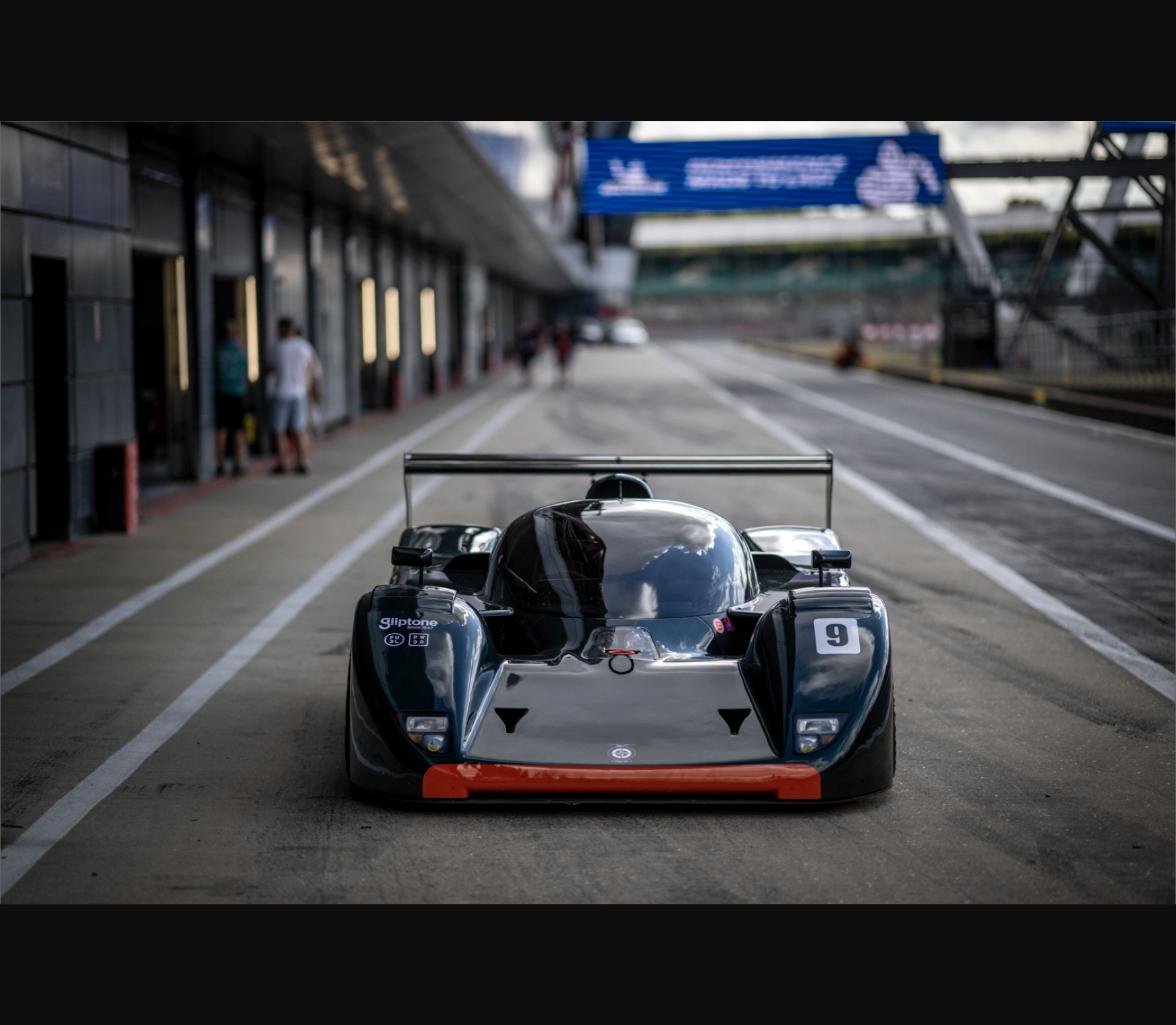
What happened to the P351 after its Group C career is the more interesting engineering story. At some point in the 1990s, the car was substantially reworked into an open-top machine called the BRM P301: the roof was removed, and the original V12 was pulled in favor of a Nissan twin-turbo V6. Ian Dawson, an engineer who worked with the car during that Nissan-powered chapter at a shop called Pacific Racing, was there for it.
BRM acquired the P351 in late 2024 and handed the restoration to Dawson Racing — meaning the same engineer who once worked on the car in its stripped-down, open-top form is the one who’s now spent nearly two years putting it back together. His shop rebuilt the original naturally aspirated V12 and its original gearbox from the ground up, components that hadn’t turned over in decades and for which there’s no factory parts bin to draw from. The bigger problem was the roof: it no longer existed in any physical form, so Dawson’s team reverse-engineered it from surviving paperwork and period photography rather than a single reference part.
That distinction matters beyond craftsmanship. Historic race cars competing internationally typically need an FIA Historic Technical Passport, a document that doesn’t verify a car’s ownership history or paperwork trail so much as confirm its physical specification matches what actually raced during its homologated period. A reverse-engineered panel built from photographs and drawings, rather than copied off an original part still in the shop, is the harder version of that exercise — and the reason authenticity, not just condition, is what actually drives value in this corner of the collector market, the same way replica-bodied classics keep struggling to find buyers at auction no matter how good they look.
Running on Fuel That Didn’t Exist in 1992
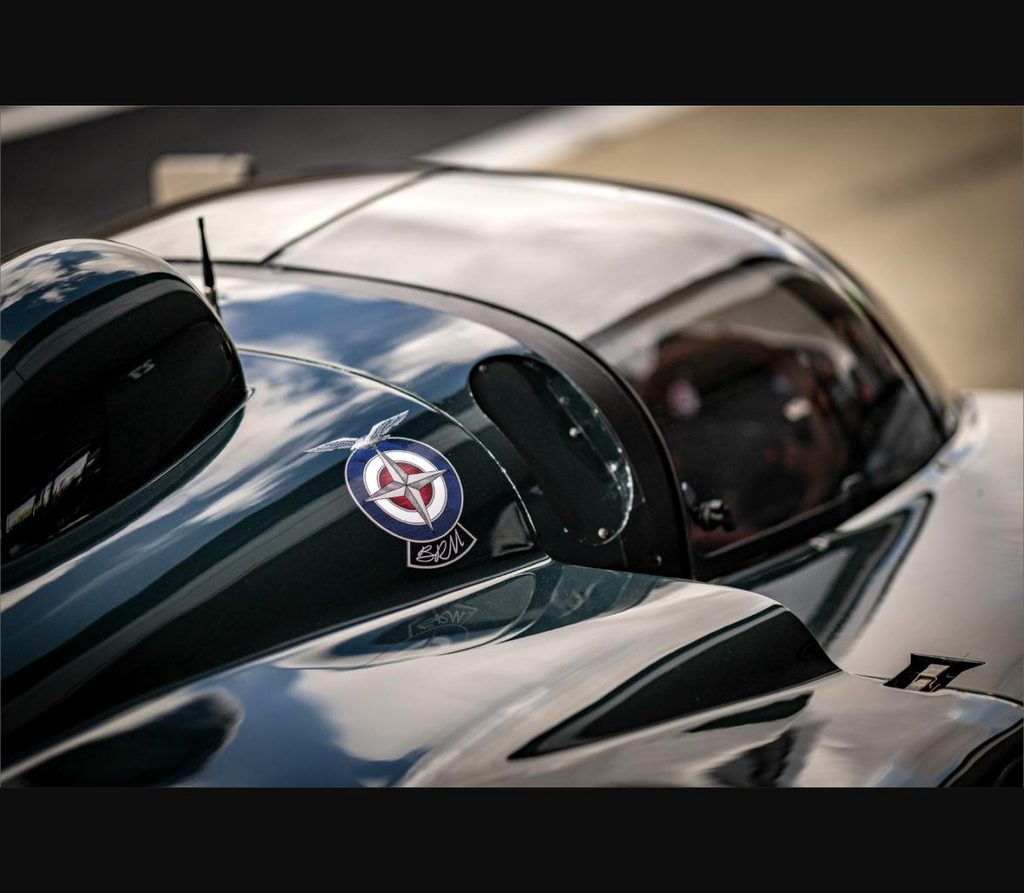
The rebuilt P351 now runs on sustainable fuel, a detail that’s easy to skim past but says something about where BRM intends to actually use this car. A naturally aspirated V12 built to 1992 emissions and fuel tolerances wasn’t designed with modern synthetic or bio-derived fuels in mind, so getting it to run cleanly on something other than period-correct racing gasoline is its own quiet engineering achievement, on top of the visual restoration. It also happens to be the direction most historic endurance racing is heading: grids for series like the Masters Endurance Legends and Le Mans Classic increasingly expect or mandate sustainable fuel as a condition of entry, not as a marketing footnote. BRM building that requirement into the P351 now, rather than retrofitting it later, reads like a car being prepared for an actual entry list rather than a trailer queen.
Two Cars, Seventy-Seven Years of BRM
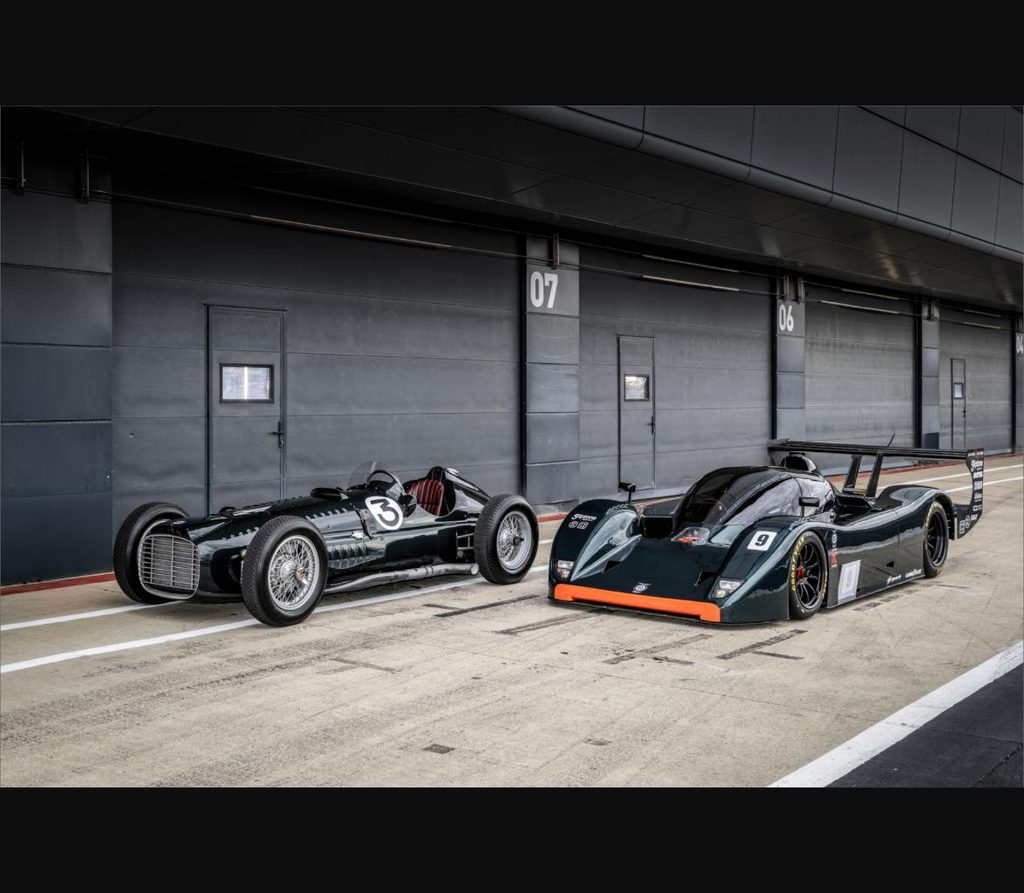
For its return to Silverstone, the P351 shared the grid with BRM P15 V16 Chassis IV — Britain’s first Formula 1 car, powered by a supercharged 1.5-litre V16, and the machine that started the BRM story in 1949. The P15’s own résumé includes BRM’s only Formula 1 titles: the 1962 Drivers’ and Constructors’ Championships, won with Graham Hill, across 17 grand prix wins in period.
The pairing is more than a photo opportunity. Between the V16 and the V12, BRM’s competition history runs through Formula 1, Can-Am, rallying, and — via the Rover-BRM gas turbine program of the 1960s — even an experimental turbine car at Le Mans. The P351 isn’t a Formula 1 car dressed up for sports car racing; it’s a genuinely different discipline that BRM built a purpose-designed prototype for in 1992, more than four decades after the P15 first turned a wheel. BRM isn’t the only British marque mining its Le Mans history this season, either — Aston Martin built its own 1951 Le Mans win into three new DB12 S one-offs for Pebble Beach this year, though BRM’s approach is putting an actual period car back on track rather than building new ones around an old story.
“The P351 was created with that same ambition for a completely different form of international motorsport,” said Simon Owen, grandson of BRM owner Sir Alfred Owen. BRM remains in Owen family ownership today, and the P351’s restoration is part of what the company calls its “Re-Awakening” — an ongoing project to put its historic chassis back into active competition rather than behind rope barriers.
What’s Next
BRM says the P351 is being prepared for an actual return to competitive racing, starting with a test day later this year that the marque is opening up to interested parties by invitation — a notably public way to shake down a one-of-one restoration. No specific series or entry list has been confirmed yet.
That restraint is probably the right call. A reverse-engineered roof and a freshly rebuilt period V12 both need mileage before anyone commits the only surviving P351 to a 24-hour race again, and the current landscape for factory-adjacent endurance prototypes is shakier than it looks — Alpine confirmed this year that it’s walking away from WEC’s Hypercar class entirely after 2026, a reminder that even current, factory-backed sports car racing isn’t the sure thing it was when the P351 was built to chase Peugeot and Toyota. For a 34-year-old restoration, a deliberate, invite-only test day is a far more sensible first step than an entry list announcement. What happens after that test day will say more about BRM’s actual racing ambitions than the unveiling did.
About the Author