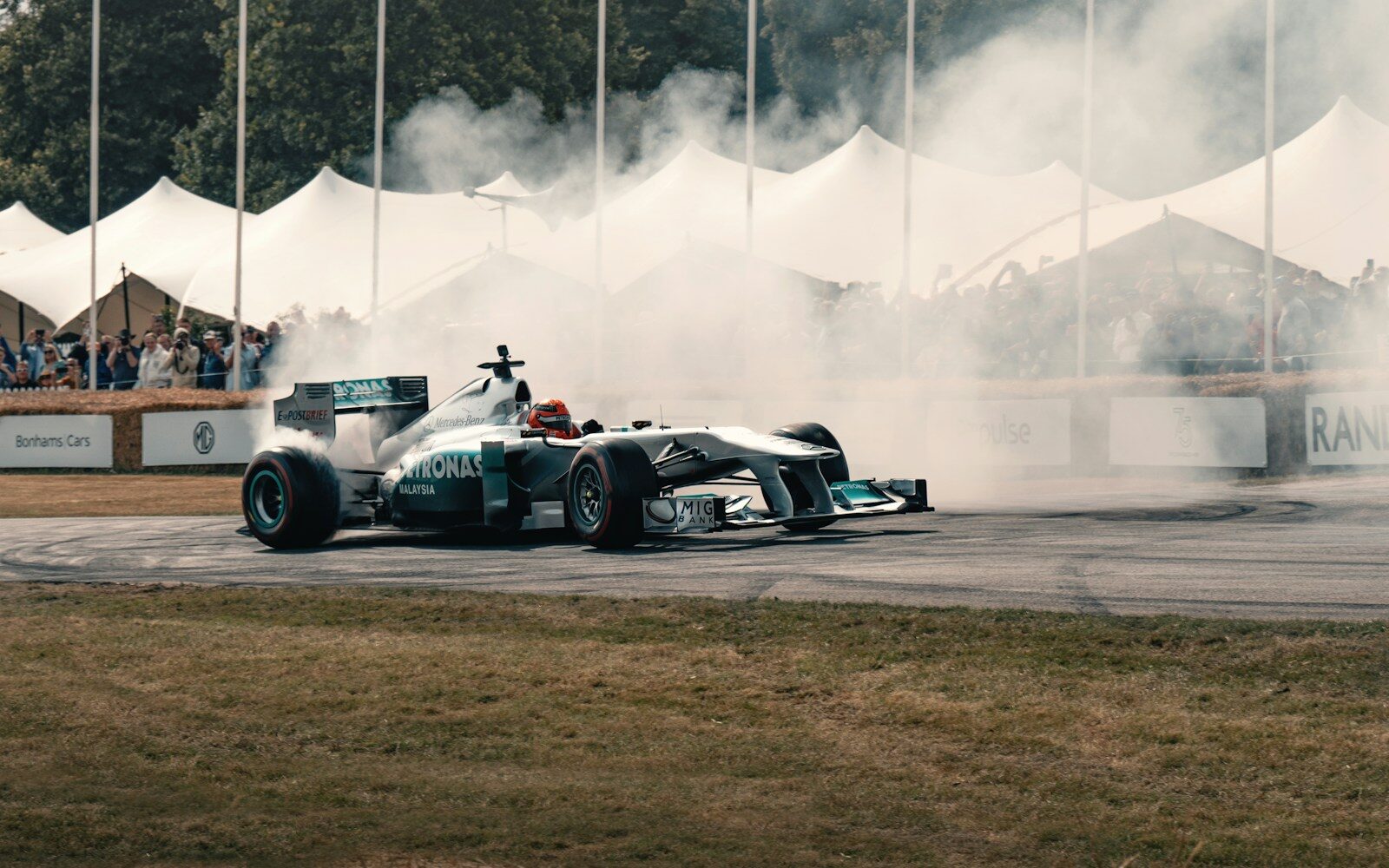
Silverstone doesn’t have a bowl like Indianapolis, and Northamptonshire isn’t exactly blessed with parking capacity. And yet 564,000 people found a way to cram themselves onto that old airfield between July 3 and July 5, the largest crowd that has ever turned out for a Formula 1 event anywhere on the calendar. That number doesn’t describe one sunny afternoon. It’s the cumulative count across practice, sprint qualifying, the sprint race, qualifying, and Sunday’s Grand Prix, and it says more about where this sport is right now than any single lap time does.
Attendance figures like this one are always tallies, not single-day headcounts, and that distinction matters before anyone starts comparing it to a football stadium’s capacity. A circuit can only physically hold so many bodies on race day itself once you account for grandstands, run-off, and emergency egress routes, so that number is effectively capped no matter how badly a promoter wants to sell more tickets. What made 2026 different wasn’t a bigger track. It was hundreds of thousands of people deciding a Friday practice session and a Saturday sprint were worth paying for on top of Sunday, and that’s really the figure that ought to have circuit marketing departments elsewhere paying attention.
We already broke down the race itself in detail, and it earned every one of those extra ticket sales. Charles Leclerc finally won at Silverstone after years of trying, Kimi Antonelli’s title bid came apart when a wheel shield failed while he was hunting down the lead, and Max Verstappen buried his Red Bull in the Stowe gravel for the second race weekend running because of the same rear wing fault that ended his qualifying in Austria. It was as chaotic as Silverstone has been in years, sprint format included, and the on-track drama only made the record crowd figure look better in hindsight.
The grid walk on Sunday looked less like a paddock and more like an awards-show red carpet, with Hannah Waddingham, Hugh Grant, Jeremy Clarkson, Brian May, and a rotating cast of Premier League footballers all wandering around before lights out. None of that happens by accident. It’s the byproduct of a decade of deliberate positioning, Drive to Survive turning drivers into recognizable characters, Lewis Hamilton’s move to Ferrari giving British fans a rooting interest wrapped in Italian red, and a championship fight tight enough that Antonelli, Russell, and Hamilton are now separated by 32 points with more than a third of the season still to run.
There’s a financial angle to a record crowd that’s easy to skip past amid the celebrity spotting. Grandstand seats, hospitality packages, and paddock club access make race week Silverstone’s single biggest revenue event of the year, and promoters don’t publish attendance totals purely for bragging rights. They’re effectively an annual earnings report for the venue, one that circuits use internally to justify grandstand expansions and, eventually, to defend the next round of ticket price increases. It’s the same sport where a single mid-season crash can burn through a meaningful chunk of a smaller team’s annual budget, which says everything about how differently the money moves depending on which side of the fence you’re standing on.
Silverstone’s numbers also arrive at a moment when Formula 1 is aggressively expanding beyond the paddock fence. Hollywood is already circling the sport’s most recognizable races for scripted content, and a British Grand Prix pulling in over half a million attendees only strengthens the case that F1 has become one of the most bankable live sports products in the world, and not just in America, where the sport has spent years chasing growth. It’s happening in the paddock’s own backyard, at a circuit that’s been hosting world championship races since 1950.
For anyone plotting a trip to Silverstone next year, the practical lesson from this weekend is simple: buy early, and budget for the whole event rather than just Sunday. Practice and sprint qualifying days used to be the quiet, cheap way to see the cars up close without paying full Grand Prix prices. That loophole is closing fast as fans increasingly treat the entire weekend, not just the race, as the show worth attending, a shift that’s been visible across other high-profile weekends this season too.
Silverstone has hosted a round of the world championship every year since Formula 1’s first official race in 1950, and it has broken its own attendance record more than once this decade alone. What’s notable this time is that it happened during a season defined by mechanical drama rather than dominance, a broken wheel shield, a wing that won’t close, and a Safety Car finish. Attendance booms tend to track with parity and unpredictability rather than one team steamrolling the field, and 2026 is shaping up to be the clearest example of that in years.
About the Author