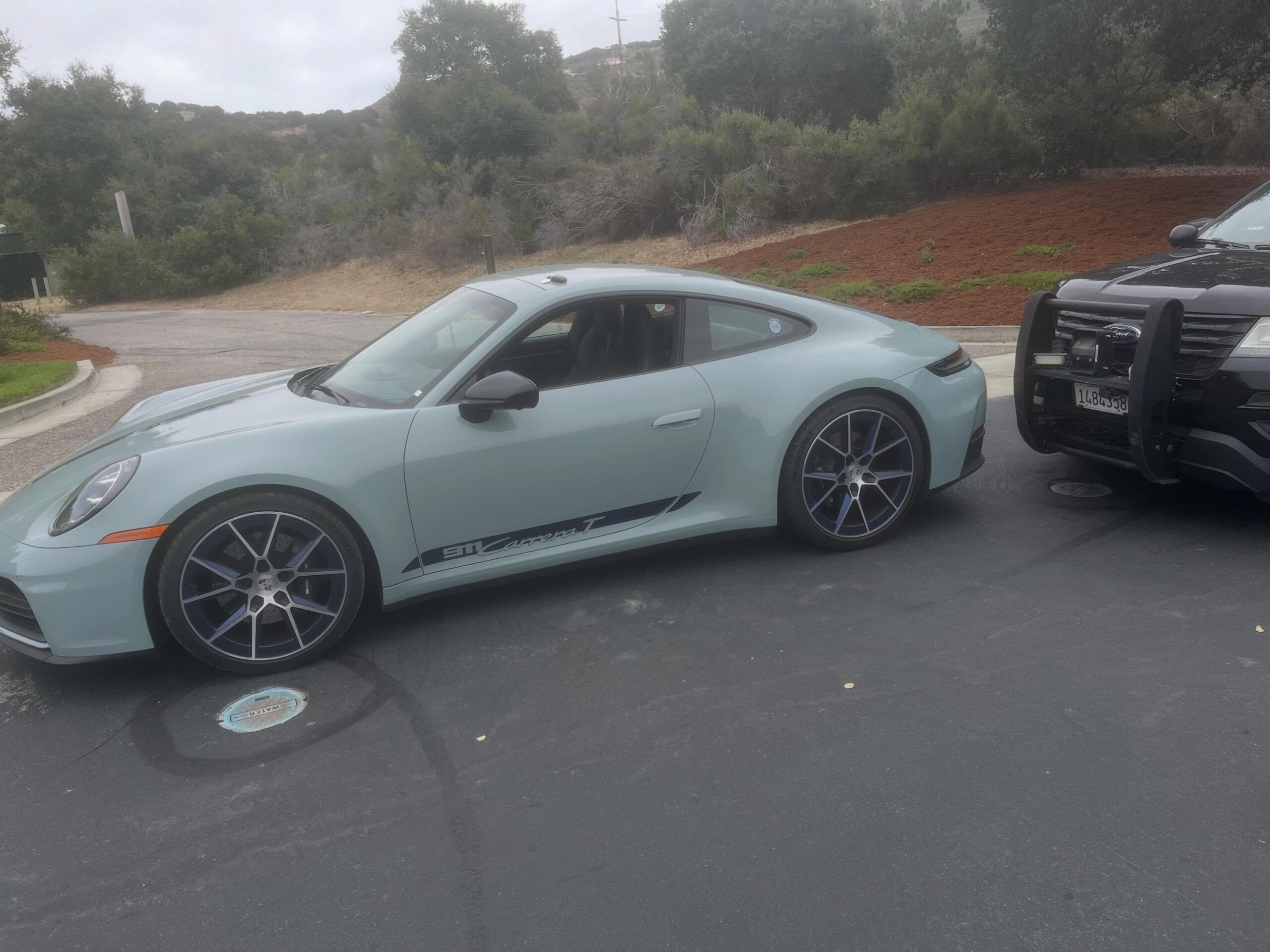
California Highway Patrol’s Monterey office says a Porsche driver managed to get pulled over for triple-digit speed, then made the stop dramatically worse by reversing into the patrol car that had just flagged him down. Officers say the driver’s blood alcohol content came in at more than four times California’s legal limit.
CHP Monterey says the Porsche was clocked doing 90 mph in a posted 55 mph zone. That number gets a trooper’s attention anywhere, but the timing makes it more notable: the stop happened in the middle of Monterey Car Week, the ten-day run of collector-car events on the Monterey Peninsula, which draws six and seven figure cars onto Highway 1 and Highway 68 and gives CHP’s Coastal Division a very good reason to run visible, aggressive enforcement all week long.
The real trouble started after the lights were already on. CHP says that once the driver pulled over, the Porsche backed into the patrol vehicle behind it. Investigators determined the driver was impaired, with a blood alcohol level exceeding four times California’s 0.08% limit, meaning a reading somewhere north of 0.32%. The driver was arrested on suspicion of DUI. CHP has not released the driver’s name, age or the Porsche’s specific model, and no injuries were reported.
Slow down, drive sober, and make it home safely.
Why “Four Times the Limit” Changes the Charge
A first-offense DUI in California is a misdemeanor, capped at six months in county jail plus fines, probation and a license suspension. But prosecutors have room to push harder when the driving itself was extreme, and a BAC north of 0.32% paired with doing 35 mph over the limit gives them plenty to work with when arguing for a longer suspension, stricter probation terms or a tougher plea deal. Excess speed on top of impairment is its own liability, too, and not just for the driver.
Insurance carriers treat the paperwork just as harshly as the courts do. A DUI conviction typically means non-renewal or a rate hike that can run 60 to 100 percent, and most insurers require an SR-22 filing before they’ll reinstate coverage at all. Whether that policy still covers the Porsche’s own bodywork after a DUI-related collision, even a low-speed one, is a separate and expensive conversation this driver now has to have with an adjuster.
Somebody Has to Pay for That Cruiser
Backing into a marked patrol car at a traffic stop isn’t a high-speed impact, but it isn’t free, either. CHP cruisers carry push bumpers, light bars, in-car computers and radar equipment, and what looks like a fender-bender can still turn into a repair bill running into the thousands of dollars once specialized equipment is involved. That bill typically gets billed against the driver’s liability coverage, assuming the DUI finding doesn’t complicate the claim first. The Porsche’s own damage is a separate headache, and exotic-car body work is never the cheap kind.
A Predictable Season for CHP’s Coastal Division
None of this is a coincidence of timing. Monterey Car Week runs Aug. 7 through Aug. 16 this year and pulls collector cars, dealer inventory and enthusiast traffic onto a peninsula built for a fraction of that volume. CHP has a track record of running visible, statewide enforcement pushes when it wants to make a point, and a scenic highway full of expensive, powerful cars during the one week everyone’s paying attention is not a place where a trooper lets 90 mph slide as a warning.
High-profile DUI arrests tend to follow the same script no matter what’s parked in the driveway. An expensive car doesn’t buy a different set of consequences once the cuffs come out, and a BAC this far past the legal limit removes any ambiguity a defense attorney might otherwise lean on.
For owners of six-figure sports cars, this is a good reminder that the car itself doesn’t change the math. A DUI arrest with a BAC this elevated typically means jail exposure, a suspended license, a mandatory ignition interlock for reinstatement, and an insurance relationship that may never look the same. The most expensive part of driving a Porsche 90 mph in a 55 zone isn’t the ticket. It’s everything that happens after the officer starts writing the report on the trunk of the car you just hit.
About the Author