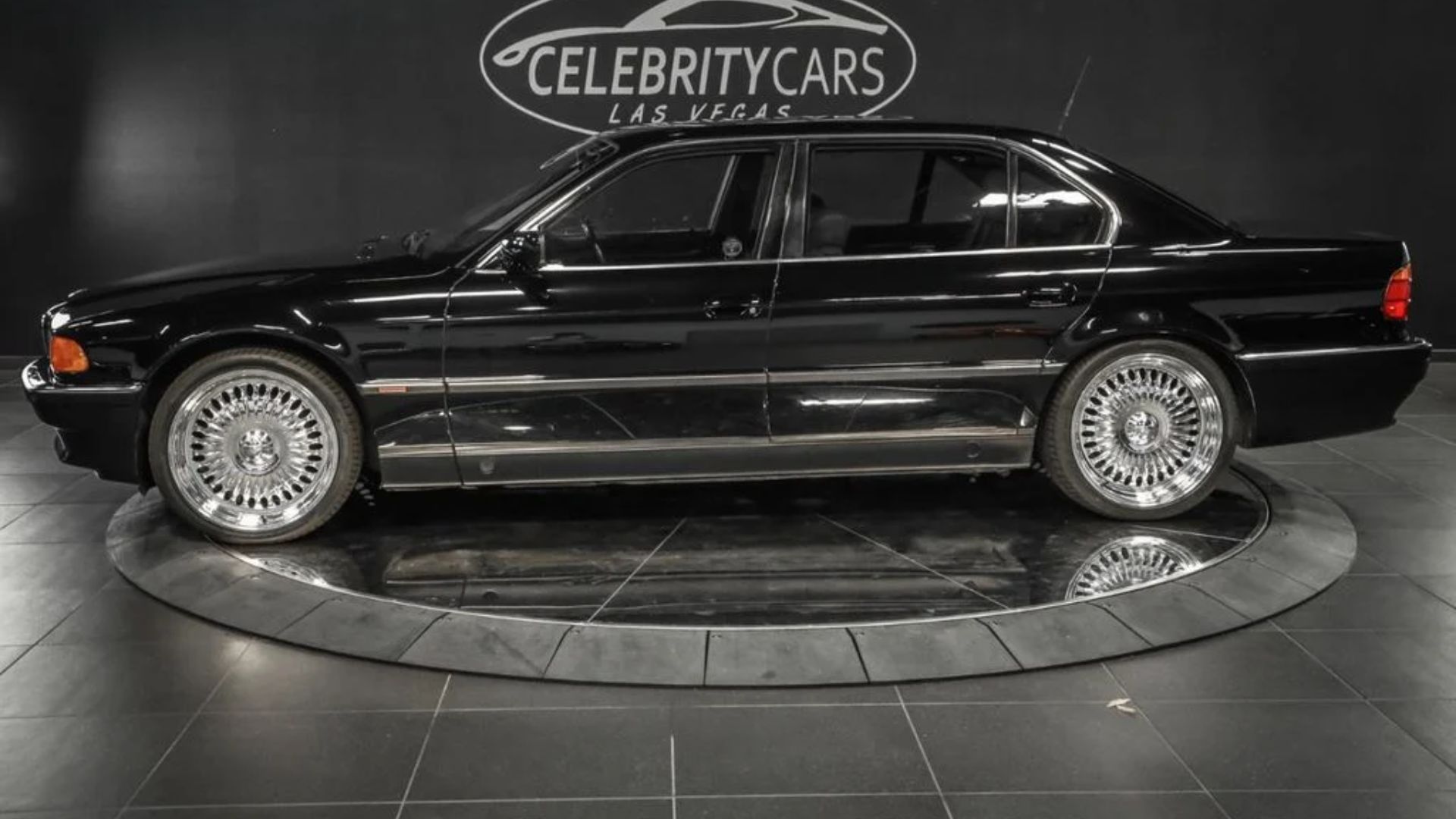
WBAGK2324TDH67073. Strip the story away and that VIN is the entire objective case for this car: a Dingolfing-built 1996 BMW 750iL, long wheelbase, black over black leather, 121,043 miles showing. On any other lot in Las Vegas that is a nine-thousand-dollar roll of the dice with a V12 and a nervous-looking check engine light. Celebrity Cars Las Vegas is asking $1,750,000.
The gap between those two numbers is why this sedan keeps resurfacing. The dealer’s listing identifies it as the car Tupac Shakur was riding in on the night of September 7, 1996, with Suge Knight driving and a Death Row Records lease on the paperwork. Shakur died six days later. Thirty years on, the man charged with his murder is finally in front of a Clark County jury, seated this week, which means the story is about to be retold in sworn testimony for months. The timing of a relisting is rarely an accident.
But the genuinely interesting problem with this car has nothing to do with the trial, and nothing to do with taste. It is that somebody fixed it.
The Restoration Paradox
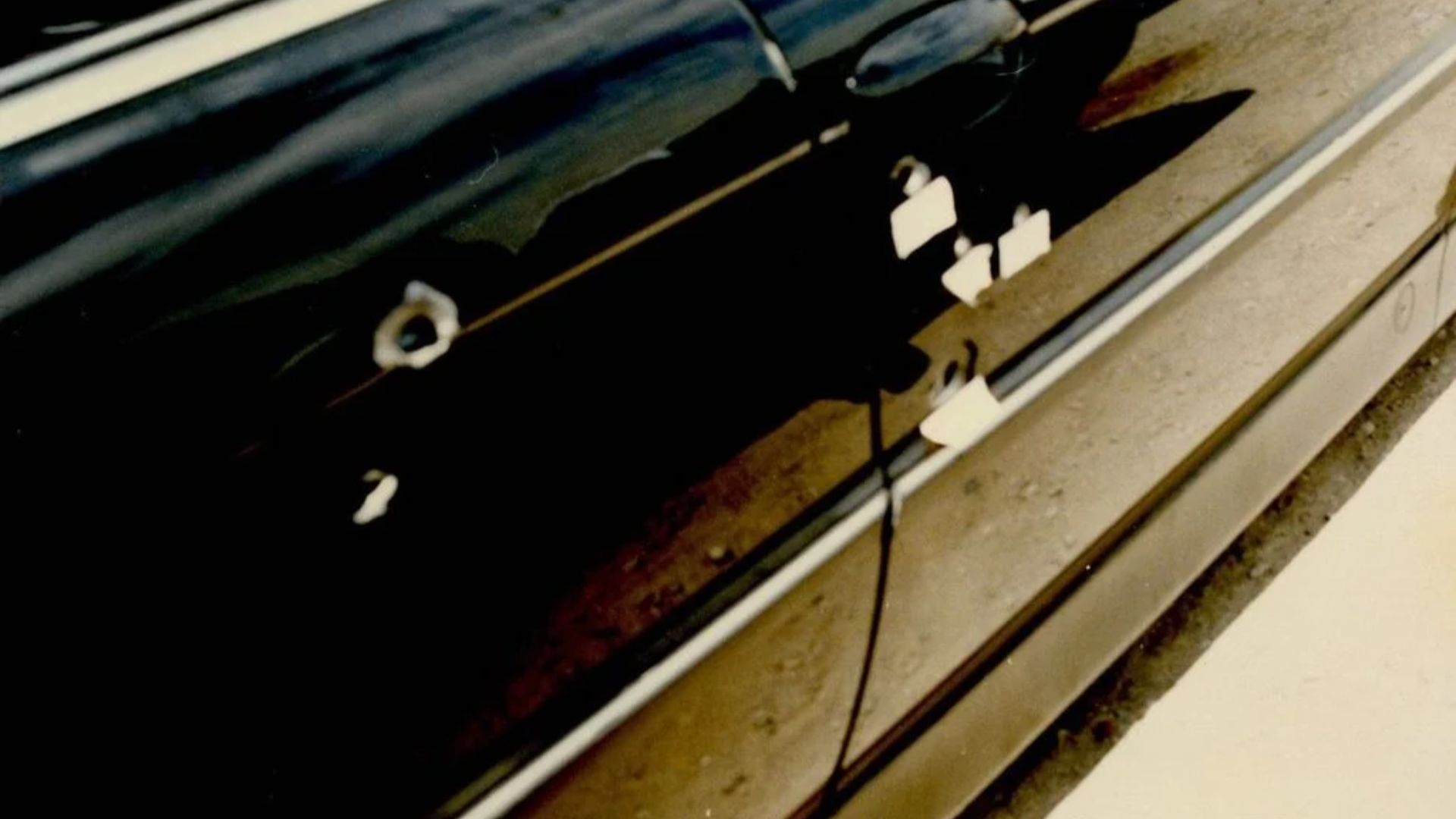
The listing is admirably direct about what was done: a comprehensive restoration to return the car to the condition it was in prior to the shooting. What survives of the actual event is one small exterior indentation the seller believes corresponds to a bullet impact, plus interior door panels and liner deliberately pulled back so a viewer can see original weld marks where rounds passed through the body.
That is a museum-quality display decision and a catastrophic market decision, and those two things are not in conflict.
Everywhere else in the collector world, a proper restoration adds money. BMW proved the point with its own Classic division when it brought Elvis Presley’s 507 Roadster back from a decade as a drag-strip hack. There, the car itself was the artifact, and returning it to factory specification restored precisely the thing people were paying for.
Artifact-of-an-event cars invert that arithmetic completely. The damage is the asset. It is the only part of the object that cannot be manufactured after the fact, and it authenticates everything else. Paul Newman’s Daytona-winning Mustang carries a premium precisely because nobody hosed the dirt off it. The money that attaches to a Steve McQueen car survives a buyer’s due diligence because the connection is documented in period and still visible in the metal.
Weld the holes shut and you convert physical evidence into a claim. The buyer is no longer purchasing a bullet-scarred BMW. They are purchasing a folder that says this used to be one. Folders are cheaper.
Twenty Grand and an NDA Before Anyone Talks Numbers
The seller requires a $20,000 refundable deposit and a signed confidentiality agreement before it will entertain an offer. Read that as two mechanisms doing two different jobs.
The deposit is a tire-kicker filter, and a sensible one. A seven-figure celebrity artifact attracts an enormous volume of people who want a look, a photo and a story to tell, and none of them are buying. The confidentiality agreement is the consequential half. It guarantees that whatever this car eventually trades for, the number never becomes public.
That matters more than it sounds. Collector car values are built almost entirely on comparable sales. A 1963 split-window Corvette has a price band because hundreds of them have crossed public blocks. Lock a one-of-one artifact behind an NDA and no comparable will ever exist, which conveniently insulates the asking price from ever being contradicted and inconveniently makes the car close to impossible to appraise, finance or insure.
Why the Title Is Clean, and Why That Is Not the Flex It Sounds Like
The listing shows a clear title, which surprises people who assume a car that absorbed gunfire must carry a brand. Titles do not work that way in Nevada or anywhere else.
Under NRS Chapter 487, a salvage title is triggered by a process, not by a category of damage: an insurer determining a total loss and taking the vehicle, or an owner relinquishing it into the salvage system. Nothing in the statute cares whether the damage came from hail, a guardrail or a bullet. If the repairs were paid privately and no insurer ever declared a total loss, the title stays exactly as it was.
That is worth internalizing several zeroes below this price point. A clean title is a record of paperwork events, not a certificate of structural integrity. Plenty of badly repaired cars carry one. It is a reason to inspect, not a reason to skip inspecting, which is the entire argument for running a real pre-purchase checklist on anything you buy.
The Machine Underneath All of It
Lost under thirty years of headlines is that the 750iL was a serious piece of engineering and a genuinely rare one. BMW built 340,242 E38 7 Series between 1994 and 2001, and only around 15,000 of those were long-wheelbase V12s. The M73 is a 5,379cc single-overhead-cam twelve rated at 322 horsepower and 361 lb-ft in US trim, feeding a five-speed automatic. In 1996 that made the 750iL one of the quickest four-doors on sale and, more to the point, one of the quietest.
It is also, mechanically, two straight-sixes sharing a crankshaft, with intake and ignition hardware duplicated across the banks. The maintenance arithmetic follows from that: you buy most things twice. Hoses, ignition components, sensors and labor all scale accordingly, and thirty-year-old E38 electrical work has a talent for turning a four-hundred-dollar job into a four-thousand-dollar one. Anyone who has stared at a non-running BMW V12 and done the math knows the shape of that estimate. Whoever writes this check inherits a 121,043-mile twelve-cylinder that still has to be maintained like one.
There is an unintentional bit of history buried in the spec sheet, too. BMW would eventually sell factory-armored E38 Protection models with ballistic glass and body armor certified to B6 and B7 levels, but not until 2000, four years too late to matter here. In 1996, the entertainment industry’s answer to security was a standard-glass luxury sedan and optimism.
The Insurance Problem Nobody Mentions
Try to insure this thing and the NDA comes back around to bite. No standard auto policy will carry $1.75 million of stated value on a 1996 sedan. You would need an agreed-value collector policy or a fine-art and collectibles rider, and both are underwritten against comparable sales that this sale structure guarantees will never exist.
Realistically the buyer lands on a negotiated agreed value backed by an independent appraisal, a strict storage and usage schedule, and a premium that reflects an underwriter making an educated guess. It is solvable, but it is a legal and actuarial project rather than a phone call, and it belongs in the diligence pile alongside everything else people get wrong about coverage before the wire goes out.
What the Market Actually Pays for Grim Provenance
Here is the uncomfortable pattern. Crime-and-tragedy cars consistently sell for a fraction of what their owners believe they are worth, because the buyer pool is tiny: a few museums, a smaller number of private collectors who want no publicity whatsoever, and speculators who need an exit that discretion has already eliminated. A Dodge Daytona that spent a decade in a Missouri junkyard as fraud evidence still could not clear $355,000, and that car came with a backstory people genuinely enjoyed telling.
Contrast that with the Shakur material that does move. His 1996 Hummer H1 found a buyer without drama, because it is an ownership car, something he chose and drove and liked. John Bonham’s Jensen Interceptor works on the same logic. Buyers will pay handsomely for proximity to an artist’s life. They are far more reluctant to pay for proximity to their death, and the ones who will do not want a press release about it afterward.
If You Are Actually Writing This Check
Then the documentation is the asset now, and it should be treated that way. Demand the restoration’s full paper trail: body shop invoices, dated photographs from before the weld work, and an unbroken chain of custody running from the evidence impound release forward. The bullet holes used to do the authenticating. With those closed, the file has to do that job alone.
Then do the boring things anyway. Pull a full title history in every state the car has been registered. Use escrow. Get an independent pre-purchase inspection from someone who has actually had an M73 apart, because a $1.75 million asking price does not exempt a thirty-year-old cooling system from being a thirty-year-old cooling system.
And go in clear-eyed about what is on offer. Not a bullet-riddled BMW. That car was repaired years ago. What is for sale is a story, a handful of welds you can see if you pull the trim back, and a VIN that happens to match the worst night in hip-hop history. Whether that is worth $1.75 million is the exact question that has kept this sedan on the market for years, and the jury now seated in Las Vegas is not going to answer it.
About the Author