Steve McQueen has been dead for 45 years, and he is still one of the most reliable line items in the collector car market. The trouble is that “reliable” and “predictable” are not the same word, and anyone treating a McQueen logbook entry as a guaranteed appreciation curve has not been reading the results sheets closely.
Start with the loudest data point. In January 2025, Mecum brought Porsche chassis 917-022 to Kissimmee as Lot S237 — the Gulf-liveried Kurzheck that Solar Productions bought new and McQueen drove on camera for Le Mans. This is the single most McQueen object on earth: a genuine 4.5-liter flat-twelve endurance racer, restored to 1970 film specification, with an unbroken ownership chain running through Reinhold Joest, Brian Redman and Richard Attwood before Jerry Seinfeld. Bidding stopped at $25 million. The reserve did not move. No sale.
That is not a failure so much as a price discovery exercise, and what it discovered is that the ceiling on celebrity provenance has a ceiling.
The Ferrari that went backwards
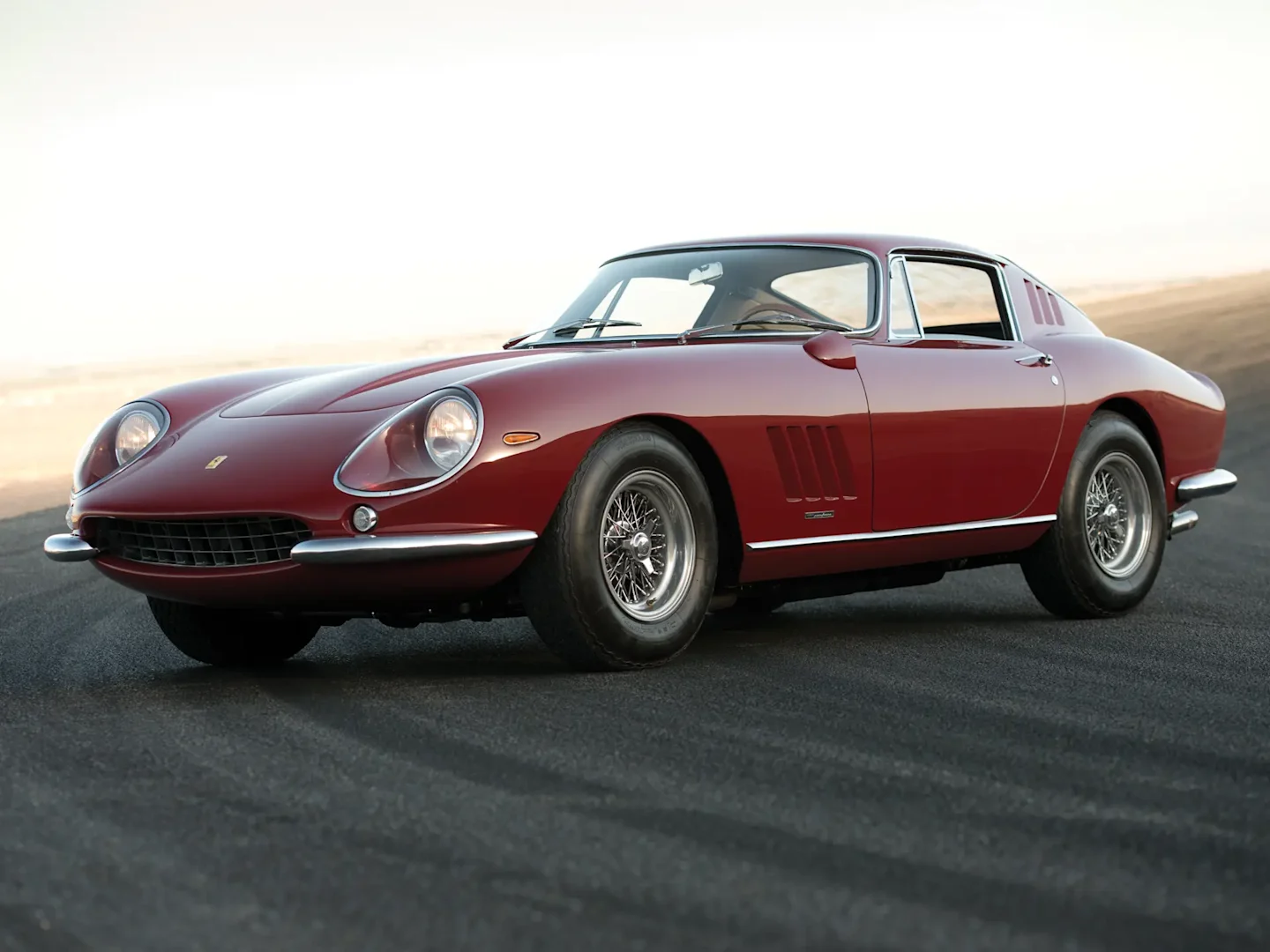
The clearest evidence sits in a single chassis number. Ferrari 275 GTB/4 chassis 10621 was ordered through Hollywood Sport Cars in December 1967 to replace the NART Spider McQueen had wadded up, repainted by Lee Brown in a one-off maroon called Chianti Red, and fitted with the Borrani wires and the driver-side fender mirror salvaged from the wrecked Spider.
Related Articles
- This Ferrari Crossed the Block Five Times in 14 Months—and Sold Only Once
- IndyCar Reveals the IR-28 for 2028, and the Bodywork Is the Least Interesting Part
In August 2014, RM Sotheby’s sold it at Monterey for $10,175,000. Nine years later, the same car came back to the same auction house at the same event and made $5,395,000.
Cut roughly in half. And the reason matters more than the number.
Robert Panella bought 10621 damaged in 1980, decided he’d rather have a Spider, and had Richard Straman cut the roof off. Vern Schuppan later reversed it, chasing down the removed components and handing the car to Ferrari Classiche, with Bacchelli & Villa physically rebuilding the roof structure. It came back with a Red Book and its original engine and gearbox. It is, by any reasonable standard, a properly sorted car.
It is also a car that had its roof removed and re-welded. That is a permanent asterisk in a market where the 275 GTB/4 cohort is dense with untouched cars, and no amount of Hollywood paperwork erases it. The 2014 result was a hot market paying for the story. The 2023 result was a cooler market pricing the metal and adding the story on top.
Practical takeaway: the McQueen premium is a multiplier applied to whatever the car is worth underneath, not a fixed sum bolted on. When the underlying market softens, the premium shrinks with it — geared, not additive.
Where the multiplier goes berserk
Flip it around and the math gets stranger. RM’s catalogue for the Slate Gray 1970 Porsche 911S from the opening sequence of Le Mans records the original Solar Productions invoice of 1 June 1970 at just over 30,000 Deutsche Marks — $8,338.61. In August 2011 that car brought $1,375,000, with 112,400 miles believed showing and a repaint as its most significant deviation.
A chrome-bumper 911S with six figures on the clock is a fine car. It is not a seven-figure car. Roughly everything above the first hundred grand or so was McQueen.
The pattern repeats at the shallow end. RM catalogued Steve McQueen’s 1952 Hudson Wasp — the Twin H-Power Brougham his widow Barbara Minty called his “Sunday-go-to-church-car” — at $40,000 to $60,000 for the Hershey sale last October. It sold for $110,000. A tired, largely original Wasp with rot on the right front fender is otherwise a low-five-figure car. The specialists who price these things for a living, with McQueen already baked into their estimate, still came in at roughly half.
The car he never owned
Then there’s the Con-Ferr Meyers Manx from The Thomas Crown Affair, which Bonhams sold at Amelia Island in March 2020 for $456,000 — a fiberglass body on a shortened VW floorpan with a Corvair flat-six, catalogued at 140-plus horsepower and four-wheel drums.
McQueen never owned it. He specced it, and he drove it on screen without a double. Bonhams’ announcement quoted him from a period documentary: “I helped them design it, so I’m kinda proud of that.” Bonhams
Worth noting that McQueen described that same buggy in period as pulling about 230 horses. Bonhams’ engineers, several decades and one concours restoration later, put it at 140-plus. Provenance research beats star quotes every time.
The lesson for buyers: screen time can outrank title history. A prop McQueen helped design and drove on camera outperformed several cars he actually registered and drove daily.
What you’re really buying, and how not to lose it
Three things separate a McQueen car from a merely old one, and none of them are mechanical.
The paper is the asset. The 911S carried the Solar Productions invoice and a Porsche factory letter documenting the post-filming installation of a limited-slip differential and revised gear ratios. Strip that file away and you own a high-mileage 911S. Scan everything, store duplicates off-site, and treat the folder like a second title — because if a fire takes the car and the documents together, your insurer will be valuing a base-model shell.
Related Articles
- Street Outlaws’ Jim Howe Indicted After His Bail-Bonds Gunfight Story Didn’t Survive the Video
- Why You Need a Dash Cam: Backfire’s Three-Camera, Three-Week 4K Dash-Cam Test
Agreed value, not stated value. Standard collector policies calculated off condition and mileage will not touch provenance-derived value. If your carrier can’t articulate in writing how it arrived at your number, you don’t have coverage, you have an argument scheduled for later.
Reconcile the title before you wire. RM’s Hershey lot carried an addendum noting the Wasp is titled as a 1951 despite being catalogued as a 1952. Model-year mismatches are common on pre-1970s American iron and they are not merely cosmetic: registration, inspection exemptions and emissions carve-outs frequently key off the year on the document rather than the year on the build sheet.
And if you buy a preservation artifact, resist the wrench. Bonhams sold McQueen’s 1971 Husqvarna 400 Cross, frame MI3845, at The Quail in 2022 for $186,500 without reserve, in as-last-ridden condition — a 396cc two-stroke that hadn’t turned a crank since the 1984 estate auction. Recommissioning it properly means crank seals, a full fuel system and fresh premix. Restoring it means torching the thing that made it worth $186,500. Budget for climate-controlled storage instead.
The best summary of the whole phenomenon might be RM’s account of the 1953 Siata 208S Spyder, chassis BS523, which a broke young McQueen bought around 1956 and promptly rebadged as a Ferrari, calling it his little Ferrari. Seventy years on, collectors are still paying Ferrari money for the McQueen badge. Just don’t assume the badge appreciates every year.
Images Via: RM Sotheby’s
About the Author