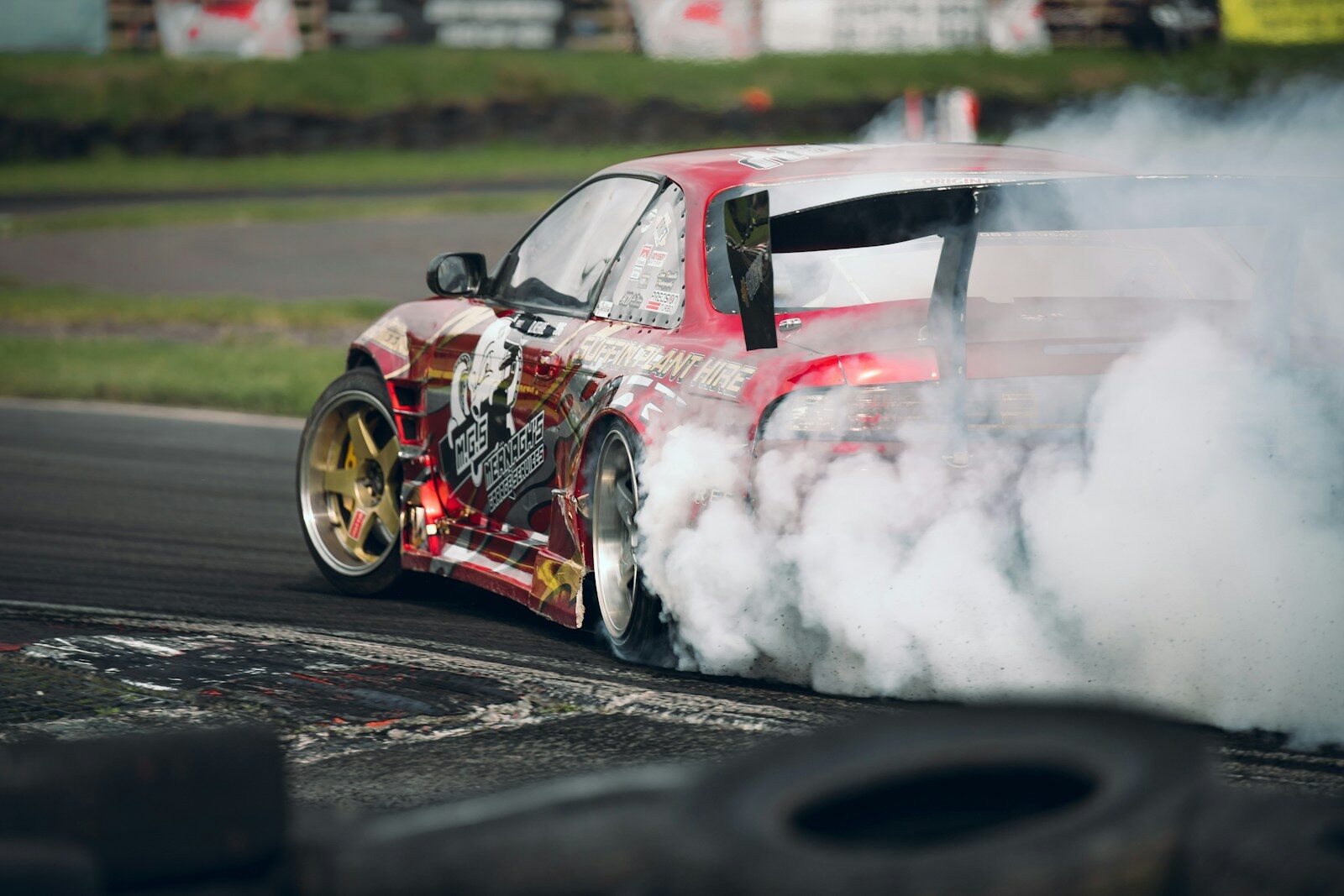
You can have all the horsepower in the world, but if only one tire is doing the work, you’re going nowhere but sideways in a cloud of smoke. That’s the problem a limited-slip differential solves – and it’s one of the most important upgrades separating a real performance car from a poser.
First, what a differential even does
When you turn a corner, your outside wheel travels farther than the inside wheel, so they need to spin at different speeds. A differential lets that happen. Simple enough. The trouble is with a basic open differential: it always sends power to the wheel with the least grip. Hit a patch of ice or lift a tire mid-corner, and all your power vanishes into one uselessly spinning wheel.
Check This Out: Best Dash Cams of 2026: How to Choose the Right One for Your Vehicle
Enter the limited-slip
A limited-slip differential (LSD) does exactly what it says – it limits how much one wheel can slip relative to the other. When one tire starts to lose grip, the LSD shuffles power over to the wheel that still has traction. The result is that you can actually use your power getting out of corners instead of lighting up a single tire.
The flavors
Read Next: The 10 Best Outdoor Knives of 2026: Top-Rated Picks for Hunting, Camping, and Survival
There are clutch-type, gear-type (like a Torsen), and electronically controlled units, plus the old-school “locker” that ties both wheels together for maximum off-road traction. Each has trade-offs between smoothness, aggression, and cost – but any of them beats an open diff when you’re trying to go fast.
An LSD is why race cars can put power down out of a hairpin, as anyone watching the front of an F1 grid or a NASCAR field is witnessing in action. It’s also a key box to check on our used performance car inspection checklist – a worn LSD is expensive to fix.
The bottom line
If your car makes real power, a limited-slip differential is how you actually use it. It’s the difference between accelerating out of a corner and just making noise.
About the Author