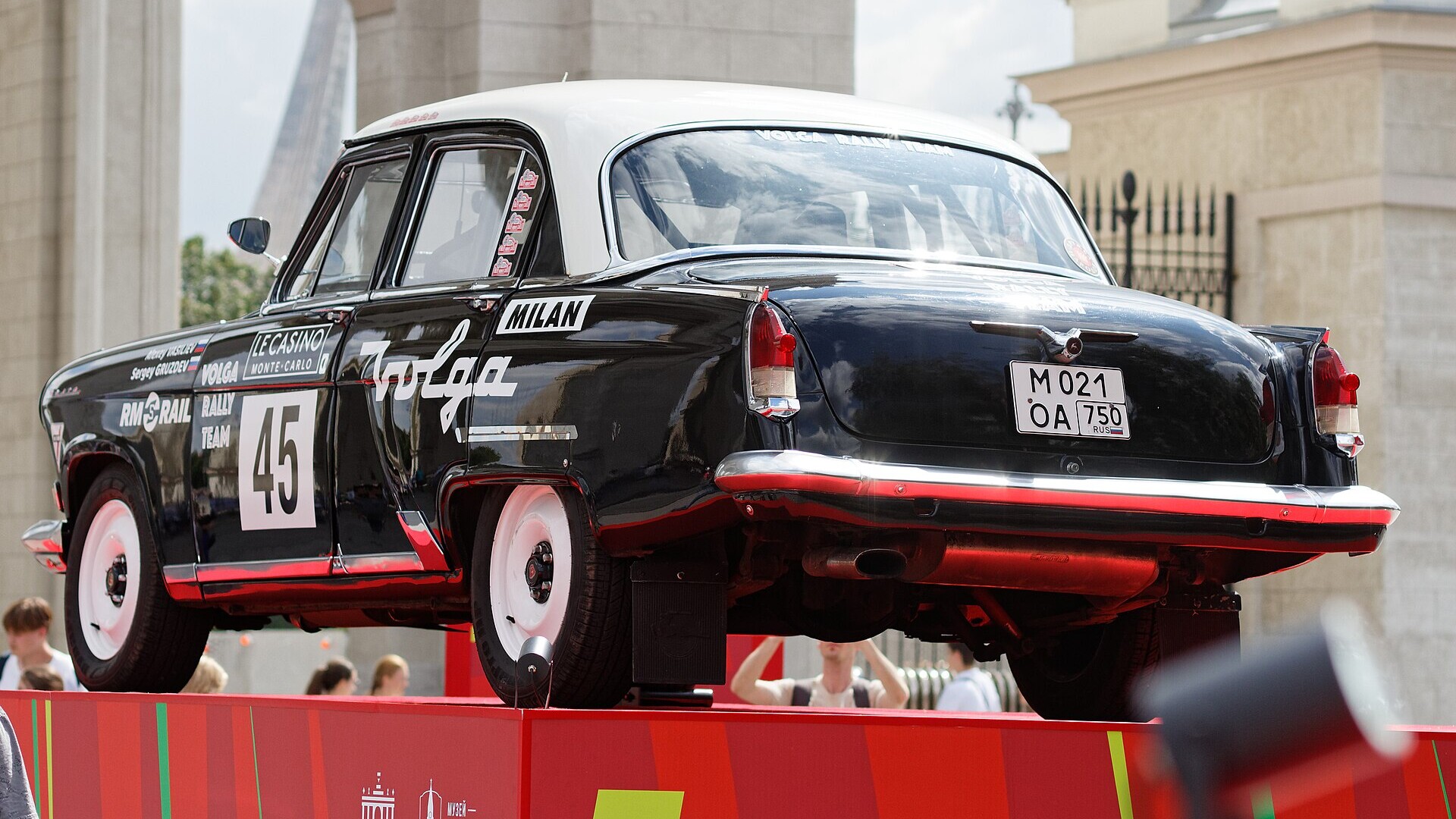
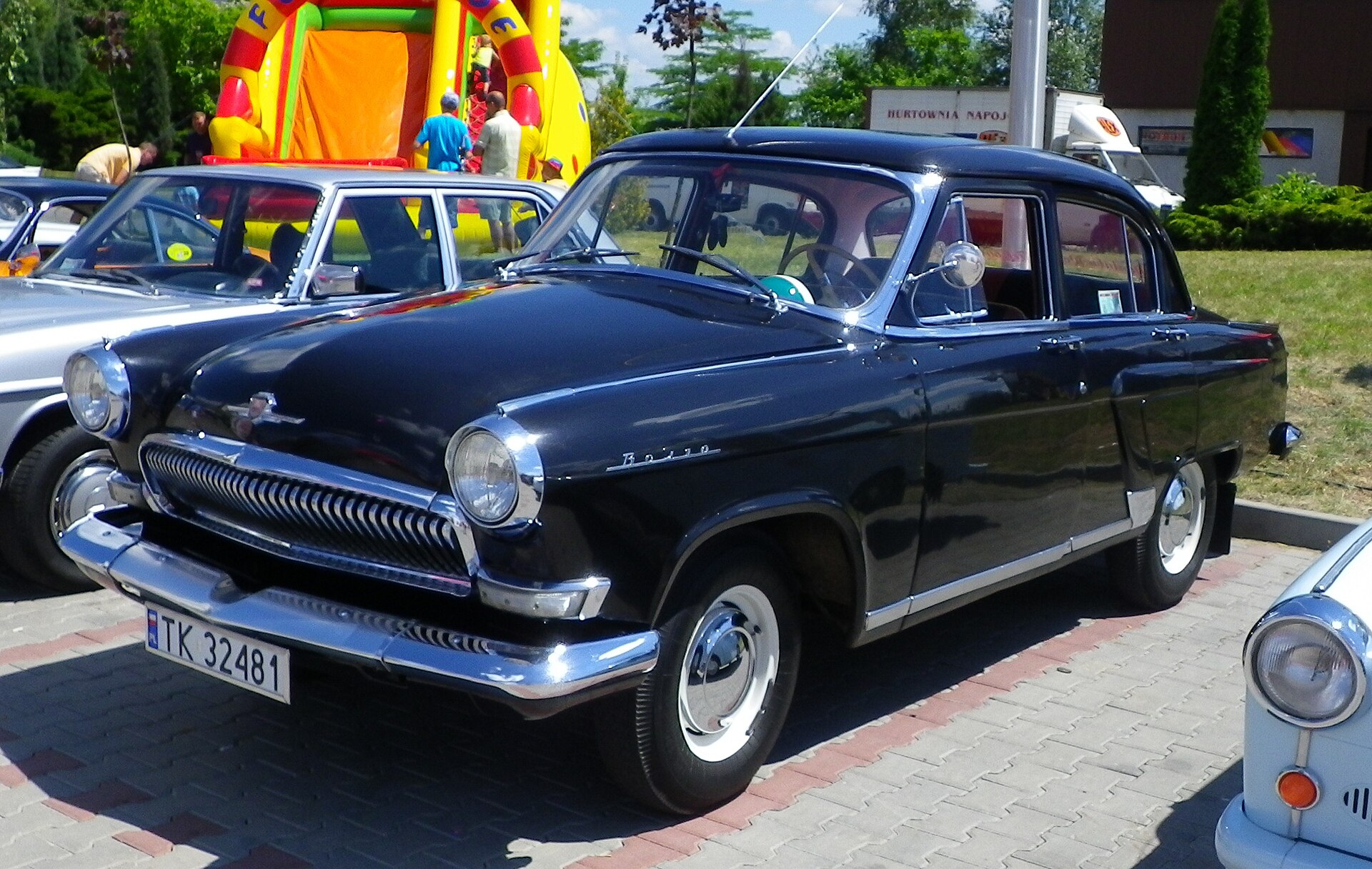
Photo: Retired electrician / Wikimedia Commons, CC0
Picture Warsaw in 1968. It’s getting dark, and your mother has told you, again, to come straight home. Watch for the black car with the white curtains, she says. If it slows down, run.
That car was the Black Volga, and for a generation of kids across the Eastern Bloc it was the bogeyman with a license plate. Most car legends need a ghost or a curse. This one only needed the secret police.
The legend
The Black Volga (czarna wołga in Polish) is the signature phantom vehicle of the Eastern Bloc. Tellings vary, but the outline holds: a black GAZ-21 or GAZ-24 Volga, sometimes red, with white curtains or white tires, prowling the streets after dark. It never speeds. It doesn’t need to.
Who’s inside depends on who’s telling it: secret police officers, priests, vampires, or Satan himself. What it wants never changes. It wants children, for their blood to cure rich foreigners dying of leukemia, for their organs, or for Satanic rituals. The driver’s motive shifts with whatever the teller feared most, whether that was the state, the church or the devil.
The story took hold in Poland, the Soviet Union, Hungary, Romania and even Mongolia. Outside the old Eastern Bloc, almost nobody has heard of it.
The part that was real
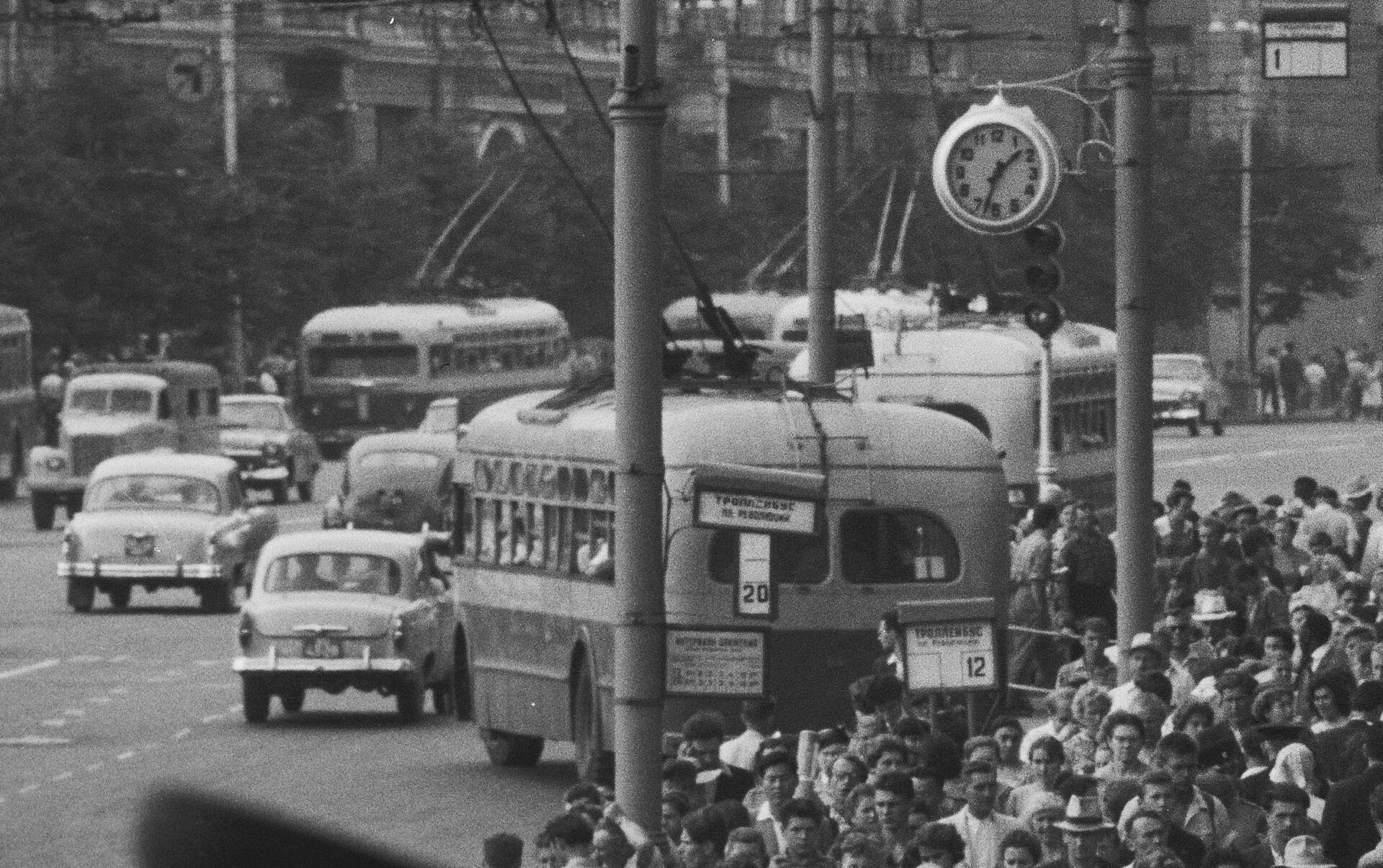
What sets the Black Volga apart from a campfire story is that the car existed, and people had good reason to fear it. In the Soviet era, the black Volga was the standard ride of Party officials and the secret police, from the KGB to its satellite-state equivalents. If you were a kid in 1960s Poland and a black Volga idled on your street, feeling uneasy was reasonable, ghost story or not.
Folklorists file the Black Volga with the organ-theft and blood-theft legends that turn up all over the world. It was the local version of a very old nightmare, given a shape everyone on the block recognized.
The kidnappings never happened. The fear did.
There are no documented kidnappings that match the legend, and no police file ties a string of child abductions to a phantom sedan with white curtains. As a story about a supernatural car hunting children, it’s folklore.
As a story about life under surveillance, it lands much closer to the truth. In the Eastern Bloc, the men in black Volgas really could make people disappear. The legend just gave that fear a set of curtains and a route through the neighborhood.
Next time a dark sedan with tinted windows idles at your curb, you’ll feel a flicker of what those kids felt. They had better reasons. For them, the scariest thing on four wheels was the government.
Which was scarier: the supernatural Volga of the legend, or the real men in black Volgas who inspired it? If your family has its own version of this story, tell us how it went.
Sources
- Factum Obscura — “Urban Legends of Eastern Europe: The Black Volga, Explained”: https://www.factumobscura.com/in-depth/urban-legends-of-eastern-europe-the-black-volga-explained/
- The Ghost in My Machine — “Encyclopaedia of the Impossible: The Black Volga”: https://theghostinmymachine.com/2020/07/29/encyclopaedia-of-the-impossible-the-black-volga-or-czarna-wolga-poland-russia-ussr-phantom-vehicle-urban-legend-car-taxi/
Lead image: Retired electrician / Wikimedia Commons, CC0
About the Author