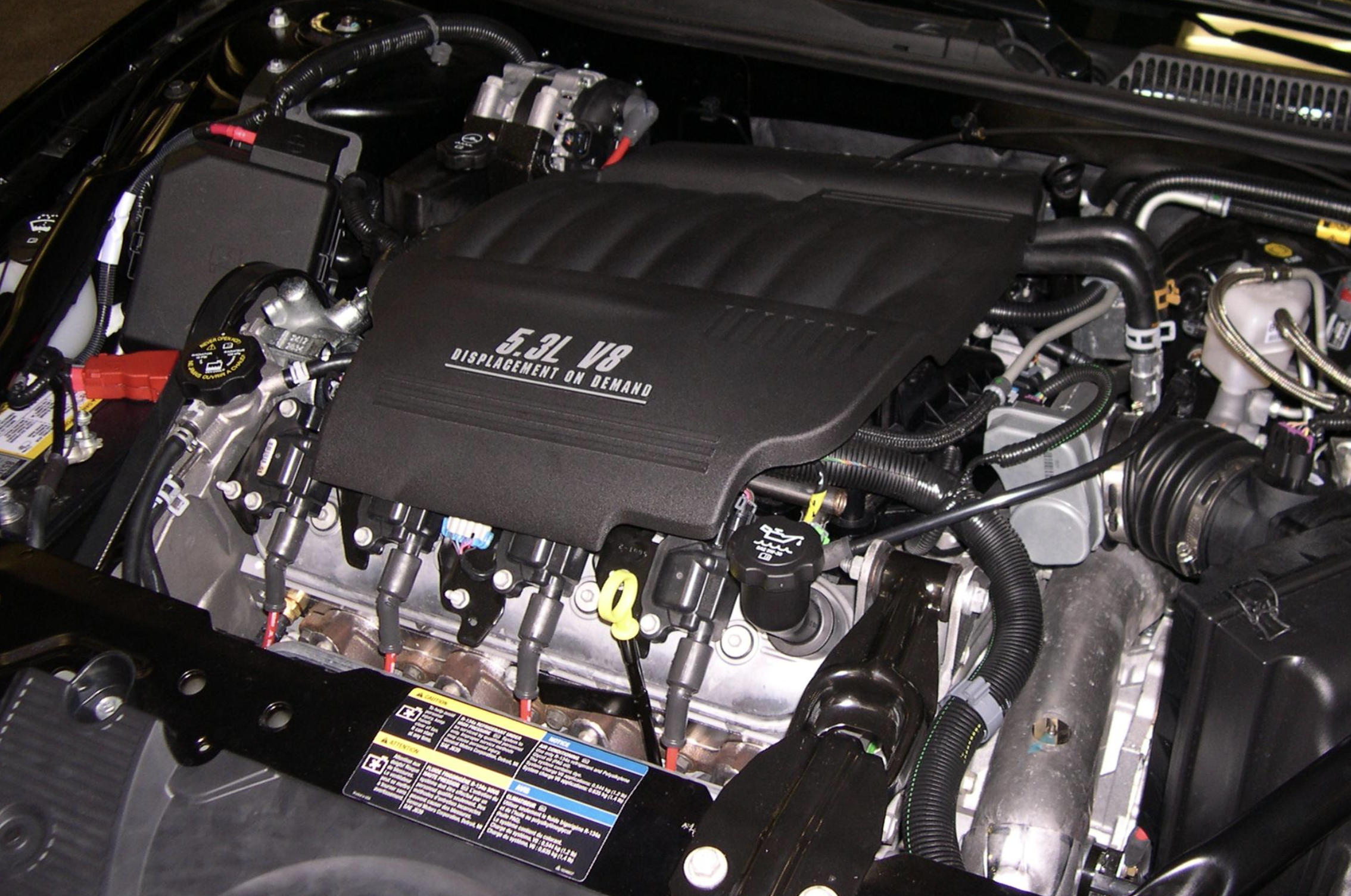
Engine teardown labs at most trade schools run on whatever turned up: old blocks, salvage-yard castoffs, and engines whose tech was out of date before the students were born. South Plains College’s Lubbock automotive program just got newer material. Scoggin-Dickey Chevrolet-Buick donated four GM 5.3L V8s to the program on Sept. 14 at SPC’s Career and Technical Center.
A relationship that goes back decades
This isn’t a one-time photo op. John Zwiacher, Scoggin-Dickey’s dealer principal, arranged the donation and has served on the advisory board for SPC’s automotive program for 35 years. His father-in-law, John Scoggin, helped start the program in the 1970s.
Zwiacher explained the gift simply: “the students always need equipment to work on.” Gary Ufford, an SPC automotive technology professor who used to work as a technician at Scoggin-Dickey, said the engines are still used in GM’s current lineup, so students will train on the same technology they’ll see in service bays.
That second point is the one that matters.
What students get from a modern 5.3
The college’s announcement doesn’t list the engines’ RPO codes, so we don’t know which 5.3 variants these are. The recent GM truck 5.3 is still a much more complicated engine than the old small-block many instructors learned on.
Related Article
- Nearly 300 Cars Are Heading to a Colorado Field Sale, and the 50-Cent Opening Bid Is the Least Interesting Number
- Have This With Your Coffee: Your Backfire News Round-Up for September 12
The main reason is cylinder deactivation. When GM launched the 2019 Silverado 1500 and Sierra 1500, it introduced the L84 5.3L with Dynamic Fuel Management. According to GM’s own technician publication, GM TechLink, the older Active Fuel Management system only switched between eight and four cylinders. DFM can shut off cylinders in many combinations, giving 17 different cylinder patterns. GM rated that engine at 355 hp and 383 lb-ft.
The mechanical side is why a teardown engine is so useful for students. GM says the DFM controller decides up to 80 times per second how many cylinders to run, and it switches modes in under 250 milliseconds, or within two crankshaft revolutions. Each cylinder has its own oil control solenoid in the lifter valley. When a cylinder is deactivated, oil pressure pushes spring-loaded locking pins inside special lifters so the lifter body moves while the pushrod stays still. GM routes that oil through 16 vertical passages in the valley, two for each cylinder.
GM says that during standard testing, a 2019 Silverado 2WD with the 5.3L and DFM ran on fewer than eight cylinders more than 60 percent of the time. That was 9 percent more than a comparable 2018 truck with AFM.
Why this matters in the shop
Anyone who has worked on GM trucks knows lifters are a big deal on these engines. Deactivation lifters, solenoids and oil passages depend on clean oil at the correct pressure. A technician who has actually handled that valley hardware, and seen how the locking pins work, has a big advantage when a customer brings in a truck with a tick, a misfire code, or a complaint about rough shifts between cylinder modes.
A diagnostic scan tool can point you toward the problem. Knowing how the parts work helps you avoid replacing expensive parts that weren’t the cause. For customers, better-trained technicians should mean fewer repeat visits and smaller repair bills. For dealers, it means fewer warranty repairs that fail to fix the problem.
The V8 isn’t going away soon
Donating V8s in 2026 isn’t looking backward. In May 2025, GM announced it would invest $888 million in its Tonawanda Propulsion plant to build its sixth-generation V8 for full-size trucks and SUVs. GM called it the largest single investment it has ever made in an engine plant. It followed a January 2023 investment in the Flint Engine plant for the same engine family.
Tonawanda will keep building fifth-generation V8s while it prepares for sixth-generation production in 2027. Engines from the current generation will therefore be in customer trucks and in repair shops for many years. Students who learn them now will be working on them for much of their careers.
The labor shortage
Dealers aren’t doing this only out of goodwill. The Bureau of Labor Statistics projects employment of automotive service technicians will grow 5 percent from 2025 to 2035, faster than average, with about 66,200 openings a year. BLS says most of those openings will come from replacing workers who retire or change careers. It also reported a median wage of $50,620 in May 2025.
Related Articles
- The First Officially Licensed Eleanor Mustang Ever Built Is Now For Sale
- Paul Newman’s Daytona-Winning Mustang Cobra Was Never Really a Mustang Underneath
A dealer that donates engines to a local training program is investing in its own future hiring. SPC’s programs, both in Levelland and at the Lubbock Career and Technical Center, have earned Master Automobile Service Technology accreditation from the ASE Education Foundation. That is the foundation’s highest program accreditation.
Takeaway
If you’re a student choosing a tech program, ask what engines you’ll actually take apart. Current hardware like this teaches you the systems customers’ trucks actually have. If you’re a truck owner, the relationship between this dealer and this college is the kind of thing that makes it more likely your next lifter problem gets fixed correctly the first time. Anyone who wants to support SPC’s students can contact the college’s Development Office.
Images Via: Wikipedia
Your Turn: Did a program like this help spark your own interest in cars? Share your story in the comments.
About the Author