Two bidders fought over an old Lincoln for ten extra minutes, and a pediatric kidney charity got paid.
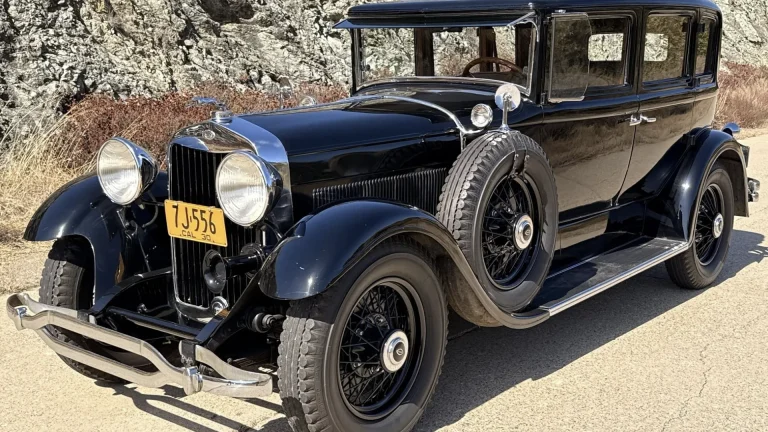
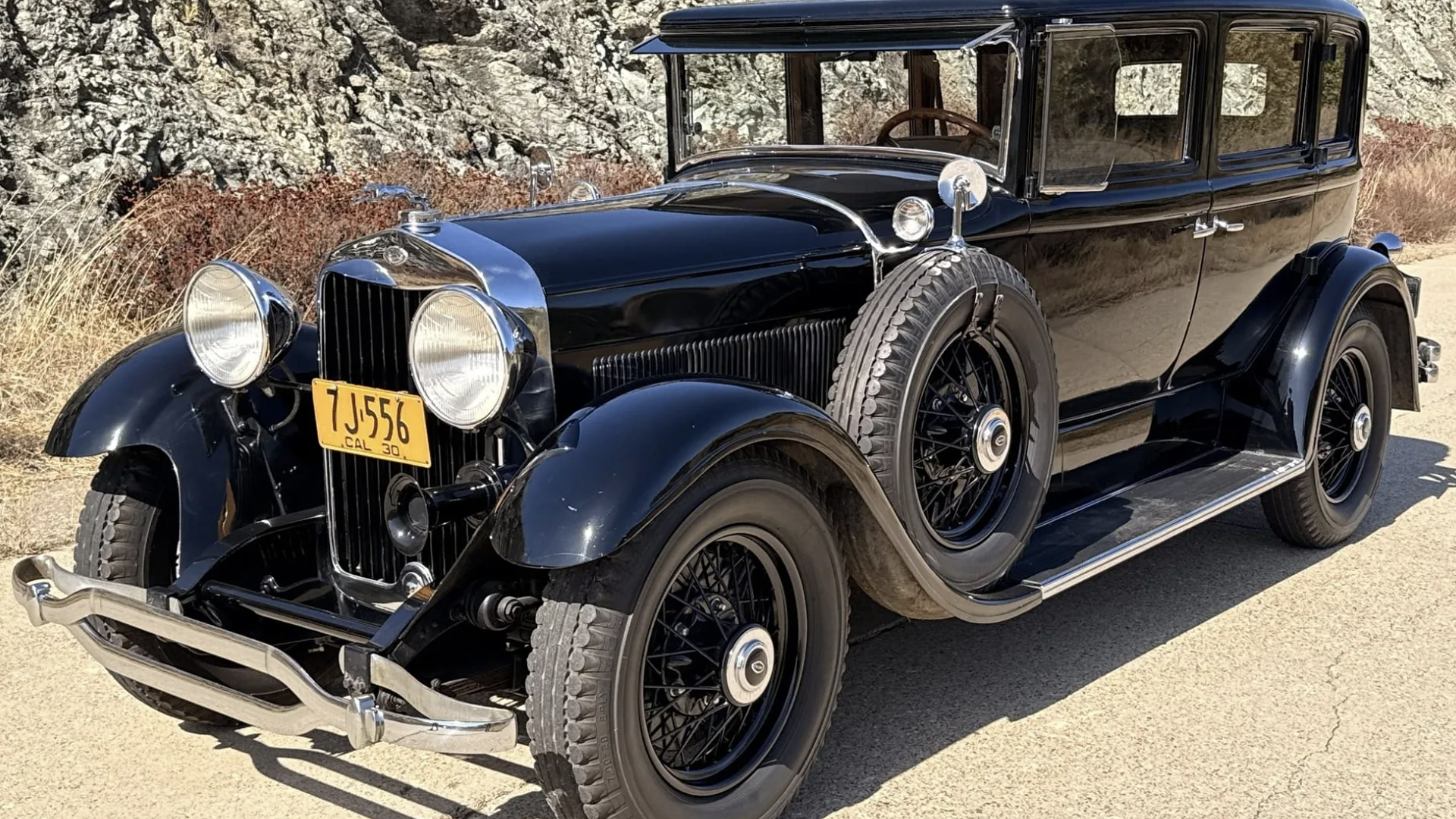
The 1930 Lincoln Model L five-passenger sedan from the garage of Ernie Ball, the man who put Slinky strings into the hands of a generation of rock guitarists, sold on Bring a Trailer on October 26 for $29,500. It took 18 bids. Nearly 400 people watched the listing. The auction was scheduled to end at 3:47 p.m. Eastern but ran to 3:57, because two bidders, kar3516 and fedoragent, kept trading $500 raises from $25,000 upward until fedoragent stopped at $28,800.
The backstory
Per the listing, the sedan had already been refurbished when Ball bought it roughly 50 years ago. He kept it until his death in 2004. Ball was born in 1930, the same model year as this car, which is a nice coincidence. After he died, the Lincoln was donated to the Casey Lee Ball Foundation, a charity created for his grandson. The foundation’s stated mission is pediatric kidney disorder education, organ donor awareness, and research, and its principal officer is Ball’s son Sterling.
Related Articles
- The Pontiac GTO Began as an Option Box. Buyers Still Pay for the Paperwork.
- Man Pleads Guilty to Aiding the Norfolk Takeover Where a Flamethrower Lit Up Redgate Avenue. He Owes 20 More Hours of Community Service.
The seller, a dealer based in San Luis Obispo, wrote in the comments that the car was titled to the foundation and that the proceeds would go to it. To put the sale price in context, the foundation’s most recent IRS filing data shows about $16,000 in revenue for fiscal 2024. One old Lincoln brought in nearly twice that.
About that tax angle
The seller suggested that buyers might see tax benefits, while noting that they aren’t tax professionals. Buyers should take that seriously and read the fine print. Under IRS charity-auction guidance, a buyer can generally deduct only what they paid above the item’s fair market value. A competitive open auction is a reasonable definition of market value, so the winner’s write-off may be close to zero. Talk to your accountant before you assume anything.
What the money bought
This is the last year of the Model L, and Lincoln’s own record of its history explains why the car matters. Henry Leland’s company built the original design. Ford bought Lincoln for $8 million in 1922, and the L carried on until the Model K took over.
Mechanically, the car has a 385-cubic-inch L-head V8 with a 60-degree bank angle, side valves, and fork-and-blade connecting rods. That rod design pairs the rods on a shared crank journal, so the engine can use a shorter crankshaft. Power is rated at 90 horsepower, which reaches the rear wheels through a three-speed manual. The car rides on leaf-sprung solid axles with hydraulic lever-arm shocks. It stops, eventually, with mechanically actuated drums at all four corners.
The cosmetics tell the story of an old restoration. The black paint is reportedly more than 50 years old. The tan striped cloth interior has rear footrests, window shades, a robe cord, and a fold-down armrest. Twenty-inch wire wheels carry 7.00-20 Denman bias-ply tires, and the spares sit in the fenders.
Three things a careful buyer should have noticed
First, the odometer. It reads 32,000 miles, but it only has five digits on a car that is 96 years old. The listing says the miles are “shown,” not verified. Treat any five-digit mileage on a prewar car as an open question, not a fact.
Second, the carburetor. The listing’s spec summary called it a downdraft unit, while the written description said updraft. A commenter caught the conflict, and the seller confirmed it’s an updraft. It’s a small detail, but it shows why reading the comments matters as much as reading the listing.
Third, use. The listing says only about 10 miles were added under current ownership. A car that has mostly sat needs attention before touring. Expect to:
- Flush the fuel system.
- Adjust and equalize the mechanical brakes.
- Inspect the lever-arm shocks, which are typically rebuilt rather than replaced.
- Check the tires’ date codes before trusting them at speed, regardless of how much tread they show.
The seller did post cold-start and driving videos. For a prewar car sold sight-unseen, those videos are the closest thing a remote bidder gets to a test drive.
The market read
At $29,500, this sale says something about where prewar closed sedans sit in today’s market. Open Model L bodies by coachbuilders get the concours attention and the big money. Factory-style five-passenger sedans are a different story. They are big, solid, usable cars that sell for roughly the price of a well-equipped new compact crossover.
Related Articles
- Grand Jury Won’t Charge Newark Cop Who Shot a Porsche Driver. Whether He Broke the Shooting-at-Cars Rule Is Still Open.
- Sydney Sweeney Is Turning Her Love of Cars Into a Business, From a ’65 Mustang to a ‘Syd’s Garage’ Trademark
For insurance, this sale gives an agreed-value classic policy a documented, public number to start from. That helps both the new owner and the underwriter.
The takeaway
Ball bought it about 50 years ago and kept it until 2004. Now it goes back on the road. A documented final-year Lincoln for $29,500 is roughly new-compact-crossover money. Which would you rather park in the garage?
Images Via: Bring a Trailer
About the Author