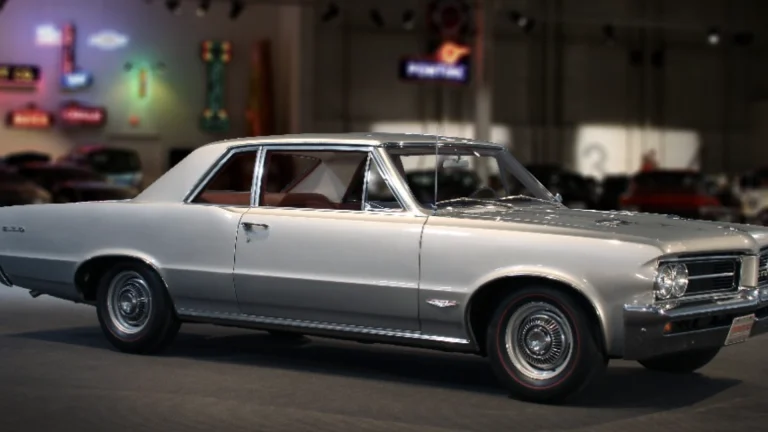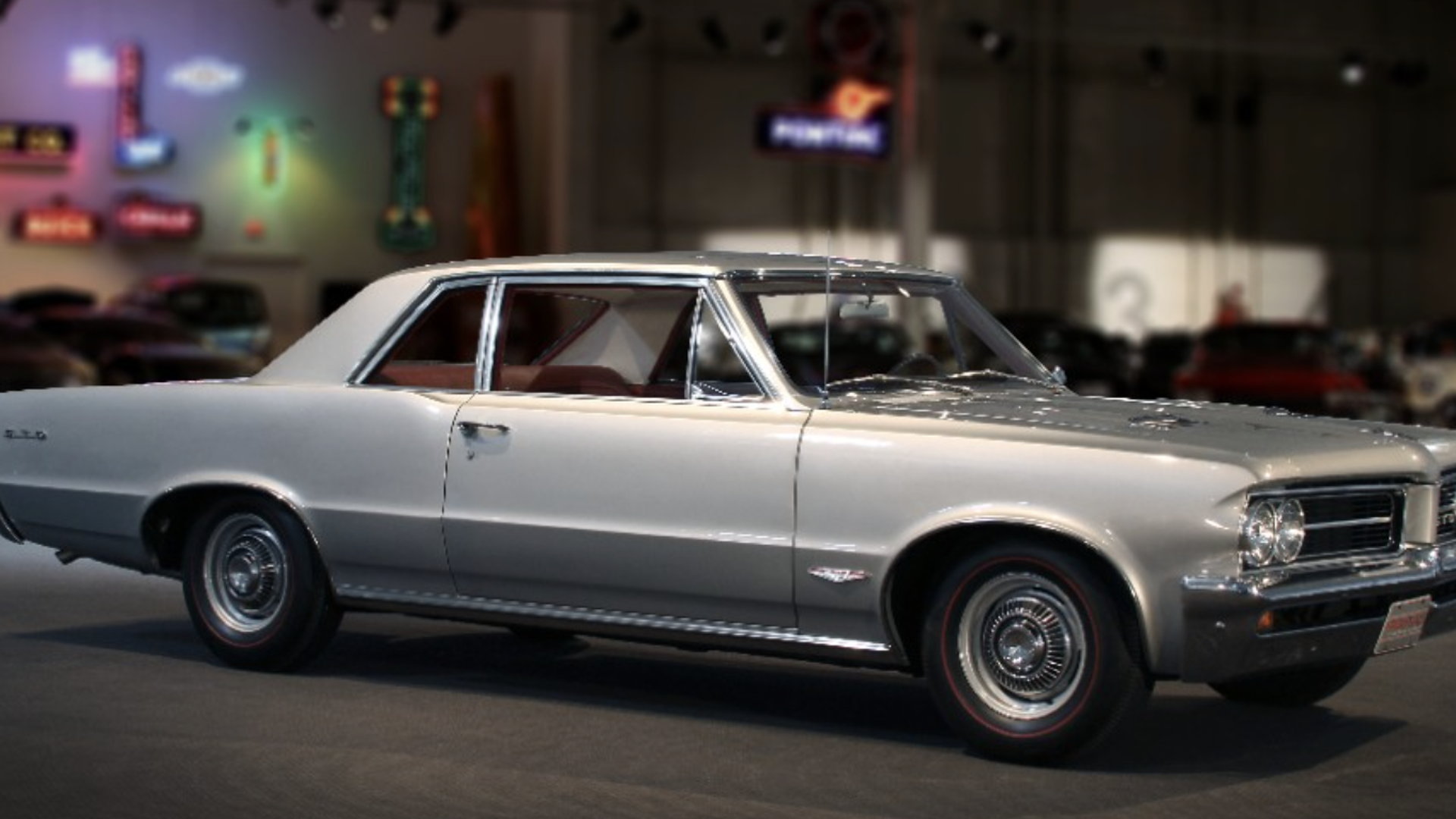
Pontiac’s GTO started life as a box on an order form. GM’s own archive calls the 1964 car a Tempest LeMans with the GTO option package, and credits that combination with kicking off the muscle car era.
The rebellion was in the accounting
GM’s heritage archive lists what the package included: the 389 cubic-inch V8, dual exhausts, GTO nameplates, engine-turned dash inserts and twin hood scoops, with an optional 348-horsepower Tri-Power setup. The 325-horse car ran 0-60 in 7.7 seconds, and Pontiac sold 32,450 of them that model year from a $2,852 base price.
Related Articles
- Court Commissioner Halves Bail for Kenosha Hellcat Race Suspect With a Prior Conviction for the Same Felony
- NHTSA Opens Petition on 7.3L Cam and Lifter Failures in 2021-22 Ford E-350, F59 and F-750
Pontiac already had big V8s. What it did differently was drop one into an existing intermediate body and list it as an option, which meant almost no new tooling cost. A product planner’s workaround, and a whole industry copied it.
Why the option status haunts buyers today
Because the early GTO was an option, the car’s identity often lives in its trim tag and documents rather than its serial number. One 1964 convertible listing shows this. The seller decodes the VIN as a 1964 Tempest LeMans built in Pontiac, Michigan, and the GTO status comes from a separate trim-tag option code. A LeMans with bolt-on scoops and a GTO with a real build history can look identical at a car show.
That’s why paperwork moves money. An RM Sotheby’s lot, a 1969 Judge Ram Air III documented with Pontiac Historical Services papers, a copy of the GM build sheet and the window sticker, sold for $78,100 in 2017. A different 1969 Judge brought $35,750 in 2013. Different cars, different years, so don’t call the gap a formula. Still, the Judge with the build sheet and the window sticker sold for more than double the other.
The same logic applies to insurance. Agreed-value classic policies only protect you if the stated value holds up after a loss. Insure a tribute car as a numbers-matching original and you’ve set up a fight with the adjuster after the loss. Get the build documentation before you set the policy value, not after.
The Australian encore
The GTO came back for 2004 as an import. A 2006 dealer listing decodes the VIN’s plant code as Elizabeth, Australia, with the U code marking the 6.0-liter LS2 V8.
The EPA’s 2004 ratings put the 5.7-liter manual at 16 mpg city and 26 highway, and the automatic at 15 and 20, both on premium fuel. For 2005, the 6.0-liter manual dropped to 15 city and 23 highway. That is a modest penalty for the extra displacement. Budget for premium fuel regardless.
The tire-wear file every buyer should read
The modern car’s known weak spot is documented by the government. NHTSA’s investigation PE07-010 covered roughly 41,000 2004-2006 GTOs, opened in February 2007 and closed that August. It logged 409 complaints and 991 warranty claims, though those counts include all tire-wear and alignment records, not only tire-to-strut contact.
GM blamed excessive negative camber, caused either by factory settings or by strut assemblies bent from hard impacts like severe potholes. The company said it modified its camber-setting fixture several times between February 2005 and May 2006. Among complaint vehicles with factory data, about 90 percent had right-wheel camber out of specification. GM also pointed to non-original tires and wheels as a cause of strut contact.
NHTSA found no safety-defect trend, but cautioned that closing the probe “does not constitute a finding by NHTSA that a safety-related defect does not exist.”
Related Articles
- Pontiac GTO Judge: Origins, Rarity, Clones and the $1.1M Sale
- Richmond Honda Theft Ring: 25 Cars, a Petersburg Chop Shop
Walk the car first:
- Inspect the inner shoulder of the right front tire.
- Look for polish marks on the strut body.
- Ask for an alignment printout.
- Be wary of oversized aftermarket wheel and tire packages.
A GTO chewing through front tires needs a camber check before it needs another set.
The paperwork that closed the book
GM’s own August 2009 filing put it bluntly. There was no planned investment for Pontiac, and the brand was expected to be phased out by the end of 2010. Dealers that signed wind-down agreements agreed to terminate their contracts before October 31, 2010.
It started as a line on an order form and ended as a line in an SEC filing. Sixty years on, the build sheet is still what separates a GTO from a LeMans with scoops.
Would you rather own a clone you can drive hard or a documented original you’re scared to park?
Images Via: GM
About the Author