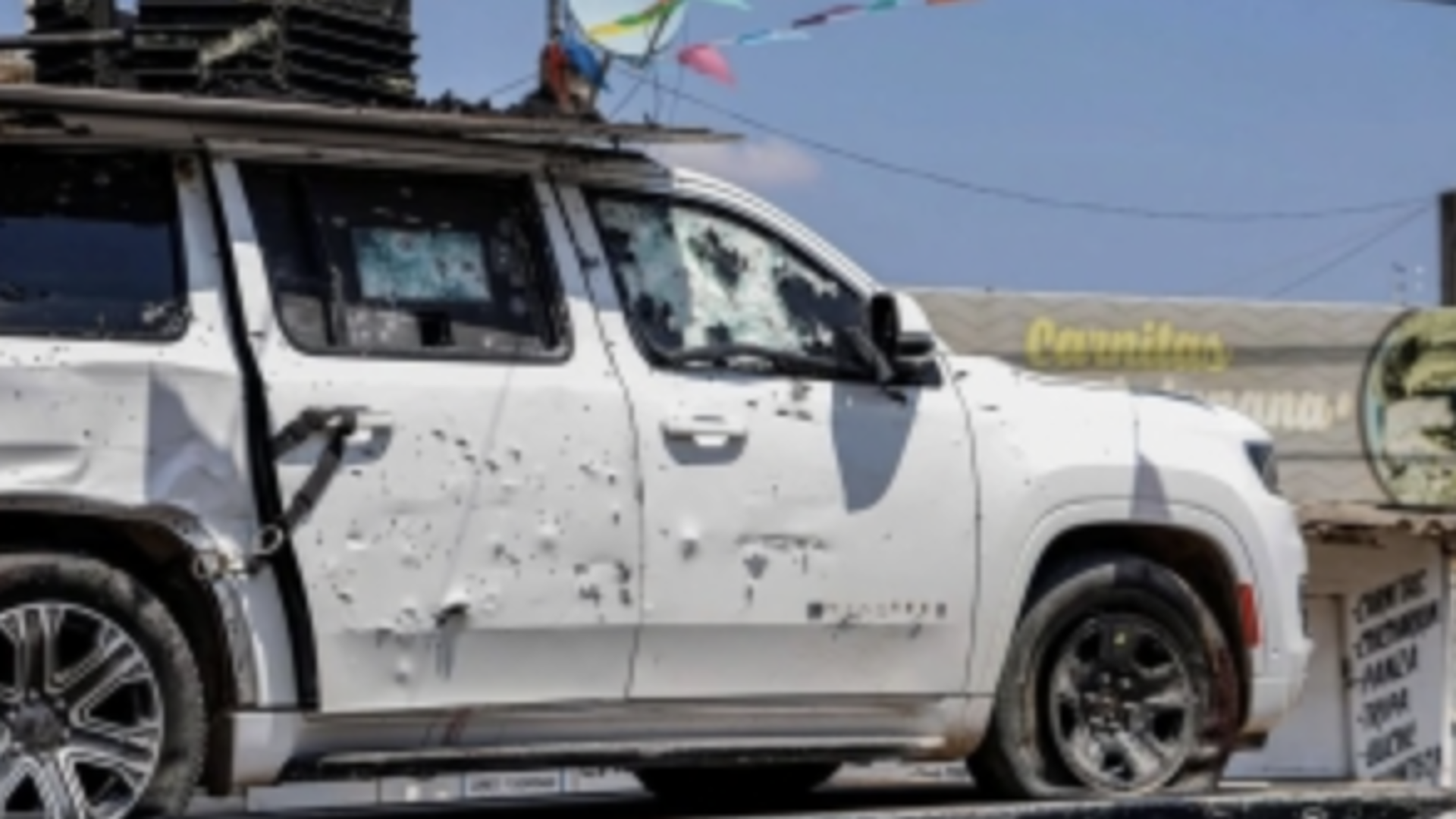
Thirteen people face federal charges in El Paso, Texas, accused of moving stolen privately owned cars and rental vehicles across the border to criminal organizations in Mexico, and 11 of them are U.S. citizens. U.S. Attorney Justin R. Simmons announced the cases on Monday, Oct. 26, at a press conference at his El Paso office alongside Homeland Security Investigations and the FBI. According to the U.S. Attorney’s Office release, investigators have recovered 29 vehicles valued at approximately $1,137,000.
The investigation, called Operation Southbound Takedown, began in spring 2026. Prosecutors say agents spotted a trend of stolen personal and rental vehicles going to people tied to Mexican criminal organizations. Prosecutors allege that in many cases the vehicles were taken from individual owners or from major rental companies across the Southwest, driven to El Paso, and delivered across the border. The government alleges the cartels then used them in their day-to-day operations. Every one of the 13 is charged with the same count, interstate transportation of stolen property, which carries up to 10 years in federal prison. All are presumed innocent, and none has been convicted.
Who prosecutors charged, and when
The case has been building for seven months. The first defendant, Kimberly Aguilar, was indicted on March 25, and Marty Gerardo Jr. followed on July 22. Both are U.S. citizens, and the release says both are in state custody. The other 11 were charged and arrested between July 22 and Oct. 19, and nine of them are also U.S. citizens.
Related Articles
- Colton Police Stopped a Silverado Carrying $54,000 in Hot Wheels Allegedly Taken From a Train
- Plymouth Barracuda Secrets: Hurst Race Cars, Disputed Hemi Counts and a 2026 Trademark
The two Mexican citizens are Pablo Frias and Pilar Bernabeth Mendez Rivas. The government’s own list notes the paperwork each one holds: a legal permanent resident card for Frias and a border crossing card for Mendez Rivas. Those are the documents that let a person drive north and south across the bridges legally. The El Paso Times reported from the press conference that Simmons said the cartels were recruiting U.S. citizens and others who could cross legally. The paper also reported that federal officials named La Línea and the Sinaloa cartel, both active around Ciudad Juárez, as the end users. Simmons described the thefts there as coming from across the country, which is broader than the release’s description of the southwestern U.S.
The case numbers in the release show more than a single sweep. Cesar David Diaz and Sinuhe Baltizar Lopez share one docket (EP-26-CR-02040-KC), so they were charged together. The other defendants listed with numbers have their own cases. James Dewey Garrett and Hilario Abraham Morales carry magistrate-judge case numbers (EP-26-MJ-5207-MAT and EP-26-MJ-5208-MAT) rather than criminal-case numbers. That suggests their cases may be at an earlier stage than the release’s word “indicted” implies. I did not find any public statements from defense attorneys in these cases.
Simmons aimed his warning at the people who drive the cars, not at the cartels:
“You are now on notice. If you provide support to these cartels, many of which have been designated as foreign terrorist organizations, by transporting stolen vehicles out of this country and into Mexico, we will find you, and we will prosecute to the fullest extent of the law.”
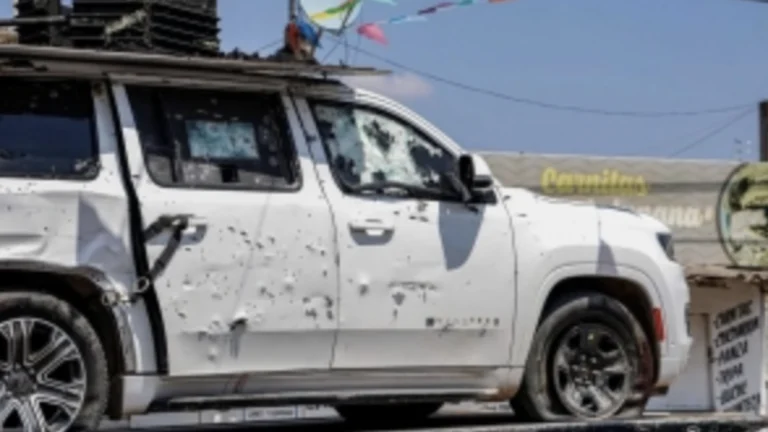
The government released three photos with the announcement: an armored black SUV, an armored black pickup, and a damaged white SUV recovered in Mexico. The release does not say who added the armor or where. Spread evenly, the 29 recovered vehicles work out to about $39,200 apiece (The Auto Wire’s math, not the government’s).
The federal law makes the drive the crime
The release says what the 13 are charged with but does not cite a code section, and I have not seen the indictments. Federal law has three statutes for this conduct, and all three carry the same 10-year maximum:
- 18 U.S.C. § 2314, the general stolen-property statute. It covers goods worth $5,000 or more that someone moves across state or national lines knowing they were “stolen, converted or taken by fraud.” That wording can reach a rental that was picked up legitimately and never returned. The release does not say how the rentals in this case were obtained.
- 18 U.S.C. § 2312, the vehicle-specific statute. It descends from the 1919 law Congress passed to punish moving stolen cars across state lines.
- 18 U.S.C. § 553, which makes it a crime to knowingly export a stolen vehicle or one with an altered VIN.
None of these statutes requires the government to prove the defendant stole anything. The crime is moving the vehicle, and the key element is knowledge. Prosecutors have to show the driver knew the car or truck was stolen. That puts the drivers in the same legal position as the thieves, and it explains why a cartel would want drivers with clean records and valid crossing cards.
For the two Mexican citizens, prison is not the only risk. Under federal immigration law, a theft offense that carries a prison sentence of at least one year counts as an “aggravated felony”. That category can cost a permanent resident their green card.
Texas has seen this pattern before, and Texas drivers pay for the checks
El Paso is not the first Texas border city to see this. In its FY 2025 report to the Legislature, dated April 1, 2026, the state’s Motor Vehicle Crime Prevention Authority described several similar cases:
- Hidalgo County: A family-run ring started out stealing older vehicles for human smuggling, then moved to newer ones for Mexican cartels. It targeted GM 1500 and 2500 pickups, Camaros, and Corvettes. Investigators said about 50 vehicles were taken, about 30 were recovered, and 18 people were arrested.
- Brownsville: Officers at a port of entry stopped a $90,000 2025 GMC Sierra that had been taken from a McAllen dealership. One suspect told detectives that someone inside the dealership was supplying keys for vehicles headed to contacts in Mexico.
The same report counts 78,677 vehicle thefts in Texas in calendar 2025. It also shows 8,015 vehicles inspected at outbound international bridges and ports by the authority’s border task forces.
Texas drivers fund that work, usually without noticing. Under Texas law, insurers pay the authority a fee for every vehicle they cover, and a Texas Department of Insurance rule lets them pass it on to policyholders. The Texas Comptroller says Senate Bill 224 raised the fee from $4 to $5 per vehicle for policies issued or renewed on or after May 29, 2023.
Related Articles
- Eugene Dealer Ran the VIN on a $15,000 Mazda CX and Found It Belonged to a Salem Dealership
- Seattle’s First Stolen CARE Vehicle Was Driven Off by the Person Responders Were Checking On
According to the authority’s report, it collected nearly $145 million from insurers in FY 2025, but lawmakers appropriated just over $55 million back to it. The gap is widest in the $4 portion that funds the auto-theft task forces. That portion brought in $115,976,428, and $24,899,500 was appropriated, about 21%. The other $1 portion, which goes to catalytic converter theft, was fully funded that year. Fighting cars headed for Mexico is one of the authority’s statutory jobs, and Texas drivers fund it with a line item on their insurance bill.
What happens when a stolen car turns up in Mexico
The U.S. and Mexico signed a convention on returning stolen vehicles on Jan. 15, 1981, and it took effect in 1983. A CBP rule lets a returned vehicle back in duty-free if it comes with a letter from the U.S. Embassy in Mexico City confirming it was stolen property returned under that treaty.
The release does not say how many of the 29 recovered vehicles were found in Mexico, how many have been returned to their owners or rental companies, or how many stolen vehicles tied to the case are still missing.
What comes next in El Paso federal court
The 13 cases are proceeding separately in the Western District of Texas, handled by Assistant U.S. Attorneys John Johnston and Andres Ortega. If anyone is convicted, a federal judge will set the sentence under the U.S. Sentencing Guidelines. HSI El Paso Special Agent in Charge Ryan G. McRae said the work is ongoing and the investigation spans both countries. So far, everyone charged is someone a U.S. court can reach: 11 Americans and two Mexican citizens with legal crossing documents. No one in Mexico has been named.
Two things for Texas drivers. A stolen truck that ends up in Juárez is a federal case, and the law treats whoever drives it over the bridge like the person who took it. Meanwhile, part of your insurance bill pays for the inspections meant to stop it.
Should a driver recruited to take a stolen vehicle across the bridge face the same 10-year federal count as the person who stole it, or should the law treat the courier differently?
Images Via: U.S. Homeland Security
About the Author