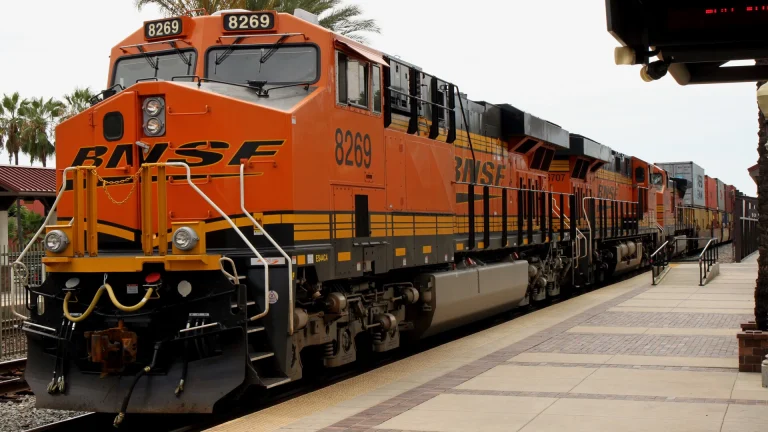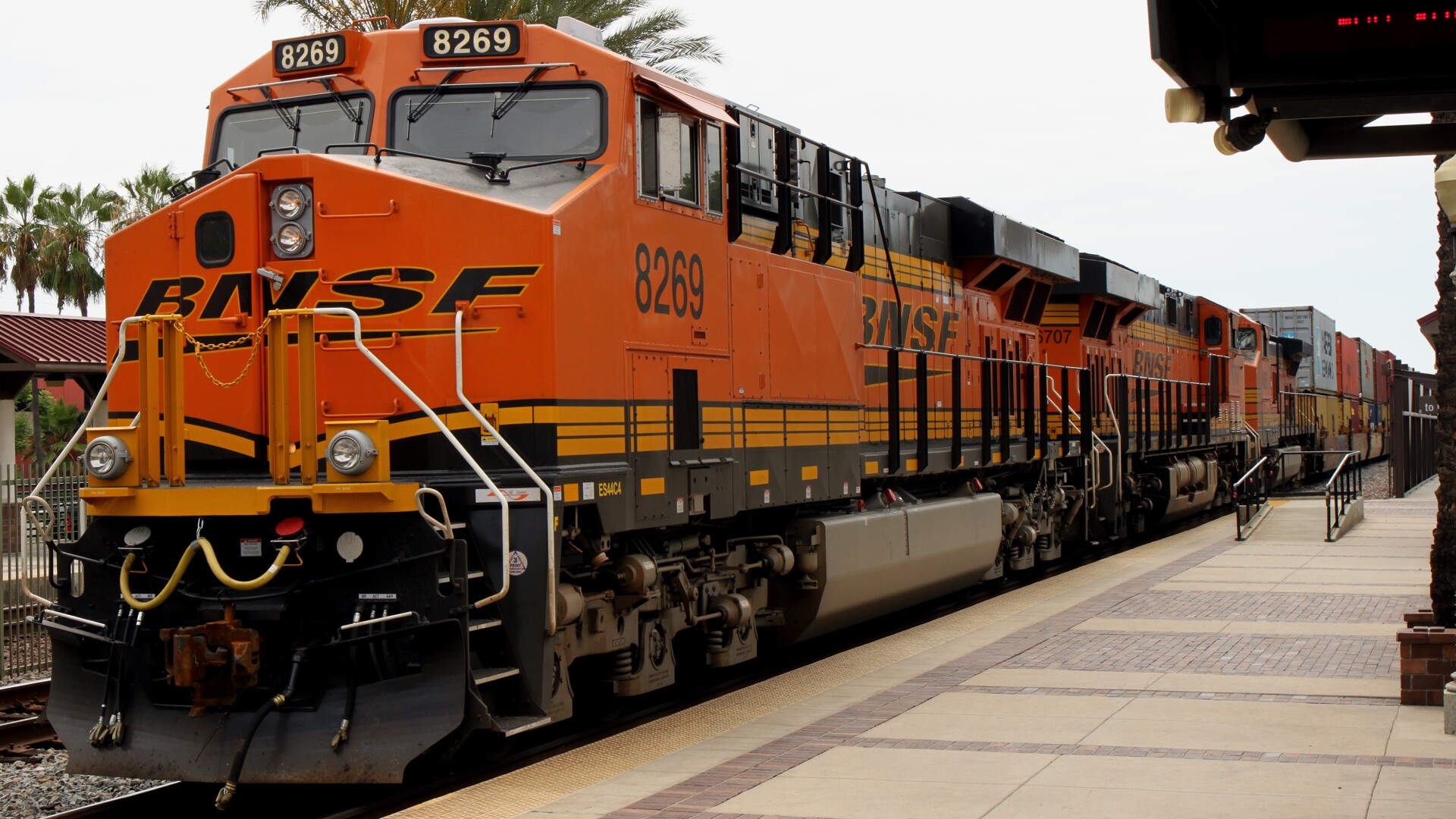
File photo of a BNSF freight train; not the train involved in the Colton case. Credit: Prayitno/Wikimedia Commons (CC BY 2.0)
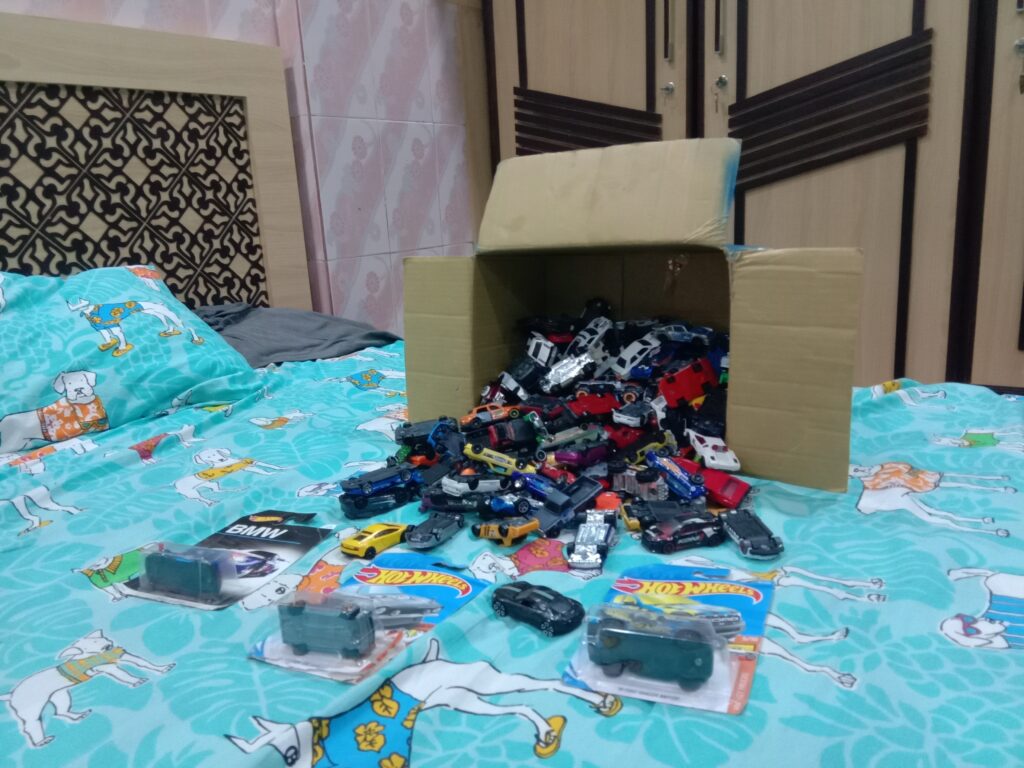
An officer in Colton, California, was waiting near 7th Street and La Cadena Drive around 3 a.m. on Thursday, Oct. 22, after a report of a train burglary near Mason Street. The officer spotted a black Chevrolet Silverado, followed it and stopped it, according to NBC Los Angeles’s account of the department’s video. Police said the pickup held 350 boxes of Hot Wheels worth about $54,000, believed to have been stolen from a train. The driver was booked into West Valley Detention Center on suspicion of burglary, possession of stolen property and grand theft.
The Colton Police Department posted the arrest video with Ozzy Osbourne’s “Crazy Train” playing over it. “We derailed his plans!” the department wrote on social media, and it added that the suspect’s “wheels weren’t hot enough to get away!”, as reported by WSB-TV. Police have not released the driver’s name. A booking is the department’s accusation, and the San Bernardino County District Attorney decides what, if anything, gets filed. As of Monday I could not find a filed complaint or a court docket.
A railcar counts as a building under California’s burglary law
The burglary charge rests on Penal Code section 459, which lists a “railroad car” and a “locked or sealed cargo container” alongside houses, shops and warehouses. A person who enters one with intent to commit grand or petit larceny or any felony is guilty of burglary under the statute. California law treats a loaded boxcar the way it treats a stockroom.
The grand theft count sits on a separate statute written for freight. Penal Code section 487h makes it grand theft to steal cargo worth more than $950, and it defines cargo as goods loaded into a trailer, railcar or cargo container, whether waiting to ship or already moving. Punishment for grand theft under section 489 is county jail for up to a year or a sentence under subdivision (h) of Section 1170, the provision for felonies served in county jail. Police valued this load at $54,000, about 57 times the threshold. My math from police figures puts it near $154 a box.
California leads the country in cargo theft
The industry tracker Verisk CargoNet counted 3,594 supply-chain crime events in the United States and Canada in 2025, against 3,607 in 2024, but estimated losses rose 60% to nearly $725 million, an average of $273,990 per theft. California ranked first among states with 1,218 incidents. Los Angeles County fell 11% while Kern County rose 82% and San Joaquin County rose 44%. In the first quarter of 2026, California logged 277 incidents against 255 a year earlier. Neither release breaks out rail or San Bernardino County, so they do not say how Colton fits.
Railroads have complained about enforcement for years. In a December 2021 letter, Union Pacific told the Los Angeles County district attorney that suspects were “generally caught and released back onto the streets in less than 24 hours,” and said rail thefts in the county had risen 160% in a year. That is a railroad’s claim from five years ago, and it describes Los Angeles County rather than Colton.
The one cargo-theft bill this year stalled in committee
State Sen. Grove’s SB 1019 would have created a California Cargo Theft Task Force in the Attorney General’s office, staffed by a commander, two law enforcement investigators and two rail or freight security professionals. It did not add penalties. Its last recorded action was May 14, 2026, when the Senate Appropriations Committee held it under submission.
The statutes already reach this kind of theft, and in Colton it took an officer waiting at an intersection at 3 a.m. to make the case. That is a thin line of defense for freight that moves through the state around the clock, and the one bill built to add investigators did not leave committee. Fast recoveries do happen when a department is in the right place, as with the Dayton GTO Judge theft, recovered within hours, but they do not replace a standing unit.
Next comes the filing decision. If prosecutors charge the driver, the cargo statute will treat a truckload of toy cars the same way it treats a trailer of televisions. Should California punish theft from a railcar more harshly than the same theft from a store, or is ordinary grand theft enough if the charges get filed and enforced?
About the Author