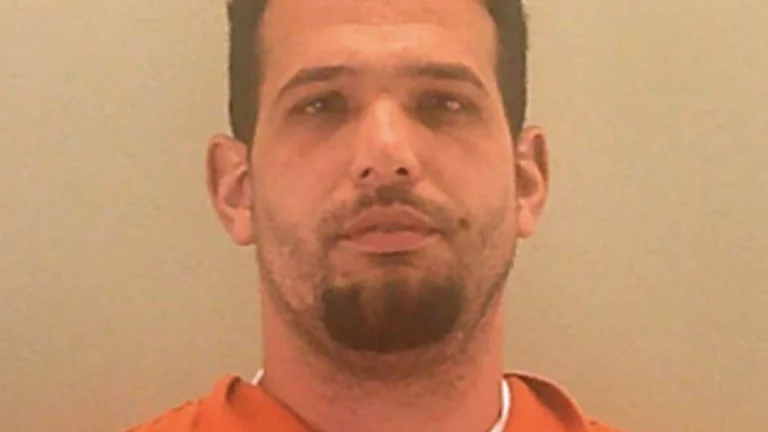
Jose Daniel Alvarez Nunez stood before Kenosha County Court Commissioner Daniel E. Kellum for six minutes on Friday, October 23. The courtroom minutes in State of Wisconsin v. Jose Daniel Alvarez Nunez, Kenosha County case 2026CF001369, timestamp the initial appearance from 1:47 to 1:53 p.m. When it ended, the 27-year-old Kenosha man’s cash bail was $25,000. That is half the $50,000 Circuit Judge Jason A. Rossell attached to the arrest warrant he signed on September 24.
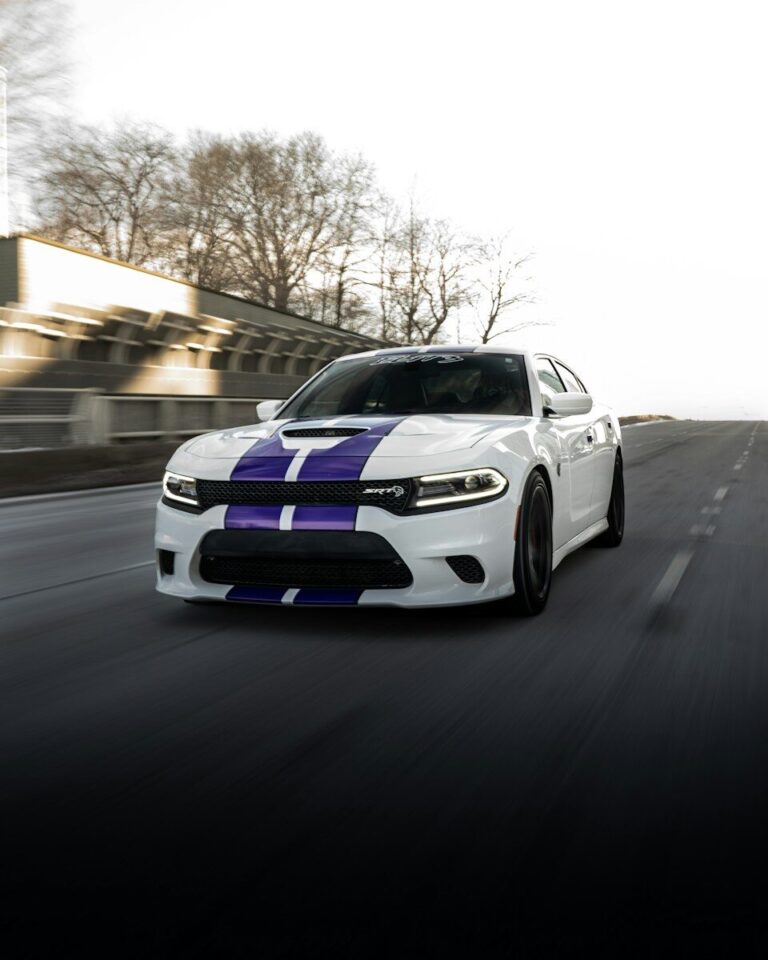
The Kenosha County Eye, which reported the hearing, described the case as an alleged Hellcat street race that left several people seriously hurt, and reported that people watching the courthouse were surprised Kellum required any cash bail at all instead of releasing him without it. I could not obtain the criminal complaint before publication. The online docket does not describe the crash, the vehicles, or the injuries, so those details rest on the Eye’s account. What the docket does show is a man charged with the same felony that sent him to prison in 2018, now accused of doing it on a suspended license. His bail is $5,000 higher than what this courthouse set when he was 18. Kenosha County Eye
Four felonies, and a prior conviction for the same crime
Prosecutors filed the complaint on September 23. It carries four counts. Two are first-degree recklessly endangering safety under Wis. Stat. 941.30(1), a Class F felony. Two are knowingly operating while suspended and causing great bodily harm under 343.44(1)(a), a Class I felony. Every count carries a repeater modifier.
Related Articles
- Forged Pay Stubs and Car Loans: The Legal Fallout When a Dealer Wants Its Keys Back
- Eugene Dealer Ran the VIN on a $15,000 Mazda CX and Found It Belonged to a Salem Dealership
Under Wisconsin’s felony penalty schedule, a Class F felony carries up to 12 years and 6 months and a $25,000 fine. A Class I felony carries up to 3 years and 6 months and a $10,000 fine. By our math, that comes to 32 years of maximum exposure before the repeater allegation. The habitual-criminality statute lets a judge add up to six years to a crime whose maximum exceeds 10 years, and up to four years to one whose maximum runs between one and 10 years, when the prior conviction is a felony. If the state proves the allegation and every count drew the maximum, the paper ceiling would pass 50 years. Real sentences rarely approach that number, but bail law tells courts to weigh it.
The repeater allegation points back to Kenosha County case 2017CF000771. That case was filed against a Jose D. Chiappette with the same December 1998 birth date. The minutes from Friday’s hearing note that the defendant is also known as Jose Chiapetta and appears in the court system as Chiappette. In June 2018 he pleaded guilty to one count of first-degree recklessly endangering safety as a party to a crime. Prosecutors dismissed a first-degree reckless injury count carrying a dangerous-weapon modifier and a second endangering count, and both were read in at sentencing. On August 2, 2018, Judge David Bastianelli sentenced him to 12 years: seven in prison and five on extended supervision. His address in that file changed to Dodge Correctional Institution in Waupun.
The five-year lookback that makes someone a repeater does not count time spent in prison, which is how a 2018 conviction can still qualify in 2026. Prosecutors must prove that status unless he admits it.
What the 2023 bail amendment tells a court to weigh
Wisconsin voters rewrote the rules for this kind of hearing in April 2023. A pair of bail questions passed with about two-thirds support statewide. The amendment allows judges to consider past violent-crime convictions when setting bail for someone accused of a violent crime. The Legislature’s 2023 Wisconsin Act 3 defined the terms. PBS Wisconsin
The statutory definition of “violent crime” in Wis. Stat. 969.001(3) is a long list of statute numbers, and 941.30 is on it. That means two of the four new counts are violent crimes for bail purposes, and so is the 2018 conviction. Under Wis. Stat. 969.01(1)(b)2., when a defendant is accused of a violent crime, a court may impose cash bail if the totality of the circumstances supports it. The statute names what the court may consider: a previous violent-crime conviction, the risk of not appearing, protecting the community from serious harm, witness intimidation, and possible defenses.
The same law pulls in the other direction. Bail for violent crimes may not be excessive. The list of proper considerations in 969.01(4) begins with the defendant’s ability to pay and ends with the state’s policy against unnecessary pretrial detention. A commissioner who halves a judge’s number is not breaking any rule by doing so. The question is whether the reasons fit this file. Friday’s minutes do not record Kellum’s finding, what amount the prosecutor requested, or what defense attorney Michelle Gardner argued. Assistant District Attorney Sarah Norkus appeared for the state.
The minutes do record one voice. One of the victims, identified on the docket by initials, asked that the state “do the right thing.”
A suspended license, a $200.50 judgment, and the line between a ticket and a felony
Two of the counts turn on one word: knowledge. Under Wis. Stat. 343.44(2)(ag)2., a suspended driver who causes great bodily harm owes a civil forfeiture of $5,000 to $7,500. If the driver knew about the suspension, the same crash is a Class I felony. For the basic suspended-driving violation, knowledge isn’t an element. Subsection (3) adds that failing to receive a mailed suspension notice is no defense if the driver moved without updating the address with the DMV.
The public record gives prosecutors something to work with on knowledge. On March 7, 2026, a Kenosha County Sheriff’s deputy issued four citations to Alvarez Nunez: operating while suspended, operating after registration suspension, speeding 1 to 10 mph over the limit, and no proof of insurance. He did not appear, and default judgments were entered in April. The suspended-driving forfeiture of $200.50 went unpaid. On May 29, the court entered a judgment for that amount along with a license suspension for failure to pay. As of this week, the docket in case 2026TR001890 shows a balance of $205.66. The public record does not say which suspension was in effect on the date of the alleged crash. That will be the state’s burden.
Kellum’s bond order includes a condition that he not drive without a valid license, along with no-contact orders covering four people. That license condition forbids the exact thing he’s accused of. His record this year already holds a March citation for it and an unpaid fine.
Bail in this courthouse in 2017 and now
The 2017 file gives the most direct comparison. On September 20, 2017, Court Commissioner David R. Berman set cash bail at $20,000 on charges led by first-degree reckless injury with a dangerous weapon. Alvarez Nunez was 18 and had no prior adult felony. Nine years later he faces four felonies, the top two of them Class F, with a conviction on his record for one of the same crimes. His bail is $25,000.
Kellum’s predecessor, William Michel II, set the same $25,000 twice in March. First for a Kenosha man accused of leading police on a high-speed chase through city streets, then days later for another accused of a 70 mph chase through residential streets. Kenosha County Eye coverage of those cases does not mention anyone being injured. Kenosha County judges chose Kellum in July to succeed Michel as judicial court commissioner. The job includes running daily intake court, where bail is set in newly filed criminal cases. Kenosha County Eye report
Readers should know where the Eye stands. The site has published an opinion piece calling for Kellum’s removal and refers to him with a mocking nickname. That editorial position does not change the dollar amounts on the docket, and the docket is what this comparison relies on. Kenosha County Eye
The October 30 hearing, and who can ask a judge to review the bail
Kellum is scheduled to hold the preliminary hearing at 10:30 a.m. Friday, October 30, in Courtroom 157 of the Kenosha County Pretrial Building. The state will need to show probable cause on each count. The case is open, no plea has been entered, and the court record notes that he is presumed innocent unless convicted. The docket does not show whether he has posted the $25,000.
Related Articles
- Seattle’s First Stolen CARE Vehicle Was Driven Off by the Person Responders Were Checking On
- Frederick Butler Gets 13 Years After Driving a Stolen Challenger Through Pedestrians at a Cardinals Game
The bail amount can still change. Under Wis. Stat. 757.69(8), any decision by a circuit court commissioner must be reviewed by the judge assigned to the case if any party files a motion. That judge is Rossell, the same judge who set $50,000 on the warrant. Either the district attorney’s office or the defense can make that request. Neither had done so as of Tuesday.
The practical warning for any Wisconsin driver sits in those March citations. An unpaid suspended-driving ticket can bring another suspension, and each notice adds to the evidence that you knew. If you later seriously hurt someone in a crash, that paper trail is the gap between a forfeiture and a felony.
Bail went from $50,000 to $25,000 for a man with a prior conviction for the same crime. Fair read of a law that also bans excessive bail, or too soft? Where would you have set it?
About the Author