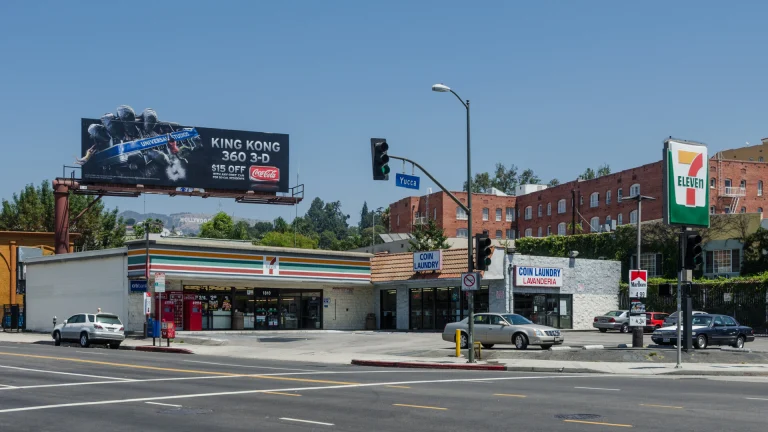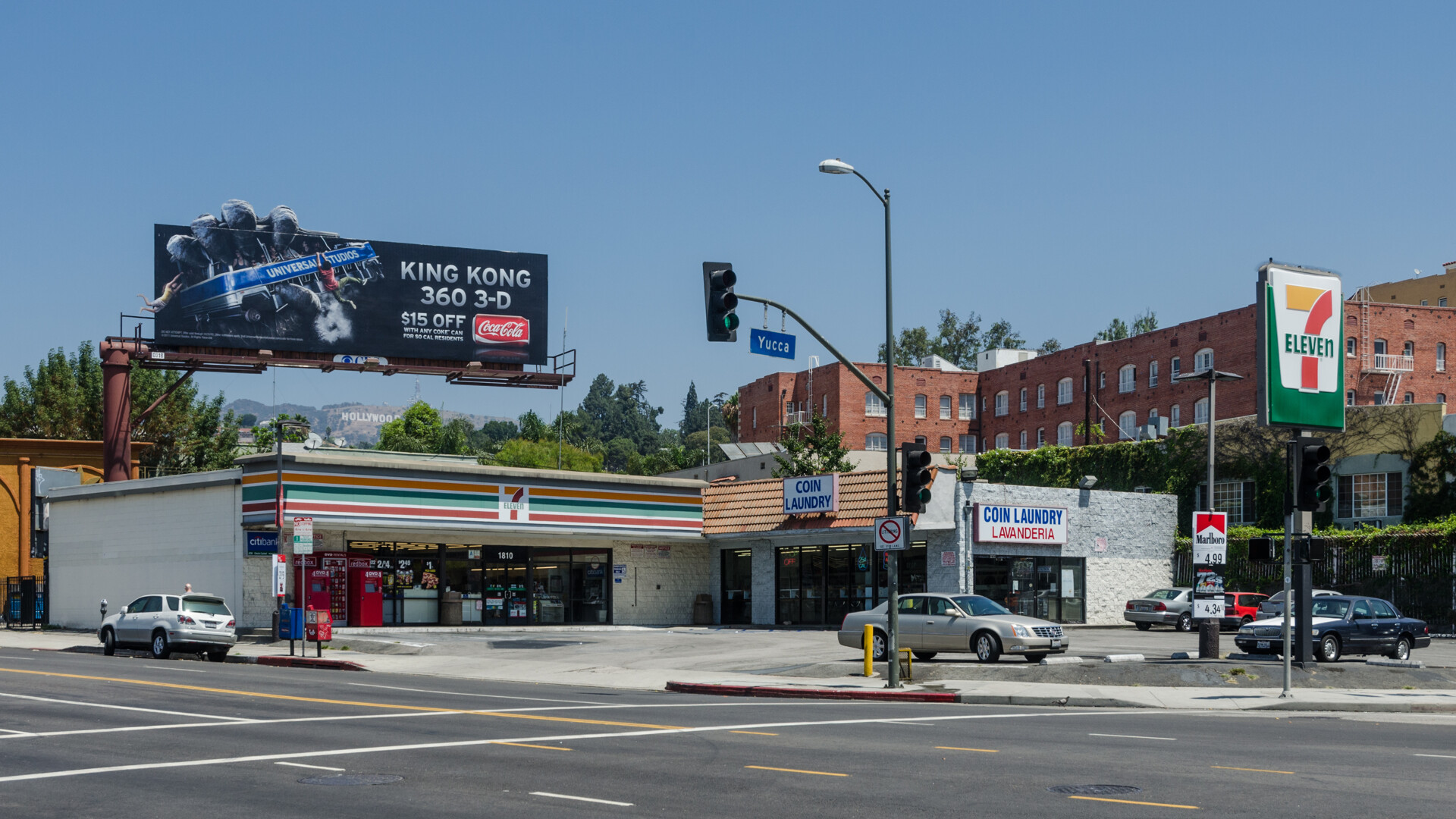
A 7-Eleven store (file photo, Los Angeles). Photo: DXR / Wikimedia Commons, CC BY-SA 4.0
An 82-year-old woman in Solon, Ohio, told police on Sunday, Oct. 18, that her 51-year-old son had traded her car for drugs. She said he had her permission to use the car, according to Solon police as reported by FOX 8 Cleveland, and that he gave it to someone she did not know in exchange for the drugs.
The car turned up the next day, and three stolen cartons of cigarettes are why. Police said that shortly before 9:30 a.m. on Monday, Oct. 19, the 7-Eleven on Aurora Road reported that a man had taken three cartons of cigarettes worth about $375. Store video helped officers identify him, an arrest warrant was issued, and police said he was later found in Cleveland in the car he had reportedly received in the drug trade. Both men were arrested. One was charged with unauthorized use of a motor vehicle and the other with theft, and the car went back to its owner.
FOX 8 did not say which man faces which charge, and I could not find a Solon police release or court docket that does. Everything above is the police account, and charges are allegations. Nothing I found shows a plea or a ruling in either case, or even a hearing date.
One word decides the car charge: consent
Ohio’s unauthorized-use statute, Revised Code 2913.03, makes it a crime to knowingly use or operate a motor vehicle “without the consent of the owner or person authorized to give consent.” The statute says nothing about a borrower passing the car along. In the police account, the owner said yes to her son and had never met the person who ended up behind the wheel. Whether her permission stretched that far is the question a court would have to answer, and the same section gives a defendant an opening: it is an affirmative defense if the person reasonably believed the owner would have authorized the use. A man handed a car by someone who was himself allowed to drive it has an obvious argument to make.
The grade of the offense depends on facts the reports leave out. A basic violation is a first-degree misdemeanor, which carries up to 180 days in jail and a fine of up to $1,000. It becomes a fifth-degree felony if the driver takes the car out of Ohio or keeps it more than 48 hours, and the reports do not say how long the car was gone. A separate clause, division (D)(4), raises the offense to a felony when the owner is an elderly person and loses money because of it. Ohio defines an elderly person in section 2913.01 as someone 65 or older, so an 82-year-old qualifies. The clause starts at a fifth-degree felony and rises to a fourth-degree felony if the loss is $1,000 or more. The car came back to her, and the reports do not say whether she was out money for damage or towing, so the charge level is unknown.
The $375 theft carries the same ceiling
Under Revised Code 2913.02, theft is a first-degree misdemeanor unless the property is worth $1,000 or more. Three cartons valued at about $375 therefore carry the same maximum as a basic unauthorized-use charge: 180 days and $1,000. The car, worth far more than the cigarettes, only moves above that tier if the 48-hour rule or the elderly-owner clause applies, and the reports do not say that either does.
It is a small case next to the 25-car Richmond Honda theft ring Backfire News covered this week. This one is a single car and an owner who had said yes to one driver. Nobody broke in. Watch the Solon court docket: a plea or a hearing date there would show which charge each man faces and at what level, and nothing had been posted when I checked.
Her son had her permission. The man he handed the keys to was someone she did not know. Is that a stolen car in your book, or a family problem that shouldn’t land in criminal court?
Photo: DXR / Wikimedia Commons, CC BY-SA 4.0. File photo of a 7-Eleven store in Los Angeles.
About the Author