Every NASCAR playoff weekend has a ticket nobody talks about. At Las Vegas in October it costs $25, it happens on Friday night, and it is the only part of the weekend where you can stand close enough to hear a late model’s tires give up.
The Bullring runs the inaugural Kyle Busch Classic presented by Star Nursery on Friday, October 2, opening the South Point 400 weekend. It is a six-division program on a 3/8-mile paved oval that sits inside the same fence as the 1.5-mile speedway, and it deserves a better argument than “it’s on before the real races.”
What the Bullring actually is
Built in 1985, refurbished in 2000, 5,400 permanent grandstand seats, banked asphalt, with a tailgating area called the Stockyard between turns three and four. LVMS announced a repave on June 30 of this year, pitched as giving the track flexibility to host new events.
It is also one of an increasingly small number of weekly short tracks owned and operated by a major speedway. That arrangement is rarer than it sounds and it is the whole reason the place matters. A speedway-owned bullring gets grandstands, lighting, tech facilities, safety crews and promotion funded by an operation that makes its money elsewhere. An independent short track has to pay for all of that out of Friday night gate receipts, which is why so many of them have become storage lots.
The alumni list makes the case better than any of that. LVMS’s own accounting of drivers who came off this track includes Kyle Busch, Kurt Busch, Brendan Gaughan, Noah Gragson, Riley Herbst and Zane Smith. Busch won two Bullring track championships before he ever ran a NASCAR national series race, and the last time he raced there it was against his son Brexton in an exhibition. Clark County has been working through its own way of marking that history.
The ladder, and what each rung costs you
Here is the part most Cup fans have never had explained, and it is the reason a six-division card is worth showing up early for. The October 2 program runs, in rough order of cost to compete:
INEX Bandoleros. The bottom rung and the point of entry, aimed at young drivers. Spec cars, sealed engines, tightly controlled rules. The entire design philosophy is that nobody can buy speed, which means the racing is close and a family can afford a season.
Legends. Same idea, one step up. Fiberglass 1930s-style bodies over a spec chassis with a sealed motorcycle engine. Legends cars are the most common stepping stone in American short track racing precisely because the rules package is identical everywhere, so a driver can travel and a car retains resale value.
Modifieds. Open wheels, huge grip, and the first class where setup knowledge starts to separate people more than budget does.
CARS Tour West Limited Late Models. The “limited” is the important word. Restricted engine packages and cost caps exist to keep a late model field from turning into an arms race. This is where a driver finds out whether they can actually manage tires over a run.
SPEARS CARS Tour Southwest Pro Late Models, 118 laps. Real late model racing, real money, real crew chiefs.
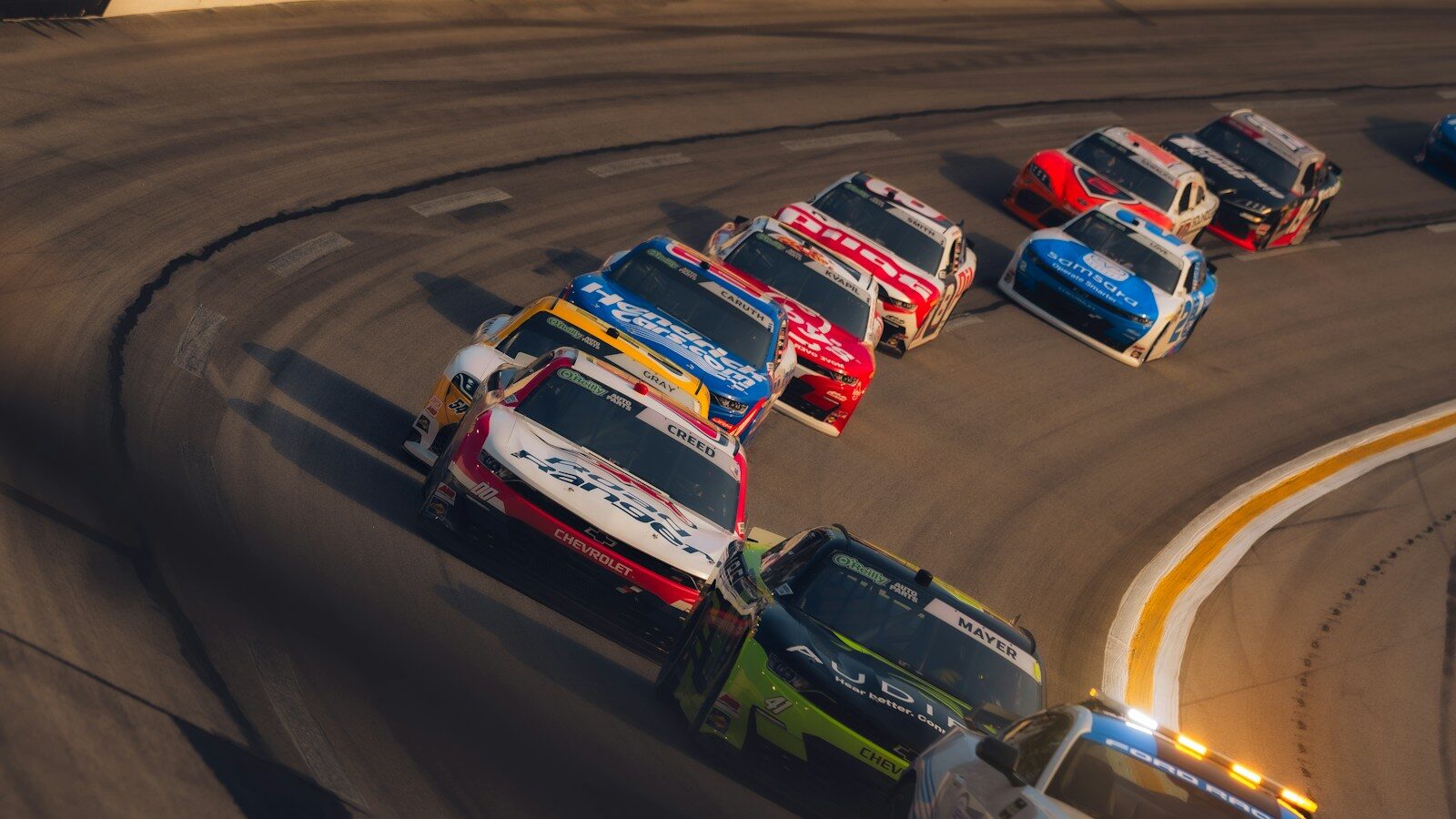
ARCA Menards Series West, 151 laps. The top of the card and a NASCAR-sanctioned development series. This is the last stop before a national-series ride becomes a realistic conversation, and FloRacing carries it.
Watching all six in one night is the clearest look you will get at how an American racing career is actually assembled, from a sealed-engine kid car to a series that feeds the Truck Series. Cup drivers arrive fully formed. This is the part that made them.
The practical case for Friday
Gates open at 4 p.m., opening ceremonies at 5:30, racing at 6:10. Tickets start at $25 and kids under 12 are free, with the ticket line at 800.644.4444.
One housekeeping note before you set an alarm: LVMS’s event release lists a 6:10 p.m. start, while the speedway’s own South Point 400 weekend schedule page lists the Bullring program at 5:00 p.m. Those are two official pages disagreeing with each other. Call the track before you plan your dinner around it.
Compare that to the rest of the weekend. Saturday brings the Focused Health 302 for the O’Reilly Auto Parts Series, 201 laps and 301.5 miles, going green at 4:30 p.m., with Cup practice at 1:30 and Cup qualifying at 2:40. Sunday is the South Point 400, gates at 10 a.m., driver introductions at 1:50, green flag at 2:30 for 267 laps and 400.5 miles.
That Sunday race is the second of three in the Round of 12, sitting between Kansas on September 27 and the Charlotte Roval on October 11, which is the elimination race. Vegas is a mile-and-a-half where a bad day is survivable and a great day nearly locks you into the Round of 8. Expect strategy, not desperation. The desperation is at the Roval.
And the dirt track that isn’t involved
Worth clearing up, because the two facilities get conflated constantly: LVMS also has a half-mile dirt oval, The Dirt Track, across the parking lot from the main speedway. It is a separate venue with a separate history. It hosted 64 World of Outlaws sprint car races between 1996 and 2019 before going dark for national-level sprint racing for six years, then came back when Kubota High Limit Racing moved its 2025 season opener there for a two-night show with $25,000 on the line Saturday.
The Kyle Busch Classic has nothing to do with that facility. It is a paved short track race on the Bullring’s asphalt, run by ARCA and the CARS Tour. If you see it described as a dirt or micro sprint event, that is a mix-up between two tracks that happen to share an address.
Why any of this survives
The honest economics of short track racing in 2026 are grim. Tires cost more every year, travel costs more, and the weekly racer is subsidizing a hobby that the sport depends on and mostly does not fund. Tracks close. The ones that survive tend to be attached to something bigger or propped up by a community that decided not to let it go.
Putting a name on a Friday night race does not fix any of that. What it does is guarantee the date. A named, sponsored, annual event on a playoff weekend is a lot harder for a future finance department to quietly delete from the calendar than a generic fall show, and that is a real form of protection for a track that has already sent six drivers to the top of the sport.
Go Friday. Sit close. The $25 seats are better than the number suggests.
Your Turn: What’s the best cheap ticket you’ve ever scored at a race weekend? Share it with us in the comments.
About the Author