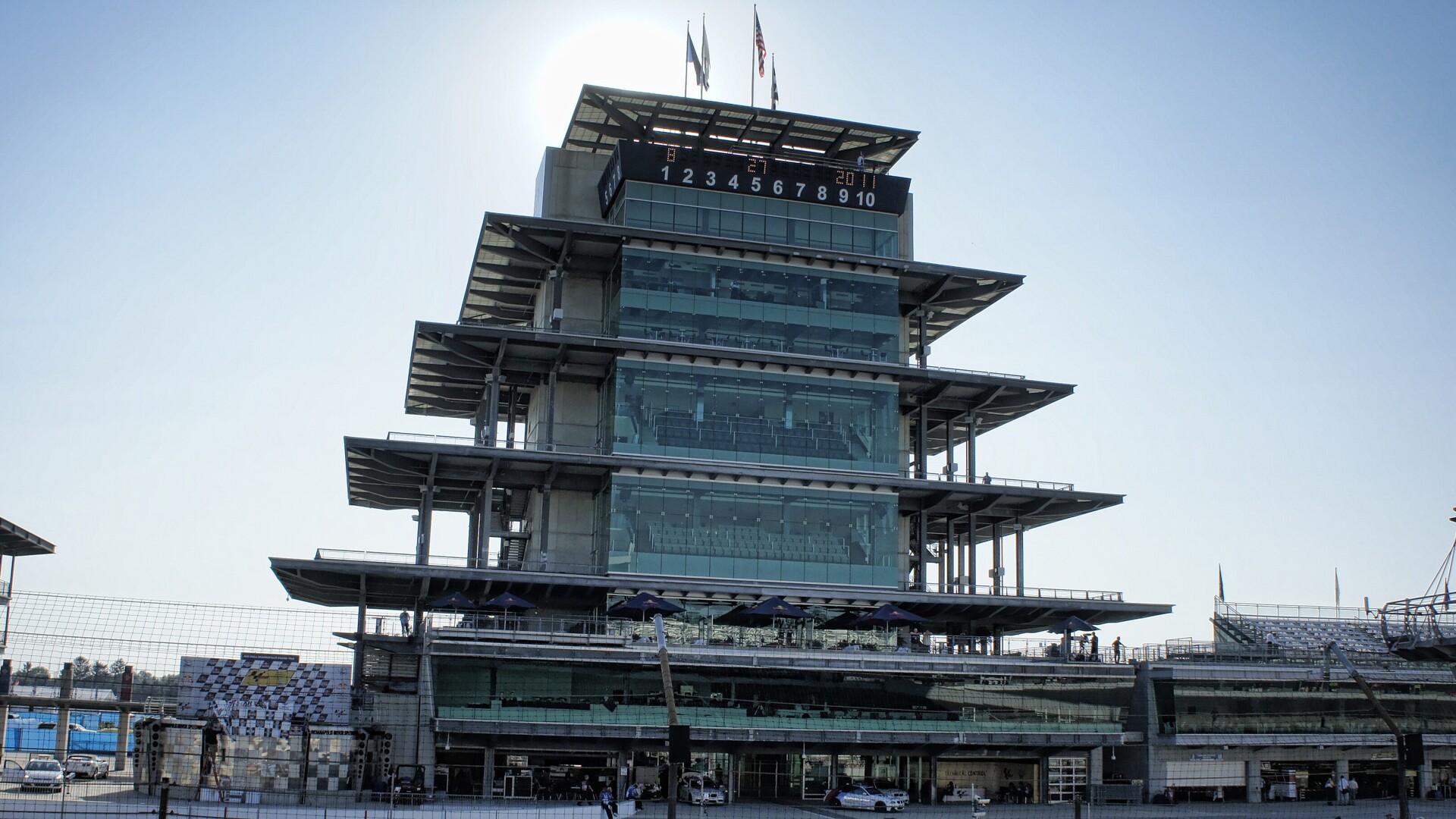
The Pagoda at Indianapolis Motor Speedway, where Droplight debuted as a primary sponsor at the 2025 Indianapolis 500. Photo: rbnlsn via Wikimedia Commons, CC BY 2.0
“Let’s do 9.91 bumped it up a bit.” That’s Phillip Patrick Williams in a May 14, 2026 message, according to federal prosecutors, choosing the monthly return Backward Hat Capital’s investors would be shown. Williams, 51, of Kokomo, also co-founded Droplight, the company whose name first showed up on Louis Foster’s No. 45 Rahal Letterman Lanigan Racing Honda in Desnuda tequila colors at the 2025 Indianapolis 500. On Wednesday, Nov. 18, prosecutors in Manhattan unsealed a complaint charging him with securities fraud and wire fraud and calling Backward Hat a $600 million Ponzi scheme.
The complaint does not mention Droplight, the IndyCar team, or racing. For RLL, which is based in Zionsville, Indiana, that leaves one open question with a seven-figure answer. If anyone later shows that the money Droplight paid for the No. 45 car came from Backward Hat’s investors, the question becomes whether RLL can keep it. The case law cuts both ways. A sponsor’s check can be clawed back out of a Ponzi scheme’s wreckage. But a team that sold real exposure at a fair price, and didn’t know where the money came from, has a strong defense.
What prosecutors say Backward Hat did with $600 million
I read the complaint, sworn on Nov. 17 by Homeland Security Investigations Special Agent Robert Fanesi before U.S. Magistrate Judge Gary Stein. It alleges that Backward Hat, founded around July 2022, took in more than $600 million from more than 2,000 investors by marketing a foreign-exchange arbitrage strategy. Investors were shown monthly returns that usually topped 6%, which compounds to more than 100% a year: money doubling annually from a strategy built on shaving thin margins off currency prices.
Bank and crypto records show little of the money went to currency trading, the agent wrote, while more than $200 million from new investors paid off earlier ones. The agent alleges that more than $130 million went to Williams and more than $40 million to his co-founder, Devin Allen Johnson, 29, of Zionsville. The complaint says Williams set each month’s reported return himself.
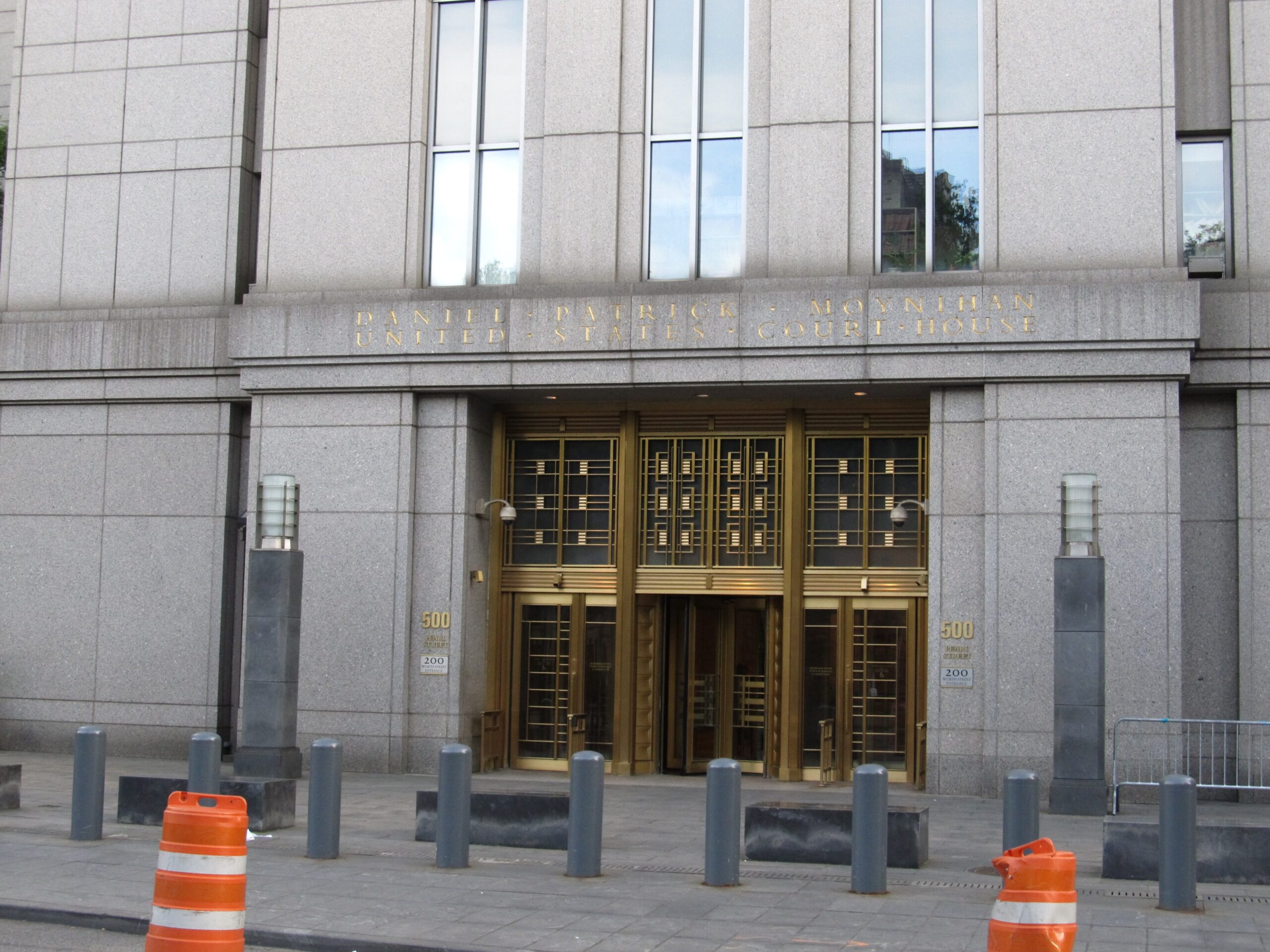
The complaint also alleges the two men misrepresented the independence of the firm that audited Backward Hat’s funds, and that the scheme began to come apart in summer 2026, when withdrawals slowed. Williams told investors the delays were caused by banking and cryptocurrency problems while privately looking for outside money to cover redemptions, the agent wrote. As late as Oct. 20, a Backward Hat email to an undercover agent said the fund was accepting new investors, according to the filing.
Each man faces one count of securities fraud and one count of conspiracy to commit wire fraud, each carrying a maximum of 20 years, plus one count of conspiracy to commit securities fraud, which carries a maximum of five years, according to the U.S. Attorney’s Office for the Southern District of New York. Williams was arrested in Kokomo and Johnson in Gilbert, Arizona. The charges are accusations, and both men are presumed innocent. As of Friday I had not found a public statement from attorneys for either man.
How a December 2024 LLC got its name on an Indy car
Droplight was formed in December 2024, and its Indiana Secretary of State filing lists Williams as manager and registered agent at the same Kokomo address he listed on a Backward Hat filing, The Indiana Lawyer and the Indianapolis Business Journal reported. When Westfield announced Droplight’s naming-rights deal for what became the Droplight Grand Park Sports Campus, the city’s Nov. 12, 2025 release identified Williams as Droplight’s co-founder and owner. Droplight’s chief executive is a different person, Joseph Anderson, who was quoted as CEO when IndyCar announced the RLL extension.
RLL announced Droplight on June 10, 2025 as primary sponsor of Foster’s car for the rest of that season, and on Oct. 27, 2025, it announced a long-term, multi-year extension after Foster won Rookie of the Year. The car started the 2026 Indy 500 as the Droplight Honda, according to IndyCar’s official starting grid. The Rahal family’s motorcycle team, Rahal Ducati Moto, ran Kayla Yaakov’s No. 19 Panigale V2 in MotoAmerica under the Droplight name in 2026, and Desnuda Tequila, which IBJ identified as a Droplight portfolio company, backed Josh Herrin on the same team.
Droplight has not published what it pays. Two people familiar with its business told IBJ the company pays RLL at least $5 million to be lead sponsor of the No. 45, and that its annual spending on Indiana teams and properties tops $8 million, including roughly $1 million a year to Butler University athletics. RLL vice president of communications Kathi Lauterbach told IBJ the team is aware of the allegations and is gathering facts. Butler said it is reviewing its agreement. Droplight’s website was down on Nov. 19 and its Instagram account had been set to private, Current reported.
When a court can take sponsorship money back
When a Ponzi scheme collapses, the investors usually get paid, partly, through a court-appointed receiver or a bankruptcy trustee who goes after money the scheme sent out the door. Under Section 548 of the Bankruptcy Code, a trustee can undo transfers made within two years before a bankruptcy filing if they were made with actual intent to defraud creditors. In Donell v. Kowell in 2008, the Ninth Circuit said the existence of a Ponzi scheme is enough by itself to establish that intent, and it made an innocent investor return the profits he had collected above his own principal.
Sponsors and vendors are in a different position from investors because they sold something. Section 548(c) lets a recipient keep what it received to the extent it gave value and took the money in good faith. The test case for advertising is the Golf Channel. R. Allen Stanford’s Ponzi scheme paid the network about $5.9 million for media advertising, and the Stanford receiver sued to get it back. A Fifth Circuit panel first sided with the receiver in 2015, reasoning that ads promoting a fraud gave creditors nothing, then withdrew that ruling and asked the Texas Supreme Court to interpret the state’s fraudulent-transfer law. On April 1, 2016, the Texas court held that advertising sold at market rates in an arm’s-length deal had objective value when it was delivered, whether or not it helped the fraud. On Aug. 22, 2016, the Fifth Circuit affirmed judgment for Golf Channel.
That ruling applied Texas law, and other states and bankruptcy courts are not bound by it, but the reasoning maps onto a race car. RLL can point to what each payment bought: a livery on track and on television, plus the marketing work the team’s 2025 announcement described. The two facts a trustee would push on are whether the price matched the market and whether anyone at the team had reason to suspect where the money came from. Nothing in the public record suggests the team did.
NASCAR went through a version of this with DC Solar. When Jeff Carpoff was sentenced to 30 years for the roughly $1 billion DC Solar fraud, the Justice Department said scheme money had paid for a NASCAR racecar sponsorship. DC Solar’s 2019 bankruptcy papers listed Chip Ganassi Racing as owed $4,310,000, the Martinez News-Gazette reported, and in November 2021 the Chapter 7 trustee, Christina Lovato, sued the team in Nevada bankruptcy court under the preference and fraudulent-transfer sections of the code. The docket shows that case closed on June 8, 2023; the public docket summary does not show the terms. A clawback is the scary scenario. The likelier hit is duller: the checks just stop, and RLL becomes one more creditor in a line that already holds more than 2,000 investors.
What happens next in Manhattan and in Zionsville
The case was filed as a complaint, not an indictment. Under the Speedy Trial Act, prosecutors generally have 30 days from an arrest to obtain an indictment or file an information, though defendants often agree to extend that deadline. The FBI has set up a victim page for Backward Hat investors. As of Friday I found no public receivership or bankruptcy filing for Backward Hat or Droplight. Either one would put a fiduciary in charge of tracing the money, and that tracing would decide whether RLL’s 2025 and 2026 payments ever come into question.
For RLL, the immediate problem is the 2027 car. The team signed Foster to a new multi-year deal in November 2025 with Droplight announced as his title sponsor, and the IndyCar season opens in a few months. The courts will take their time with Williams. RLL doesn’t get that luxury. Sometime this winter it has to decide whether the No. 45 rolls out in Droplight colors for 2027, or whether someone at the Zionsville shop starts looking for a new check.
Say a receiver traces Droplight’s checks back to Backward Hat investors. RLL ran the car, the sponsor got its TV time, and nobody has alleged the team knew anything. The Golf Channel kept its $5.9 million from Stanford. Should RLL keep its money too, or should it go back to the investors whose cash paid for the paint?
About the Author