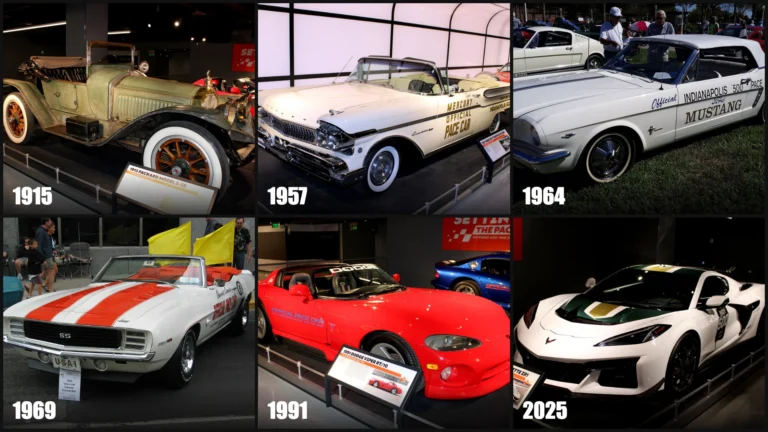
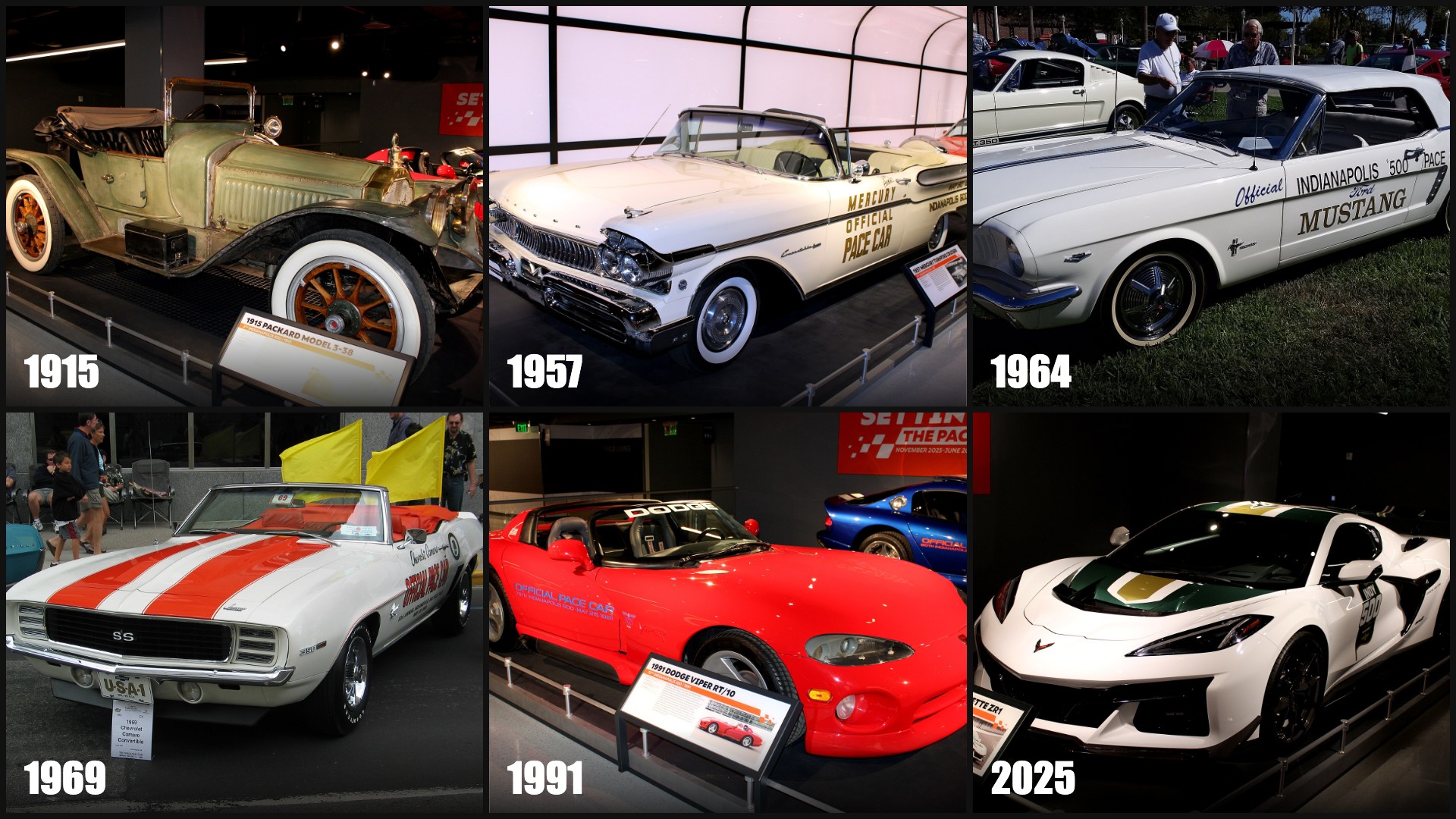
Collage photos: 1915 Packard: Michael Barera / <a href="https://commons.wikimedia.org/wiki/File:Indianapolis_Motor_Speedway_Museum_May_2026_52_(1915_Packard_Model_3-38_pace_car).jpg" target="_blank" rel="noopener">Wikimedia Commons</a>, CC BY-SA 4.0; 1957 Mercury Turnpike Cruiser: Michael Barera / <a href="https://commons.wikimedia.org/wiki/File:Indianapolis_Motor_Speedway_Museum_May_2026_55_(1957_Mercury_Turnpike_Cruiser_pace_car).jpg" target="_blank" rel="noopener">Wikimedia Commons</a>, CC BY-SA 4.0; 1964 Ford Mustang: Michel Curi / <a href="https://commons.wikimedia.org/wiki/File:1964%C2%BD_Ford_Mustang_Indy_Pace_Car_(15401178420).jpg" target="_blank" rel="noopener">Wikimedia Commons</a>, CC BY 2.0; 1969 Chevrolet Camaro SS: Photographed by: Chris J. Moffett / <a href="https://commons.wikimedia.org/wiki/File:1969_Chevrolet_Camaro_Pace_Car.jpg" target="_blank" rel="noopener">Wikimedia Commons</a>, CC BY-SA 2.0; 1991 Dodge Viper RT/10: Michael Barera / <a href="https://commons.wikimedia.org/wiki/File:Indianapolis_Motor_Speedway_Museum_May_2026_53_(1991_Dodge_Viper_RT-10_pace_car).jpg" target="_blank" rel="noopener">Wikimedia Commons</a>, CC BY-SA 4.0; 2025 Chevrolet Corvette ZR1: Michael Barera / <a href="https://commons.wikimedia.org/wiki/File:Indianapolis_Motor_Speedway_Museum_May_2026_51_(2025_Chevrolet_Corvette_ZR1_pace_car).jpg" target="_blank" rel="noopener">Wikimedia Commons</a>, CC BY-SA 4.0
Every Indianapolis 500 since the first one in 1911 has started behind a pace car. That’s 110 races and more than 100 years of Stoddard-Daytons, Packards, LaSalles, Mustangs, Camaros and, lately, a whole lot of Corvettes.
The pace car leads the field through the warm-up laps, releases the cars at the green flag, and comes back out to gather the field under every caution. It has also become one of the best marketing slots in the car business. Automakers have used it to launch new models, sell replica editions, and hand the keys to astronauts, movie stars and sports legends.
Here is every Indy 500 pace car ever, in order, from Carl Fisher’s 1911 Stoddard-Dayton to the 1,250-horsepower Corvette ZR1X that led the 110th running in 2026. Some became collectibles. One crashed into a photographers’ stand. One was a Beretta convertible Chevy never even built for customers.
Indy 500 pace car quick facts
- Races: 110 (1911–2026). No race was held in 1917–18 or 1942–45.
- Most appearances by a brand: Chevrolet, which has supplied every pace car since 2002.
- Most-used model: Chevrolet Corvette, which first paced the race in 1978.
- Most turns as driver: Sam Hanks (six straight, 1958–1963) and Jim Rathmann (six, 1969–1982).
- First SUV: 2001 Oldsmobile Bravada. First pickup: 2003 Chevrolet SSR. First hybrid: 2024 Corvette E-Ray.
- Winner’s prize: Since 1936, the race winner has received a pace car.
The Brass Era and the Roaring Twenties (1911–1929)
In the early years, pace cars were usually driven by the men who built them or ran the Speedway, and many came from factories just a few miles from the track.
1. 1911: Stoddard-Dayton
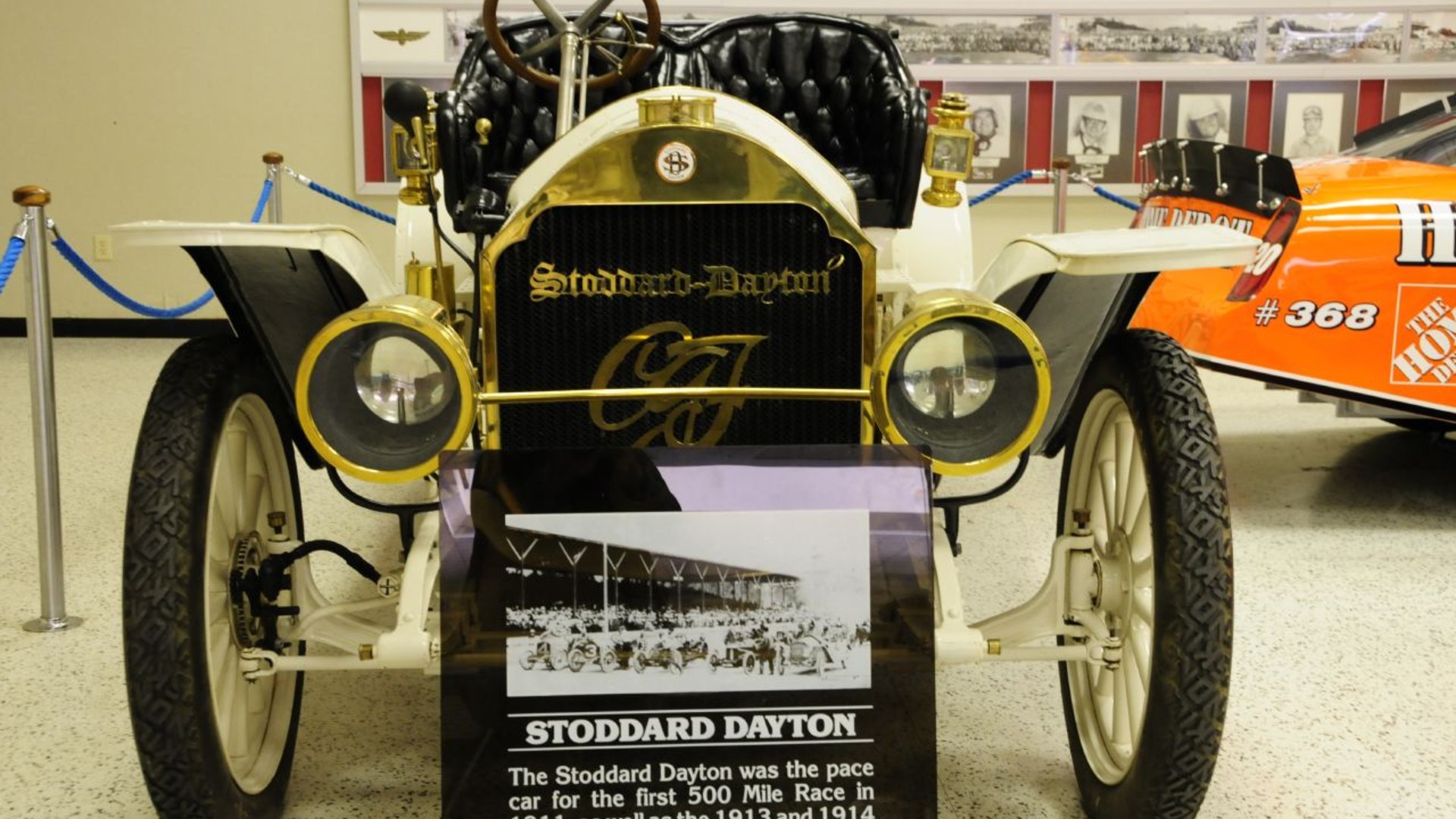
Driven by: Carl G. Fisher
Speedway founder Carl Fisher took the wheel of his own Stoddard-Dayton roadster to lead the 40-car field into the very first International 500-Mile Sweepstakes. Most races of the era used standing starts; Fisher’s rolling start behind a pace car became the Indy tradition that every race since has followed. 1911 race recap.
2. 1912: Stutz
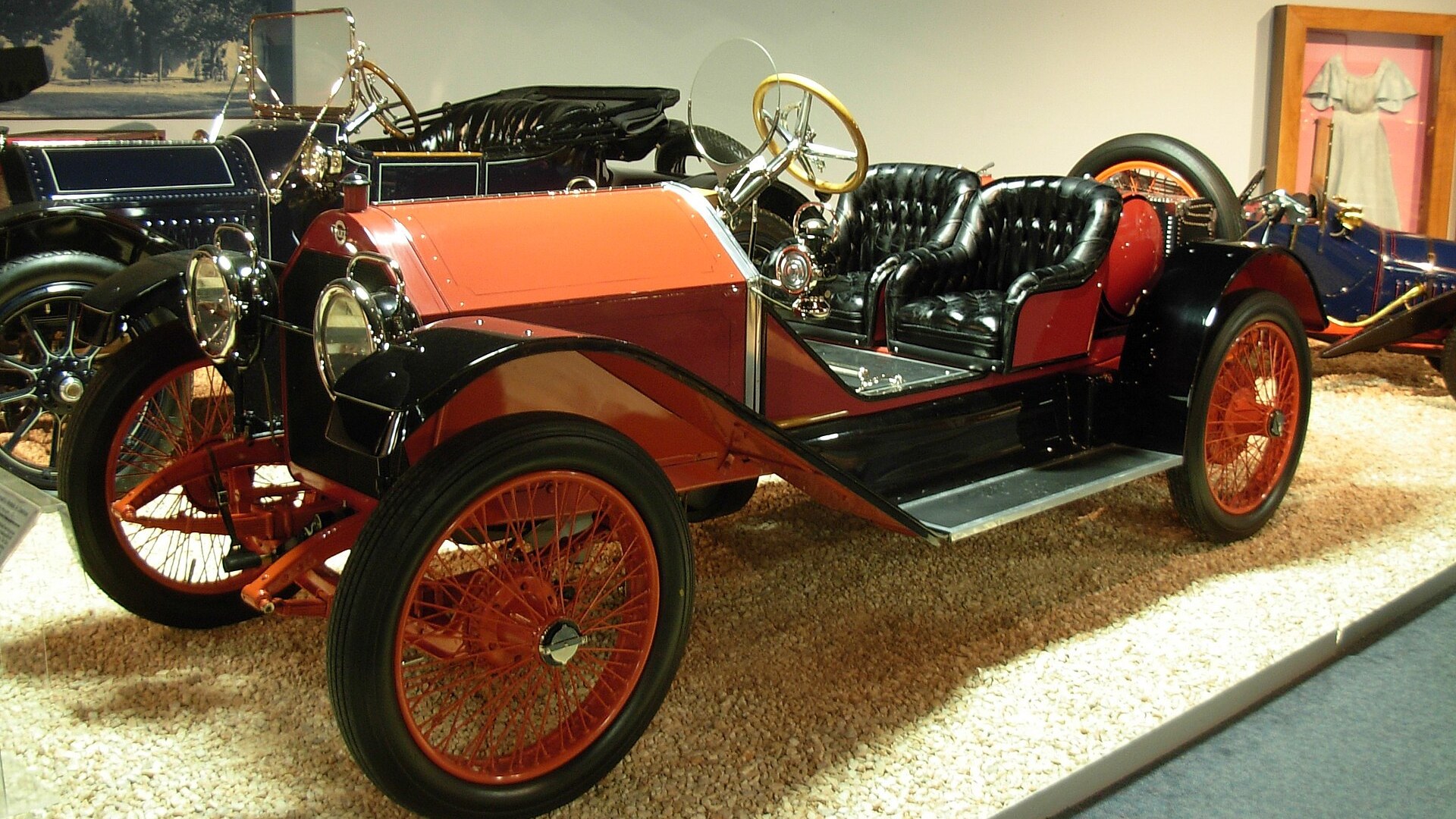
Driven by: Carl G. Fisher
Fisher paced again, this time in a car from Indianapolis neighbor Stutz, whose racing cars had earned the slogan “the car that made good in a day” after an 11th-place debut in 1911. 1912 race recap.
3. 1913: Stoddard-Dayton
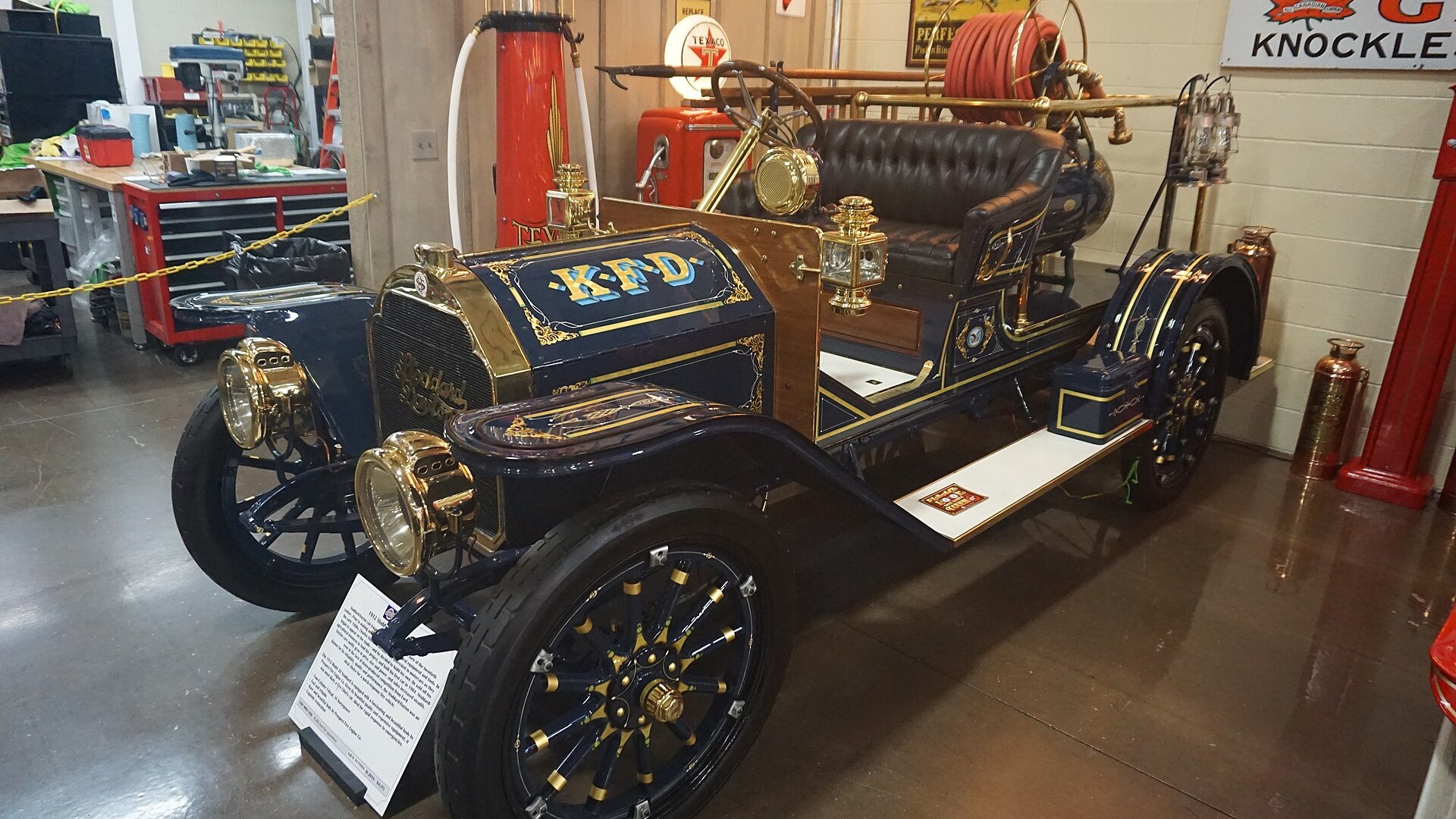
Driven by: Carl G. Fisher
Fisher’s second Stoddard-Dayton turn. Nobody had yet figured out the pace car was a sales pitch. 1913 race recap.
4. 1914: Stoddard-Dayton
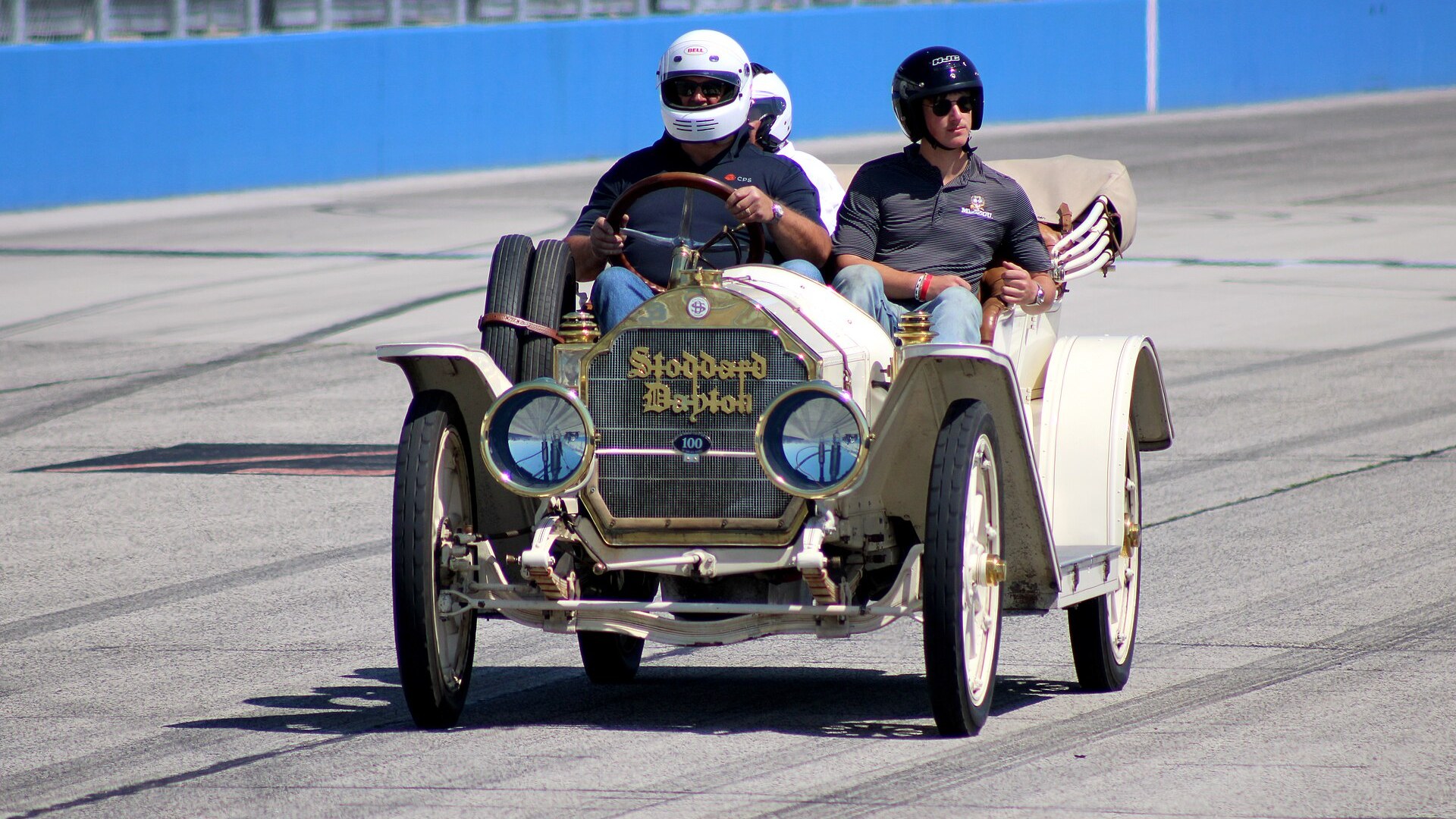
Driven by: Carl G. Fisher
Third and last Stoddard-Dayton, a farewell lap. The marque disappeared soon after the collapse of its parent, the United States Motor Company. 1914 race recap.
5. 1915: Packard Six Model 5-48
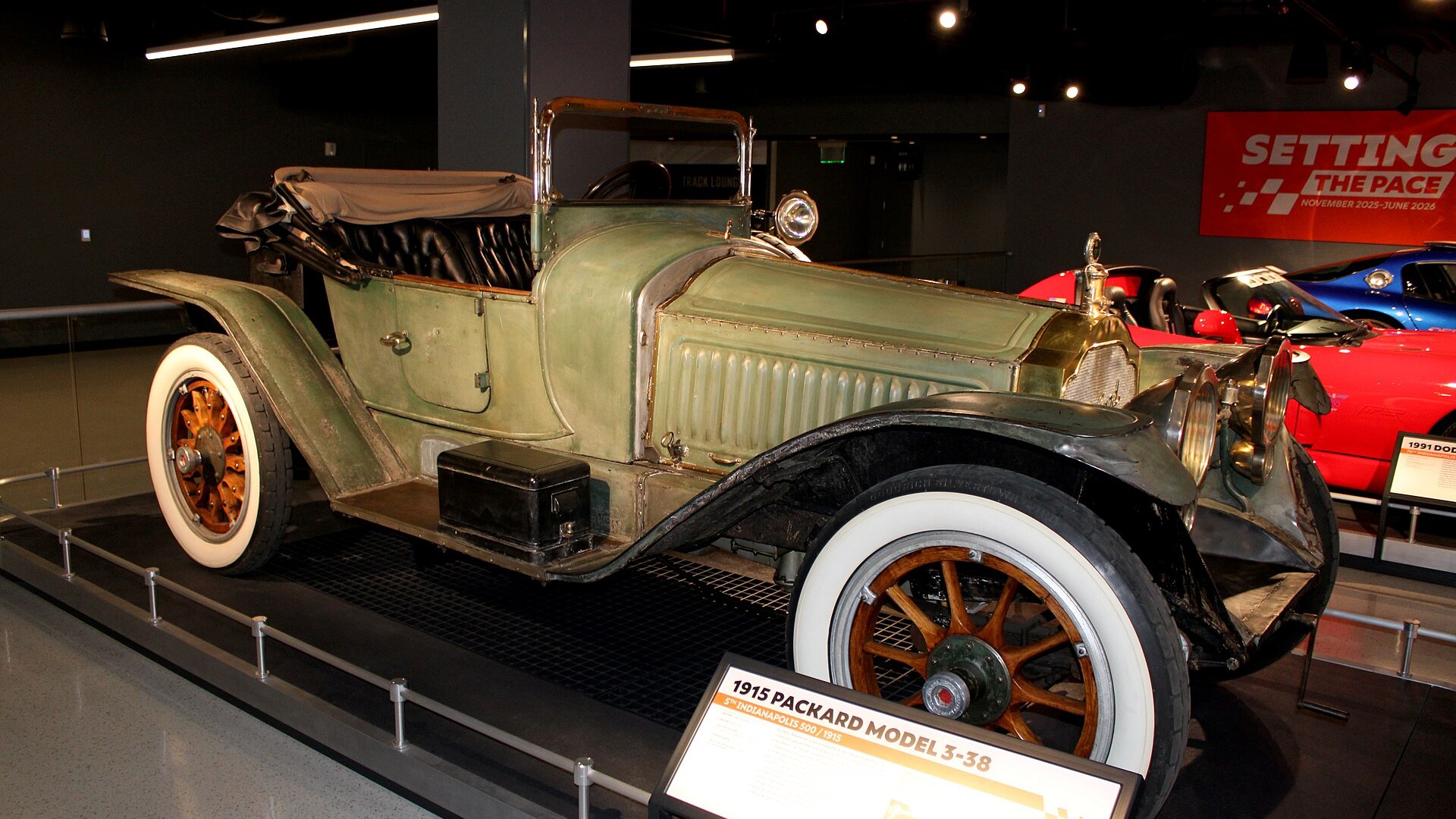
Driven by: Carl G. Fisher
Packard’s big six-cylinder tourer marked Fisher’s fifth straight year as pacemaker, and the first of three Packard appearances at the Brickyard. 1915 race recap.
6. 1916: Premier 6 (Model 6-56)
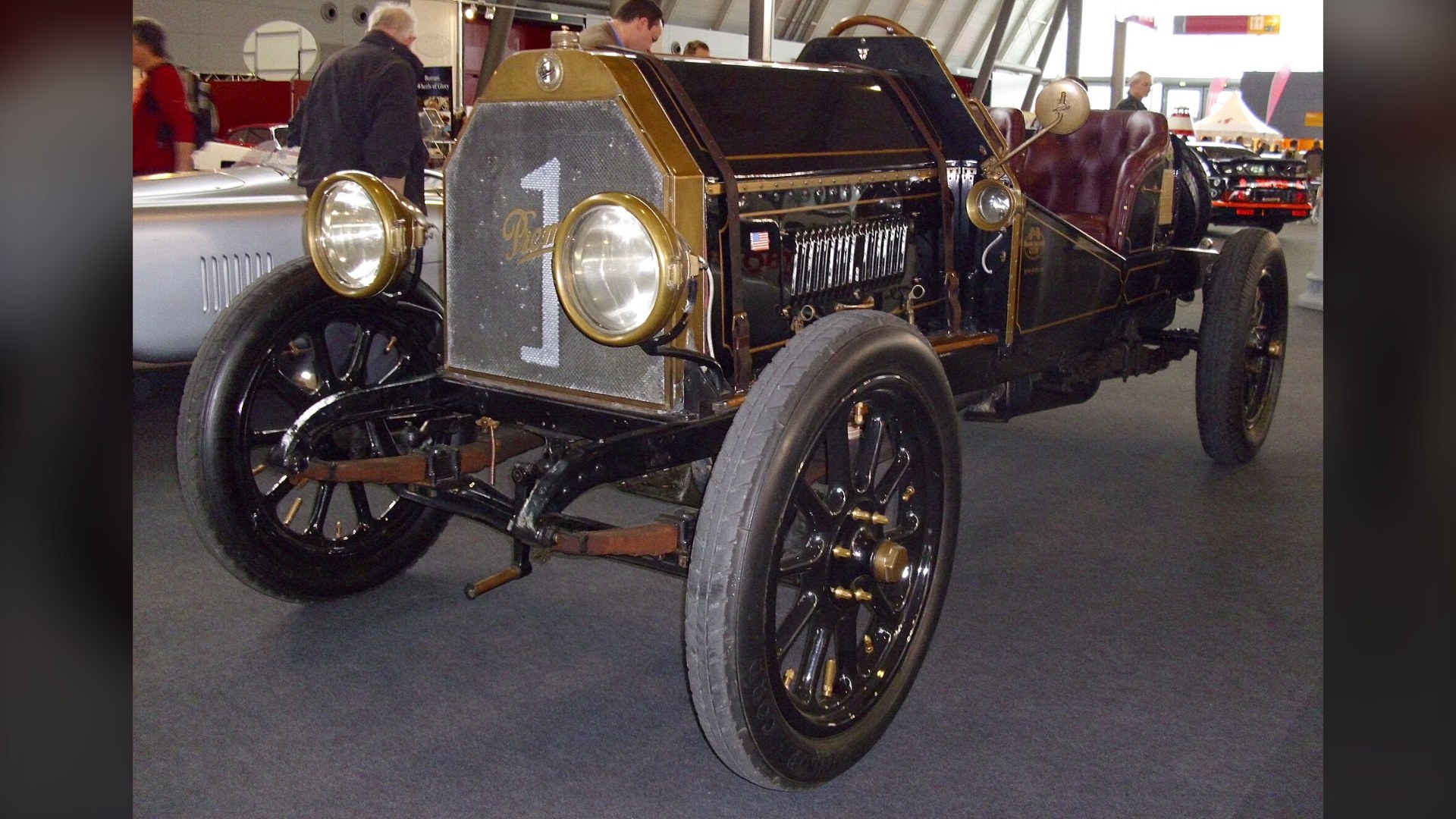
Driven by: Frank Smith
Another Indianapolis-built car. The 1916 race was scheduled for just 300 miles, the only time the “500” ran a shorter planned distance. 1916 race recap.
No race was held in 1917 or 1918 because of World War I.
7. 1919: Packard Twin Six
Driven by: Jesse G. Vincent
After a two-year break for World War I, the race returned behind Packard’s V12 Twin Six, driven by Jesse Vincent, the company’s engineering chief and the man behind the Liberty aircraft engine. 1919 race recap.
8. 1920: Marmon 6 (Model 34)
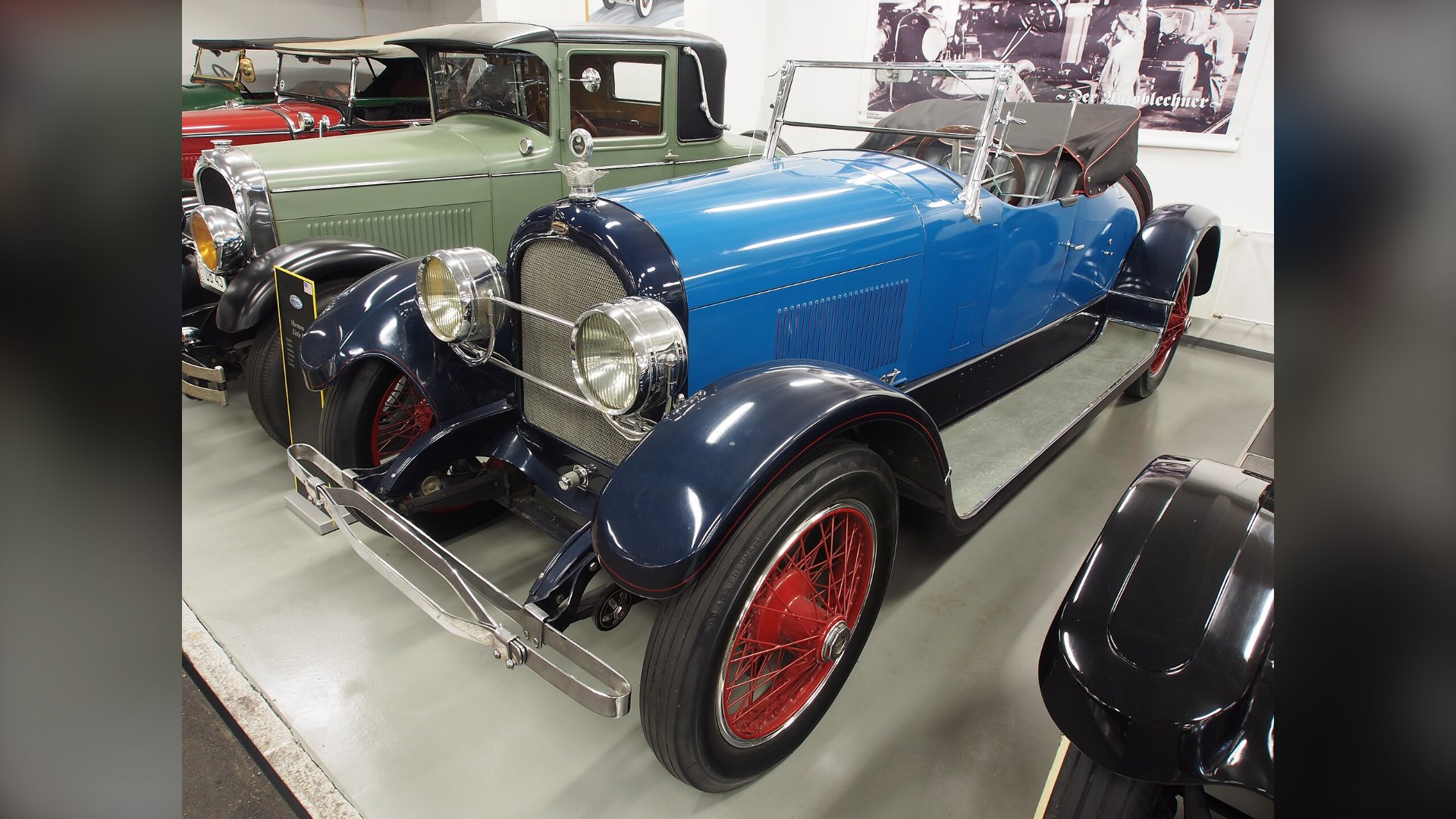
Driven by: Barney Oldfield
Hometown Marmon, whose Wasp won the first 500, supplied the pace car, and barnstorming legend Barney Oldfield did the driving. 1920 race recap.
9. 1921: H.C.S. 6
Driven by: Harry C. Stutz
Harry Stutz left his namesake company and started over with H.C.S. Motor Car Co., and he personally paced the 1921 race in one of the new cars. 1921 race recap.
10. 1922: National Sextet
Driven by: Barney Oldfield
Oldfield returned, this time in a six-cylinder car from Indianapolis-based National, which had won the 500 in 1912. 1922 race recap.
11. 1923: Duesenberg
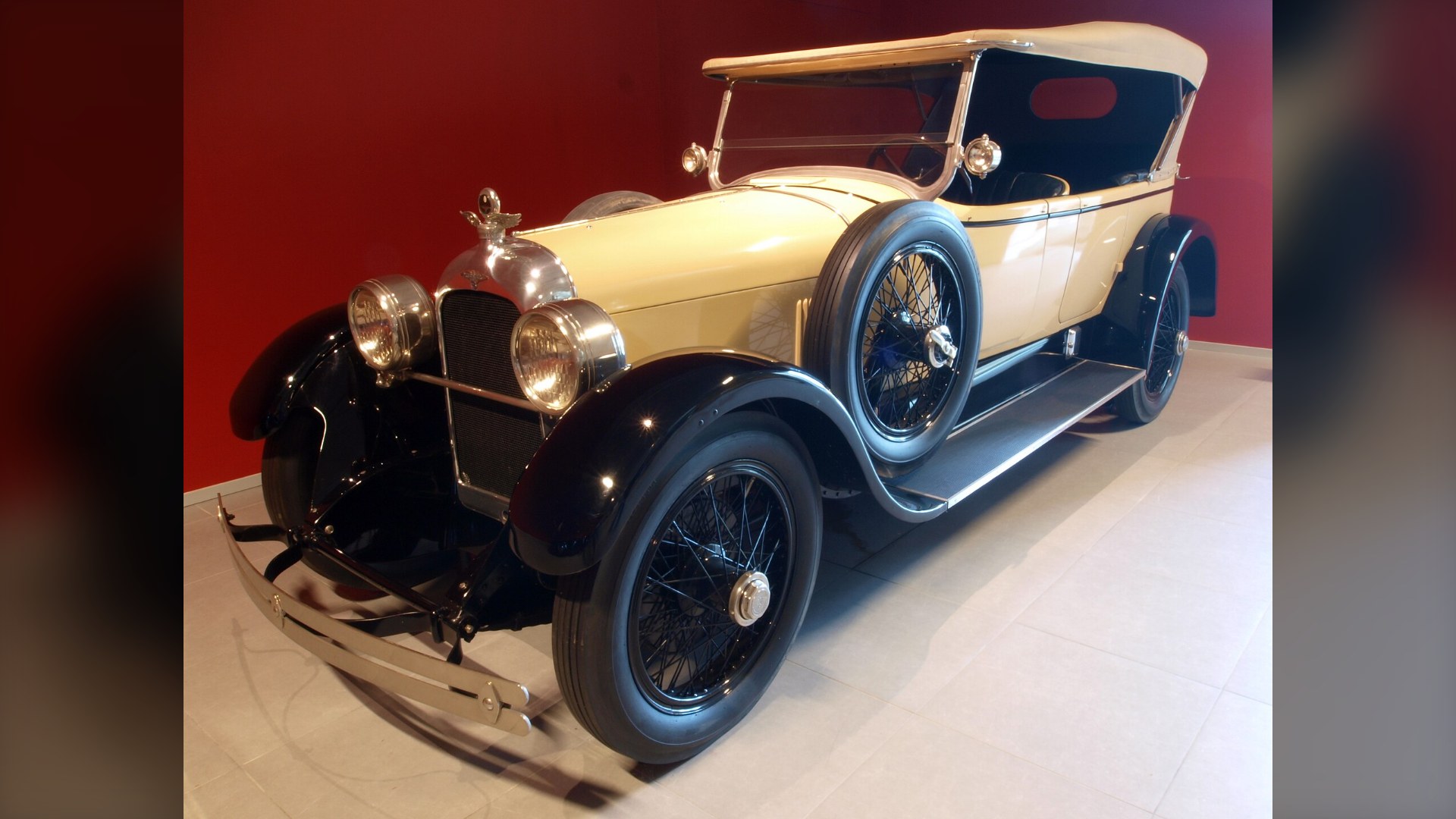
Driven by: Fred Duesenberg
Fred Duesenberg drove his own car at the front of the pack. Duesenberg race cars would win the 500 in 1924, 1925 and 1927. 1923 race recap.
12. 1924: Cole V8
Driven by: Lew Pettijohn
Indianapolis-built Cole was an early champion of the V8 engine, which made it a natural choice to lead the field. 1924 race recap.
13. 1925: Rickenbacker 8
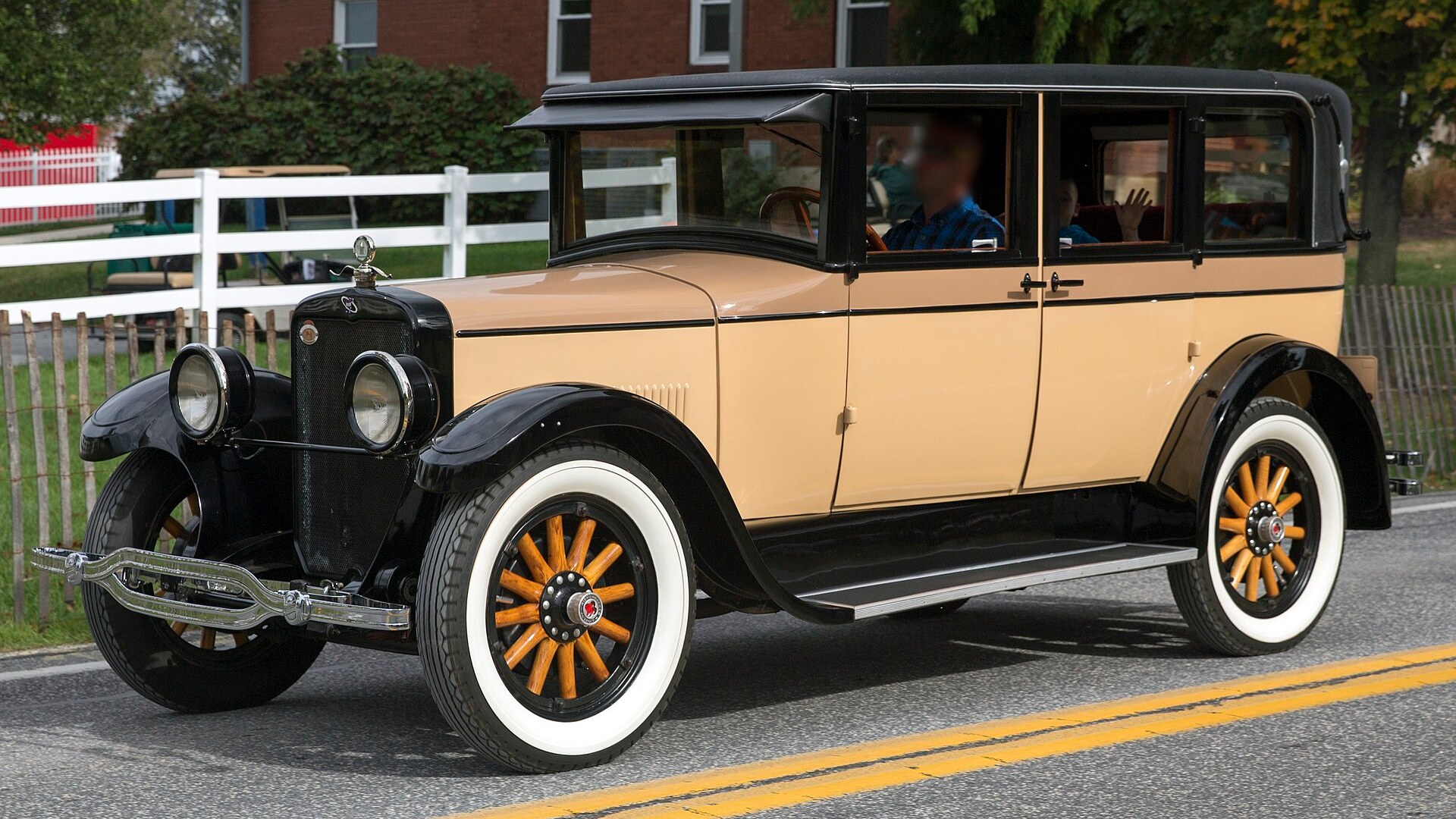
Driven by: Eddie Rickenbacker
World War I flying ace Eddie Rickenbacker paced the field in a car bearing his own name. Two years later he bought the Speedway outright. 1925 race recap.
14. 1926: Chrysler Imperial 80
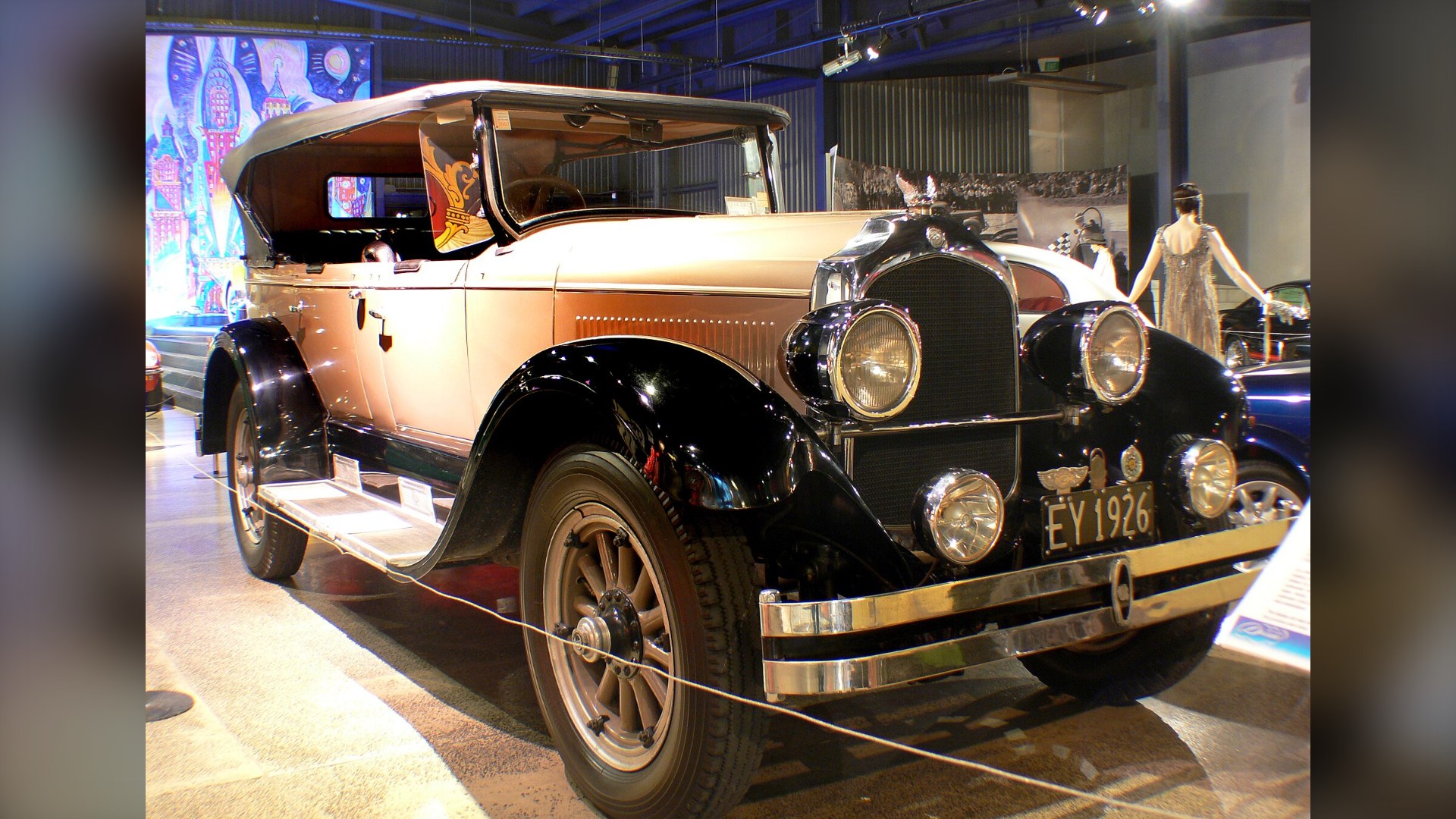
Driven by: Louis Chevrolet
Louis Chevrolet, co-founder of the brand that would later dominate pace car duty, drove the young Chrysler company’s flagship. 1926 race recap.
15. 1927: LaSalle V-8 Series 303
Driven by: Willard “Big Boy” Rader
General Motors launched its LaSalle brand in 1927, and the brand-new V8 got a prime-time debut at Indy. 1927 race recap.
16. 1928: Marmon 8 (Model 78)
Driven by: Joe Dawson
1912 winner Joe Dawson drove a straight-eight Marmon, the hometown company’s second pace car. 1928 race recap.
17. 1929: Studebaker President Roadster
Driven by: George Hunt
Studebaker’s new straight-eight President roadster led the final race of the Roaring Twenties. 1929 race recap.
Depression, V12s and the Road to War (1930–1941)
Even as the economy cratered, automakers kept sending their most glamorous machines to Indy. This era also gave us the race’s most enduring perk: the winner gets the pace car.
18. 1930: Cord L-29
Driven by: Wade Morton
The front-wheel-drive Cord L-29, built by Auburn-Cord-Duesenberg, was one of the most advanced American cars of its day and looked the part. 1930 race recap.
19. 1931: Cadillac Series 370 V-12
Driven by: “Big Boy” Rader
Even in the depths of the Depression, Cadillac sent a V12 to Indy. Rader made his second appearance as pacemaker. 1931 race recap.
20. 1932: Lincoln Model KB
Driven by: Edsel Ford
Edsel Ford, president of Ford Motor Company, personally paced the field in a V12 Lincoln KB. 1932 race recap.
21. 1933: Chrysler Imperial Convertible Roadster
Driven by: Byron Foy
Chrysler executive Byron Foy led the field in the long, low Imperial roadster. 1933 race recap.
22. 1934: LaSalle Model 350
Driven by: “Big Boy” Rader
LaSalle’s second pace car and Rader’s third turn as driver. 1934 race recap.
23. 1935: Ford Model 48
Driven by: Harry Mack
Ford’s affordable flathead V8 brought the pace car down to earth after a string of luxury cars. 1935 race recap.
24. 1936: Packard 120
Driven by: Tommy Milton
Two-time winner Tommy Milton drove, and winner Louis Meyer took the Packard home, starting the tradition of awarding the pace car to the race winner. 1936 race recap.
25. 1937: LaSalle Series 50
Driven by: Ralph DePalma
1915 winner Ralph DePalma paced the field in LaSalle’s third and final pace car. 1937 race recap.
26. 1938: Hudson 112
Driven by: Stuart Baits
Hudson engineer Stuart Baits drove the compact Hudson 112. 1938 race recap.
27. 1939: Buick Roadmaster 80
Driven by: Charles Chayne
Buick’s chief engineer Charles Chayne handled the straight-eight Roadmaster. 1939 race recap.
28. 1940: Studebaker Champion Two Door Sedan
Driven by: Harry Hartz
An unglamorous but fitting choice: the thrifty Champion was a big sales hit for Studebaker. 1940 race recap.
29. 1941: Chrysler Newport Parade Phaeton
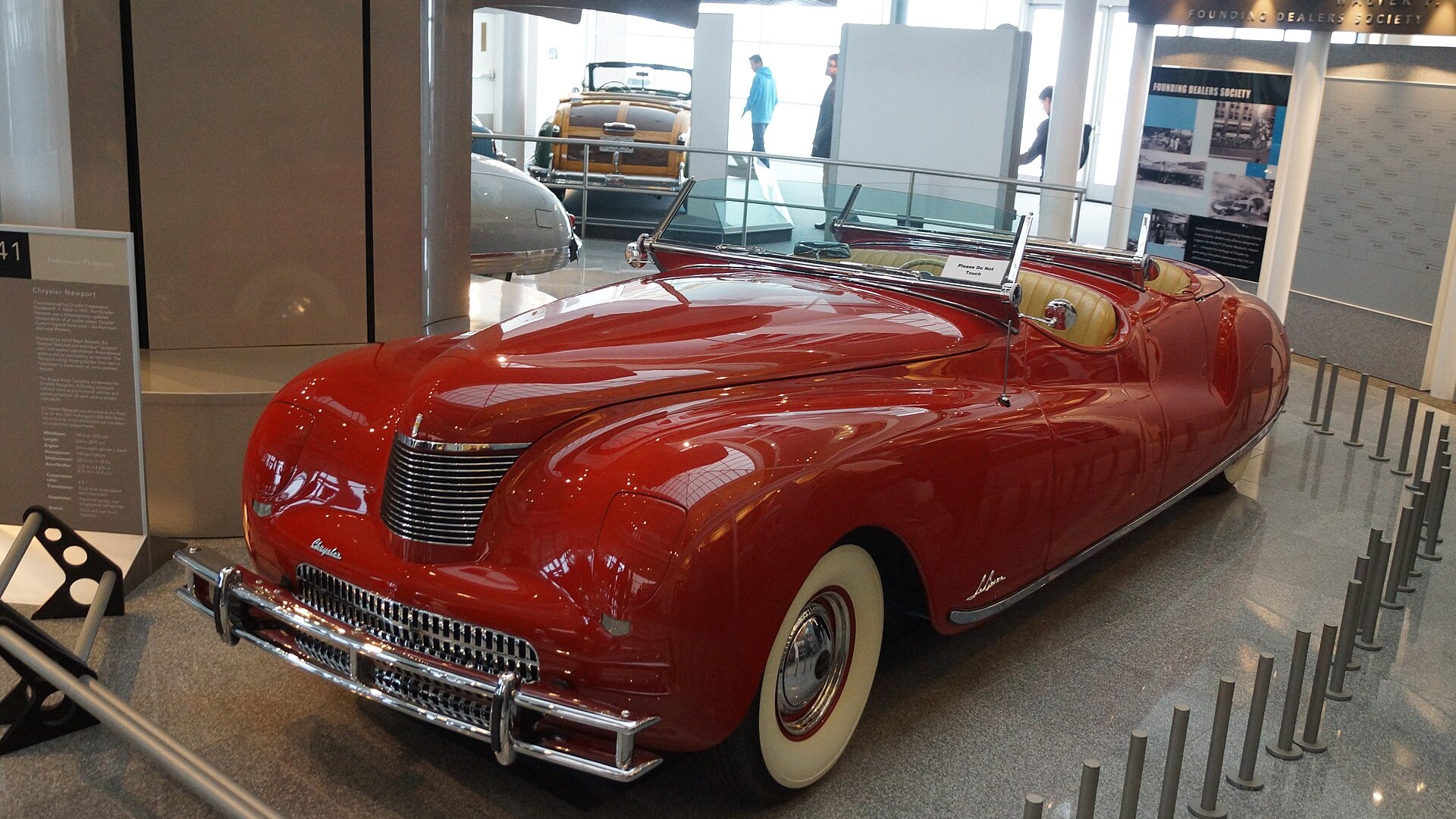
Driven by: A.B. Couture
One of only six dual-cowl Newport show cars built for Chrysler by LeBaron, it was the last pace car before the race went dark for World War II. 1941 race recap.
No race was held from 1942 through 1945 because of World War II.
The Postwar Boom (1946–1957)
Tony Hulman bought the shuttered Speedway in 1945, and Detroit returned with V8s, convertibles and a new idea: selling pace car replicas to the public.
30. 1946: Lincoln Continental V-12
Driven by: Henry Ford II
With the track newly rescued by Tony Hulman, Henry Ford II paced the first postwar race in an elegant V12 Continental. 1946 race recap.
31. 1947: Nash Ambassador
Driven by: George W. Mason
Nash-Kelvinator president George Mason drove the big Ambassador sedan. 1947 race recap.
32. 1948: Chevrolet Fleetmaster Six
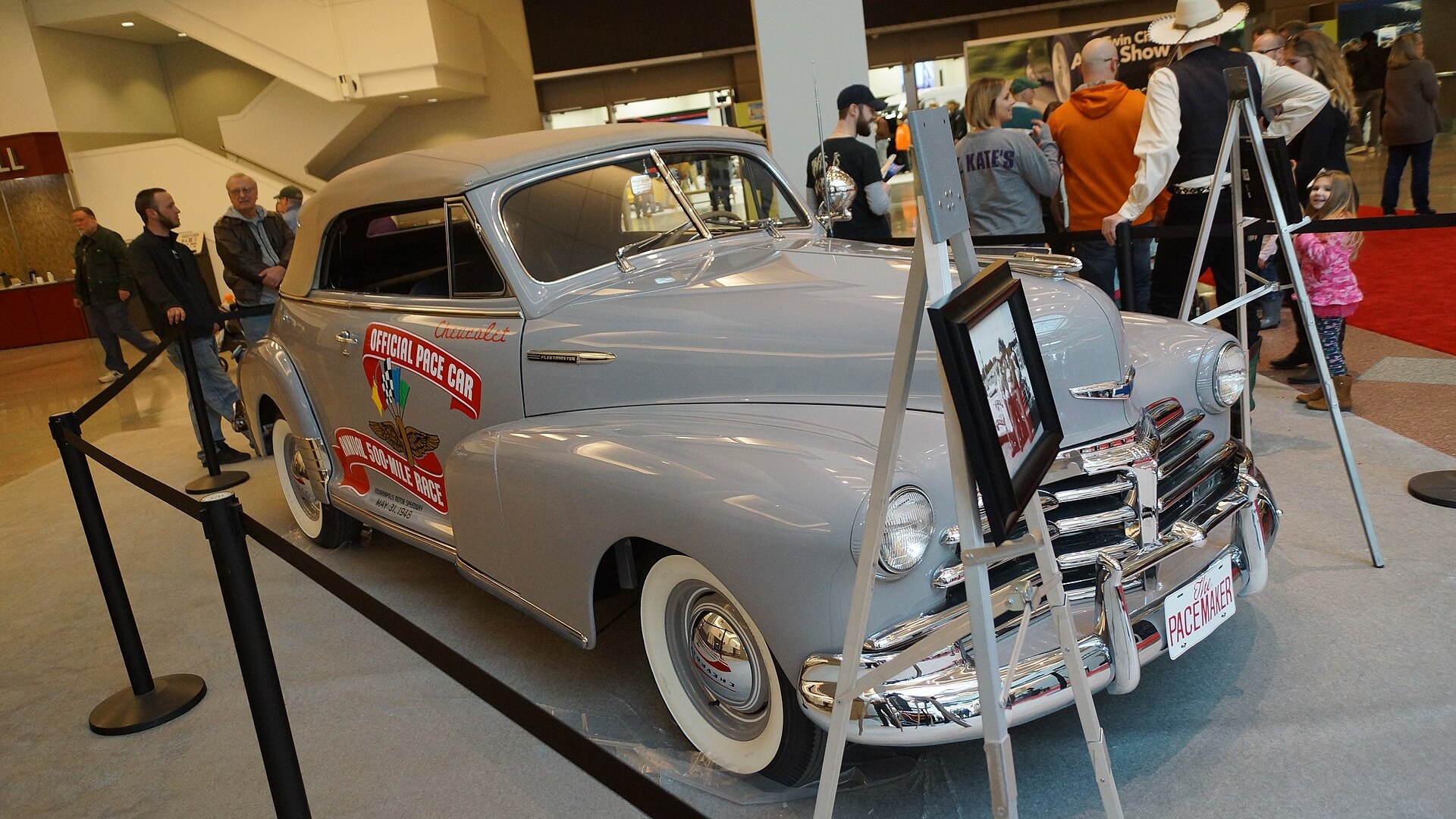
Driven by: Wilbur Shaw
The first Chevrolet pace car, driven by three-time winner and Speedway president Wilbur Shaw. Chevy has since paced the race more than any other brand. 1948 race recap.
33. 1949: Oldsmobile 88
Driven by: Wilbur Shaw
The Rocket 88, with Oldsmobile’s new overhead-valve V8, is often called the first muscle car, and it earned its Indy invite in its debut year. 1949 race recap.
34. 1950: Mercury Eight Convertible
Driven by: Benson Ford
Henry Ford’s grandson Benson Ford took the wheel of a Mercury convertible. 1950 race recap.
35. 1951: Chrysler New Yorker V8
Driven by: David A. Wallace
Chrysler’s new FirePower Hemi V8 arrived in 1951, and Chrysler sent it to Indy under the hood of a New Yorker. 1951 race recap.
36. 1952: Studebaker Commander Convertible
Driven by: P.O. Peterson
Studebaker’s third pace car arrived during the company’s centennial year. 1952 race recap.
37. 1953: Ford Crestline Sunliner
Driven by: William Clay Ford Sr.
Ford celebrated its 50th anniversary with a Sunliner convertible pace car. 1953 race recap.
38. 1954: Dodge Royal 500
Driven by: William C. Newburg
Dodge named a special-edition convertible after the race itself; the Royal 500 went on sale as a limited run of pace car replicas. 1954 race recap.
39. 1955: Chevrolet Bel Air
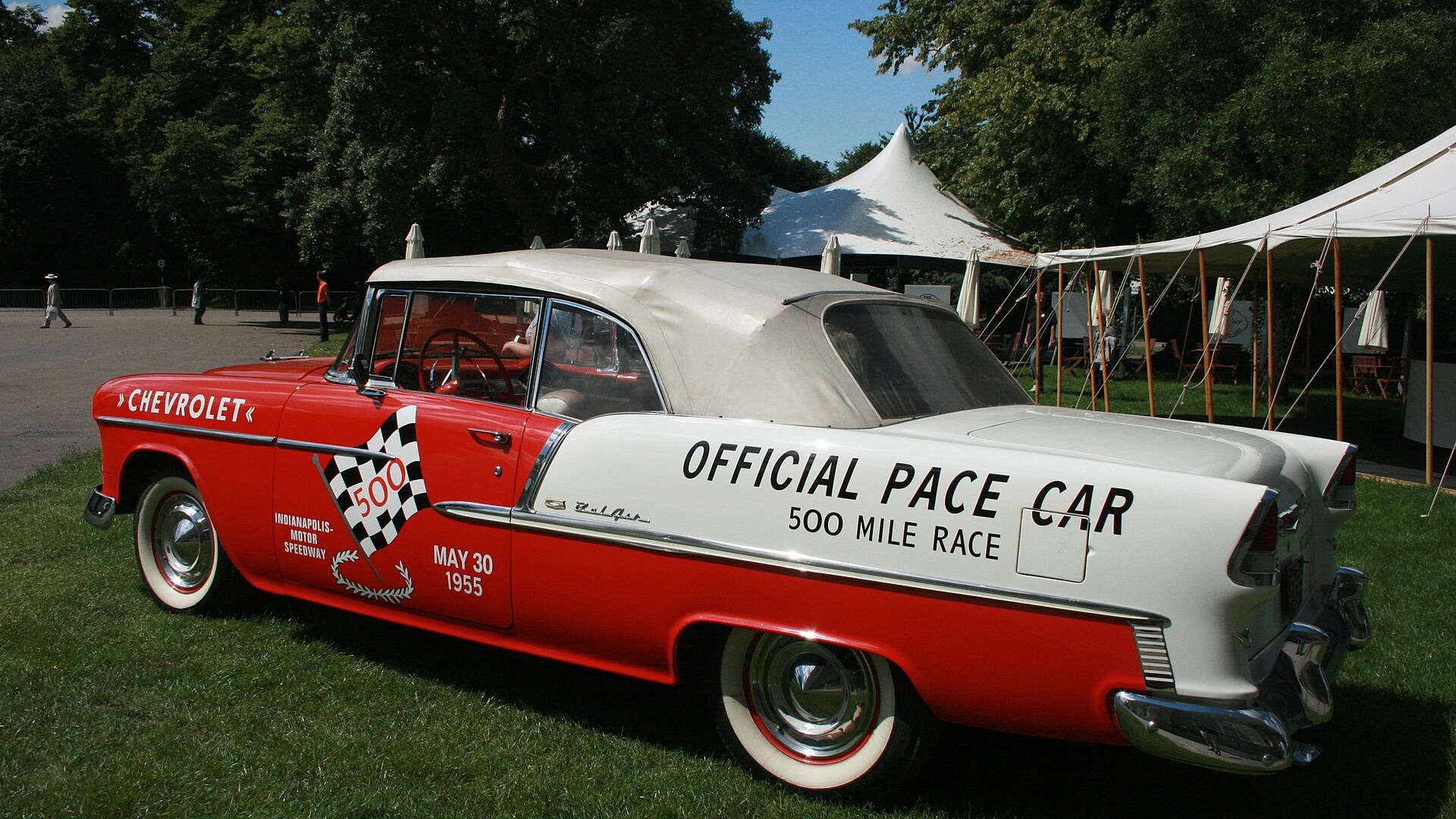
Driven by: Thomas H. Keating
The year Chevrolet introduced the small-block V8 it would keep building for decades, a Bel Air convertible led the field. 1955 race recap.
40. 1956: DeSoto Fireflite
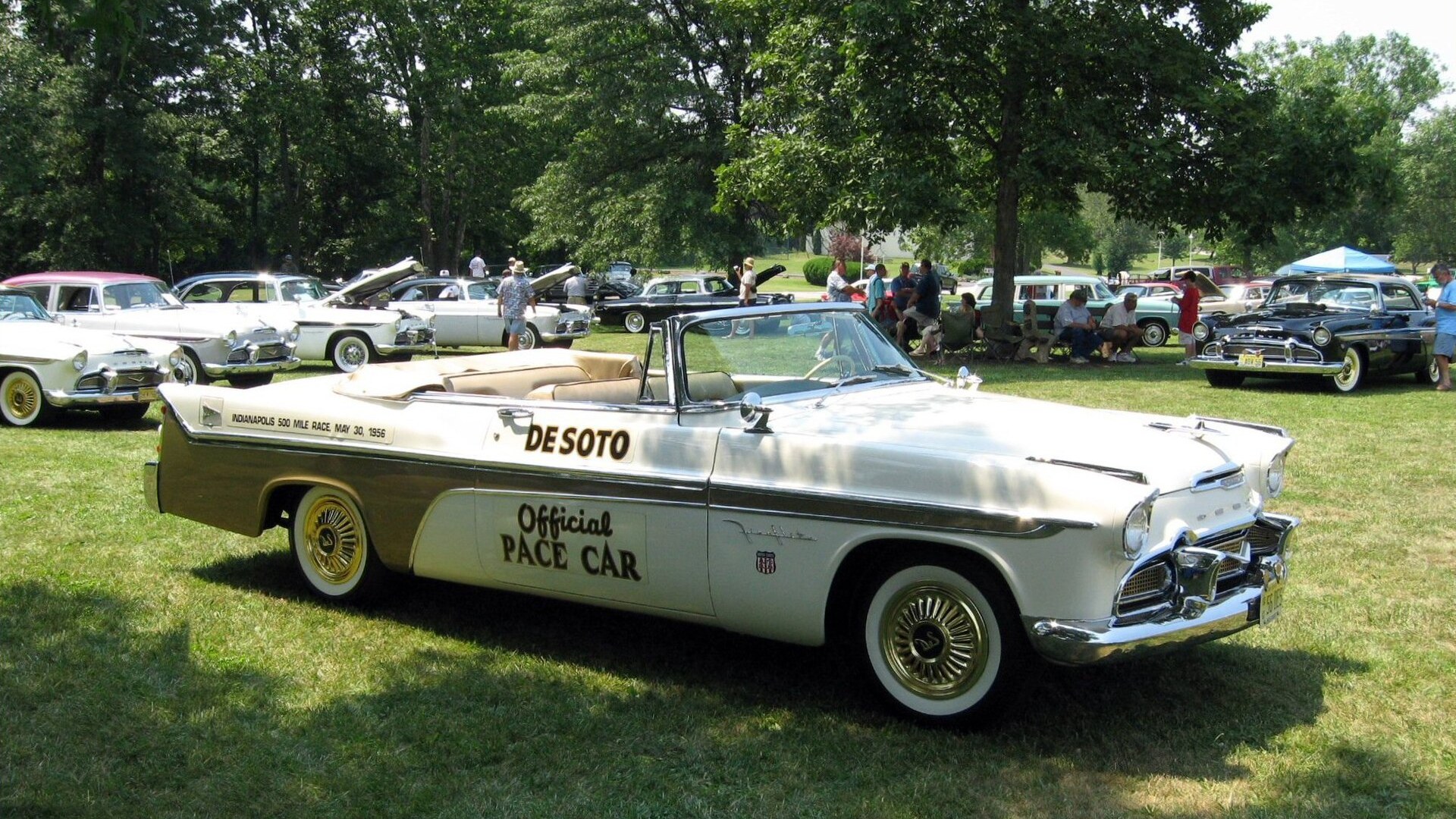
Driven by: L.I. Woolson
DeSoto’s tailfinned Fireflite convertible spawned a run of “Pacesetter” replicas. 1956 race recap.
41. 1957: Mercury Turnpike Cruiser
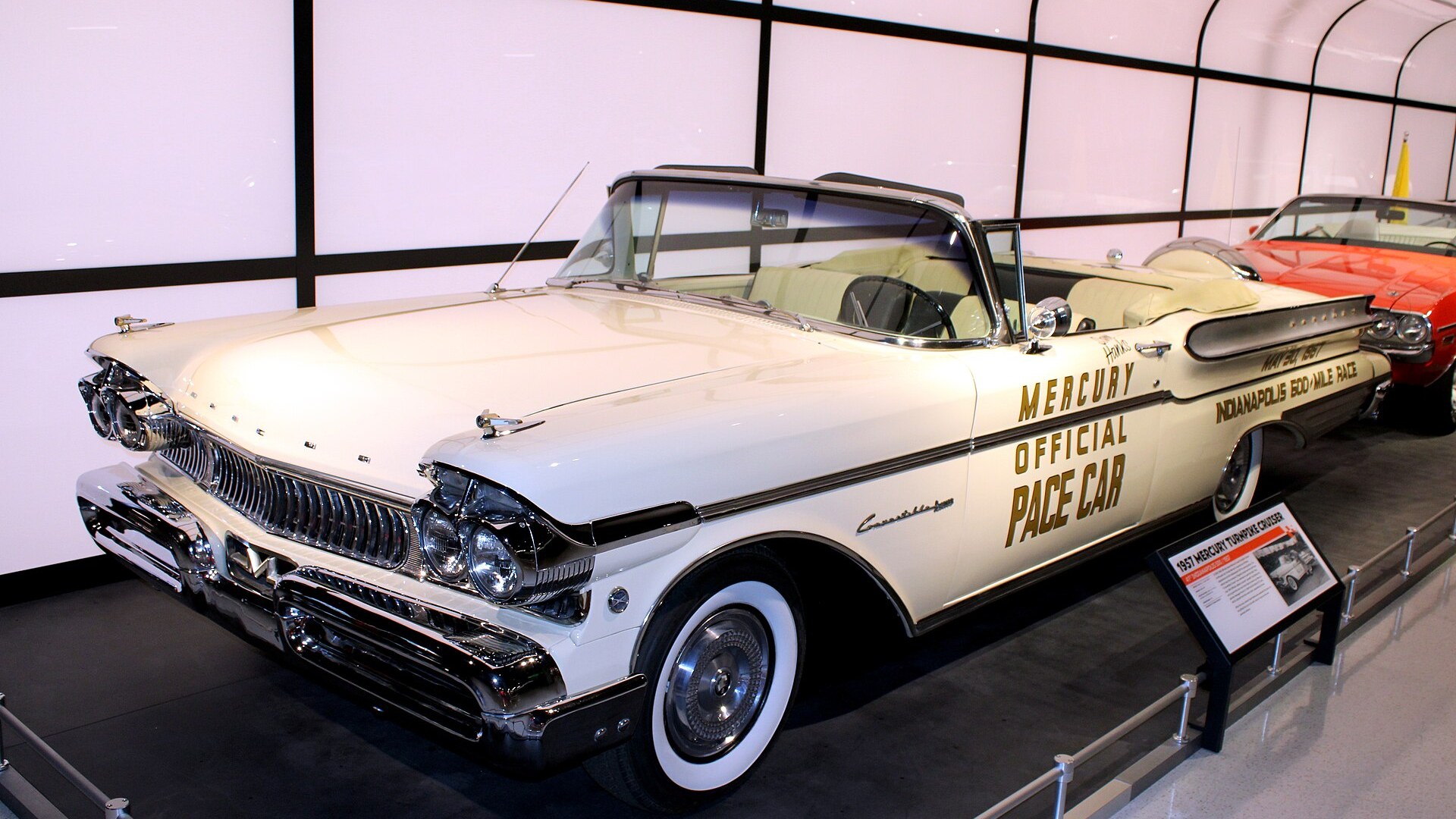
Driven by: F.C. Reith
Few cars captured 1950s excess like the Turnpike Cruiser, with its retractable rear window and push-button gadgetry. 1957 race recap.
Sam Hanks, Pony Cars and Muscle (1958–1970)
Retired winner Sam Hanks became the regular pacemaker, and the pace car became Detroit’s favorite launch pad for its newest performance cars.
42. 1958: Pontiac Bonneville
Driven by: Sam Hanks
1957 winner Sam Hanks retired from racing and began a six-year run as the official pace car driver. 1958 race recap.
43. 1959: Buick Electra 225
Driven by: Sam Hanks
The “Deuce and a Quarter” got its name from its overall length of 225 inches. 1959 race recap.
44. 1960: Oldsmobile Ninety-Eight
Driven by: Sam Hanks
Oldsmobile’s full-size flagship convertible paced the field in Hanks’s third straight year. 1960 race recap.
45. 1961: Ford Thunderbird
Driven by: Sam Hanks
The newly restyled “bullet bird” Thunderbird led the 50th anniversary race. 1961 race recap.
46. 1962: Studebaker Lark Daytona Convertible
Driven by: Sam Hanks
Studebaker’s final pace car, from a company that would close its South Bend plant less than two years later. 1962 race recap.
47. 1963: Chrysler 300
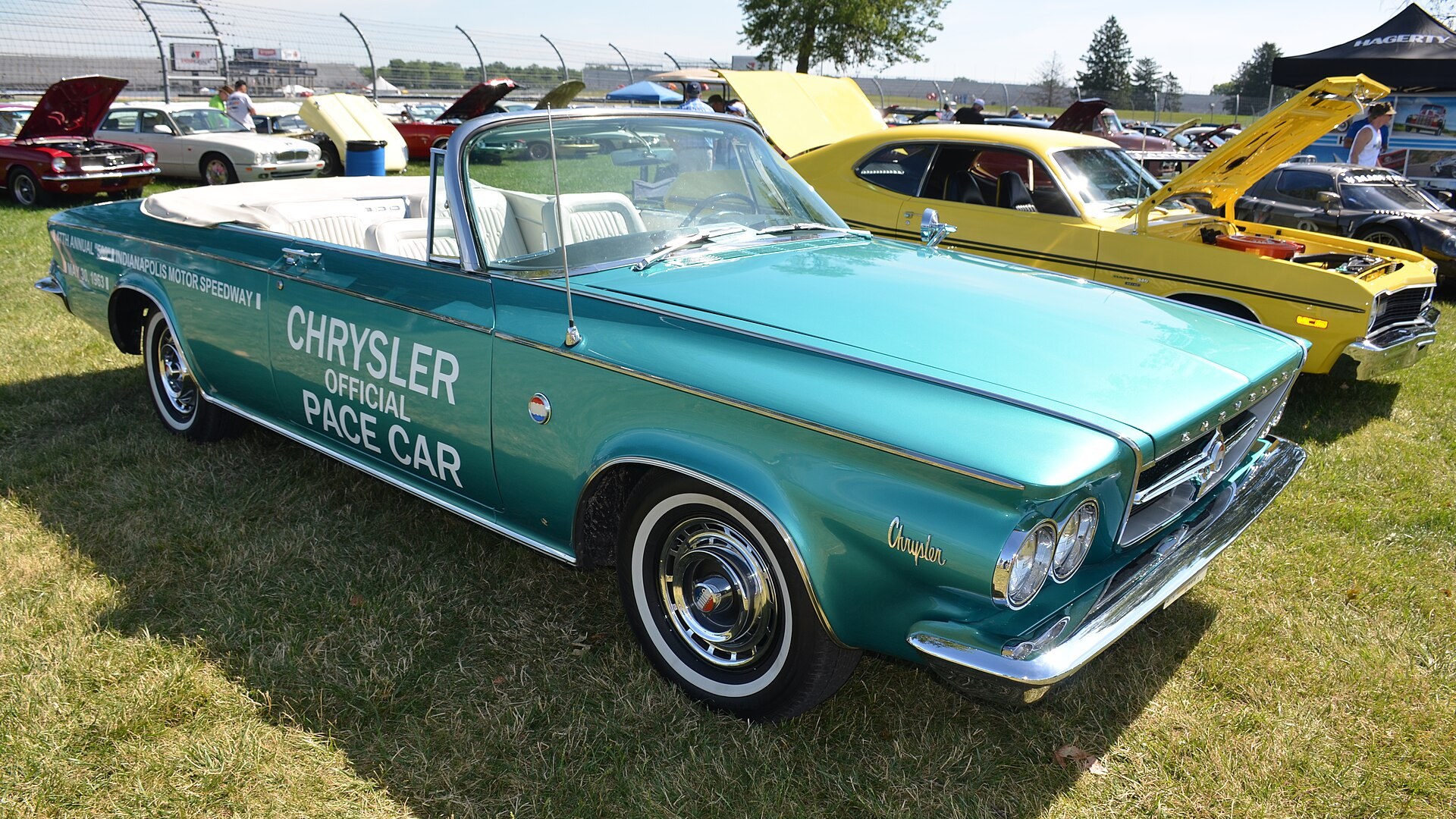
Driven by: Sam Hanks
Hanks’s last turn as pacemaker came in a Chrysler 300 “Pace Setter” convertible. 1963 race recap.
48. 1964: Ford Mustang
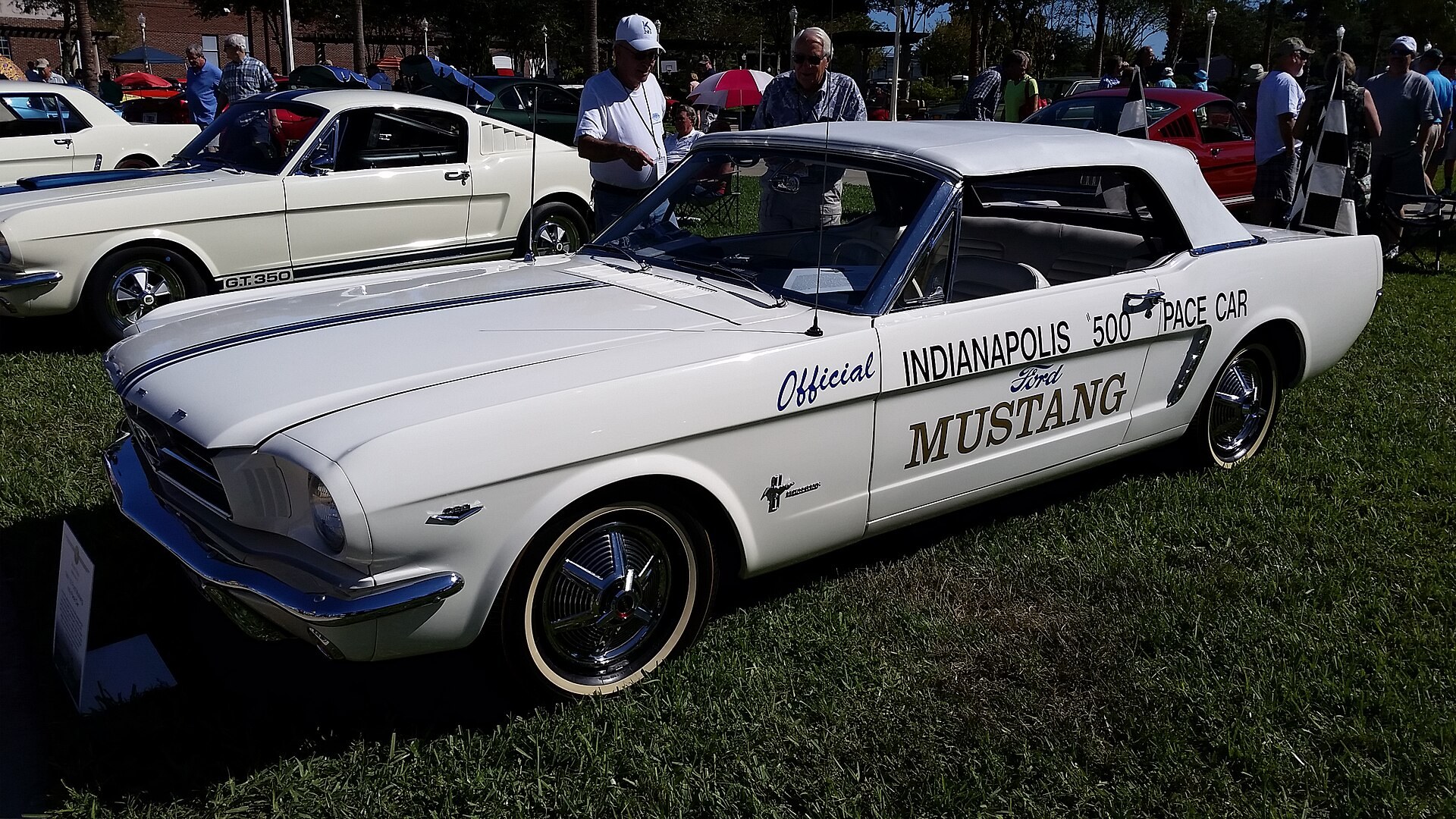
Driven by: Benson Ford
About six weeks after its launch, the Ford Mustang led the 500, and Ford sold pace car replicas off the back of the publicity. 1964 race recap.
49. 1965: Plymouth Sport Fury
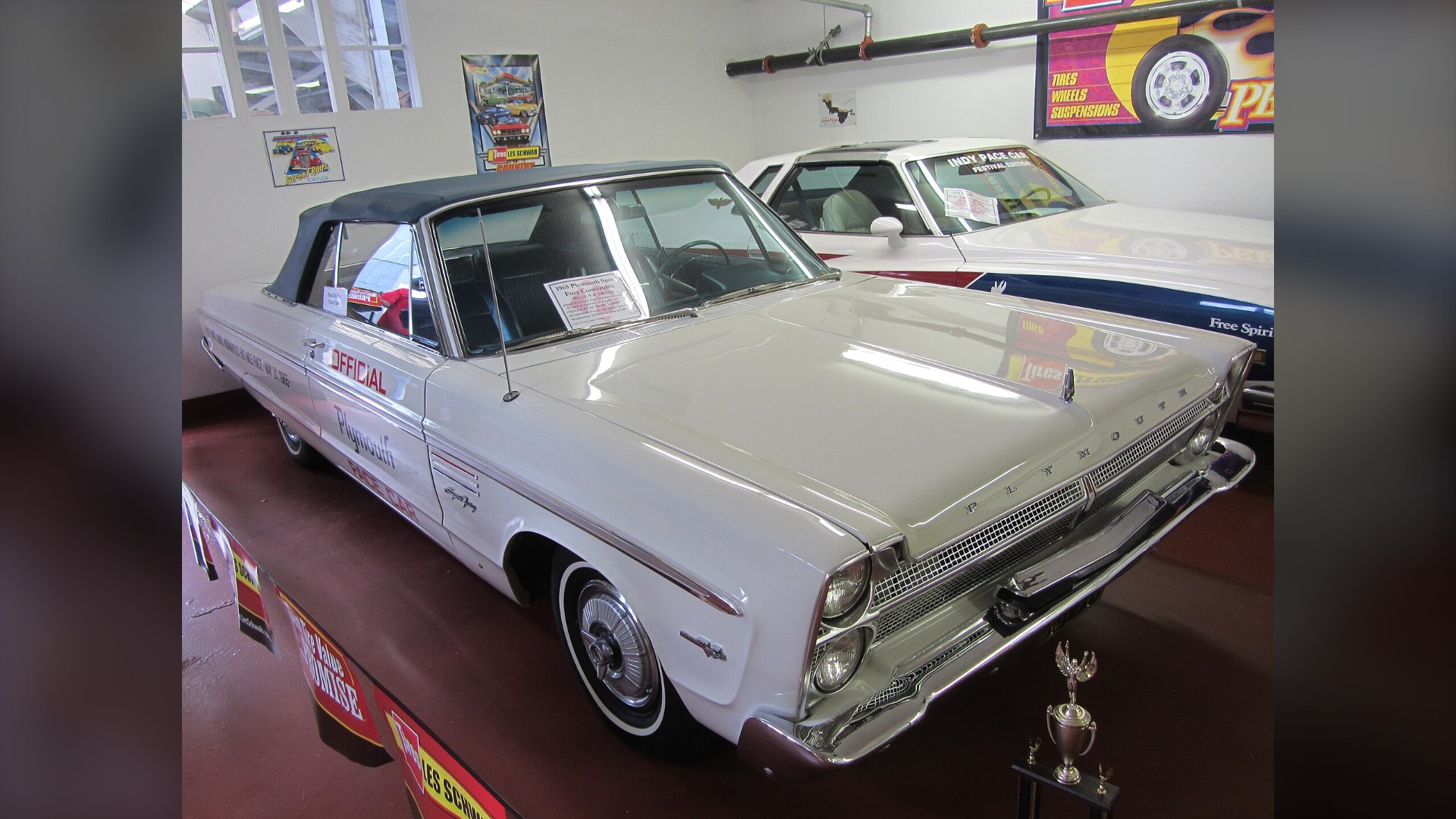
Driven by: P.M. Buckminster
A gold Plymouth Sport Fury convertible led the field, and dealers sold replicas. 1965 race recap.
50. 1966: Mercury Comet Cyclone GT
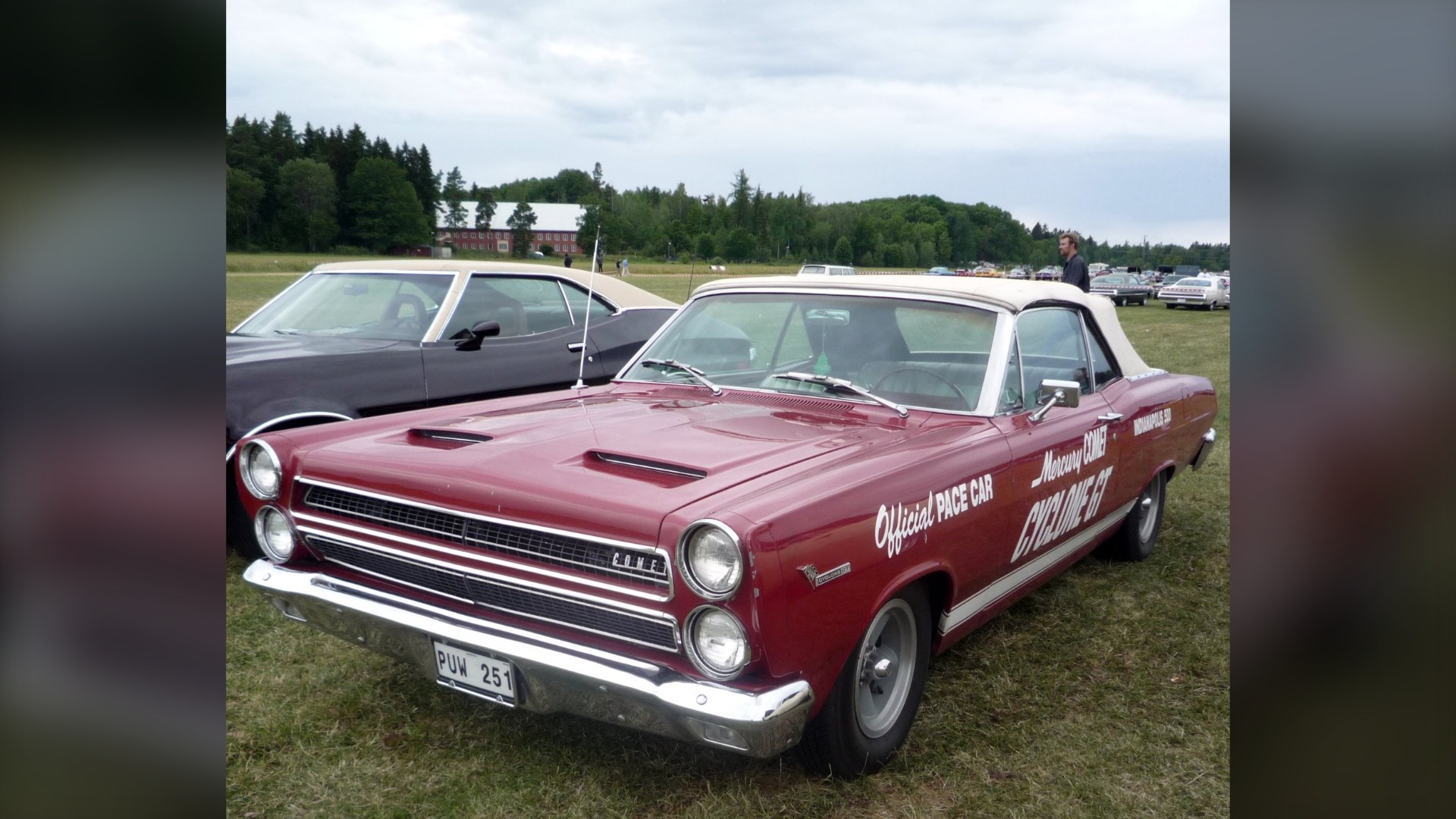
Driven by: Benson Ford
Mercury’s mid-size performance car paced a race remembered for its 11-car first-lap pileup. 1966 race recap.
51. 1967: Chevrolet Camaro
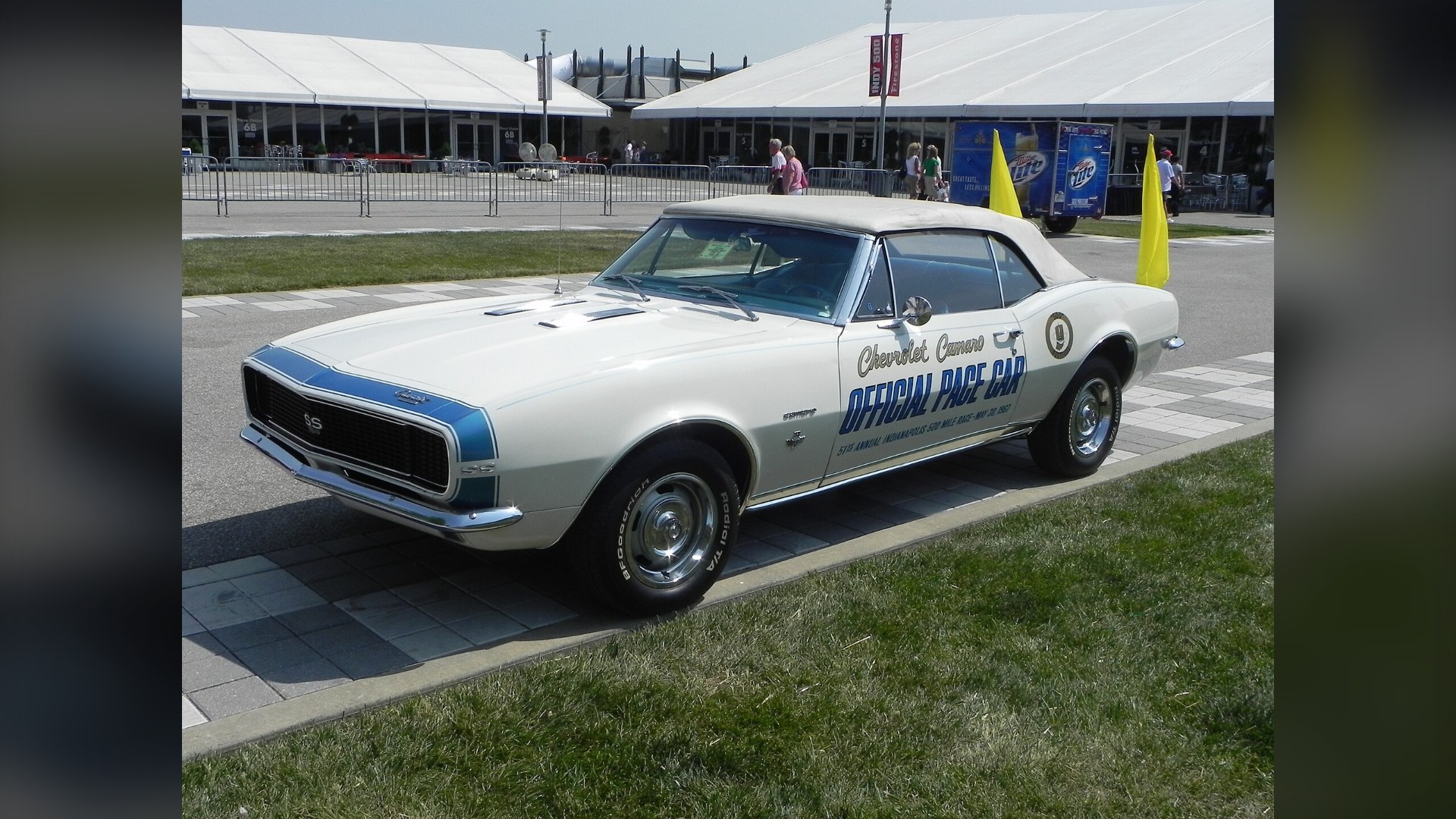
Driven by: Mauri Rose
Three-time winner Mauri Rose drove the brand-new Camaro in its very first year on sale. 1967 race recap.
52. 1968: Ford Torino GT
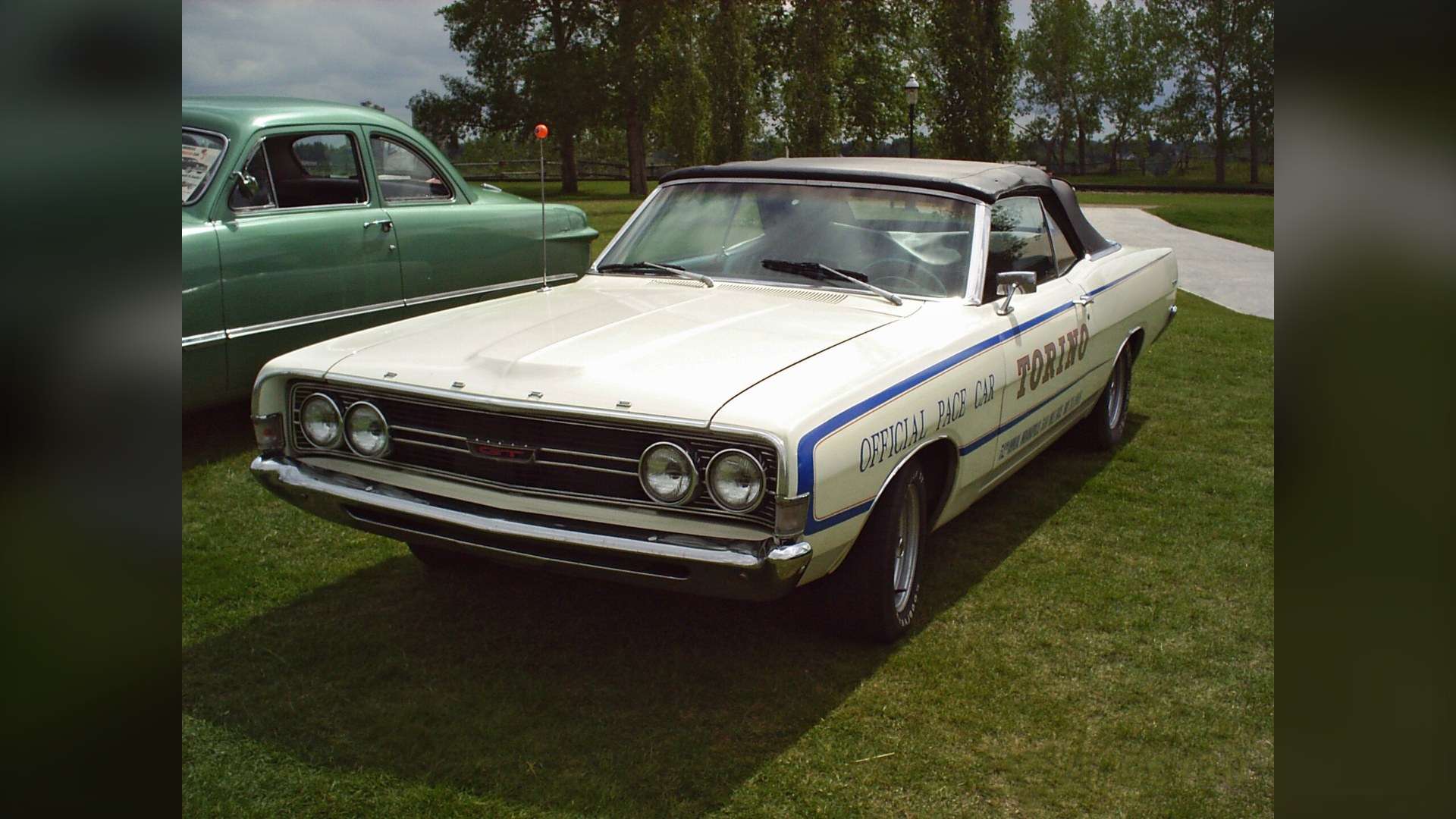
Driven by: William Clay Ford Sr.
Ford answered with its fastback Torino GT. 1968 race recap.
53. 1969: Chevrolet Camaro SS
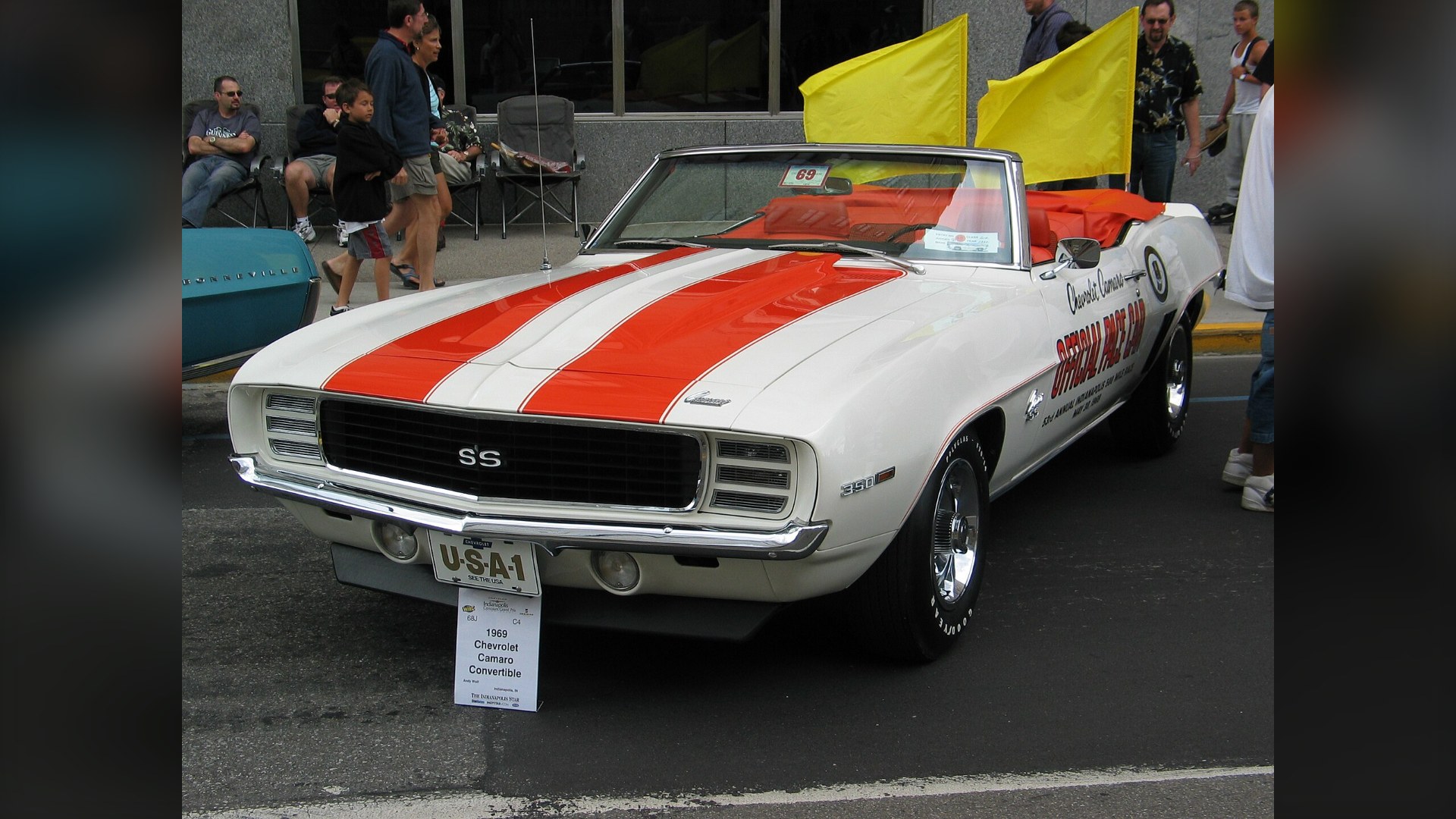
Driven by: Jim Rathmann
The white-and-Hugger-Orange 1969 Camaro SS convertible is one of the most collectible pace car replicas ever. 1960 winner Jim Rathmann drove. 1969 race recap.
54. 1970: Oldsmobile 4-4-2
Driven by: Rodger Ward
Two-time winner Rodger Ward paced the field in a 4-4-2 at the peak of the muscle car era. 1970 race recap.
Crashes, Turbos and Celebrities (1971–1989)
After the 1971 crash, organizers put veteran drivers and well-known names behind the wheel, while automakers worked around emissions rules with turbos and special editions.
55. 1971: Dodge Challenger
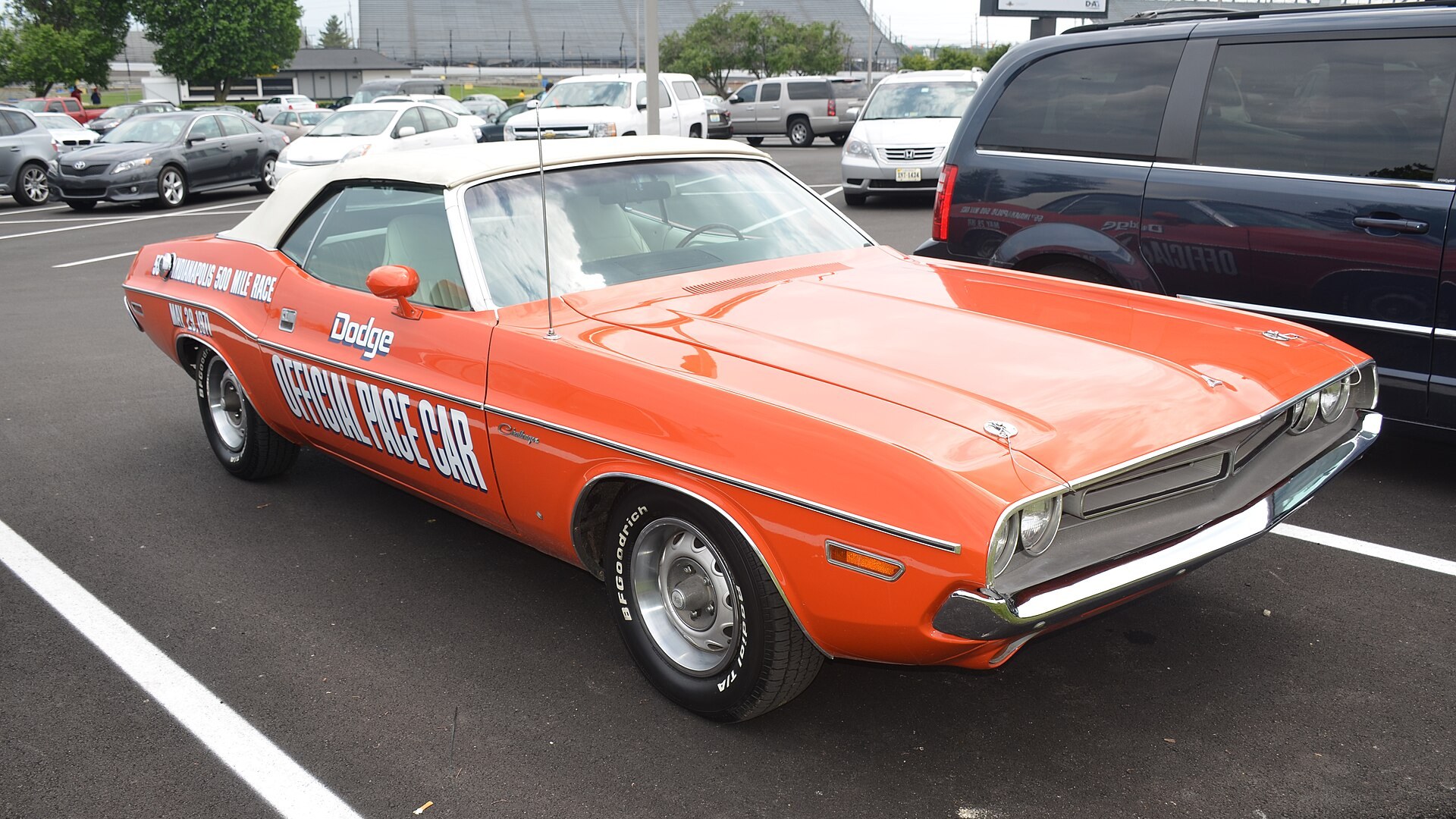
Driven by: Eldon Palmer
The most infamous pace car in history: local dealer Eldon Palmer lost control at the end of the pace lap and crashed into a photographers’ stand, injuring spectators and media. 1971 race recap.
56. 1972: Hurst/Olds Cutlass
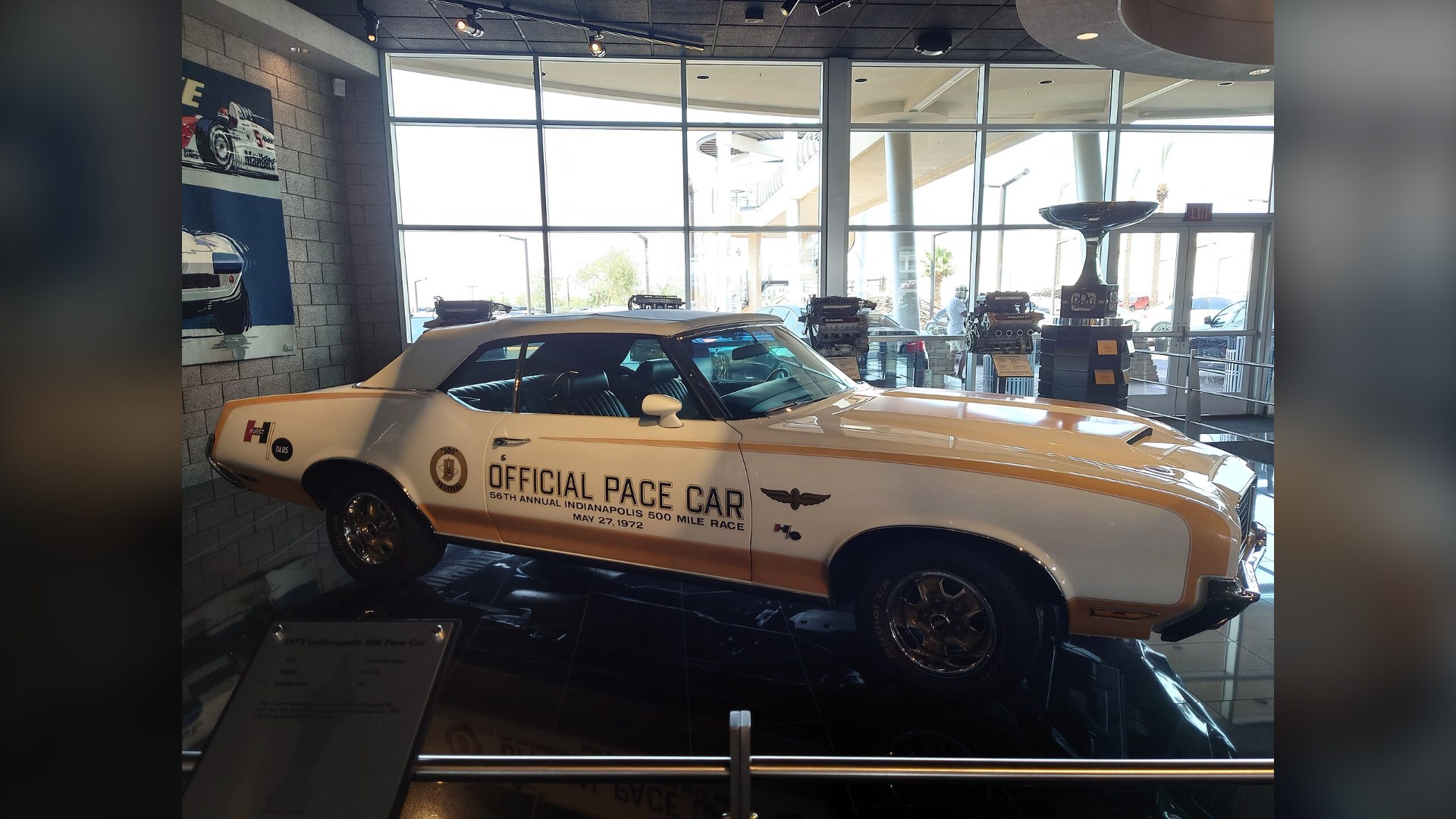
Driven by: Jim Rathmann
After 1971, organizers leaned on experienced drivers. Rathmann returned in a Hurst/Olds. 1972 race recap.
57. 1973: Cadillac Eldorado
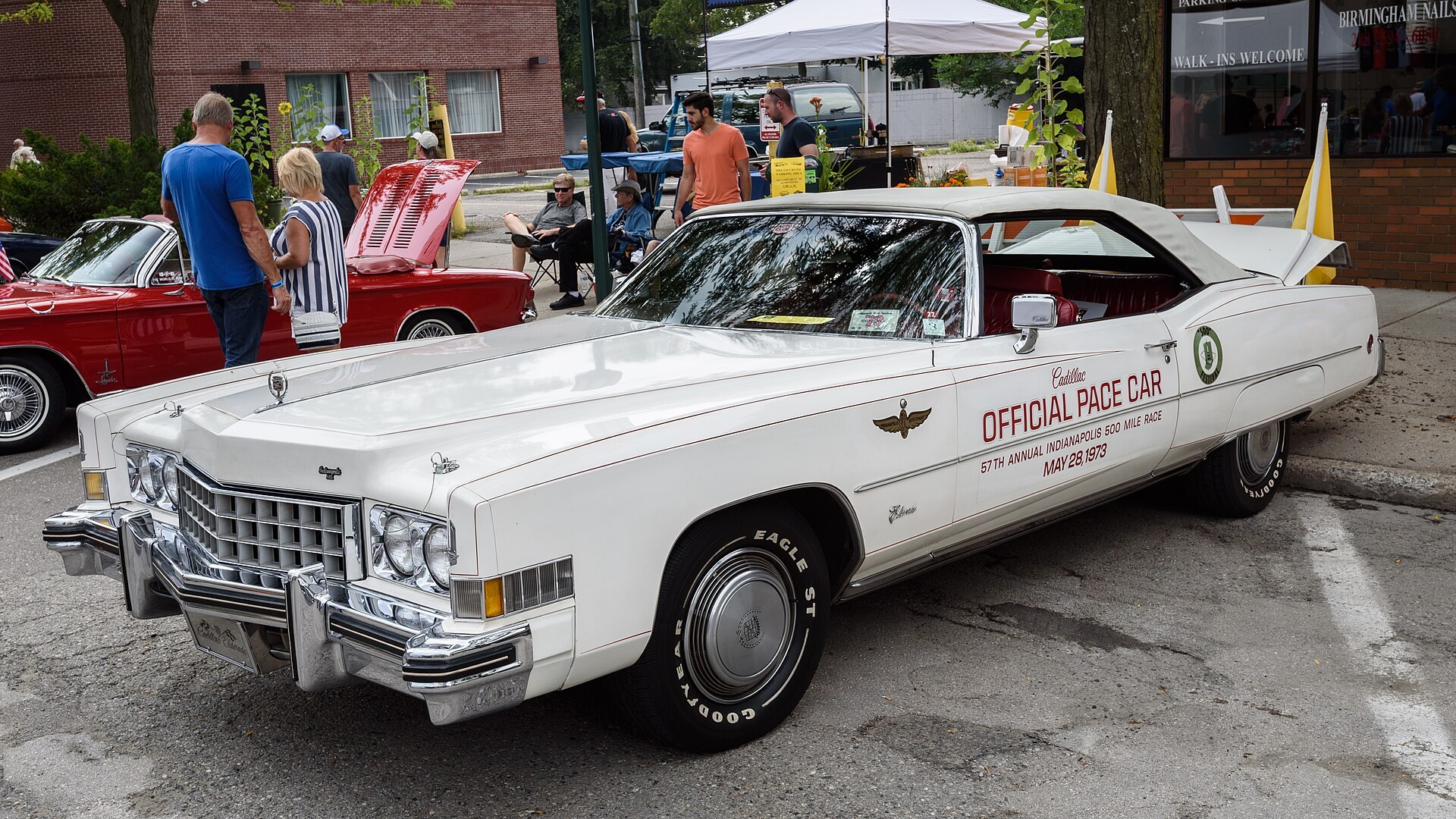
Driven by: Jim Rathmann
Cadillac’s front-drive Eldorado convertible, with its 500-cubic-inch V8, led a rain-plagued, tragic race. 1973 race recap.
58. 1974: Hurst/Olds Cutlass
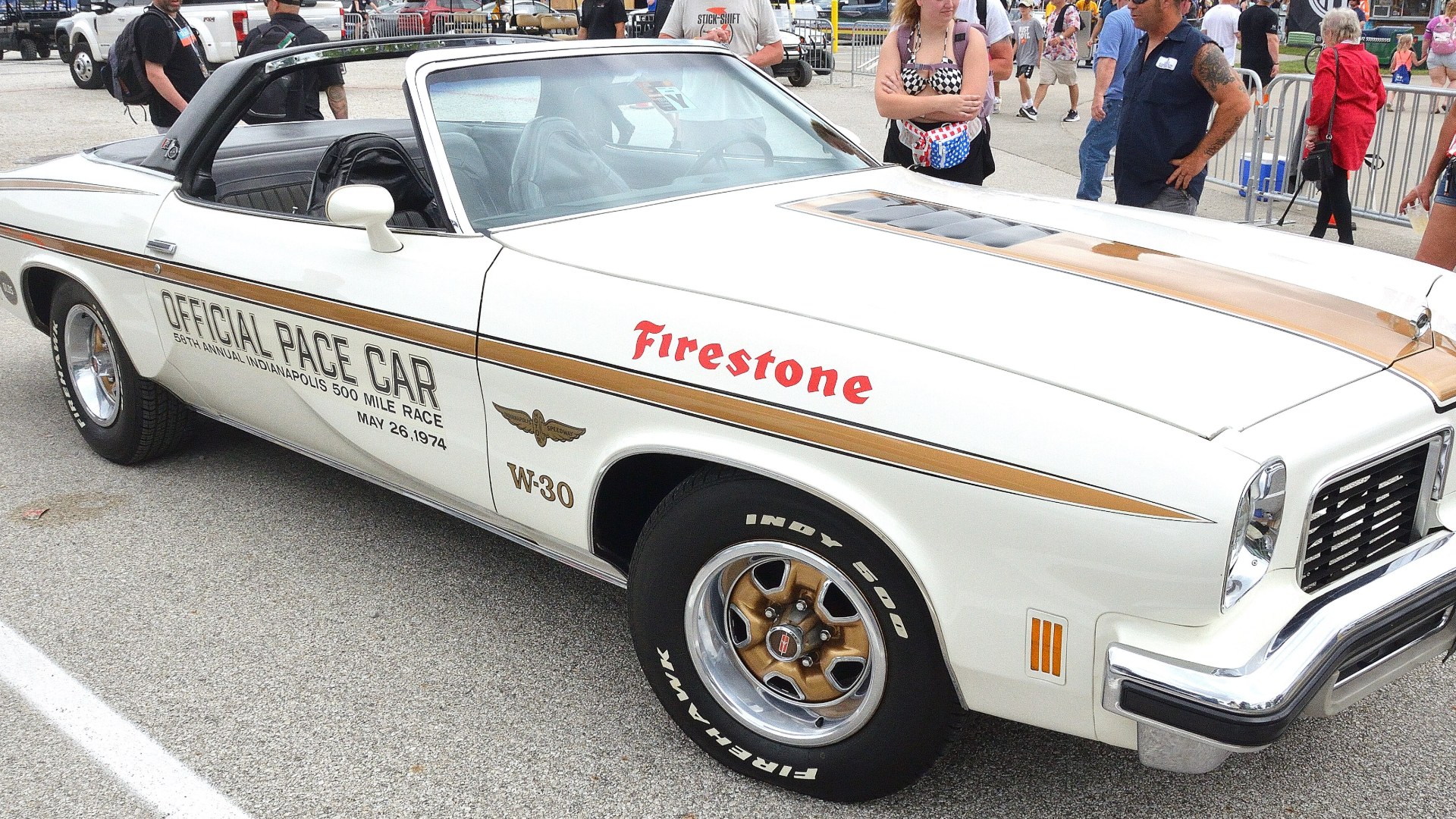
Driven by: Jim Rathmann
A second Hurst/Olds pace car, and Rathmann’s fourth turn. 1974 race recap.
59. 1975: Buick Century
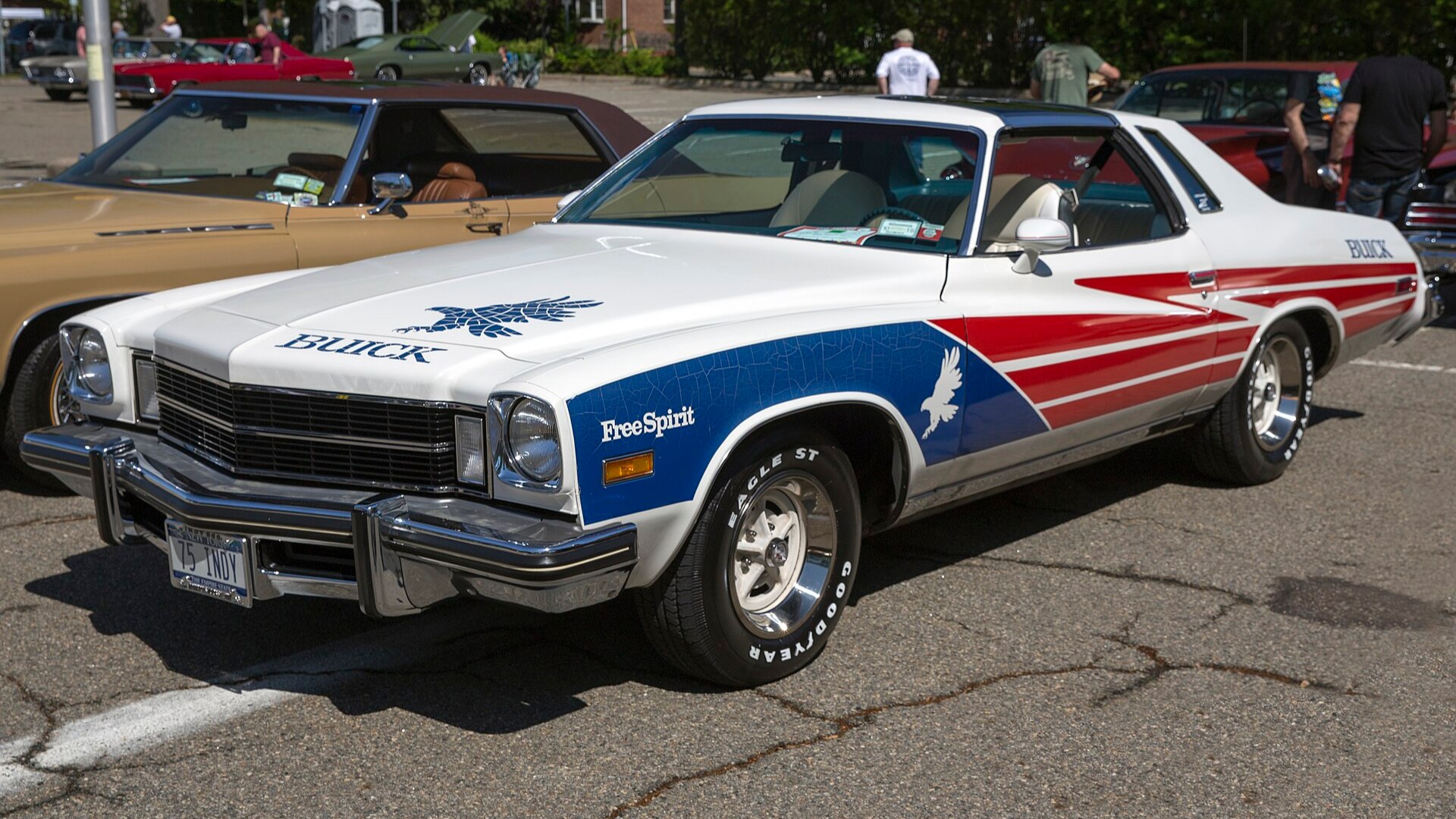
Driven by: James Garner
Actor and racing fan James Garner made the first of three appearances, in a Century powered by a 455 V8. 1975 race recap.
60. 1976: Buick Century Turbo V6
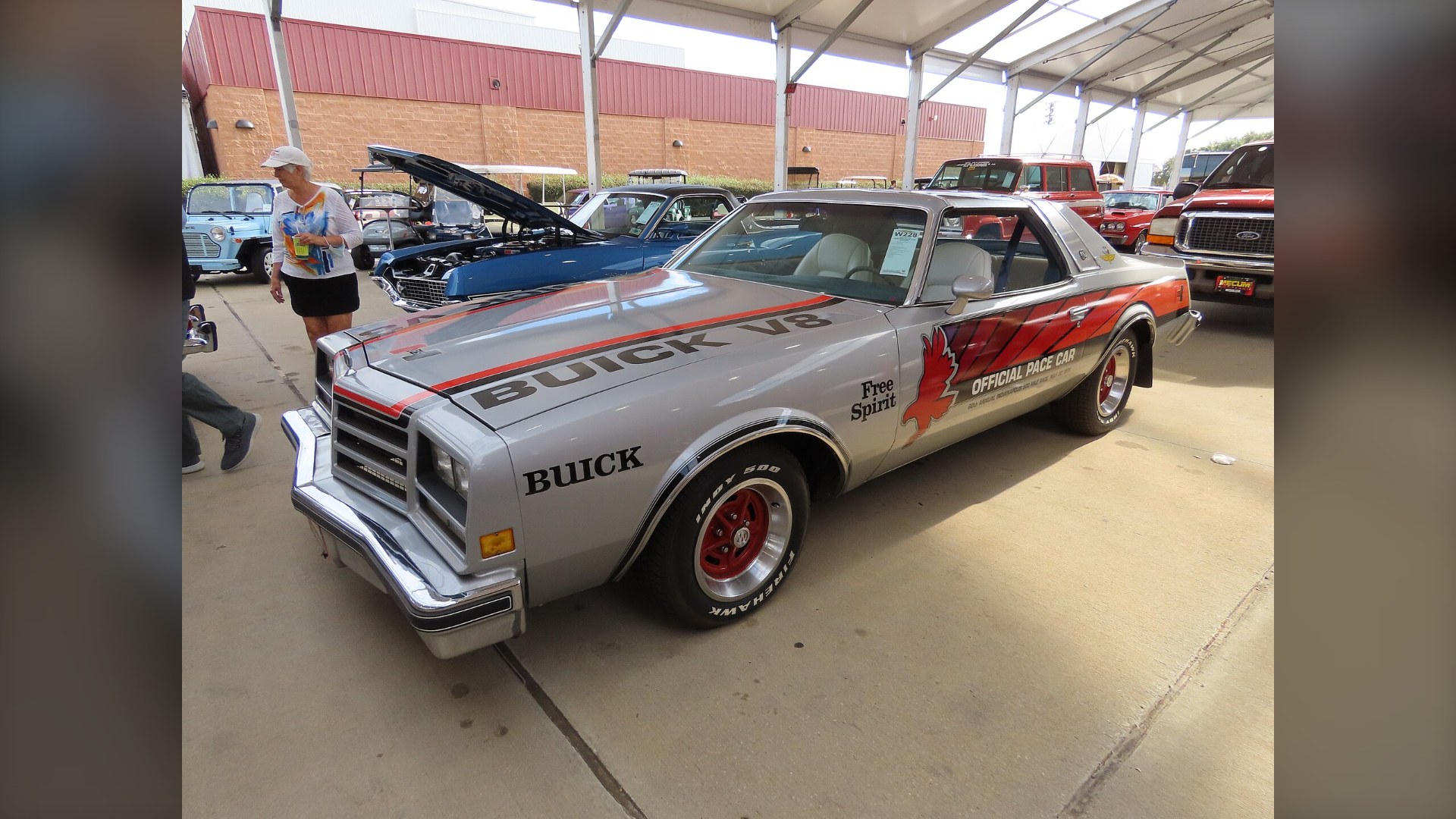
Driven by: Marty Robbins
Country star and part-time NASCAR racer Marty Robbins drove a turbocharged V6 Century, a sign of the fuel-crisis era. 1976 race recap.
61. 1977: Oldsmobile Delta 88
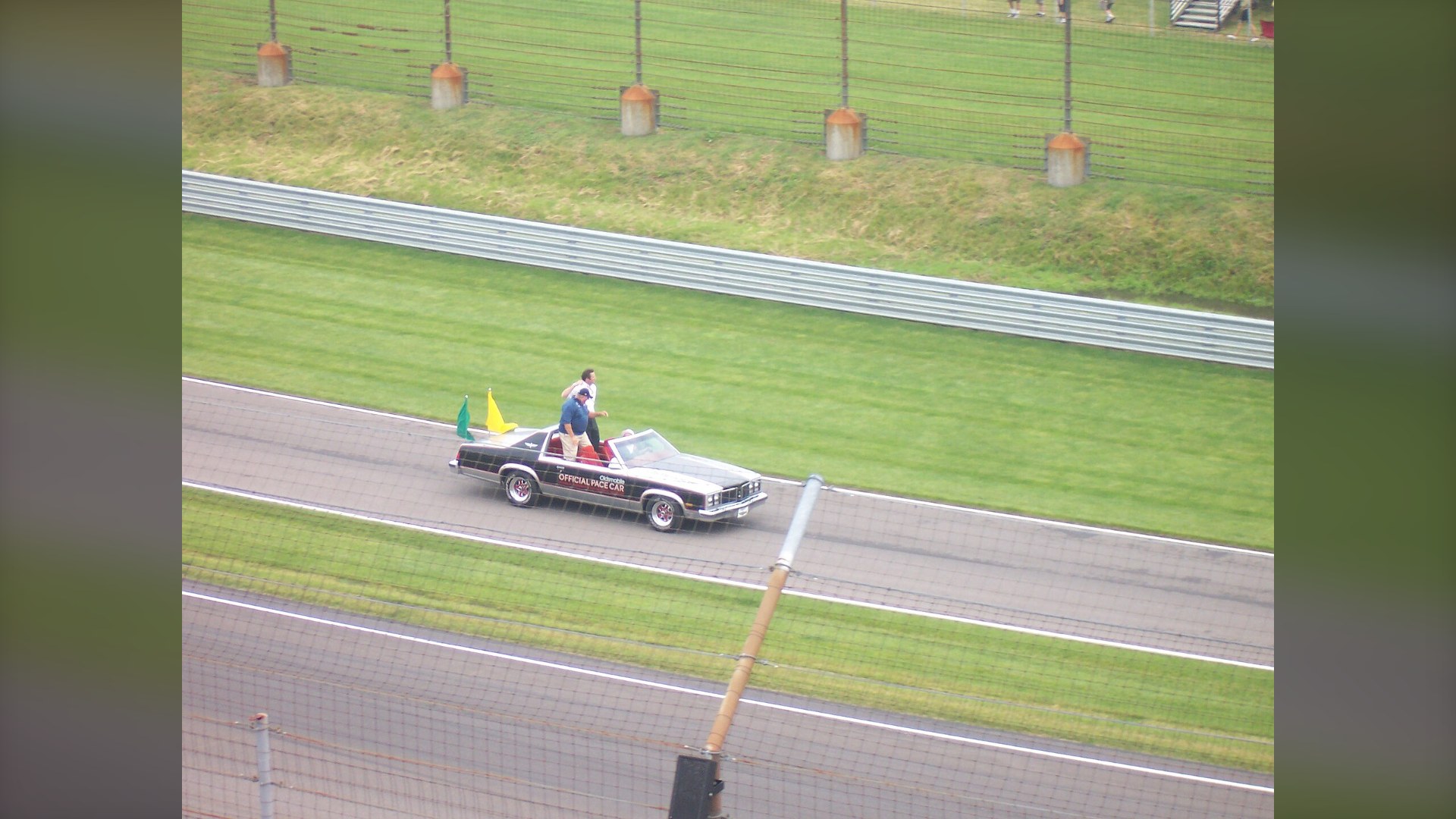
Driven by: James Garner
Garner returned in a full-size Delta 88. 1977 race recap.
62. 1978: Chevrolet Corvette C3
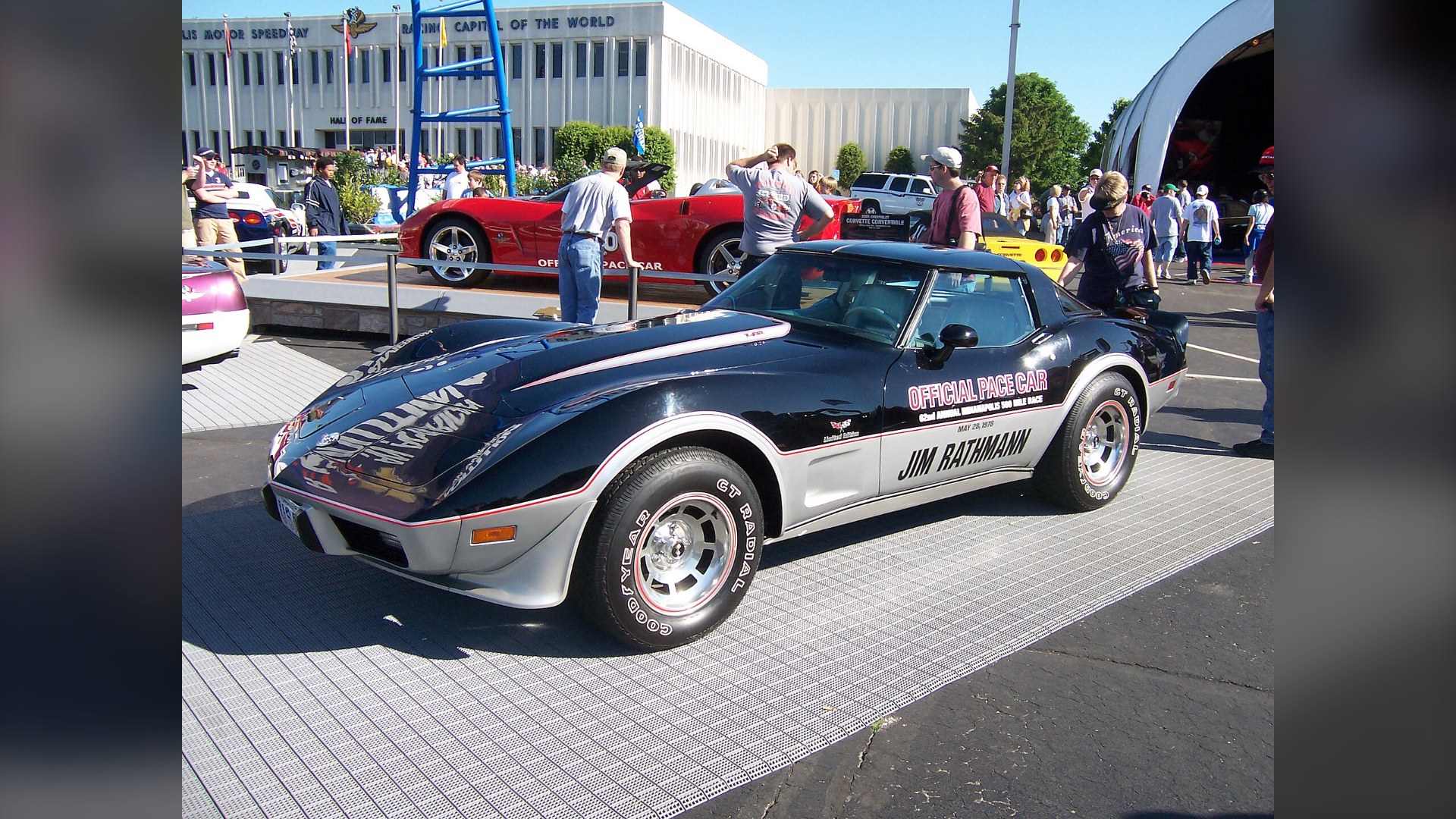
Driven by: Jim Rathmann
The Corvette’s first pace car outing came in its 25th anniversary year. Chevy built more than 6,000 silver-and-black Limited Edition replicas. 1978 race recap.
63. 1979: Ford Mustang
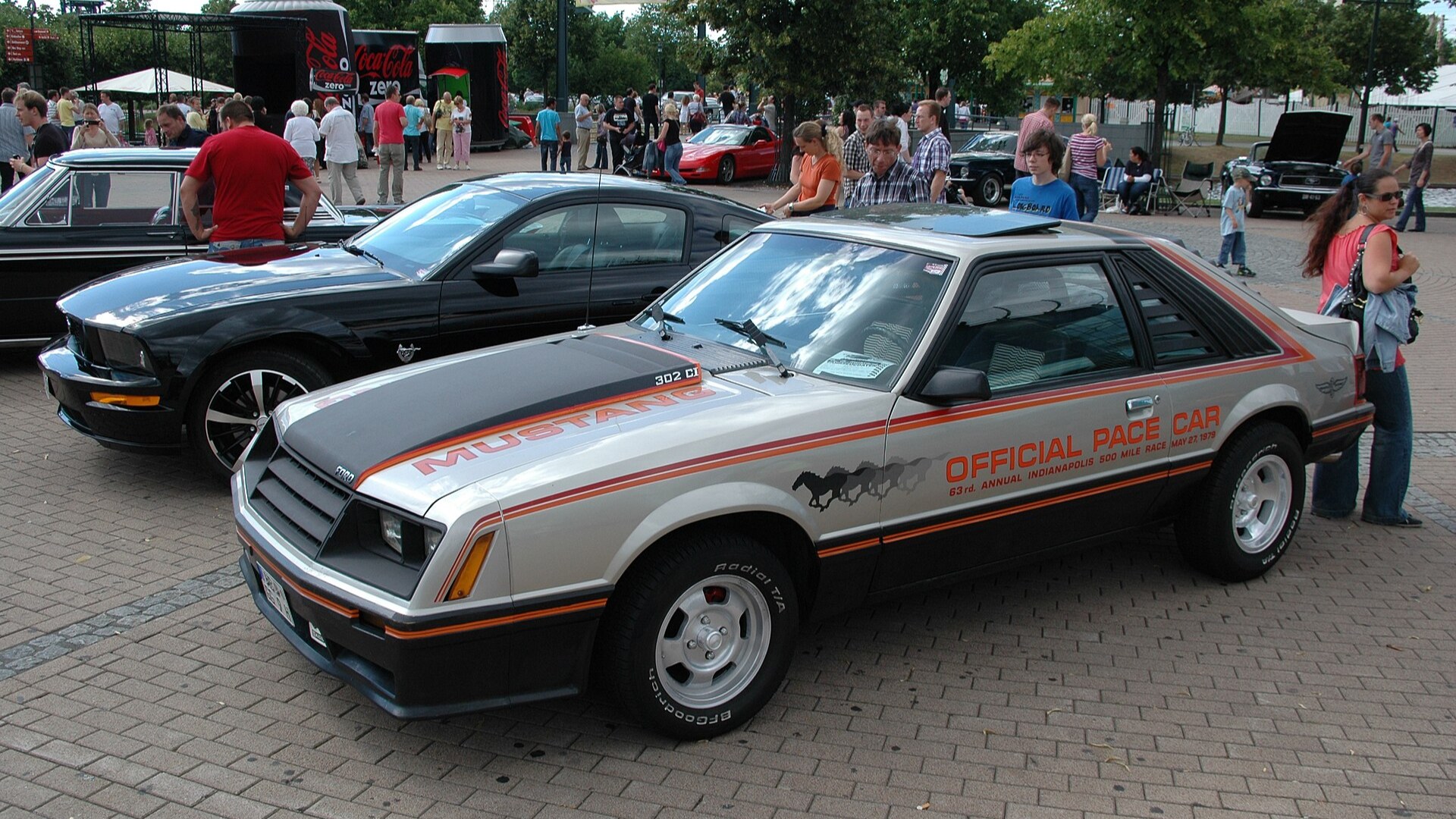
Driven by: Jackie Stewart
Three-time Formula 1 champion Jackie Stewart drove the new Fox-body Mustang. 1979 race recap.
64. 1980: Pontiac Trans Am Turbo
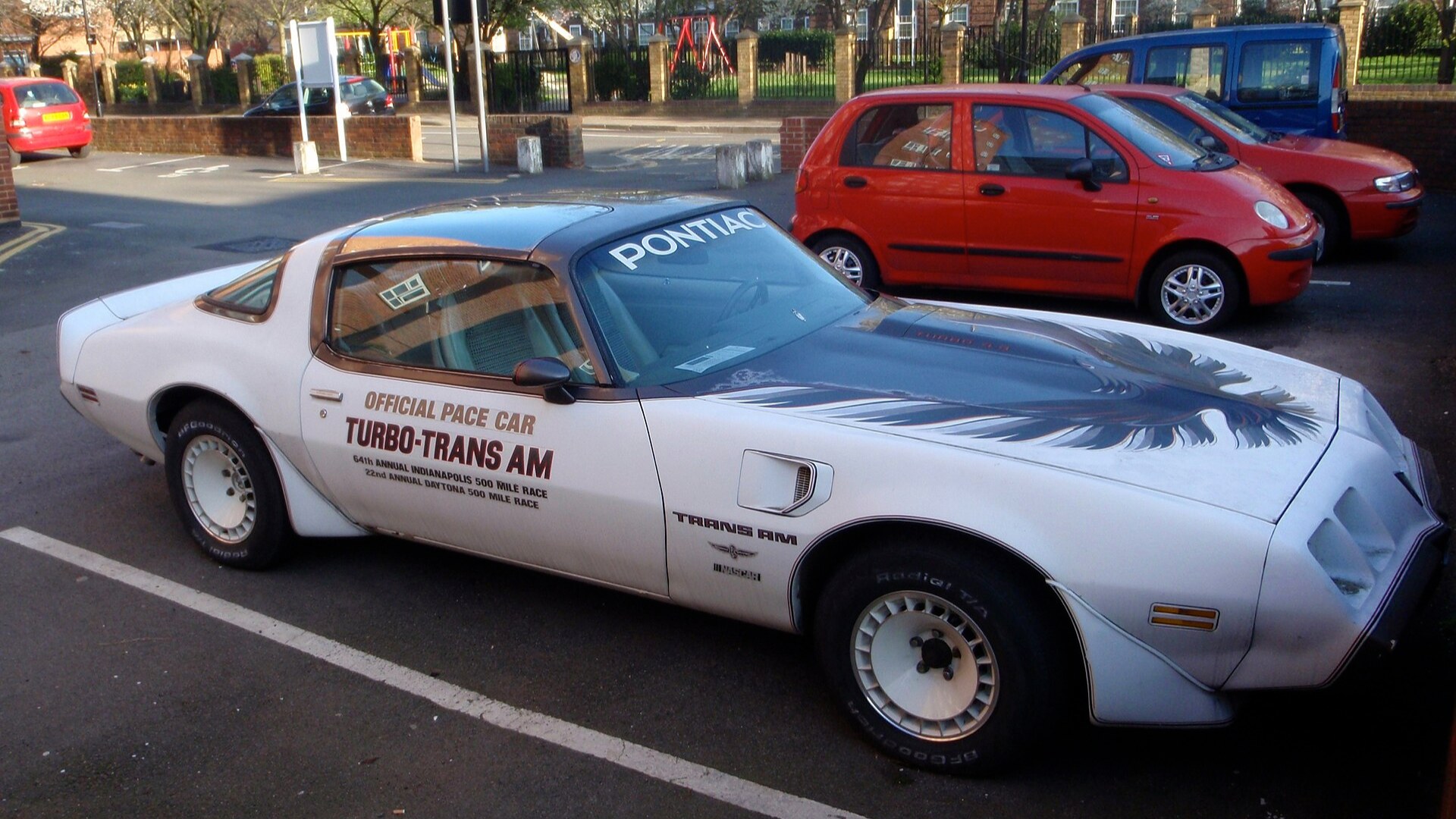
Driven by: Johnnie Parsons
1950 winner Johnnie Parsons led the field in a turbocharged white Trans Am. 1980 race recap.
65. 1981: Buick Regal V6
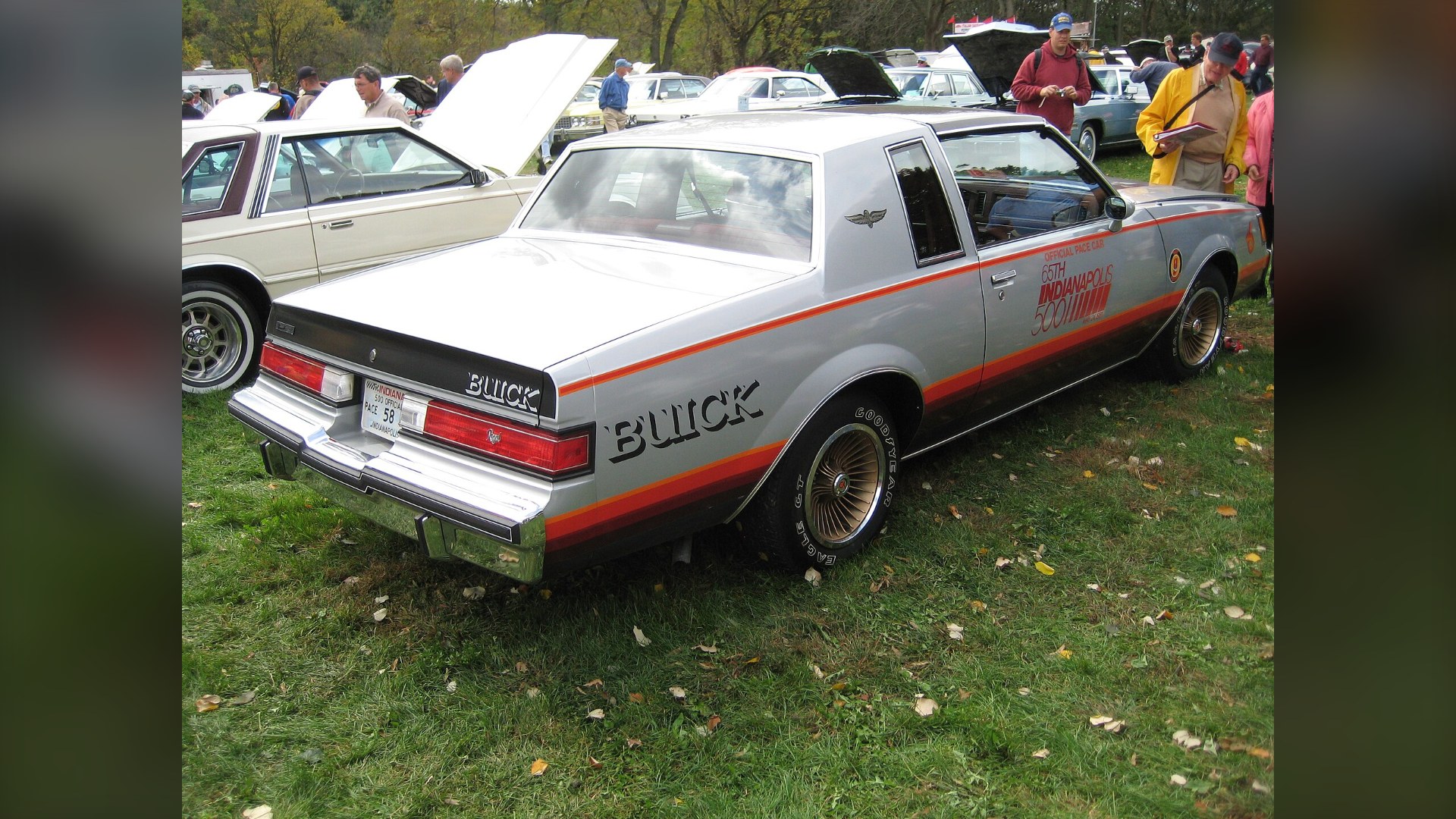
Driven by: Duke Nalon
Buick’s turbo V6 era continued with a Regal. 1981 race recap.
66. 1982: Chevrolet Camaro Z28
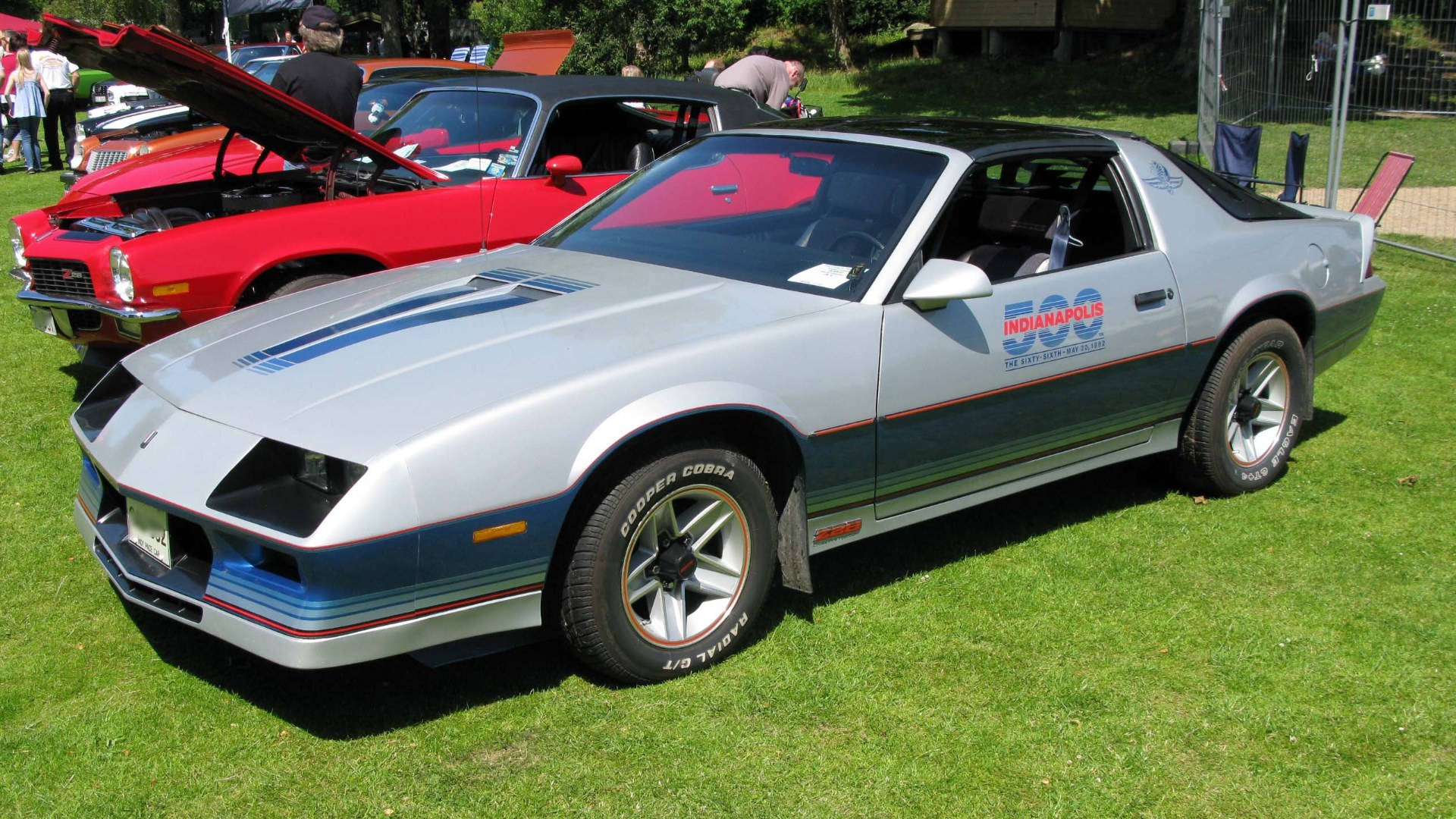
Driven by: Jim Rathmann
The new third-generation Camaro debuted as the pace car, Rathmann’s final turn at the wheel. 1982 race recap.
67. 1983: Buick Riviera Convertible
Driven by: Duke Nalon
Nalon back at the wheel, this time in a Riviera convertible: a luxury drop-top leading 33 cars into a 500-mile race. 1983 race recap.
68. 1984: Pontiac Indy Fiero
Driven by: John Callies
Pontiac’s mid-engine Fiero received a special Indy body kit, a rare pace car built on a commuter car. 1984 race recap.
69. 1985: Oldsmobile Cutlass Calais
Driven by: James Garner
Garner’s third pace car drive came in a compact Calais. 1985 race recap.
70. 1986: Chevrolet Corvette C4 convertible
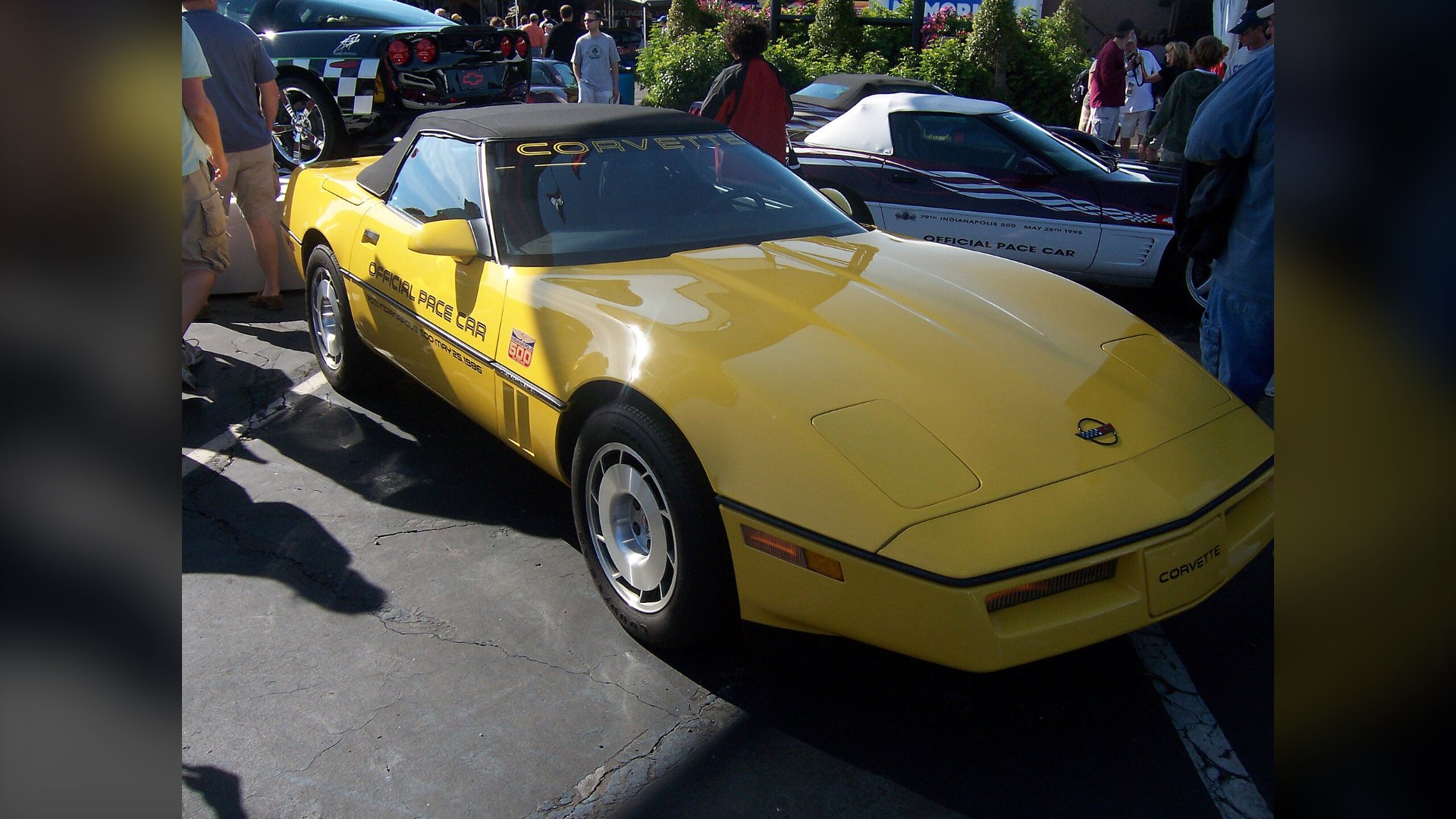
Driven by: Chuck Yeager
Test pilot Chuck Yeager drove the first Corvette convertible since 1975. Every 1986 Corvette convertible was badged as a pace car replica. 1986 race recap.
71. 1987: Chrysler LeBaron
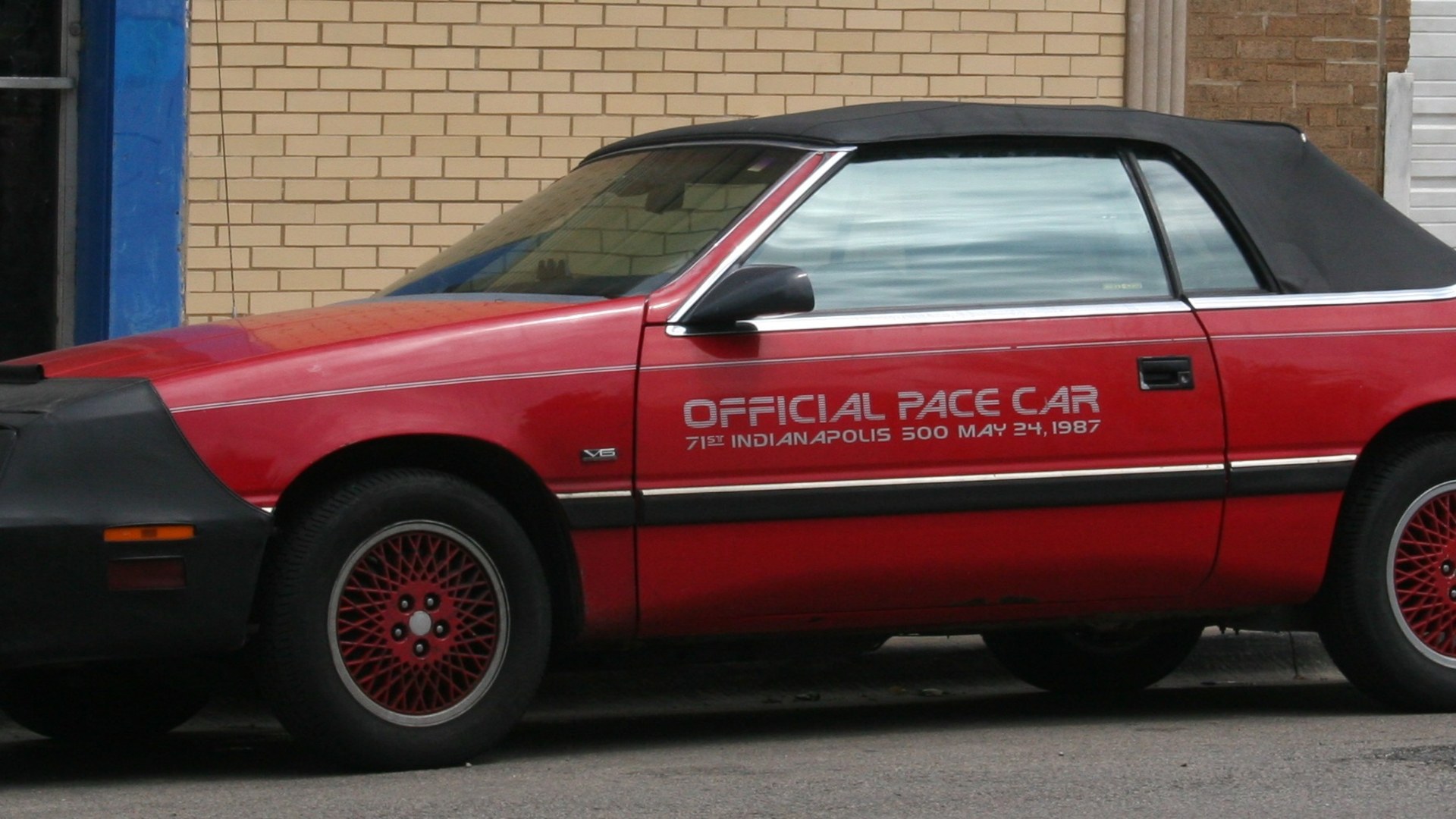
Driven by: Carroll Shelby
Carroll Shelby, then working with Chrysler, drove a LeBaron convertible. 1987 race recap.
72. 1988: Oldsmobile Cutlass Supreme
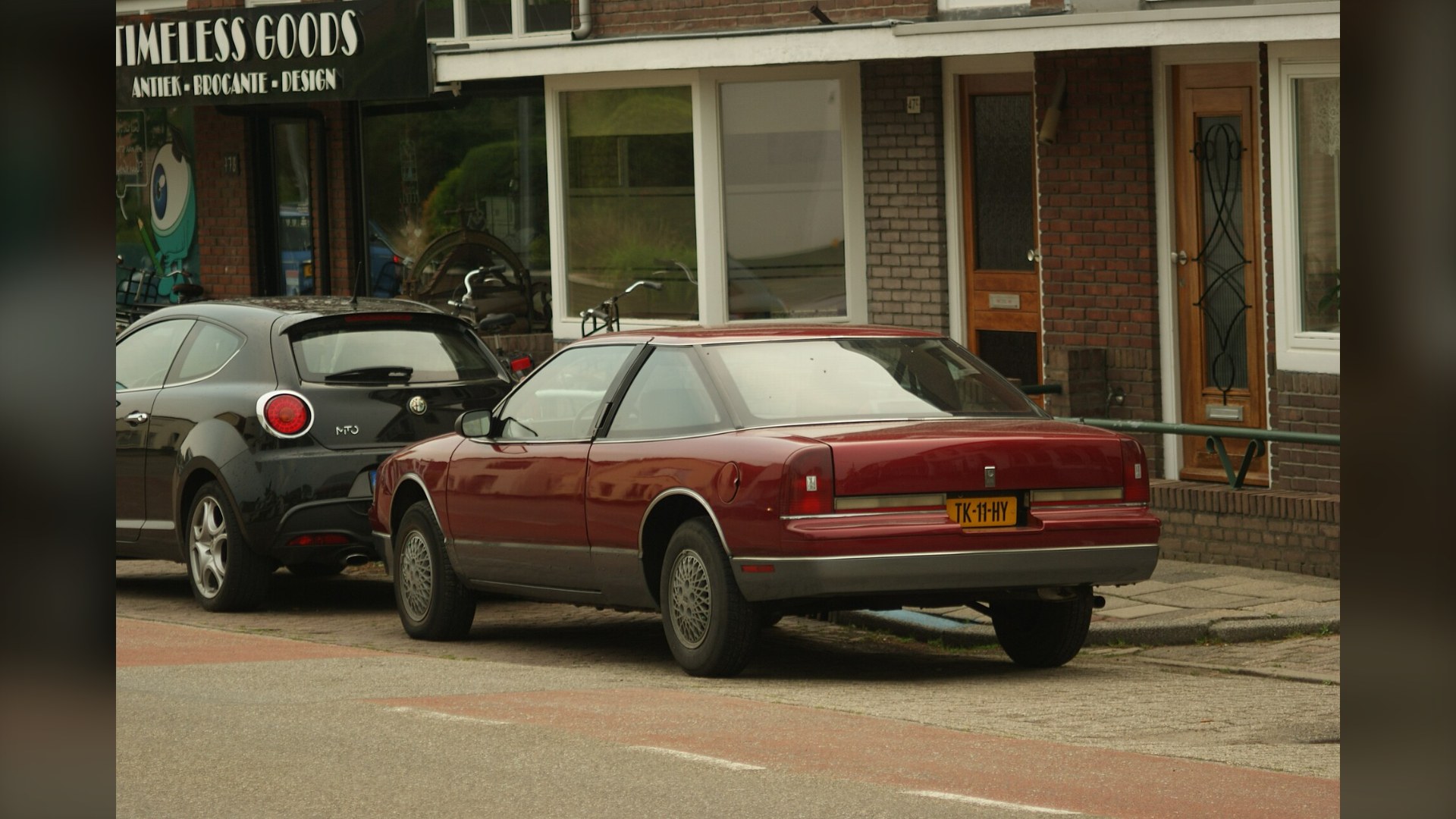
Driven by: Chuck Yeager
Yeager returned for Oldsmobile’s new front-drive Cutlass Supreme. 1988 race recap.
73. 1989: 20th Anniversary Pontiac Trans Am
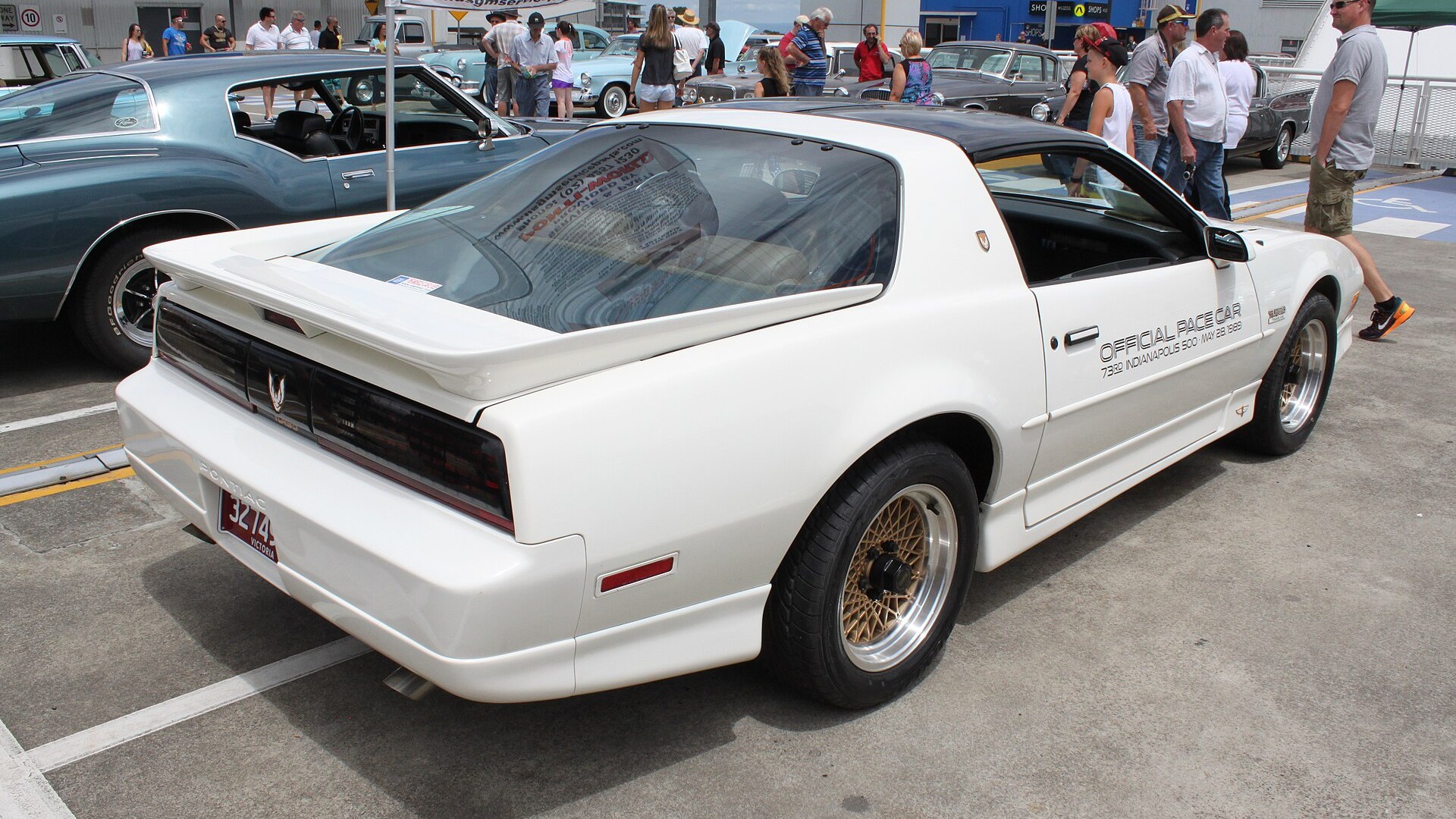
Driven by: Bobby Unser
Powered by the Buick turbo V6 from the Grand National, the 20th Anniversary Turbo Trans Am needed no modifications to pace the race. 1989 race recap.
Vipers, Vettes and Oldsmobile’s Farewell (1990–2001)
The 1990s brought controversy, the Dodge Viper, and the final Oldsmobile pace cars.
74. 1990: Chevrolet Beretta Convertible
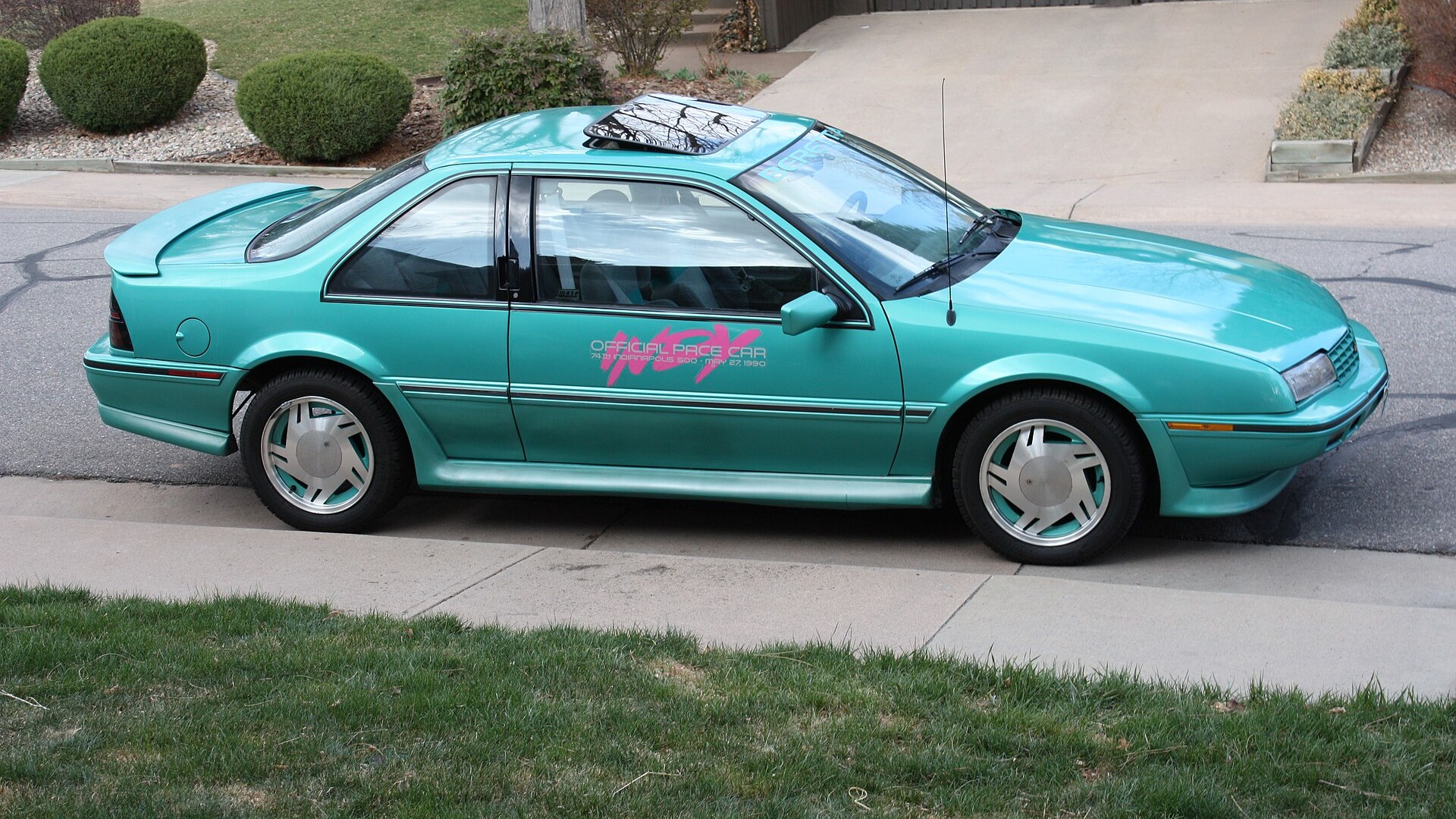
Driven by: Jim Perkins
Chevrolet built a Beretta convertible for pace car duty, but the model never reached production. 1990 race recap.
75. 1991: Dodge Viper RT/10
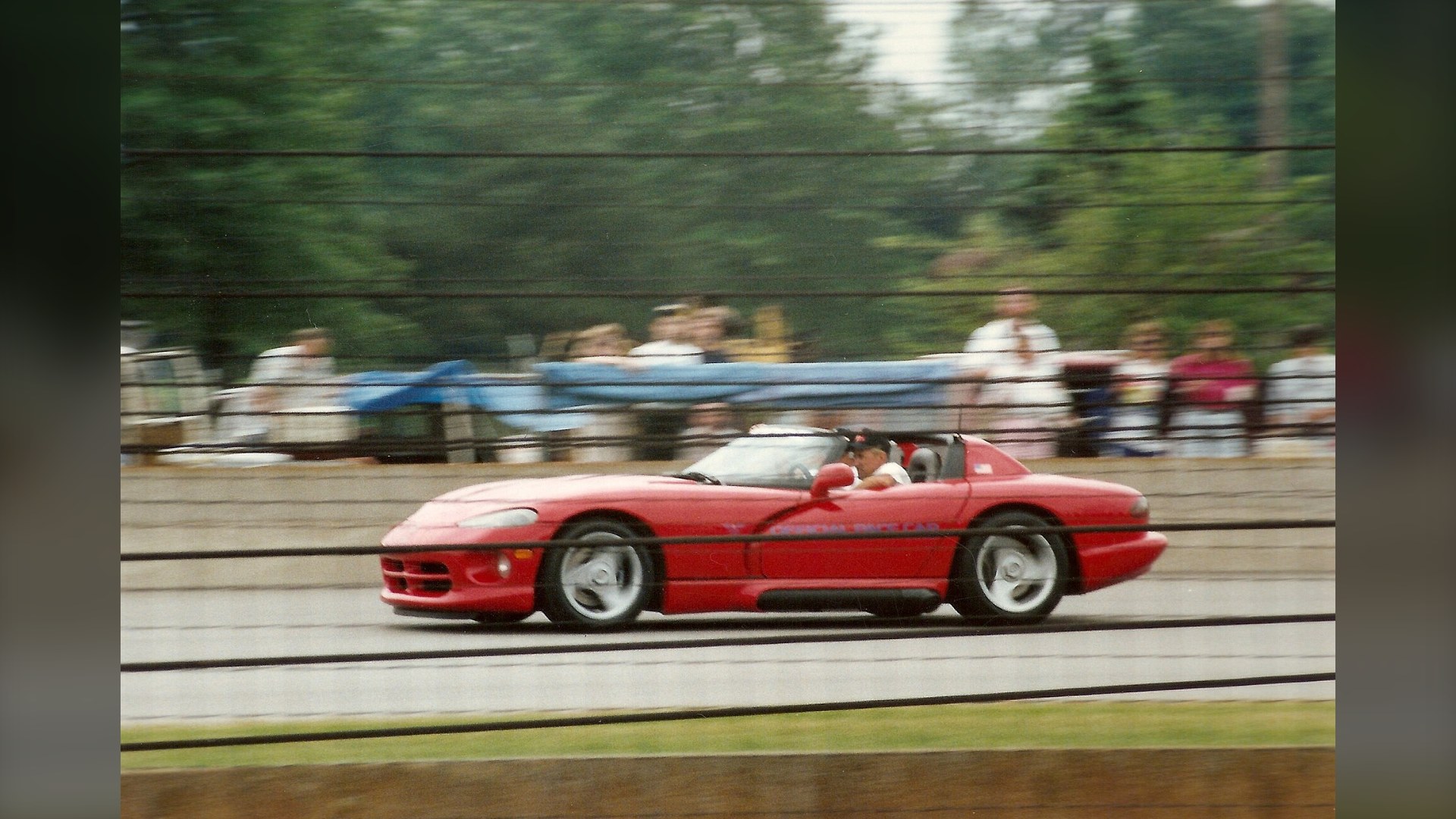
Driven by: Carroll Shelby
A Japanese-built Dodge Stealth was originally planned. After fan and union backlash, Dodge substituted a prototype of the then-unreleased Viper. 1991 race recap.
76. 1992: Cadillac Allanté
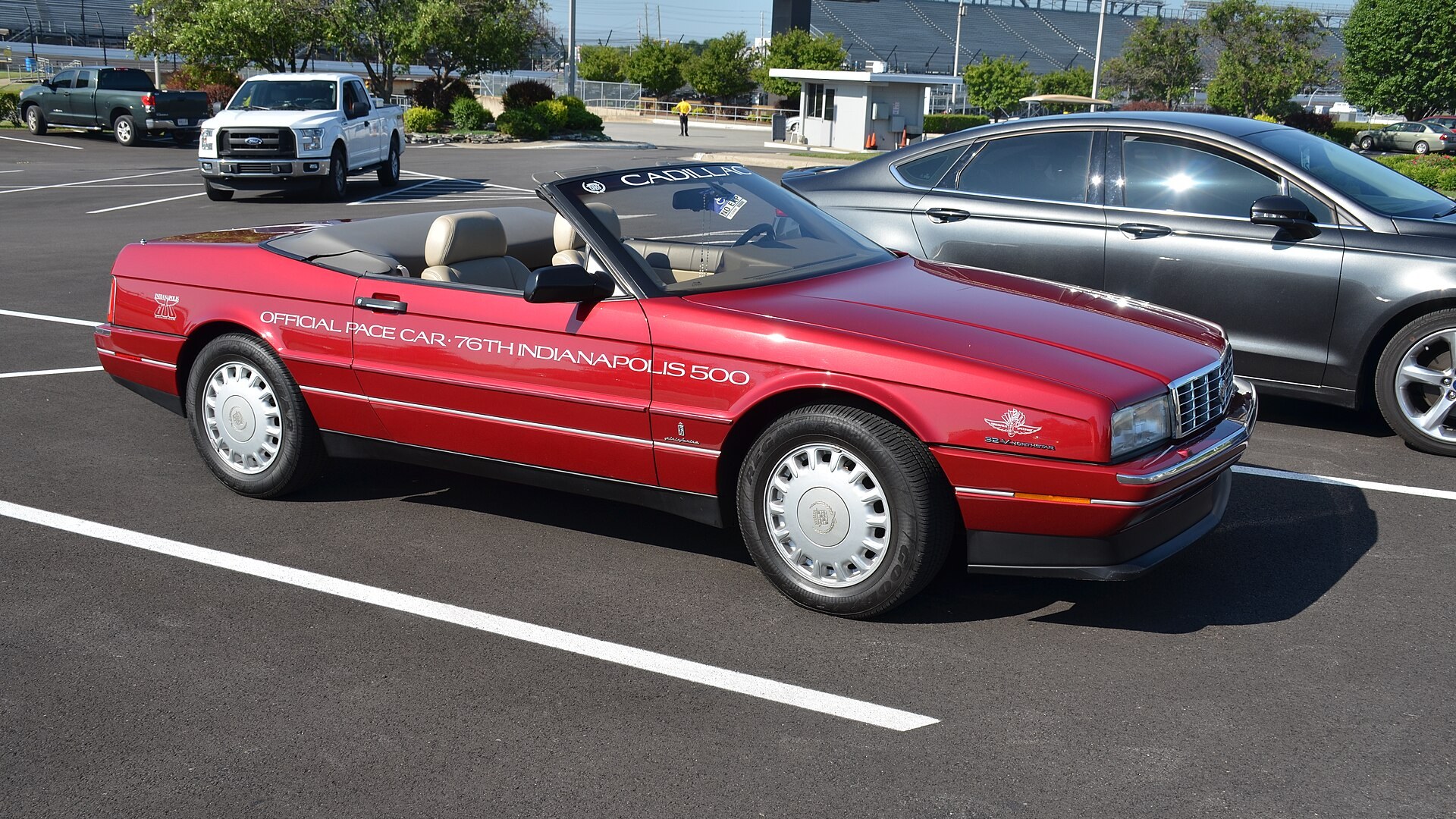
Driven by: Bobby Unser
Cadillac’s Pininfarina-bodied roadster in its final model year. 1992 race recap.
77. 1993: Chevrolet Camaro Z28
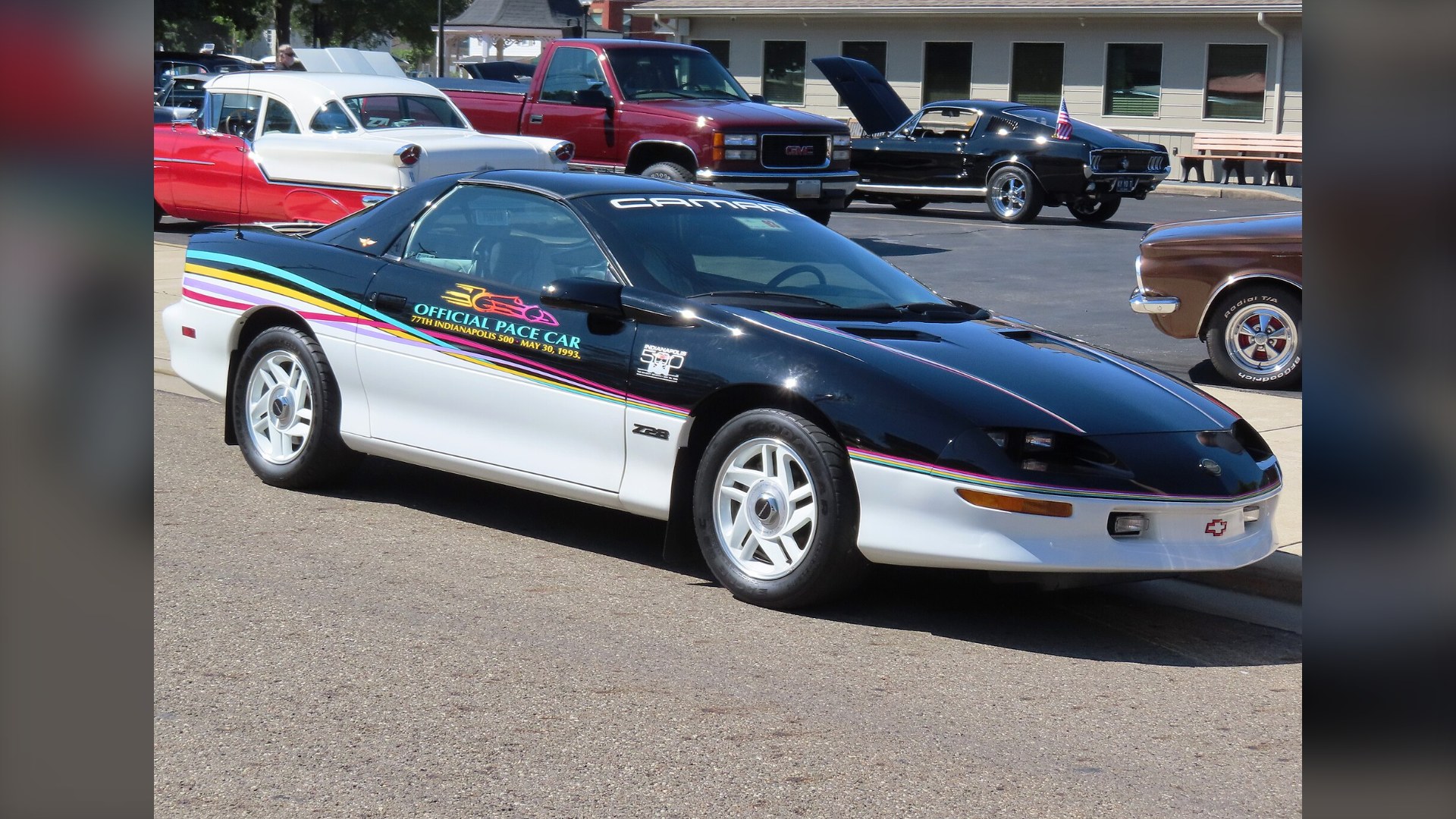
Driven by: Jim Perkins
The new fourth-generation Camaro continued the tradition of launching a new Camaro at Indy. 1993 race recap.
78. 1994: Ford Mustang Cobra
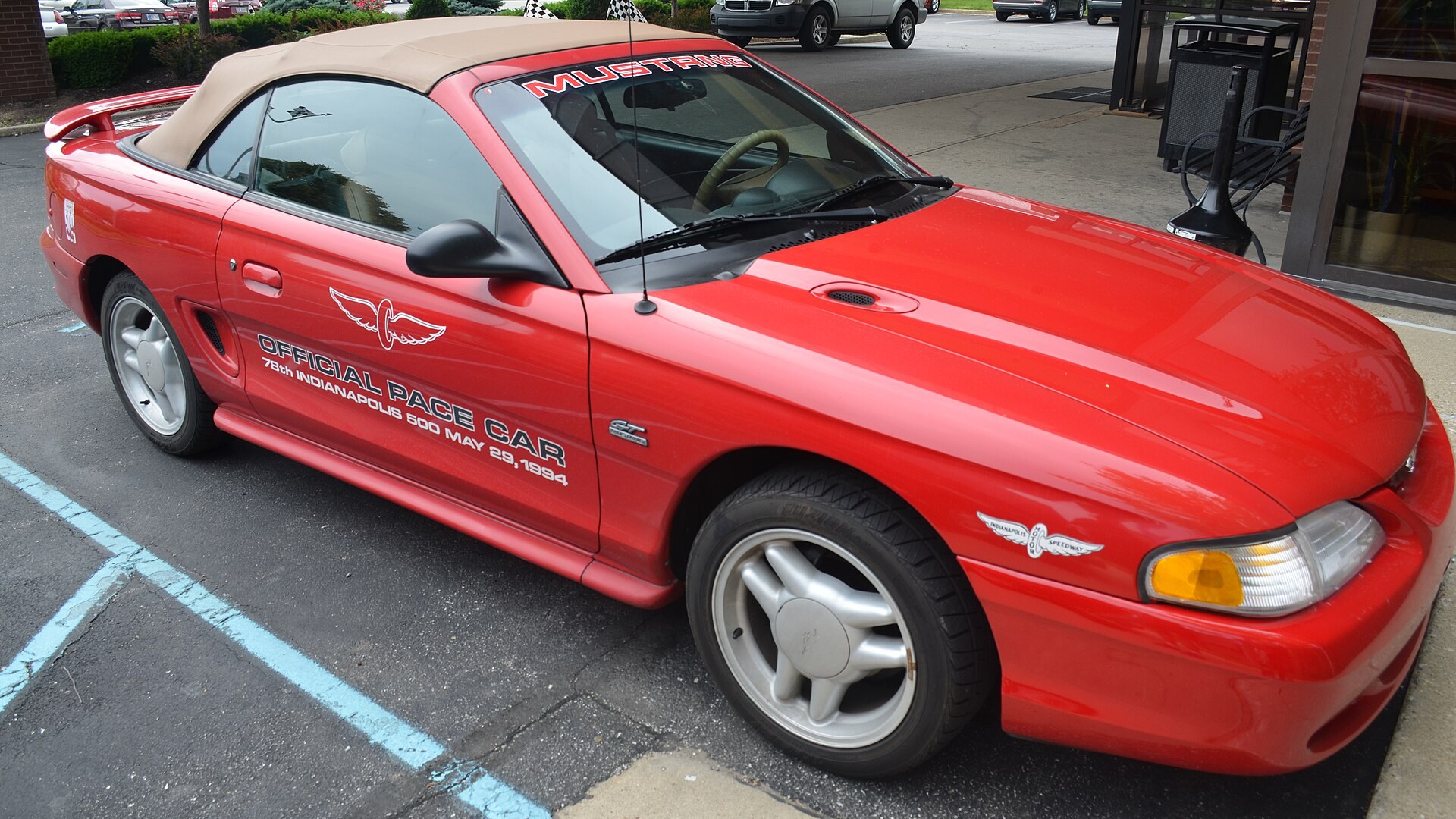
Driven by: Parnelli Jones
1963 winner Parnelli Jones drove the new SN95 Mustang Cobra convertible. 1994 race recap.
79. 1995: Chevrolet Corvette C4 convertible
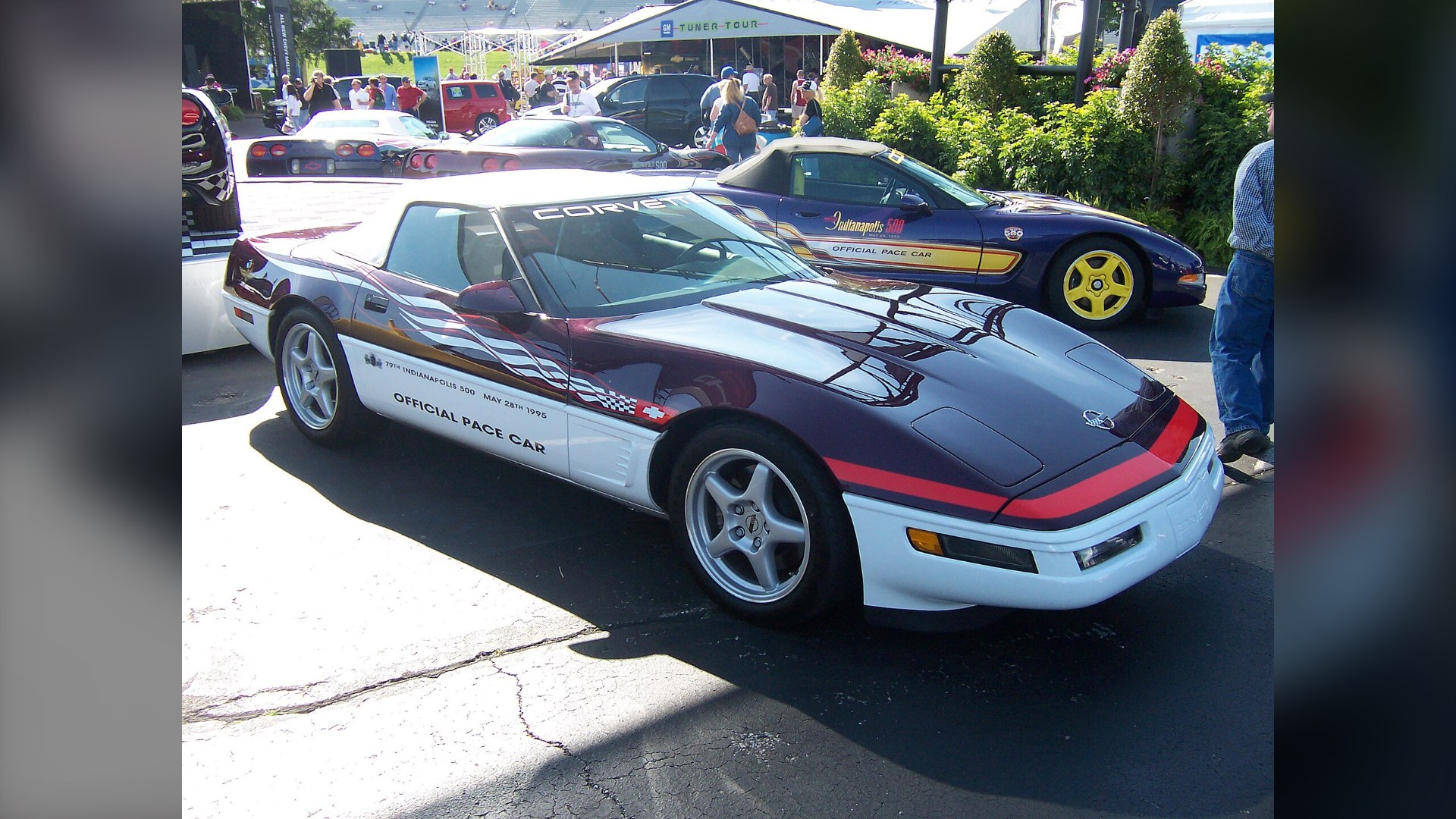
Driven by: Jim Perkins
A dark purple and white Corvette convertible, with 527 replicas built. 1995 race recap.
80. 1996: Dodge Viper GTS
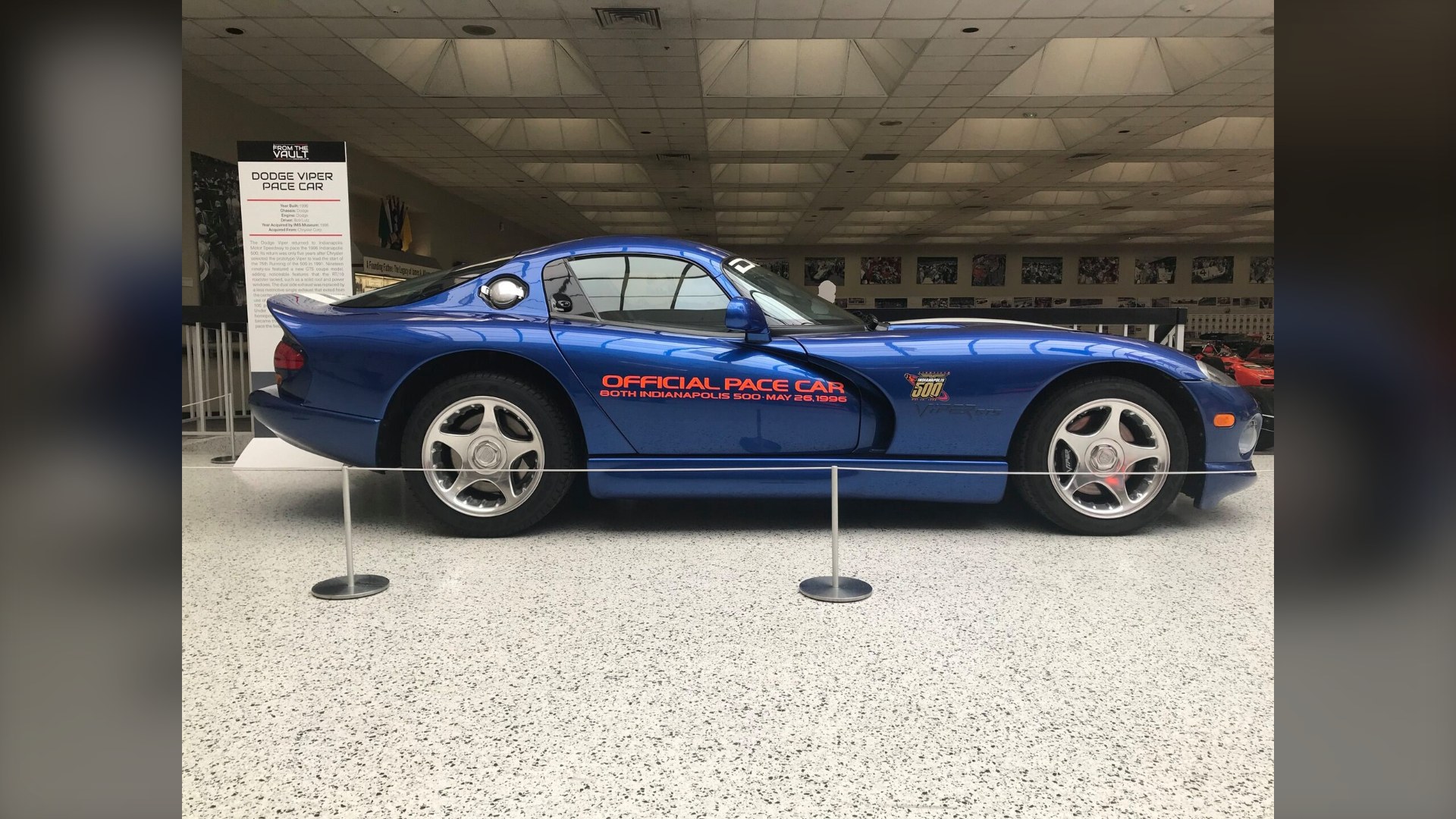
Driven by: Bob Lutz
Chrysler president Bob Lutz drove the new Viper GTS coupe, in blue with white stripes. 1996 race recap.
81. 1997: Oldsmobile Aurora
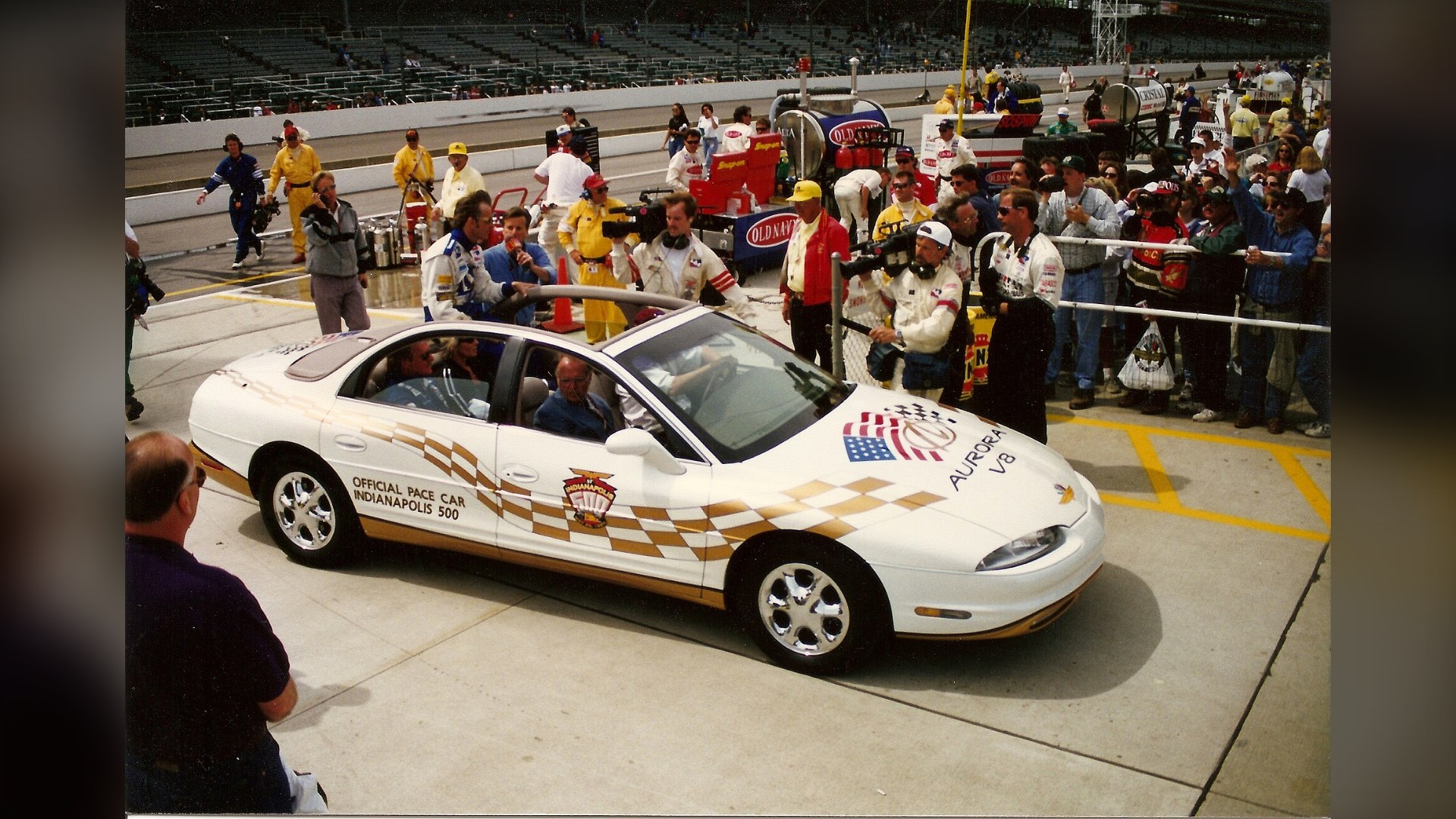
Driven by: Johnny Rutherford
The Aurora’s V8 formed the basis of the Indy Racing League engine, giving the pace car a direct link to the race cars. 1997 race recap.
82. 1998: Chevrolet Corvette C5
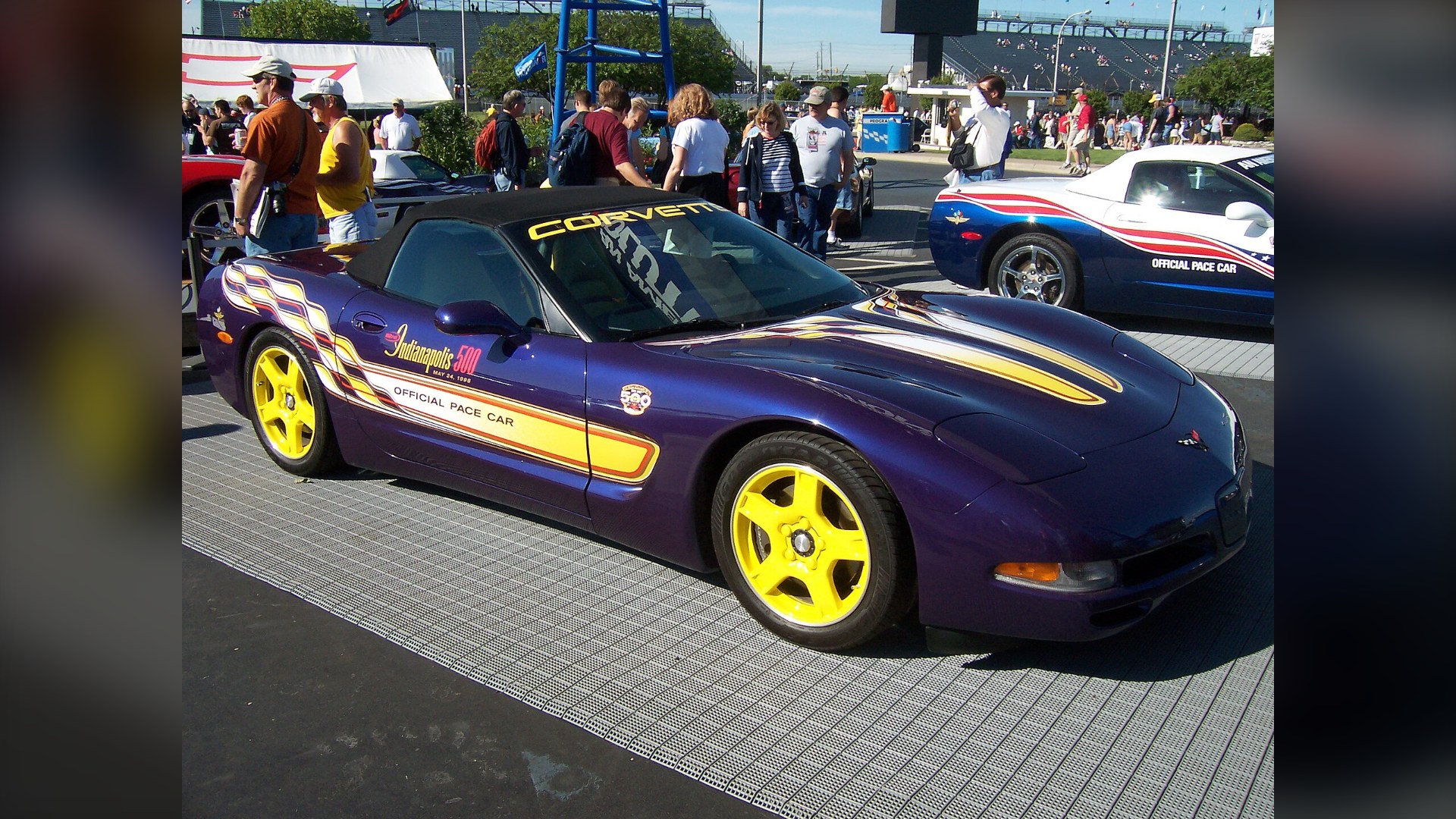
Driven by: Parnelli Jones
The new C5 Corvette convertible arrived in a bright purple-and-yellow pace car scheme. 1998 race recap.
83. 1999: Chevrolet Monte Carlo
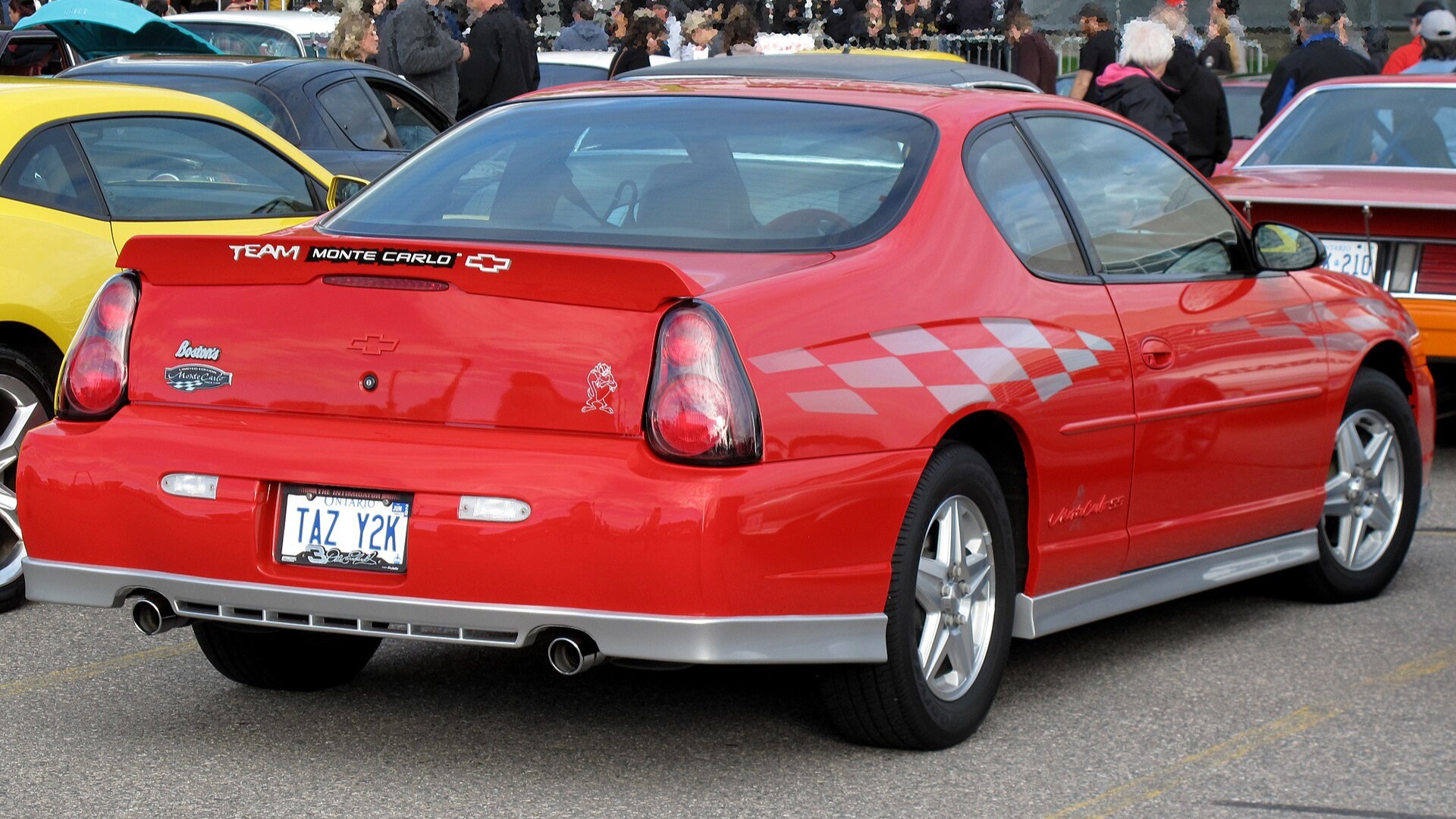
Driven by: Jay Leno
Car collector and late-night host Jay Leno drove. 1999 race recap.
84. 2000: Oldsmobile Aurora
Driven by: Anthony Edwards
ER star Anthony Edwards led the field in the second-generation Aurora. 2000 race recap.
85. 2001: Oldsmobile Bravada
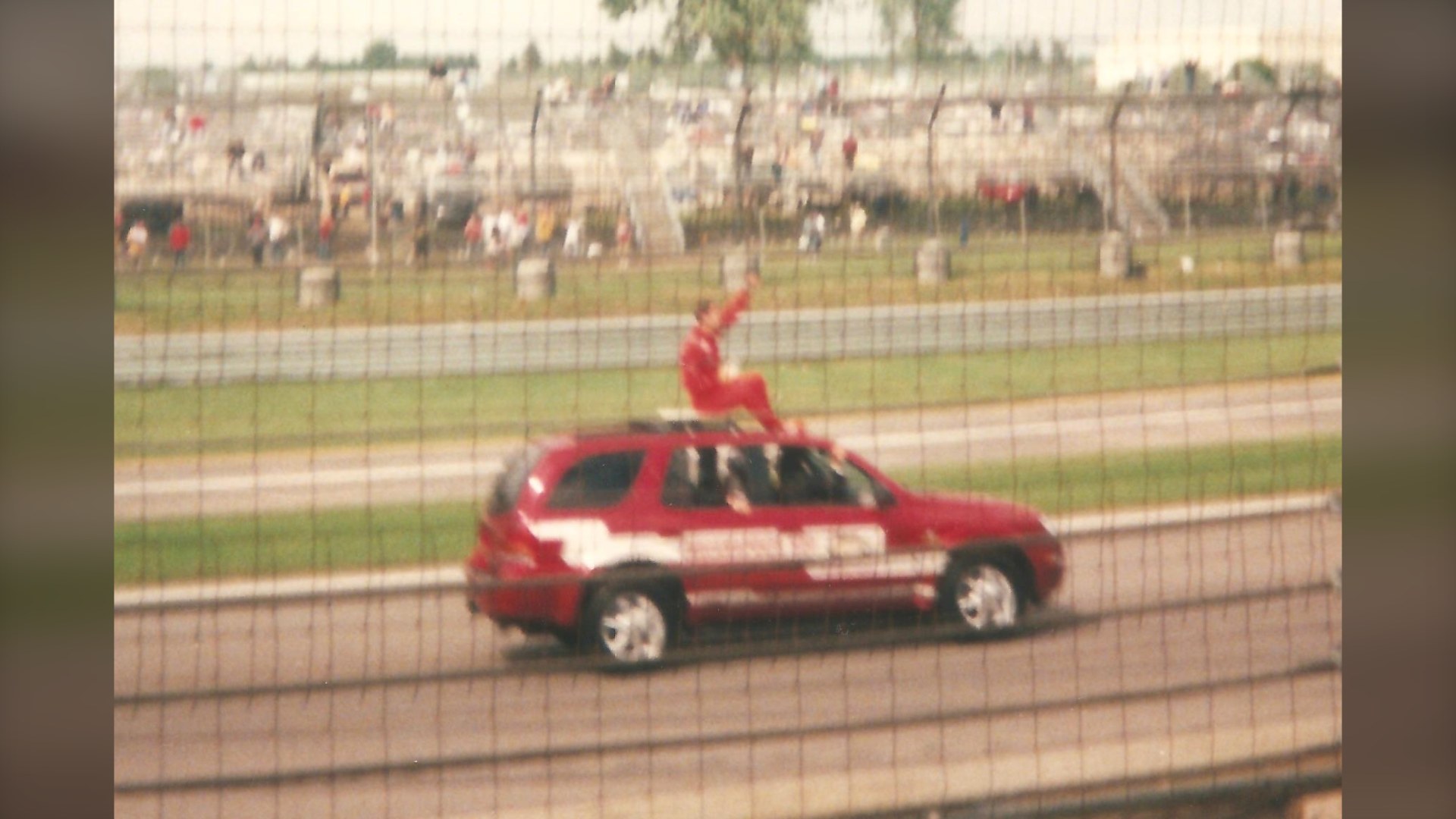
Driven by: Elaine Irwin Mellencamp
The first SUV to pace the 500, and the final Oldsmobile pace car. 2001 race recap.
The Chevrolet Era (2002–Present)
Chevrolet has supplied every pace car since 2002, alternating between Corvettes and Camaros before the Corvette took over full time in 2017.
86. 2002: 50th Anniversary Chevrolet Corvette C5
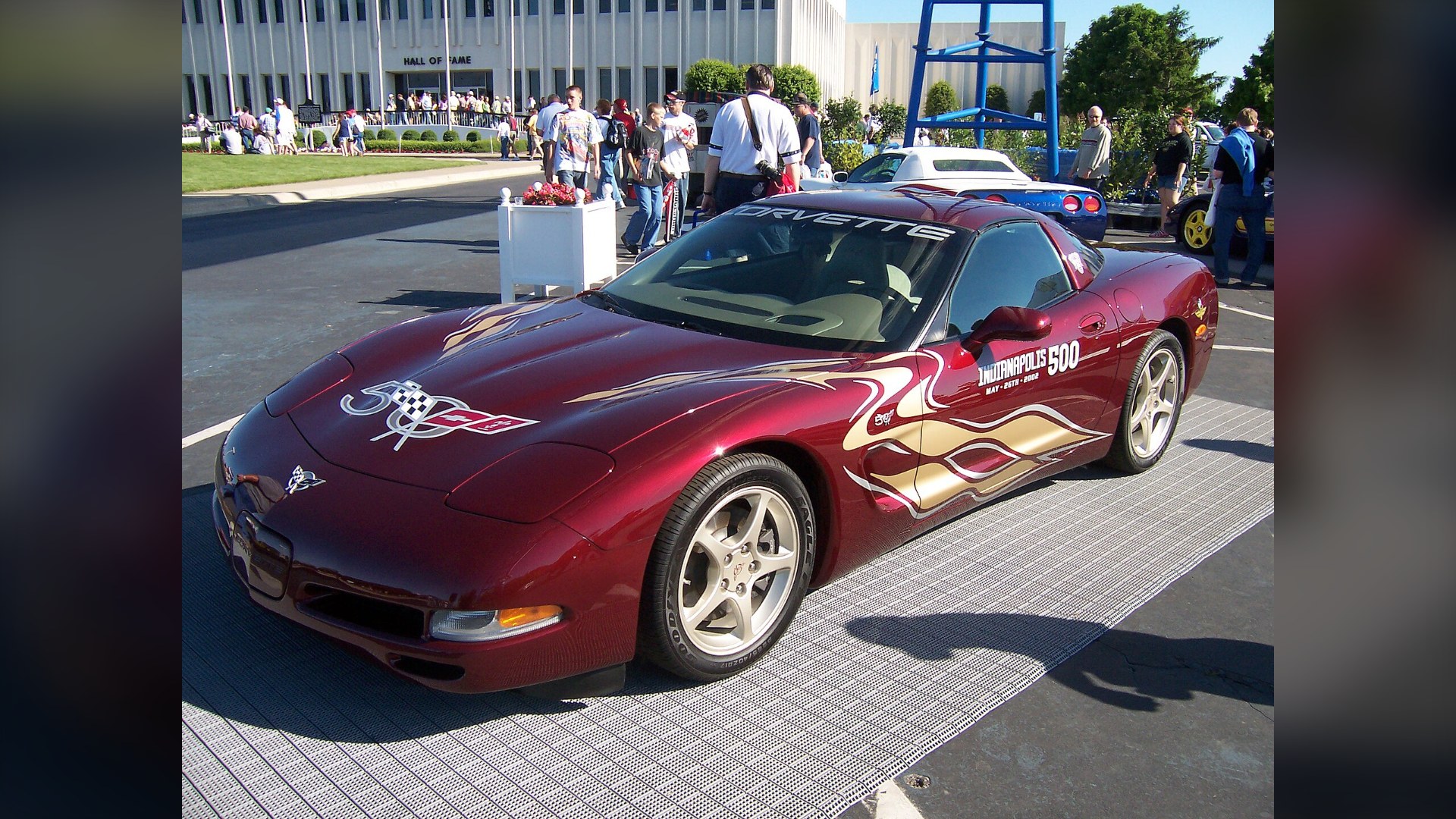
Driven by: Jim Caviezel
Chevy marked the Corvette’s upcoming 50th anniversary with a special edition convertible. 2002 race recap.
87. 2003: Chevrolet SSR
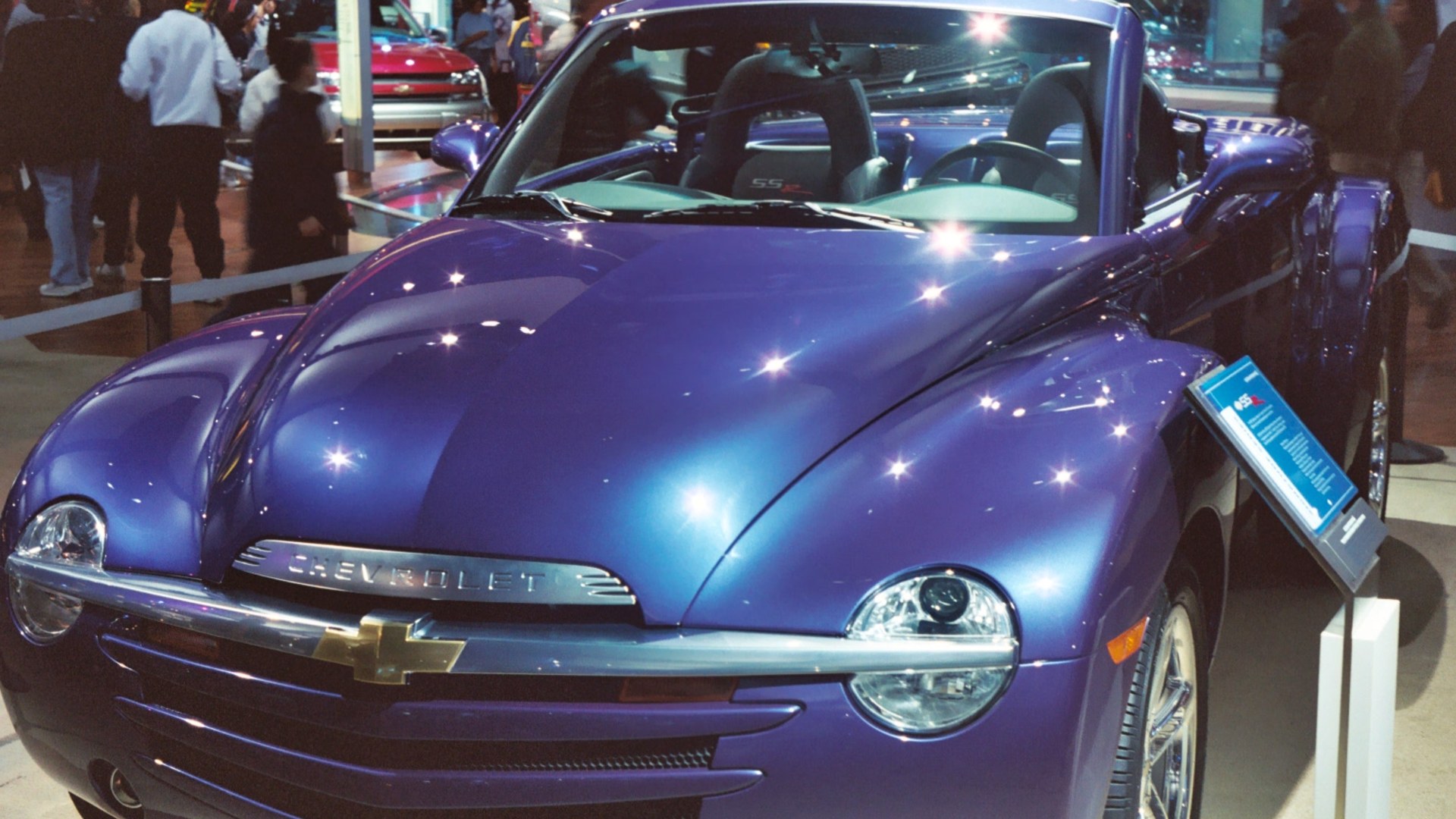
Driven by: Herb Fishel
GM Racing chief Herb Fishel drove Chevy’s retro-styled convertible pickup, the first truck to pace the race. 2003 race recap.
88. 2004: Chevrolet Corvette C5
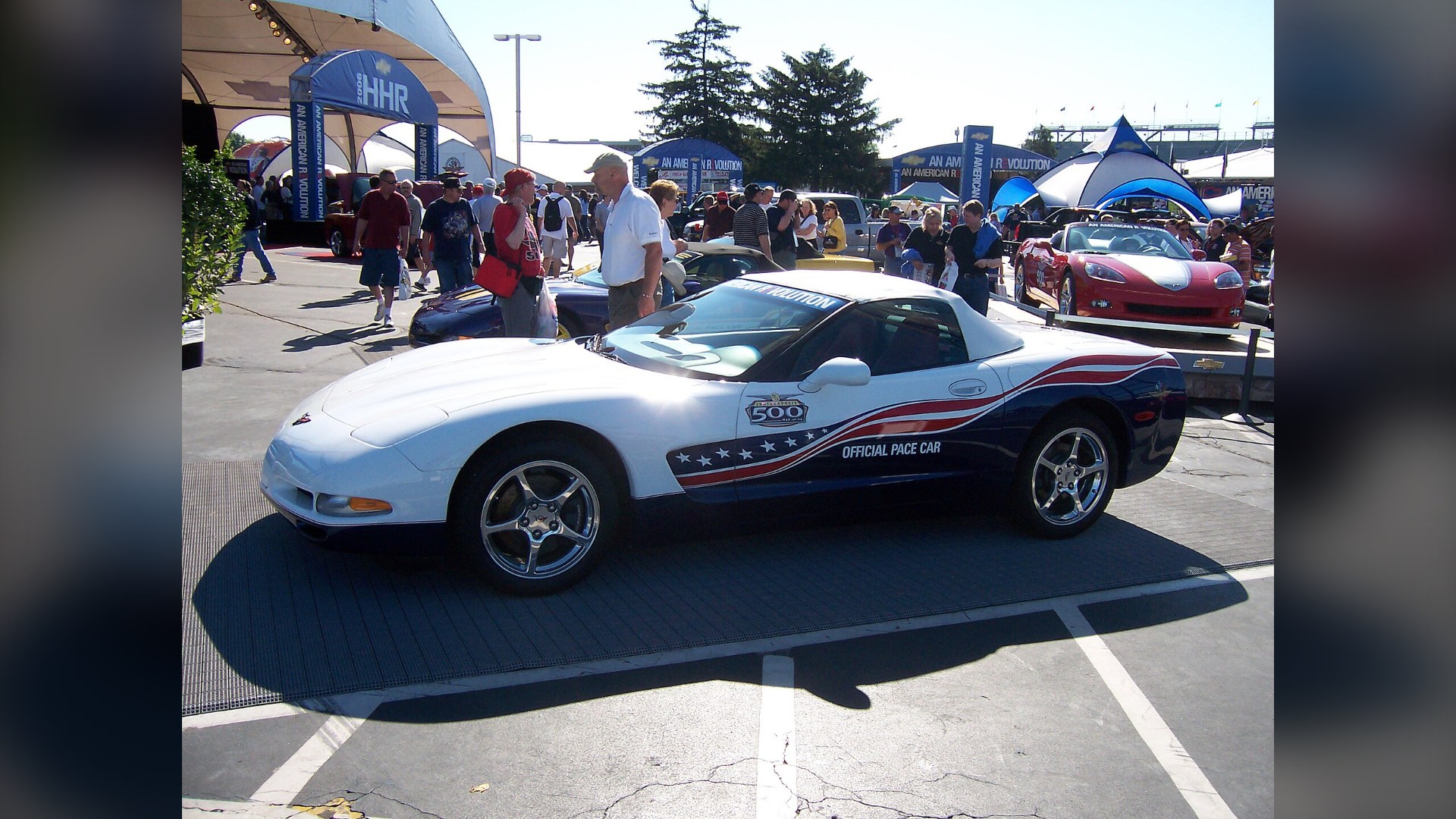
Driven by: Morgan Freeman
Actor Morgan Freeman drove the C5 in its final year. 2004 race recap.
89. 2005: Chevrolet Corvette C6 convertible
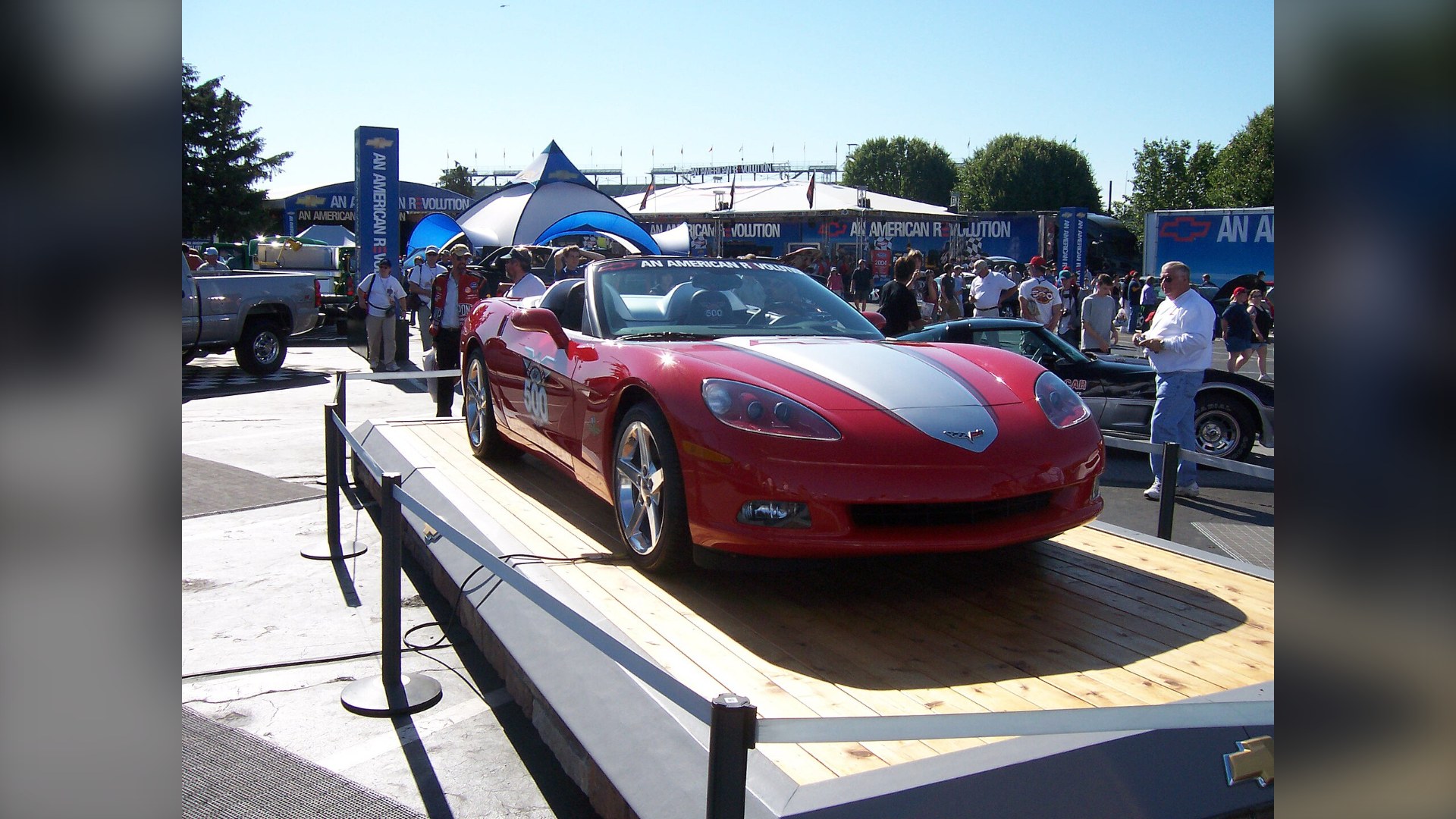
Driven by: General Colin Powell
Former Secretary of State Colin Powell paced the field in the new C6. 2005 race recap.
90. 2006: Chevrolet Corvette C6 Z06 coupe
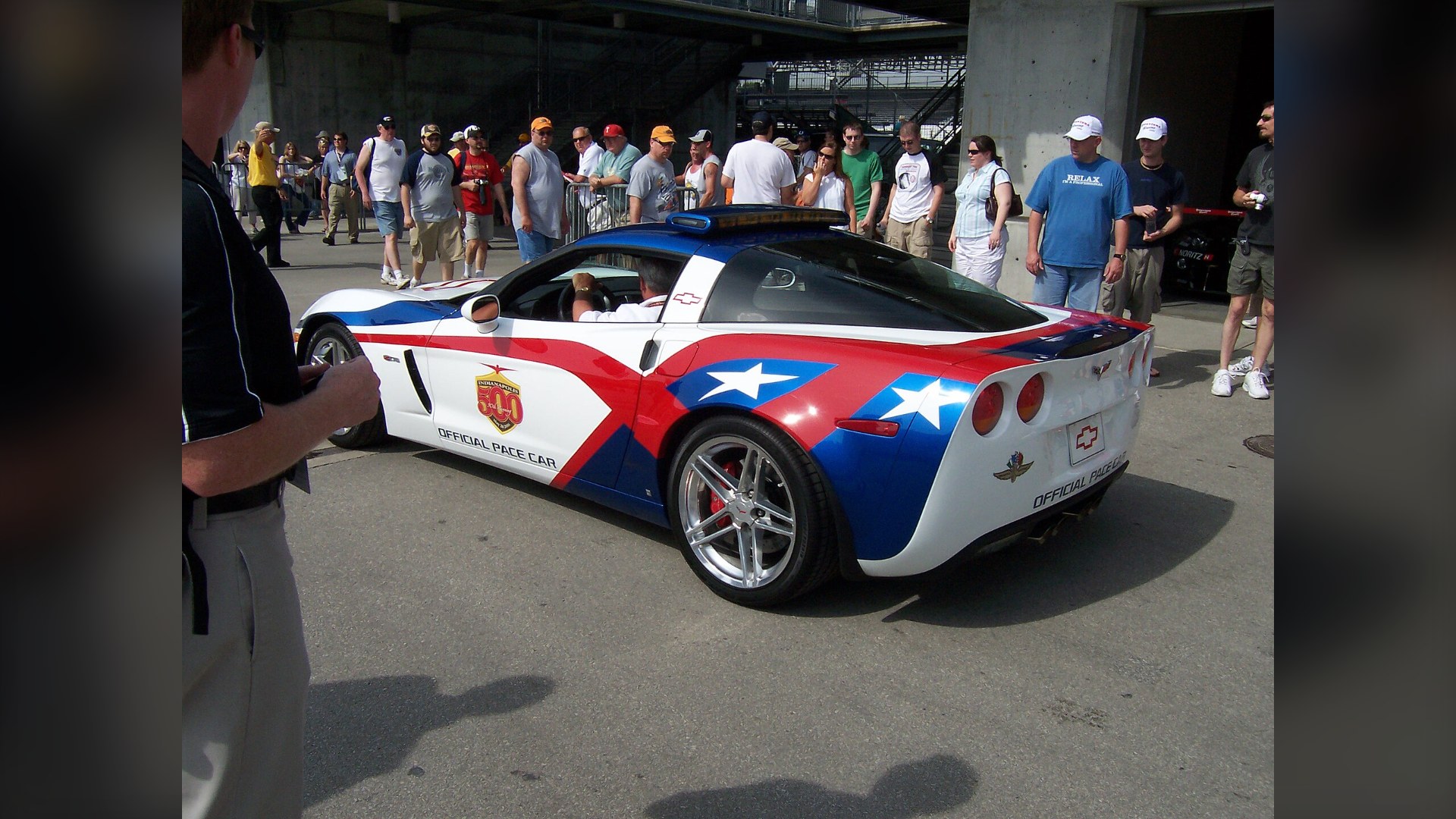
Driven by: Lance Armstrong
Seven years before his doping confession, Lance Armstrong drove the 505-hp Z06. 2006 race recap.
91. 2007: Chevrolet Corvette C6
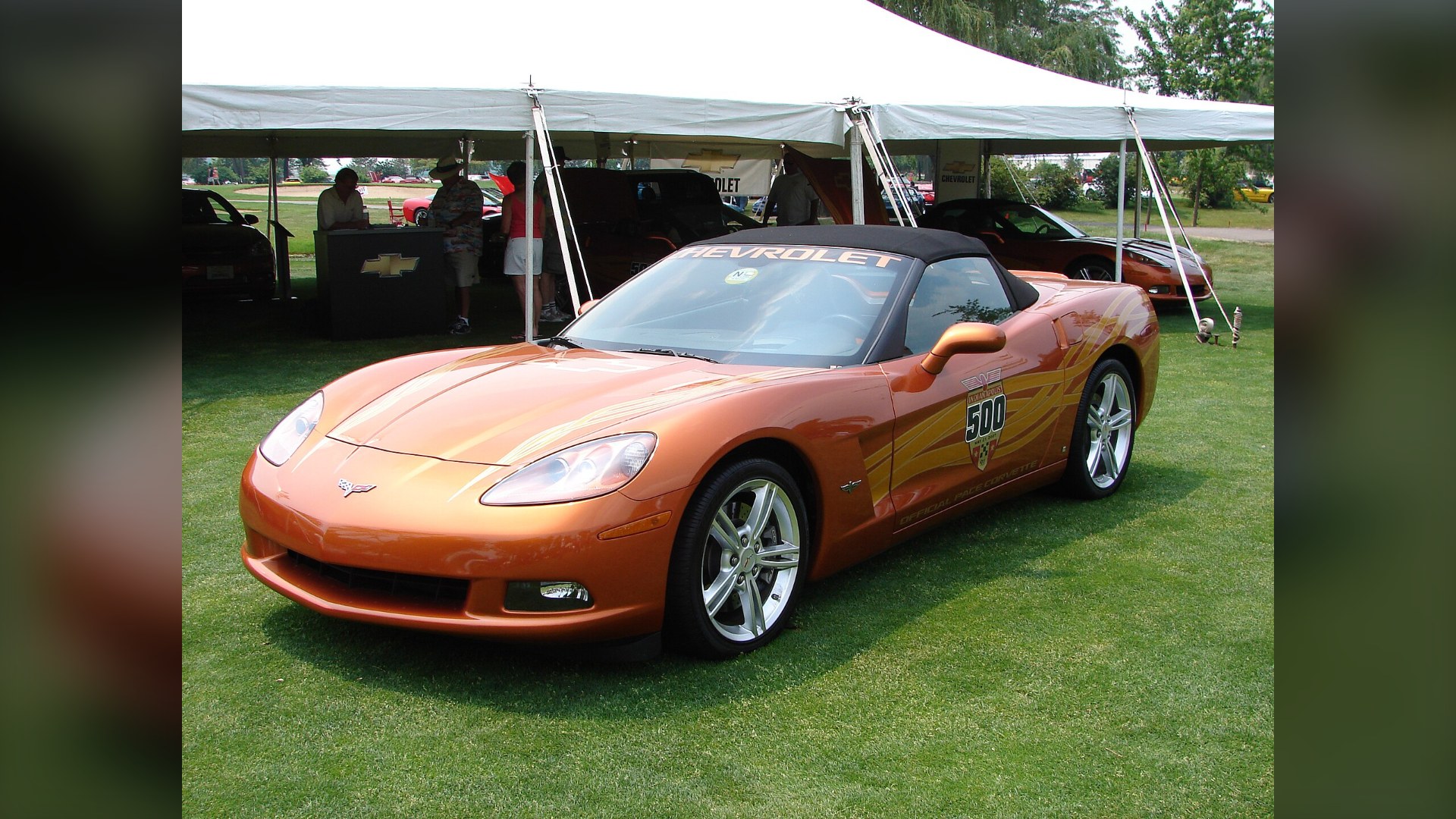
Driven by: Patrick Dempsey
Actor and racer Patrick Dempsey drove a Corvette convertible. 2007 race recap.
92. 2008: Chevrolet Corvette C6 Z06 E85
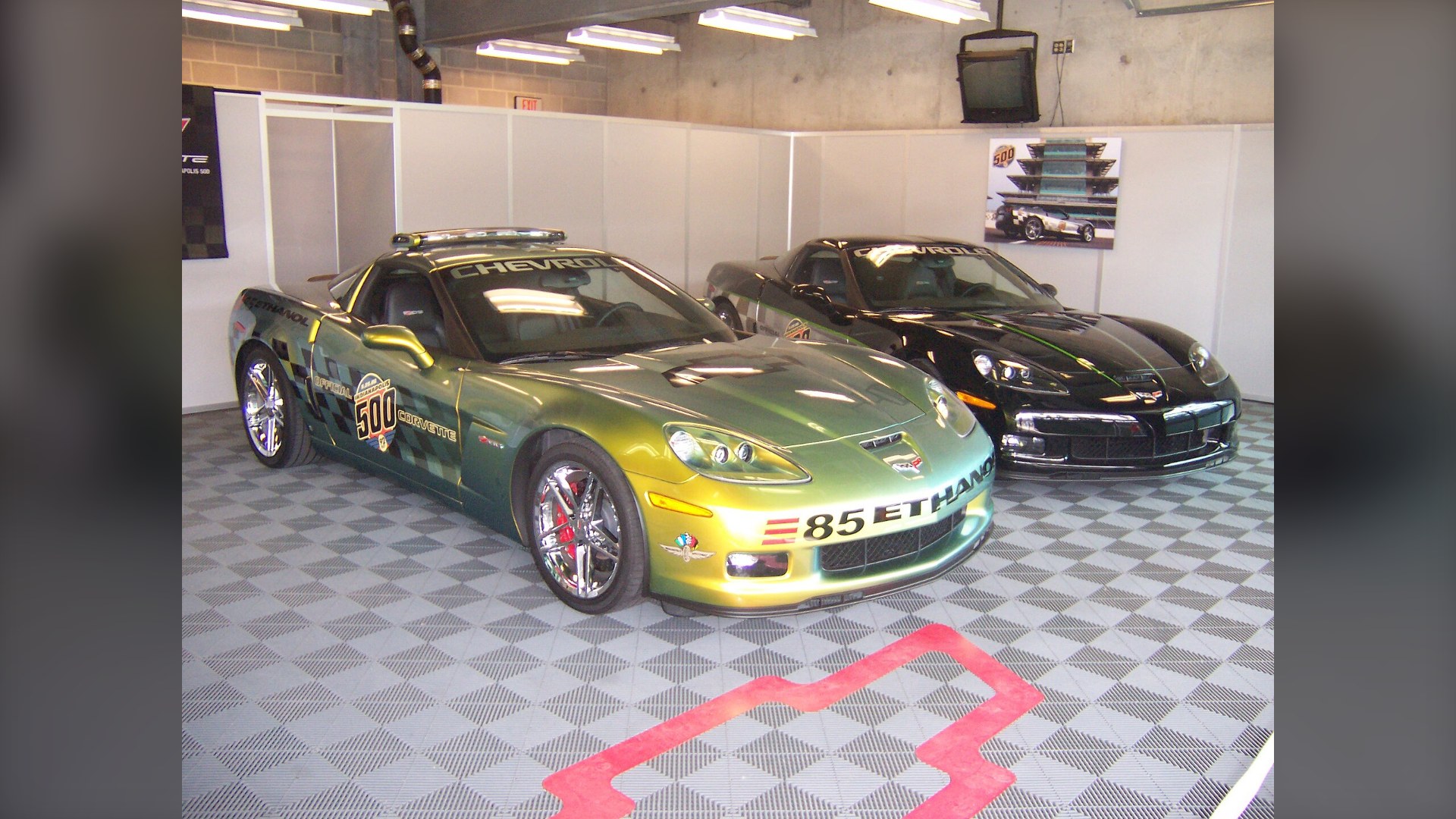
Driven by: Emerson Fittipaldi
An ethanol-fueled Z06 matched the ethanol the IndyCar field was running on. Two-time winner Emerson Fittipaldi drove. 2008 race recap.
93. 2009: Chevrolet Camaro SS
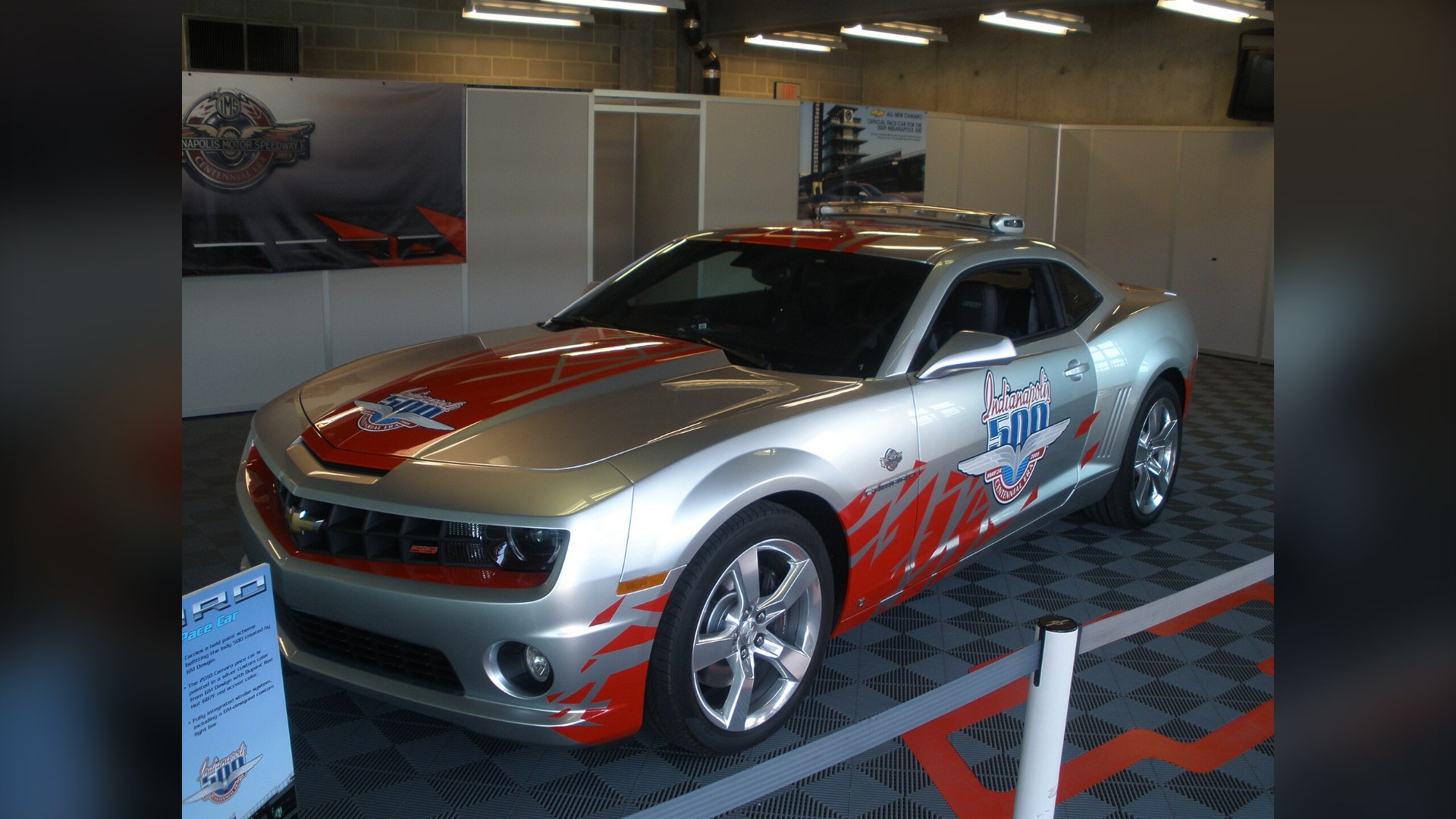
Driven by: Josh Duhamel
The fifth-generation Camaro debuted at the front of the field. 2009 race recap.
94. 2010: Chevrolet Camaro SS
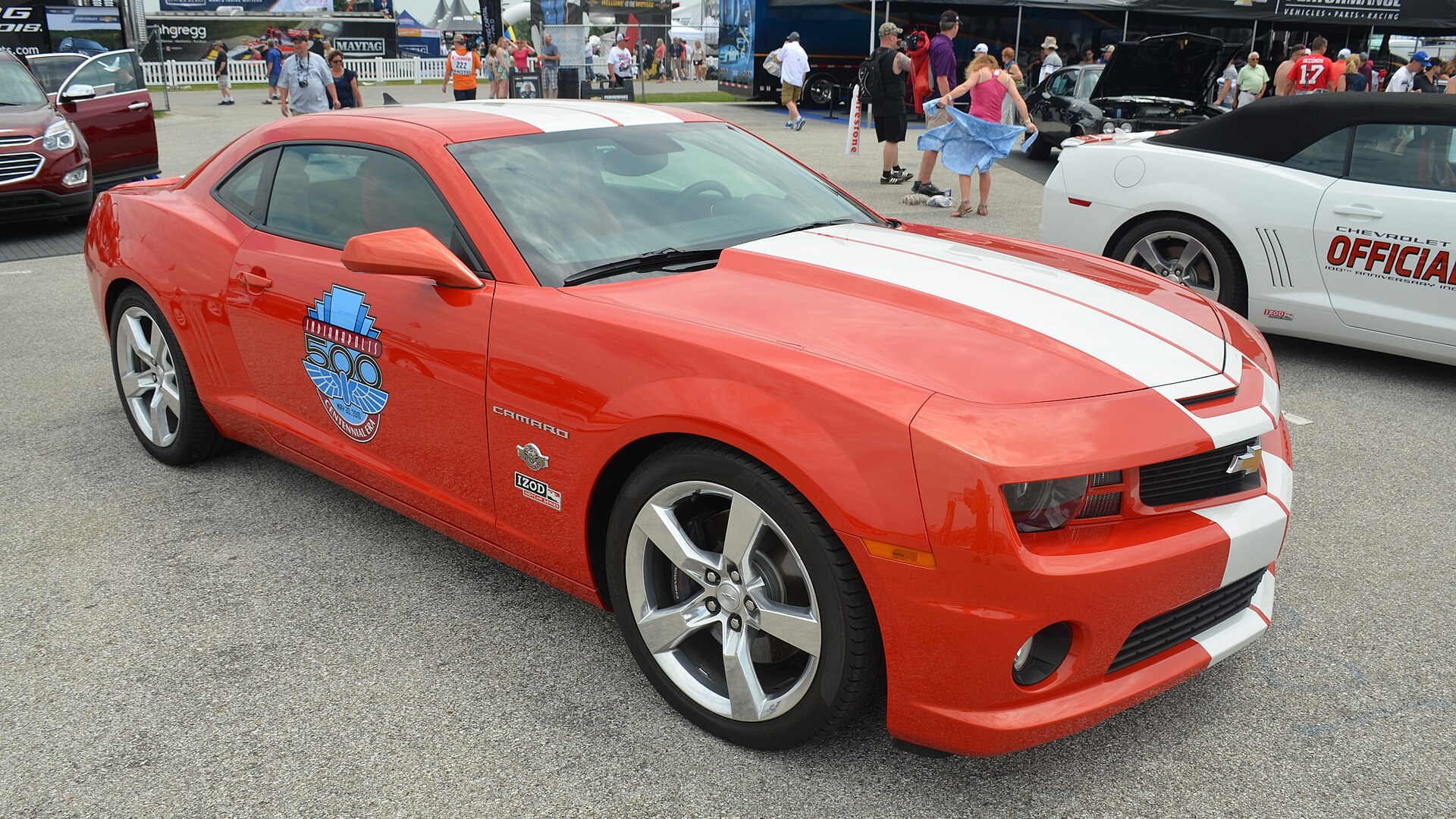
Driven by: Robin Roberts
Good Morning America anchor Robin Roberts drove. 2010 race recap.
95. 2011: Chevrolet Camaro
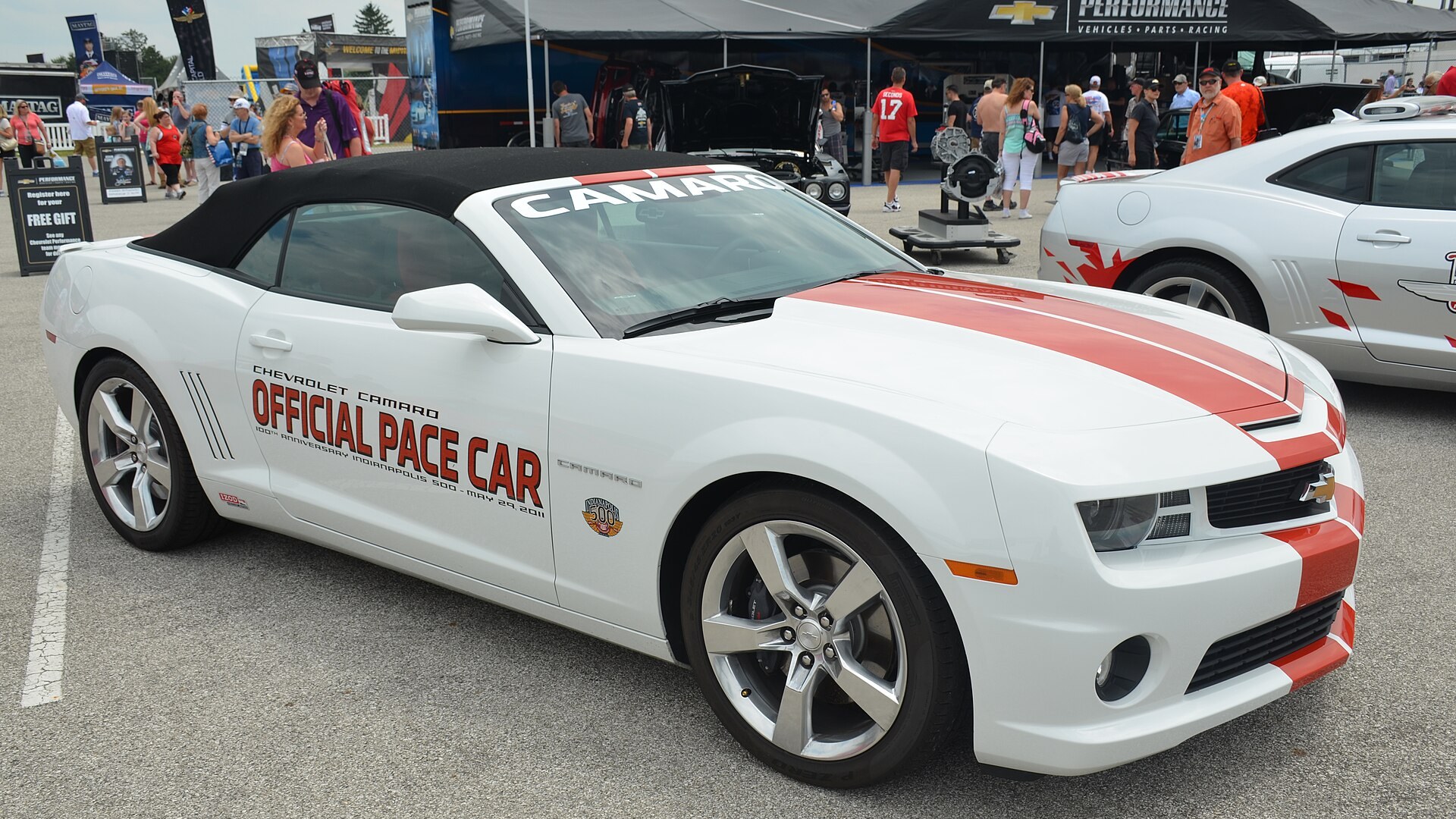
Driven by: A. J. Foyt
Fifty years after his first win, four-time winner A.J. Foyt drove a Camaro at the race’s 100th anniversary. 2011 race recap.
96. 2012: Chevrolet Corvette C6 ZR1
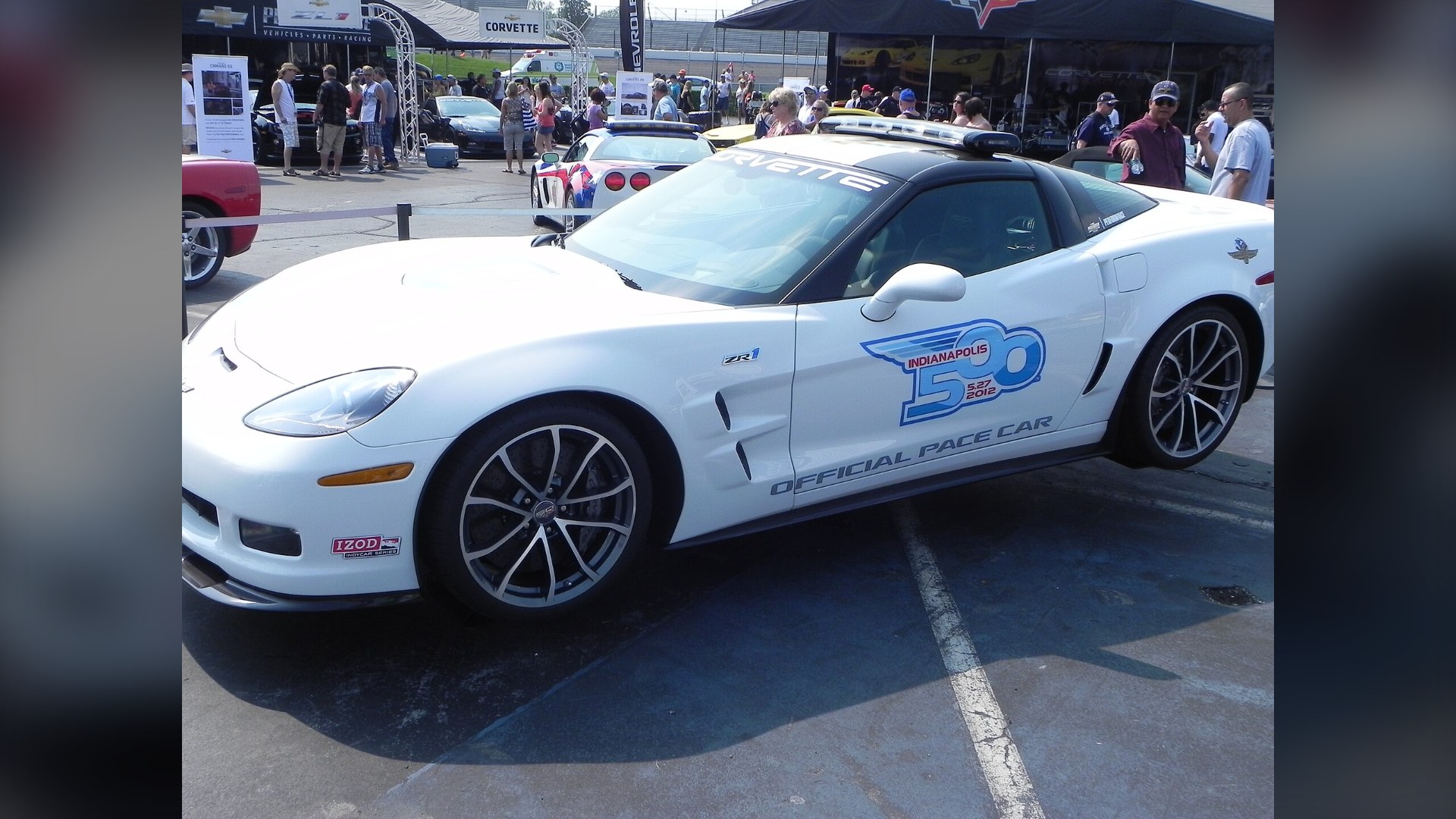
Driven by: Guy Fieri
The supercharged ZR1 marked Chevrolet’s return as an IndyCar engine supplier. 2012 race recap.
97. 2013: Chevrolet C7 Corvette Stingray
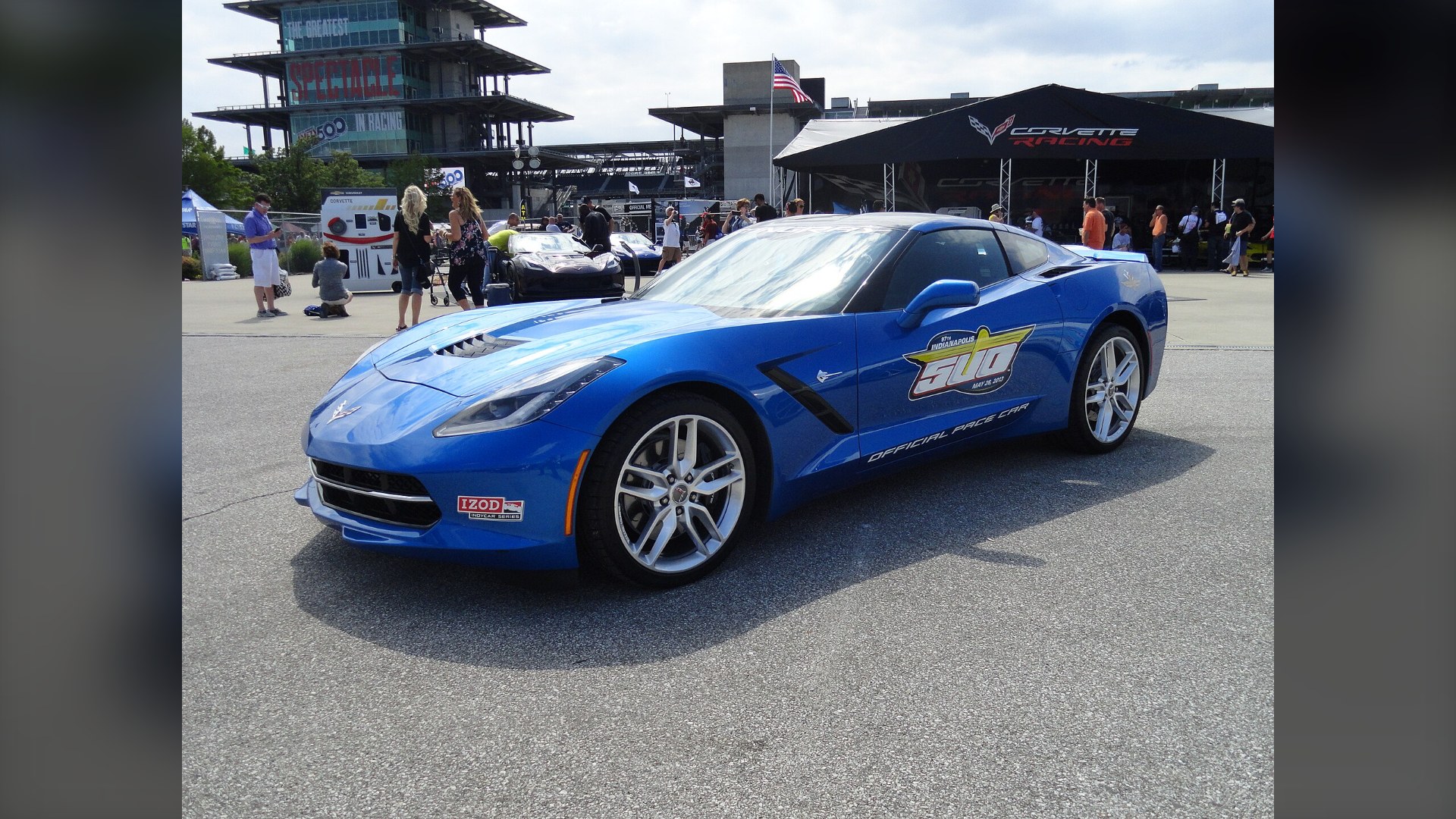
Driven by: Jim Harbaugh
The new C7 Stingray paced the race in its launch year, with the then-San Francisco 49ers coach Jim Harbaugh driving. 2013 race recap.
98. 2014: Chevrolet Camaro Z28
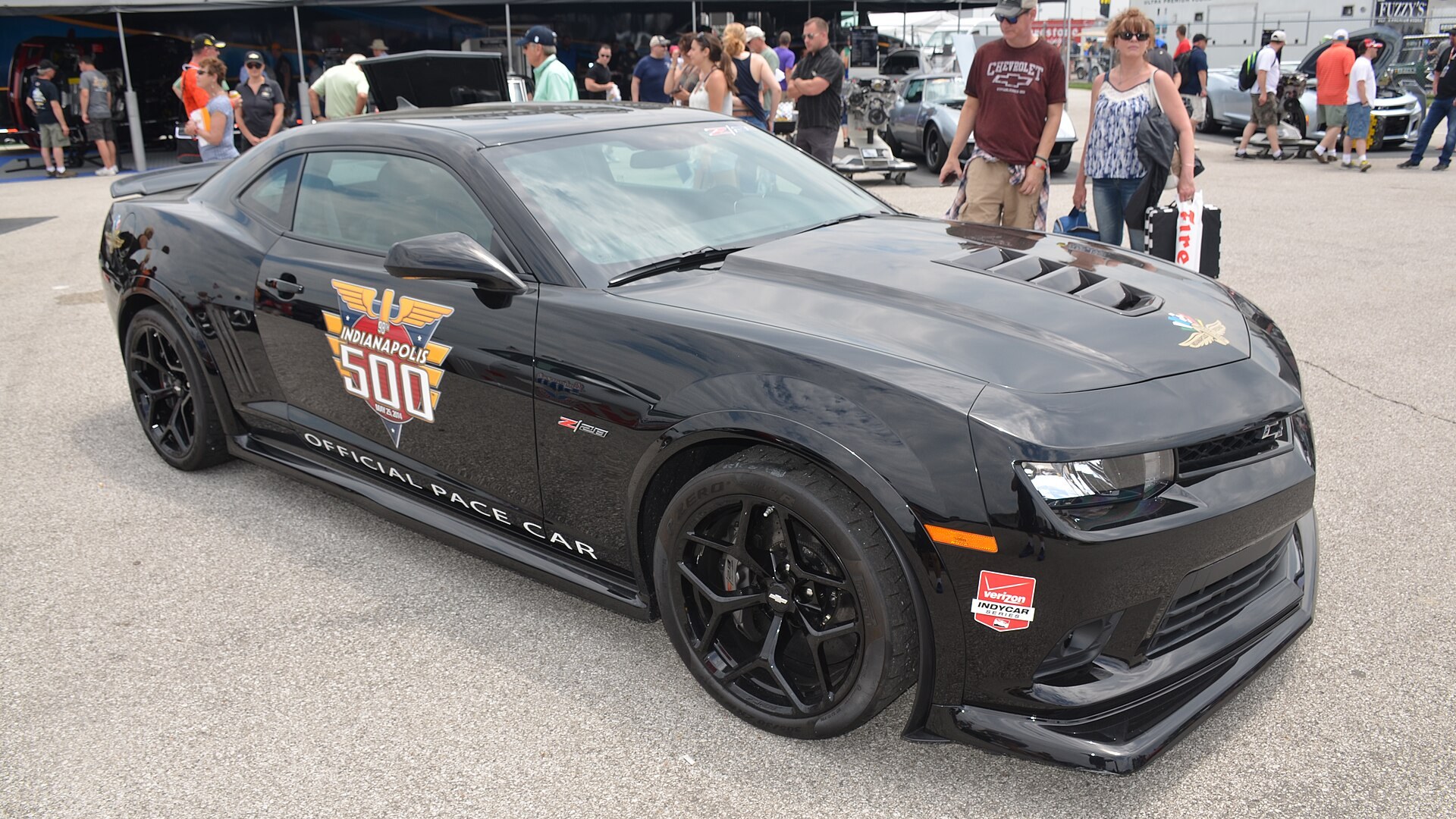
Driven by: Dario Franchitti
Three-time winner Dario Franchitti, retired after a crash in 2013, drove the track-focused Z/28. 2014 race recap.
99. 2015: Chevrolet Corvette Z06
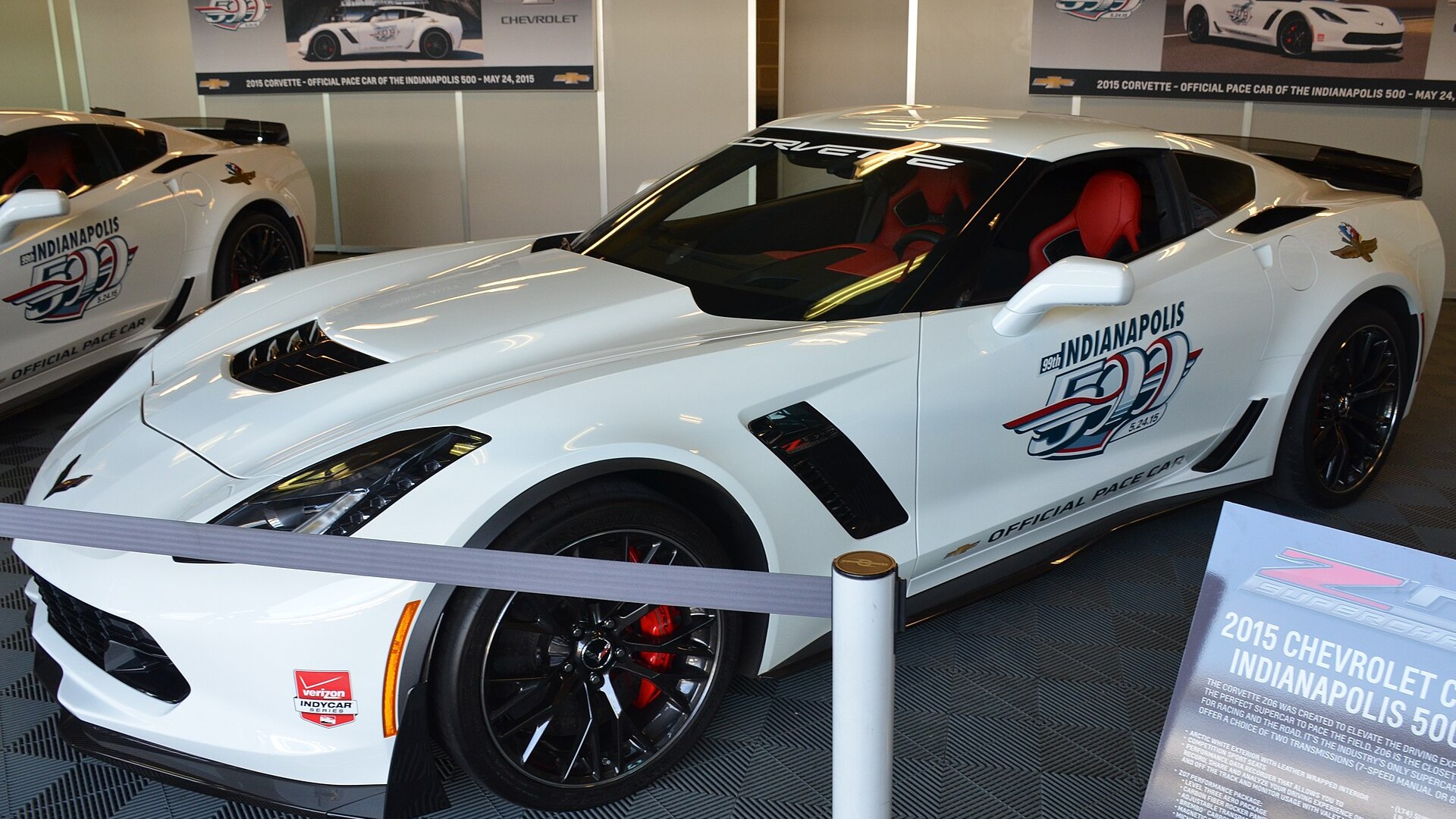
Driven by: Jeff Gordon
NASCAR star Jeff Gordon, who grew up in Indiana, drove the 650-hp Z06. 2015 race recap.
100. 2016: Chevrolet Camaro
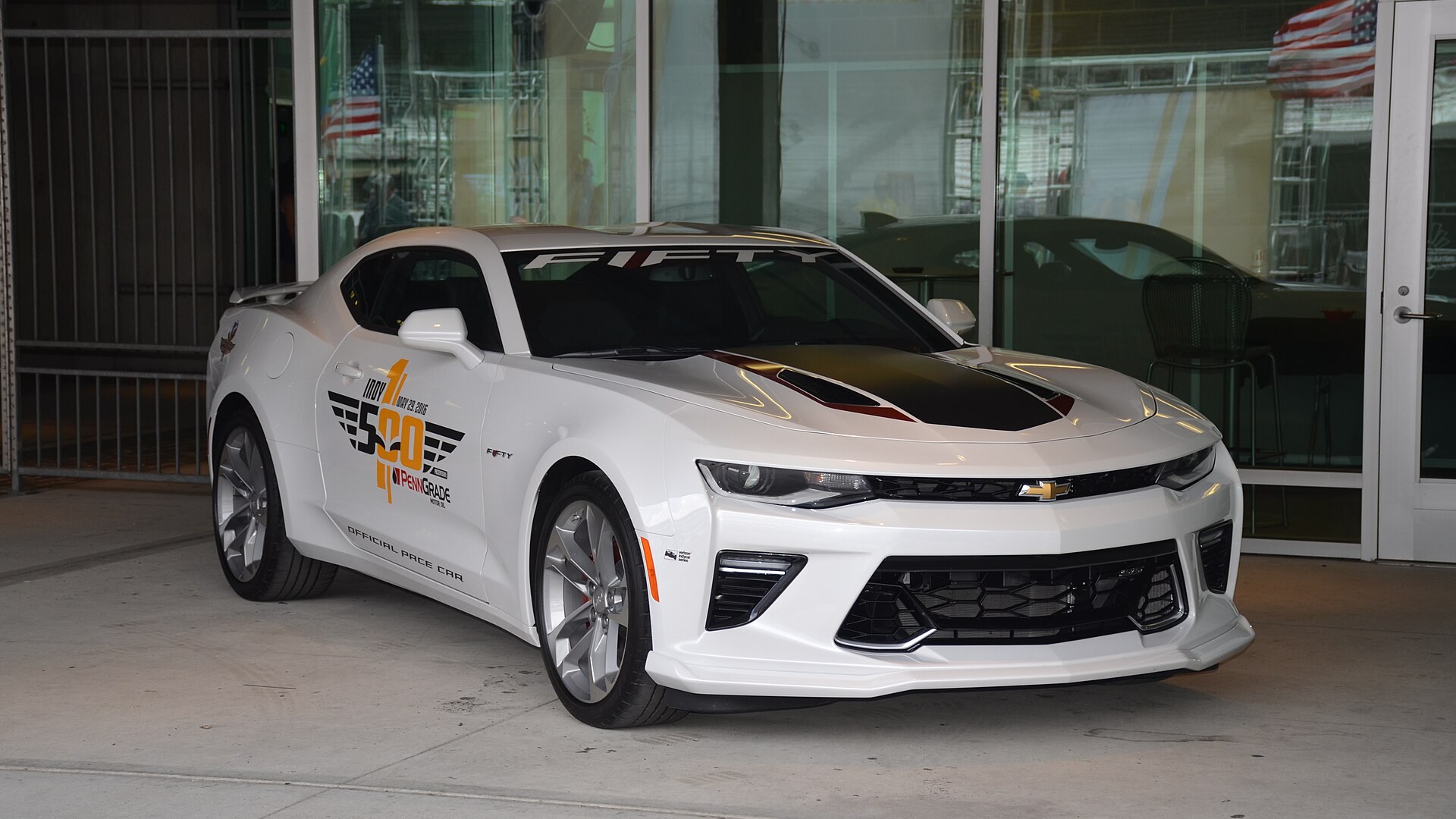
Driven by: Roger Penske
For the 100th running, team owner Roger Penske paced in a sixth-generation Camaro SS. 2016 race recap.
101. 2017: Chevrolet Corvette Grand Sport
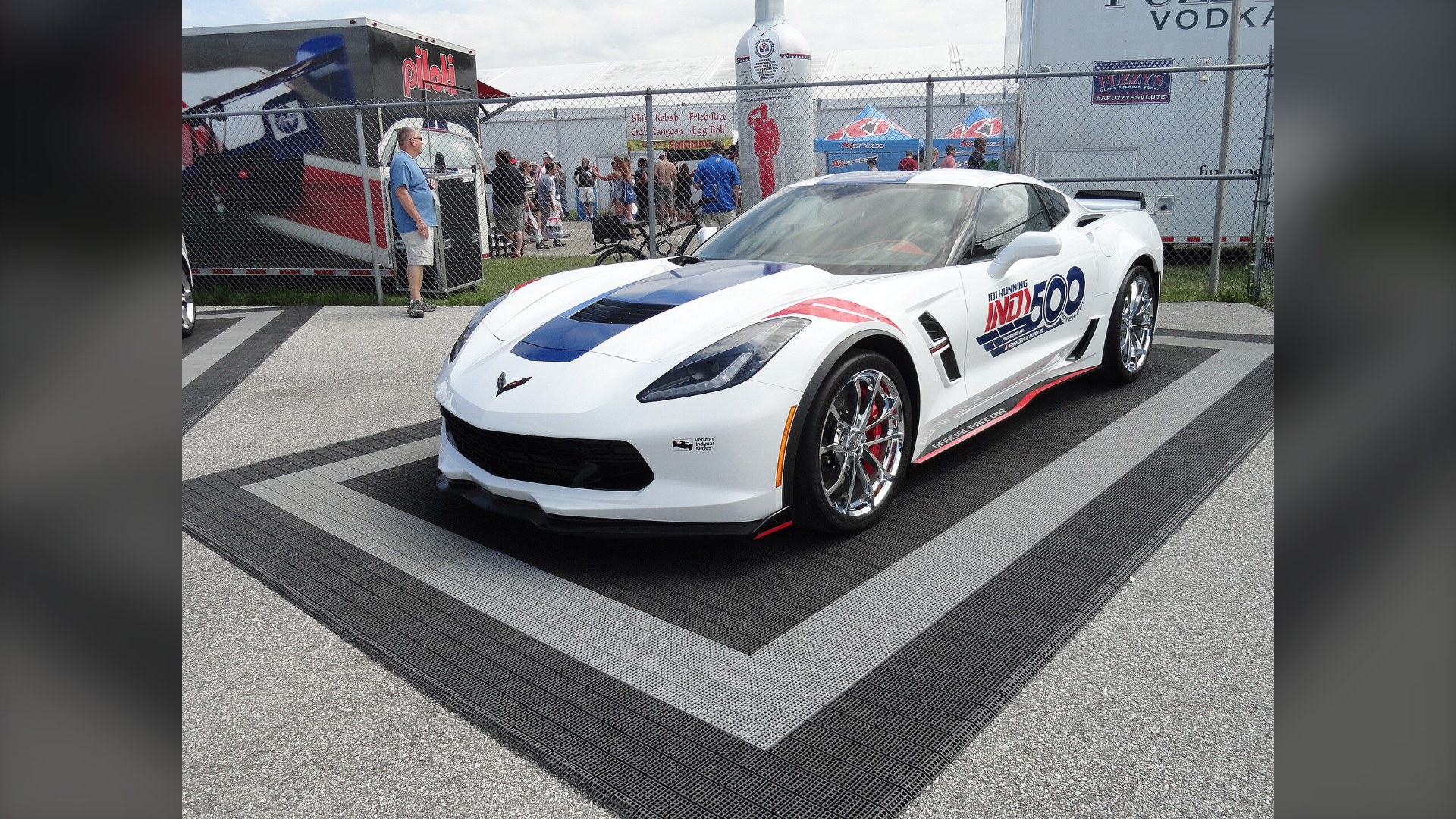
Driven by: Jeffrey Dean Morgan
The Walking Dead actor Jeffrey Dean Morgan drove. 2017 race recap.
102. 2018: Chevrolet Corvette ZR1
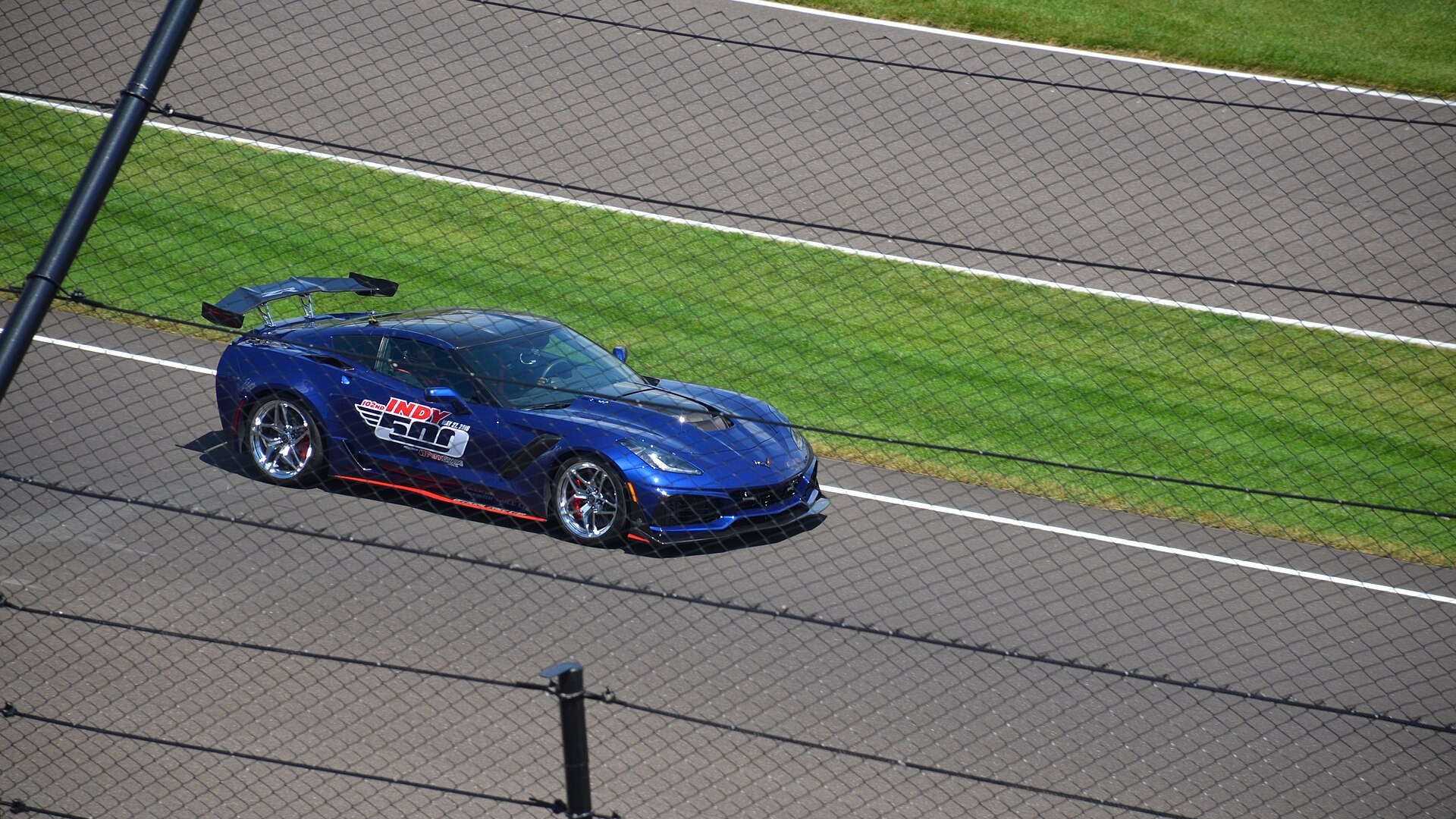
Driven by: Victor Oladipo
Indiana Pacers star Victor Oladipo drove the 755-hp ZR1. 2018 race recap.
103. 2019: Chevrolet Corvette Grand Sport
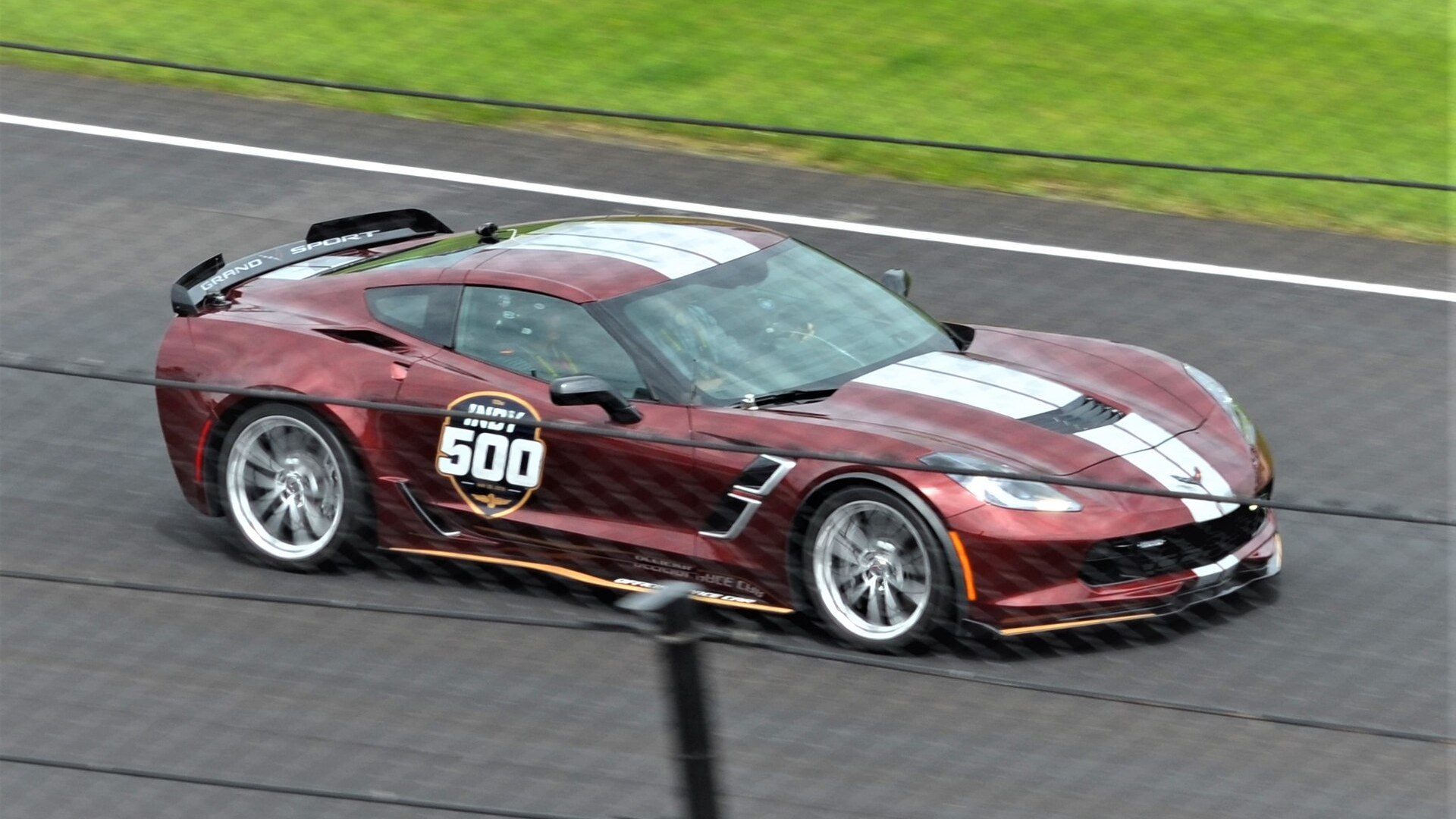
Driven by: Dale Earnhardt Jr.
Dale Earnhardt Jr. drove the last front-engine Corvette pace car. 2019 race recap.
104. 2020: Chevrolet Corvette Stingray
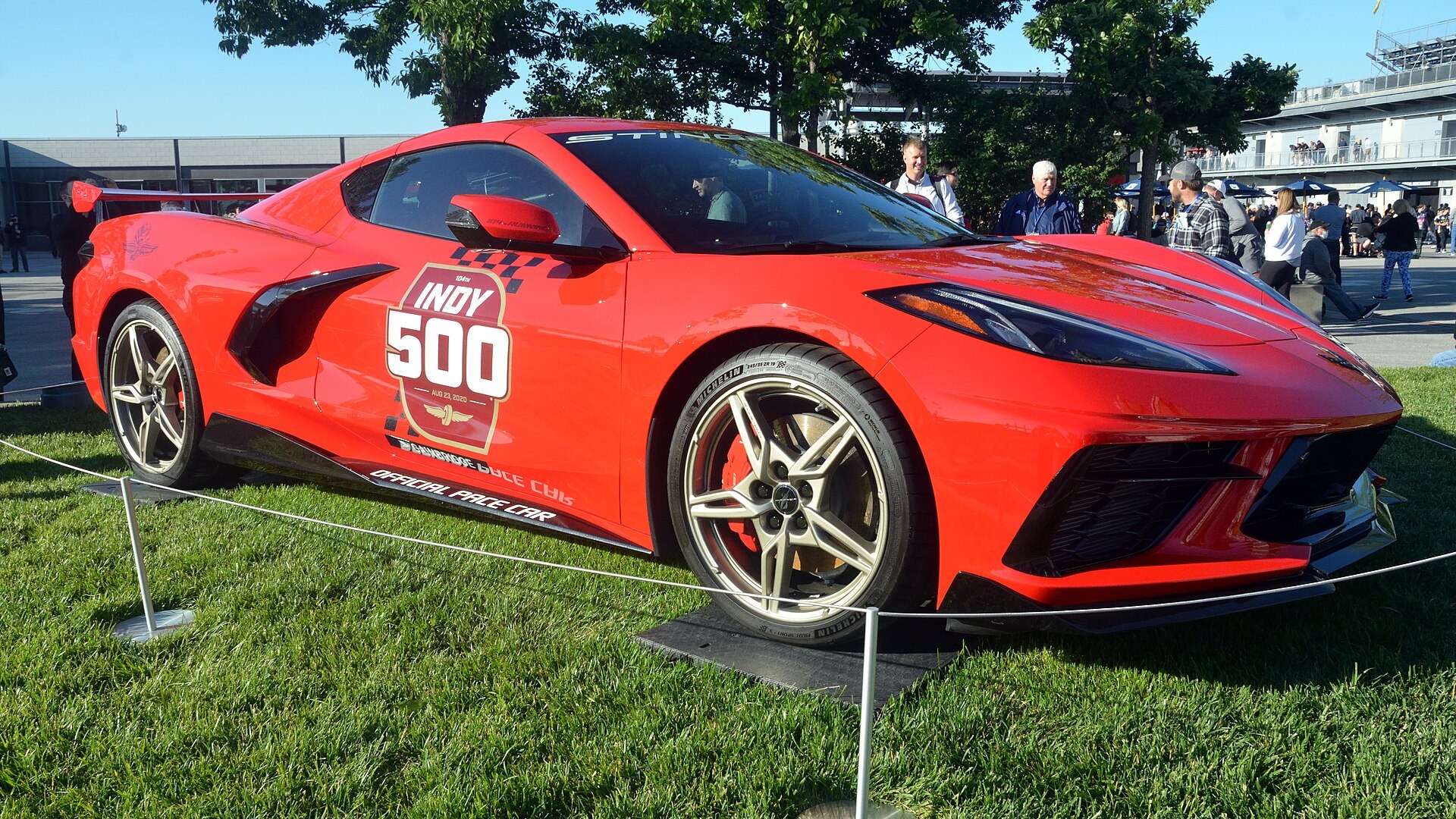
Driven by: Mark Reuss
The mid-engine C8 paced a race moved to August and run without fans because of the COVID-19 pandemic. GM president Mark Reuss drove. 2020 race recap.
105. 2021: Chevrolet Corvette Convertible
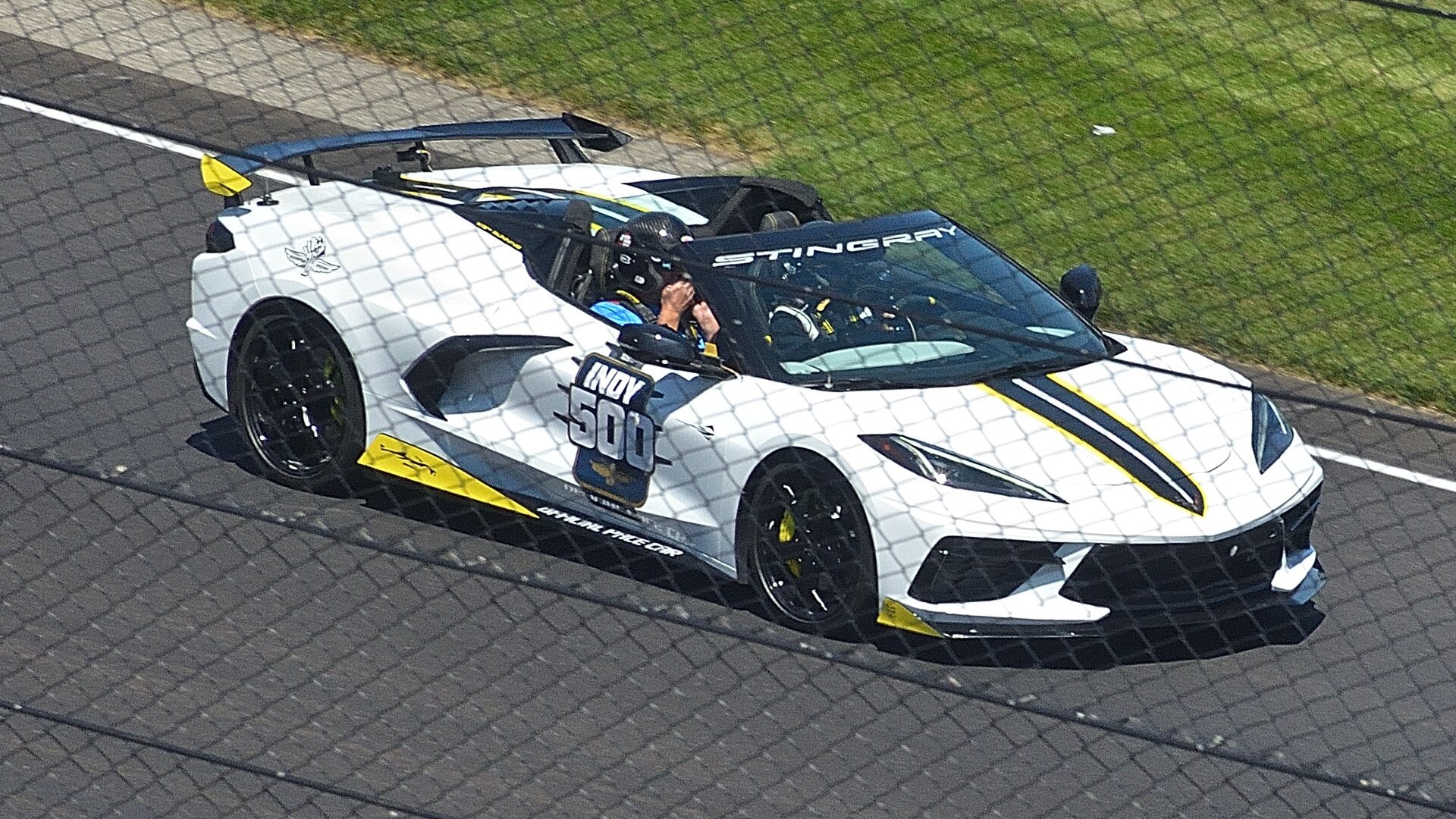
Driven by: Danica Patrick
Danica Patrick, the first woman to lead the 500, drove the C8 convertible. 2021 race recap.
106. 2022: Chevrolet Corvette Z06
Driven by: Sarah Fisher
Former driver and team owner Sarah Fisher paced the field in the flat-plane-crank Z06. 2022 race recap.
107. 2023: Chevrolet Corvette Z06
Driven by: Tyrese Haliburton
Indiana Pacers guard Tyrese Haliburton drove a Z06. 2023 race recap.
108. 2024: Chevrolet Corvette E-Ray 3LZ
Driven by: Ken Griffey Jr.
The E-Ray was the first hybrid and the first all-wheel-drive Corvette to pace the 500. Baseball Hall of Famer Ken Griffey Jr. drove. 2024 race recap.
109. 2025: Chevrolet Corvette ZR1
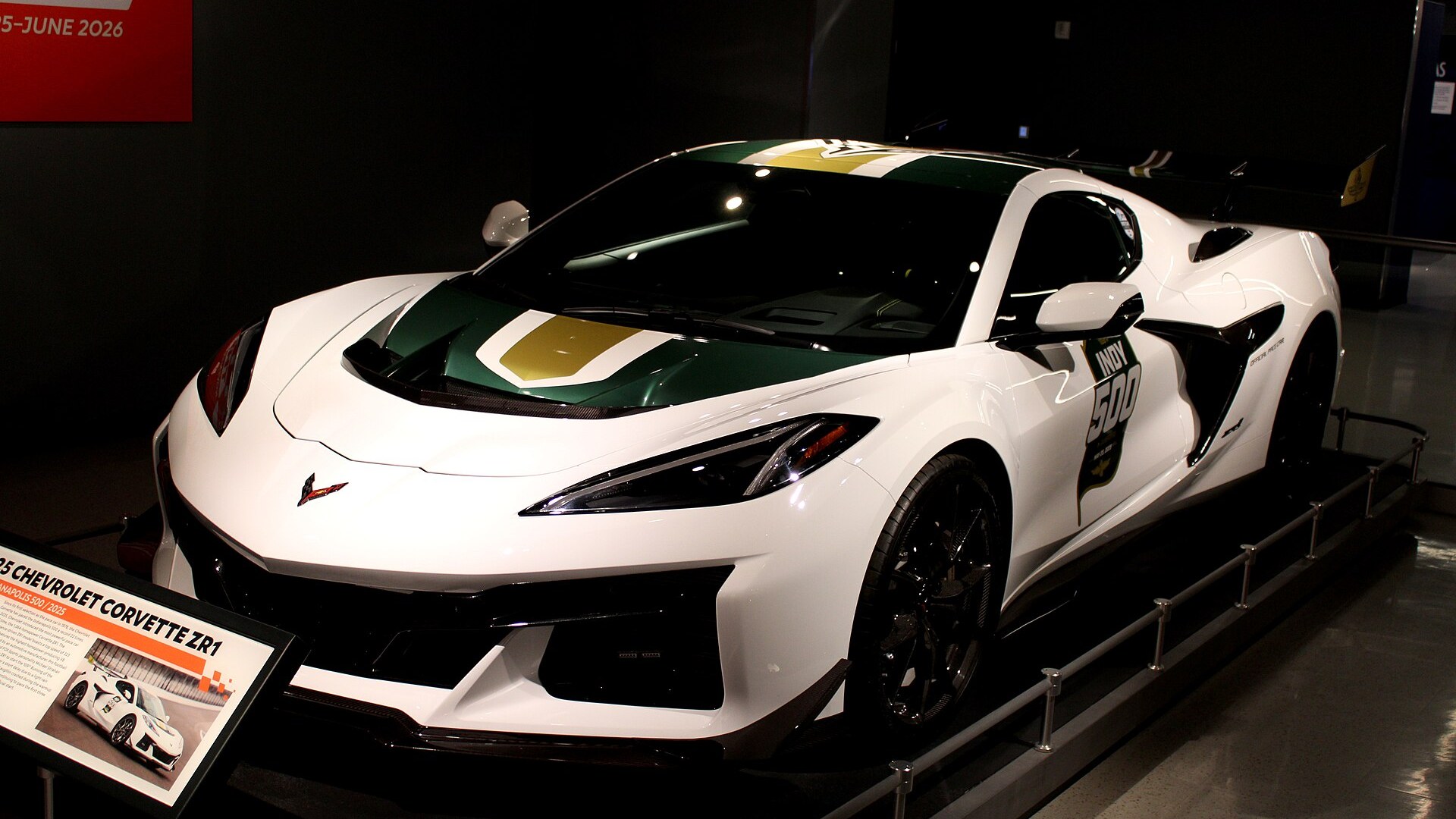
Driven by: Michael Strahan
The 1,064-hp ZR1 led the field, with Pro Football Hall of Famer Michael Strahan at the wheel. 2025 race recap.
110. 2026: Chevrolet Corvette ZR1X
Driven by: Curt Cignetti
For the 110th running, Chevy sent its most powerful car ever: the 1,250-hp hybrid ZR1X. Indiana University football coach Curt Cignetti drove. 2026 race recap.
Why Chevy owns the pace car now
Chevrolet supplies IndyCar engines and has a long partnership with the Speedway. It has paced the race more than any other manufacturer: its first was the 1948 Fleetmaster, and every pace car since 2002 has been a Chevy. The Corvette has handled the job every year since 2017, and the Camaro went out of production after 2023. The cars on track are usually close to stock, with added safety equipment such as strobe lights and harnesses. A Corvette every year is great for Chevy’s marketing department and a little predictable for the rest of us. The list was more fun when a Fiero or a Hurst/Olds could get the call. If you’d won the 500 in any year, which pace car would you want handed to you: the ’69 Camaro SS, the ’78 Corvette, or the 1,250-hp ZR1X?
Sources and image credits
Year-by-year pace car and driver data comes from Wikipedia’s Indianapolis 500 pace cars list. Every photo is from Wikimedia Commons under the license credited in its caption. Some years have no freely licensed photo. Many photos show period replicas, pace cars displayed at museums and events, or (for several early years) another example of the same make and era, not necessarily the exact car that paced the race. Images were resized and cropped to 1920×1080. Featured image collage, cropped and combined by Backfire News. 1915 Packard: Michael Barera / Wikimedia Commons, CC BY-SA 4.0; 1957 Mercury Turnpike Cruiser: Michael Barera / Wikimedia Commons, CC BY-SA 4.0; 1964 Ford Mustang: Michel Curi / Wikimedia Commons, CC BY 2.0; 1969 Chevrolet Camaro SS: Photographed by: Chris J. Moffett / Wikimedia Commons, CC BY-SA 2.0; 1991 Dodge Viper RT/10: Michael Barera / Wikimedia Commons, CC BY-SA 4.0; 2025 Chevrolet Corvette ZR1: Michael Barera / Wikimedia Commons, CC BY-SA 4.0.
About the Author