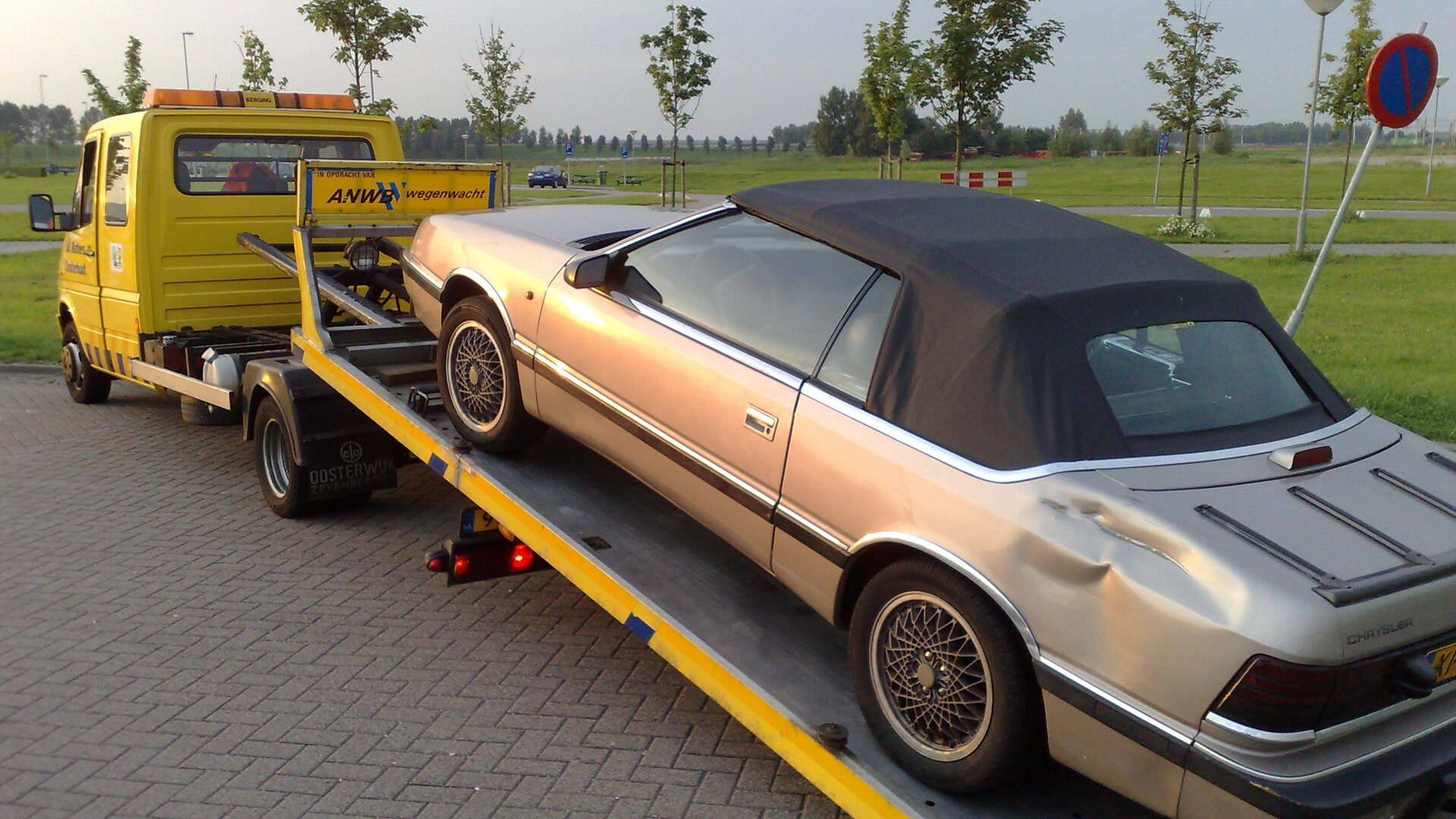
Illustration only: a flatbed tow truck, not the vehicle in this case. Photo: Ruben de Rijcke / Wikimedia Commons, CC BY-SA 3.0
Roland Imming, 59, was booked into the Bexar County Adult Detention Center after a repossession on Silver Wings Drive in south Bexar County, Texas, that deputies say ended with a closed gate and shotgun rounds into a tow truck’s tires while the driver was still inside the cab.
The Bexar County Sheriff’s Office says deputies were sent to the 20000 block of Silver Wings Drive at about 2:15 p.m. Tuesday, Nov. 17, for a reported shooting. Fox San Antonio reported that they found a tow truck with a white pickup on its bed and two flat tires on the driver’s side. According to the sheriff’s office, as KSAT reported, the driver was in the middle of legally repossessing Imming’s white truck when Imming closed the gate to keep the tow truck from leaving and fired multiple rounds from a shotgun toward the driver’s-side tires. No injuries were reported.
KSAT reported that records show Imming faces two counts of second-degree aggravated assault with a deadly weapon, plus hindering secured creditors, tampering with physical evidence with intent to impair, and unlawful restraint. Fox San Antonio’s list adds criminal mischief. Those are accusations, and the reports I found show no plea, bond amount, court date or statement from Imming or an attorney.
Texas lets lenders repossess without a judge, with one condition
Section 9.609 of the Texas Business and Commerce Code says a lender can take collateral after default through court process or, without a judge, “if it proceeds without breach of the peace.” Section 9.602 bars a borrower from waiving that duty in the loan paperwork, so it applies whatever the contract says. The language comes from the uniform commercial code, which other states have adopted in their own versions, and each state’s courts decide what counts as a breach of the peace in practice.
The sheriff’s office calls this repossession legal. The reports don’t say how the driver reached the truck, whether the gate was open when he arrived, or whether Imming told him to stop before the gate closed. Those answers decide whether anyone argues the repossession itself broke the rule.
A disputed repossession becomes a damages claim
The same chapter of the code gives a borrower who thinks a lender broke the rules a way to fight back. Section 9.625 lets a court order or restrain collection of collateral when a secured party isn’t following the chapter, and it makes the lender liable for the borrower’s resulting loss. If the collateral is consumer goods, which covers a vehicle bought mainly for personal or family use, the borrower can recover at least the credit service charge plus 10 percent of the loan’s principal amount. That minimum applies whether or not the borrower can show a loss. The civil-versus-criminal line also came up in Backfire News’ report on a Dallas dealer accused of repossessing the same Tesla six times, who says the dispute is civil.
What each charge requires
Hindering secured creditors, Penal Code Section 32.33, reaches only a person who signed the security agreement. It covers destroying, removing, concealing, encumbering or otherwise harming or reducing the value of the secured property with intent to hinder the lender’s enforcement. The statute presumes that intent when the borrower missed a payment that was due and, if the lender demanded it, didn’t hand over the property. Punishment depends on the value of what was harmed: a Class C misdemeanor under $100, a state jail felony from $2,500 to under $30,000, and higher felony grades above that. The reports don’t say what act the count rests on or what value prosecutors assigned.
Texas defines assault to include intentionally or knowingly threatening another with imminent bodily injury under Section 22.01(a)(2), so no one has to be hit. Using or exhibiting a deadly weapon makes it aggravated assault under Section 22.02, a second-degree felony, which carries two to 20 years in prison and a fine of up to $10,000. With no injuries reported, the threat provision is the one that fits these facts, and the charging documents will show which theory prosecutors chose. The reports also don’t say who the second count names, since only one driver has been described.
Unlawful restraint is a Class A misdemeanor, the top misdemeanor grade, unless an enhancement applies. It becomes a third-degree felony when the person recklessly exposes the victim to a substantial risk of serious bodily injury. KSAT’s report doesn’t say which grade was charged.
What the case file will show
The arrest affidavit and any indictment should show what the hindering count rests on, what the tampering count refers to, and who the second assault count names. The lender and the repossession company haven’t been named in the reports I found, and none of them says what became of the pickup.
Repo drivers: what do you do when the gate closes behind you?
About the Author