Screenshot
On a residential block in San Bernardino, California, there’s a modest single-story house behind a wrought-iron fence with a driveway that, for one afternoon in late August, held more exotic machinery than most Ferrari showrooms carry at once. Jesús Ortiz Paz — the tattooed, sunglassed frontman known to millions as JOP, who fronts the regional Mexican group Fuerza Regida — posted a set of photos standing between two matte-black Ferrari Enzos, their scissor doors thrown open like a pair of switchblades, parked nose-to-nose in front of the house where he grew up. The caption was simple: “Who trynna join my lobby? I’m just different baby.” The comment section did the rest of the bragging for him.
What Was Actually Sitting in the Driveway
Between the photos and an accompanying clip of a car hauler idling on a Southern California boulevard, JOP’s own audience counted seven vehicles that made the trip that day. Beyond the two black Enzos, the visible lineup included a black coupe wearing the scalloped intakes and red brake calipers typical of Ferrari’s naturally aspirated V12 era, plus a deep maroon convertible with its top stowed. Other clips from the same visit show JOP shaking hands with a dealership representative across a paperwork-covered desk, and a nighttime shot of him walking toward a row of black Enzos parked outside an illuminated Ferrari storefront sign — evidence that at least part of this fleet came straight from a franchised dealer rather than a private seller.
Nobody involved published an appraisal, and the widely repeated $20 million figure floating around social media didn’t originate from JOP, Ferrari, or any auction house — it started as a caption on a fan account and got copied from there ever since. Treat it as an estimate, not an invoice.
View JOP’s original Instagram post documenting the delivery.
The Enzo Math Nobody’s Doing
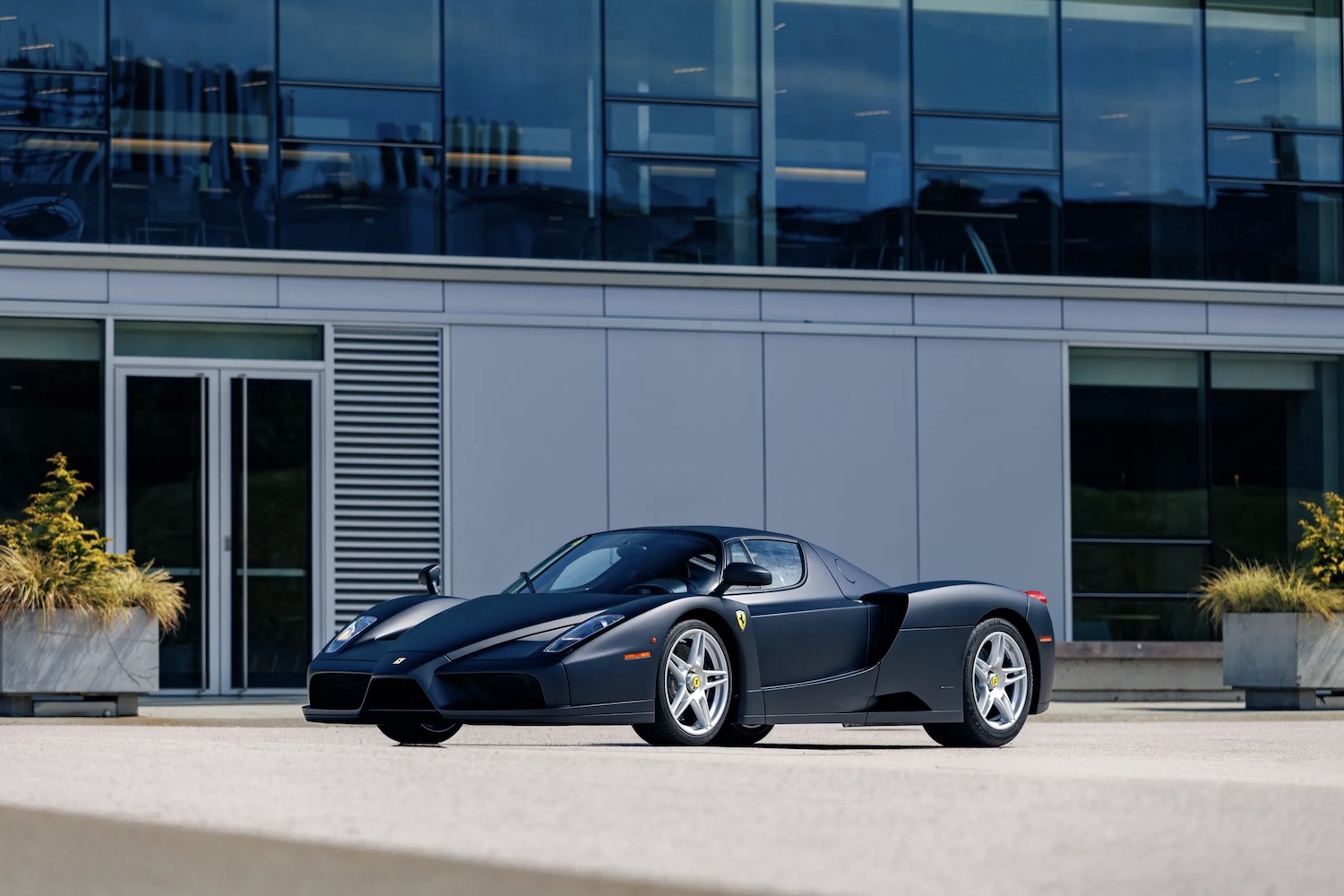
Whatever the other five cars are worth, the Enzos alone are not a rounding error. Ferrari built exactly 400 of them between 2002 and 2004, and the factory hand-selected buyers rather than taking open orders — owning several other Ferraris first was effectively a prerequisite. Each one carries a 6.0-liter F140 V12 rated at 660 horsepower, paired with a six-speed automated-manual gearbox whose paddle-shift logic borrowed directly from Ferrari’s Formula 1 program under Ross Brawn and Rory Byrne. Pininfarina designer Ken Okuyama drew a body with no glass covering the headlights and a nose lifted almost straight off the F1 cars of the era, because the Enzo was Maranello’s answer to the McLaren F1: as much race-derived hardware as street-legal rules would allow.
Ferrari’s original invoice for one ran about $660,000 in 2003. That number reads like a rounding error today: a clean Enzo sold for $4.075 million at Monterey Car Week in 2023, and Backfire News covered another low-mileage example that carried a $5 million to $6 million estimate heading into a January Arizona sale. Two of them sitting in JOP’s driveway alone could represent $8 million to $12 million of that reported $20 million total — before anyone even prices the rest of the fleet.
Shipping and Insuring a Fleet Like This
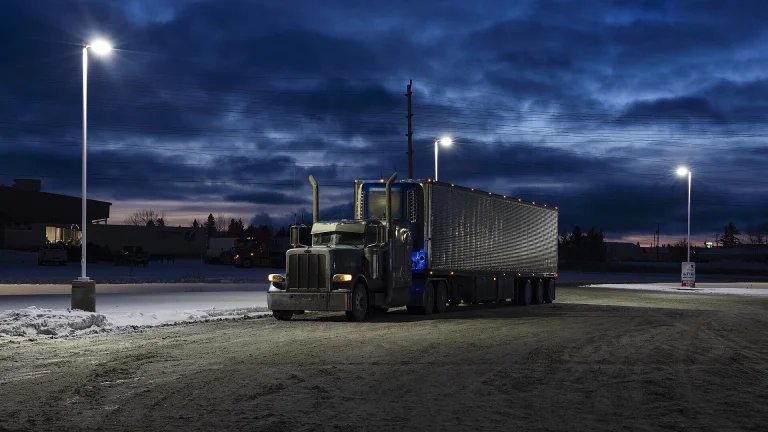
Getting that kind of money onto a residential street isn’t as simple as backing out of a garage. The transport clip JOP posted shows an enclosed multi-car hauler, the kind exotic dealers and relocation companies use specifically because open trailers expose seven-figure paint to rock chips, road film, and anyone with a phone camera and bad intentions. Shipping a load like that typically runs on a transporter’s cargo policy with agreed-value coverage matched to each car’s appraised worth, since a standard per-item liability cap on a generic cargo policy would leave a total loss badly underinsured.
Once the cars are parked at the curb, the exposure shifts. A policy underwritten for garage-kept exotics in a gated community doesn’t automatically extend full value coverage to a car parked overnight on a different, unsecured street, and insurers increasingly factor in parking location, camera coverage, and how long a vehicle sits exposed before adjusting premiums or denying claims outright. A driveway full of Enzos is a flex; it’s also, technically, an underwriting headache.
The Bigger Picture
None of this is unique to corridos tumbados or to JOP. Backfire News has covered a seven-car supercar convoy that got pulled over for hitting 85 mph in a 45 zone on a Colorado mountain highway, and watched a rapper’s Mercedes end up making headlines for a crash instead of a music video. Exotic metal photographs beautifully right up until it doesn’t, and the collector market has its own way of keeping score regardless of who’s behind the wheel — a low-mile Shelby GT500 once owned by a musician sold for more than its original sticker price purely because of who signed the title, a reminder that celebrity ownership can move a price tag just as easily up as it can down.
What happened on that block in San Bernardino wasn’t really about the sticker price, anyway. It was a kid who grew up there driving the dealership’s greatest hits back to the driveway where none of this used to fit. The Enzos will get parked back in climate-controlled storage soon enough. The block will remember it regardless of what the other five cars turn out to be worth.
About the Author