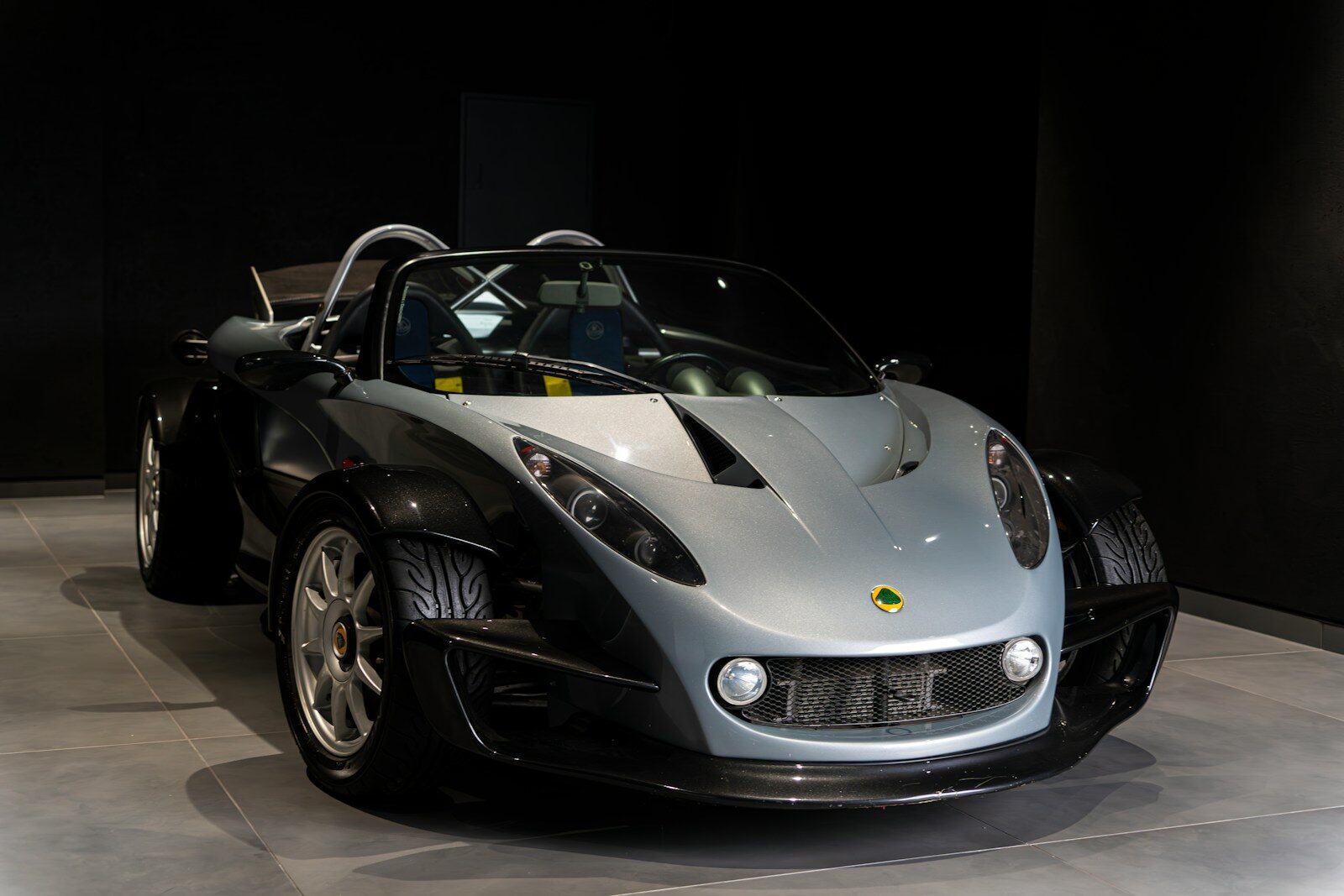
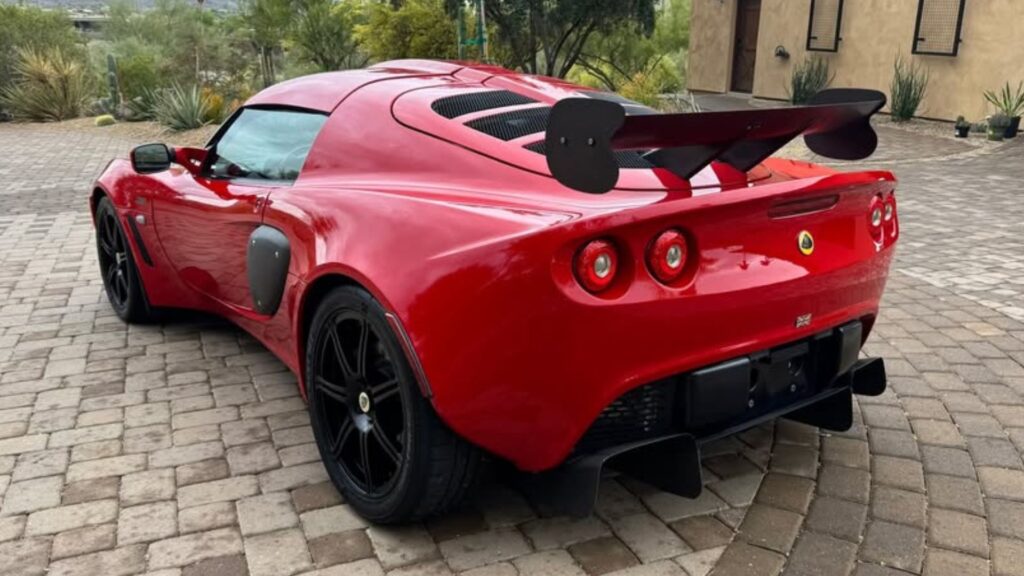
The first customer car is finished, and only 35 will ever exist. That’s a serious number to put next to a car that stickered for under $40,000 new and today trades in the $20,000-to-$50,000 range depending on condition and how many previous owners took it to track days. Analogue isn’t selling nostalgia. It’s selling an entirely different car wearing an Elise’s silhouette.
A Single Seat With Racing DNA, Not a Marketing Gimmick
Centering the driver isn’t symmetry for its own sake. The original Elise’s aluminum tub was bonded and riveted around two seats sitting side by side, with the chassis rails, sills, and bulkheads all located to suit that layout. Moving a single seat into the middle means rethinking where the driver’s mass sits relative to the car’s roll axis and front-to-rear weight split — the same logic that made the McLaren F1’s central seat a genuine handling advantage rather than a party trick. Analogue is leaning on Lotus’s own history to justify the layout: the automaker once ran a single-seat competition Elise in the old Autobytel Lotus Championship, and the VHPK borrows that car’s driving position instead of inventing one from scratch.
Carbon Everywhere, and a Number on the Scale That Actually Matters
Every body panel on the VHPK is carbon fiber, and Analogue fitted carbon-ceramic brakes and ultralight carbon wheels to cut unsprung mass along with overall curb weight. The finished car weighs roughly 600 kilograms — about 1,323 pounds, or lighter than a base Mazda Miata by nearly half. Paired with more than 250 horsepower, that works out to a power-to-weight ratio of about 400 horsepower per metric ton, a figure that puts it in the same conversation as purpose-built track cars rather than anything else with a license plate. It’s the kind of obsession with mass that McMurtry’s fan-powered Spéirling takes to an even further extreme, though Analogue is chasing the same goal with carbon layup and packaging discipline instead of downforce trickery.
The Engine Stays Old-School, Even If Nothing Around It Does
Rather than dropping in something exotic, Analogue kept the Elise’s original Rover K-Series engine and reworked it from the inside out. Displacement grows from 1.8 to just under 1.9 liters, and bespoke billet and forged internals help the four-cylinder clear 250 horsepower reliably — big numbers for an engine that left the factory happy with roughly 118 horsepower in the base Series 1 Elise. Analogue hasn’t published full driveline specifics for the VHPK, but the company’s existing SuperSport model, a less extreme Elise restoration in its lineup, pairs its own uprated K-Series with a close-ratio five-speed manual and a Quaife limited-slip differential. If the VHPK follows that formula, expect a gearbox that punishes lazy shifting and rewards a driver who still enjoys working a clutch pedal — a dwindling pleasure in an era when Fernando Alonso’s $11.7 million Pagani Zonda made news specifically for having three pedals.
35 Cars, One Very Specific Kind of Buyer
Production is capped at 35 examples worldwide, each individually numbered, with ordering opening through Analogue Automotive in 2026. Pricing starts at £350,000 before tax — roughly $472,500 — and that figure includes the donor Elise S1 that Analogue sources and rebuilds around. That detail matters more than it looks. Clean Series 1 Elises have climbed in value for years as the used-Lotus market catches up to what enthusiasts already knew: these are among the purest-feeling chassis you can buy for the money, and there are fewer good ones left every year. Baking the donor car into the price insulates Analogue from that inflation, but it also means buyers are paying for an increasingly scarce base car, not just carbon fiber and machine work.
That dynamic isn’t unique to Lotus. The restomod market broadly has turned old, once-affordable platforms into six-figure commissions, whether it’s a 550-horsepower Ford F-150 that crossed a Barrett-Jackson stage or a numbers-matching classic getting a modern drivetrain transplant. What’s happening to the Elise is the same story with a British accent: a car nobody worried about wrecking on a track day in 2003 is now expensive enough to need a vault.
What Owning One Actually Looks Like
A center-seat, single-occupant cockpit isn’t a paperwork problem everywhere, but it complicates registration in markets that regulate seating position, mirrors, and occupant protection by seat location — worth confirming through a country’s type-approval or kit-car process before writing a deposit check, since Analogue builds these in the UK and international buyers handle their own compliance and shipping. American buyers face an added wrinkle: the VHPK is a heavily reconstructed, low-volume vehicle rather than an unmodified older car, so it doesn’t automatically qualify for the same import path as a 25-year-old original Elise brought in under NHTSA’s exemption. Anyone serious about bringing one stateside should talk to an import specialist before assuming the paperwork is simple.
Insurance is its own conversation. A 250-horsepower, 600-kilogram carbon car with one seat and a six-figure replacement cost calls for a specialty insurer, not a mainstream provider, and agreed-value coverage is worth arranging before the car ever turns a wheel on public roads. Maintenance shouldn’t scare anyone away mechanically — the K-Series is a well-understood engine with decades of aftermarket support — though the design’s old reputation for head gasket trouble in high-mileage examples is exactly why Analogue rebuilds the internals rather than leaving the original bottom end in place.
For the collector-car market, the VHPK is a useful data point. Money that used to chase six- and seven-figure results at events like Monterey Car Week is increasingly willing to fund small-batch, engineering-led projects instead of only buying finished history. Analogue is betting buyers want a car that feels like an engineering thesis on lightness as much as they want a name on the fender. At $472,500 for 35 cars, they’re about to find out if that bet pays off.
Your Turn: Is a center-seat Elise worth nearly half a million dollars to you? Sound off in the comments.
About the Author