Photo: fr0ggy5 / Unsplash
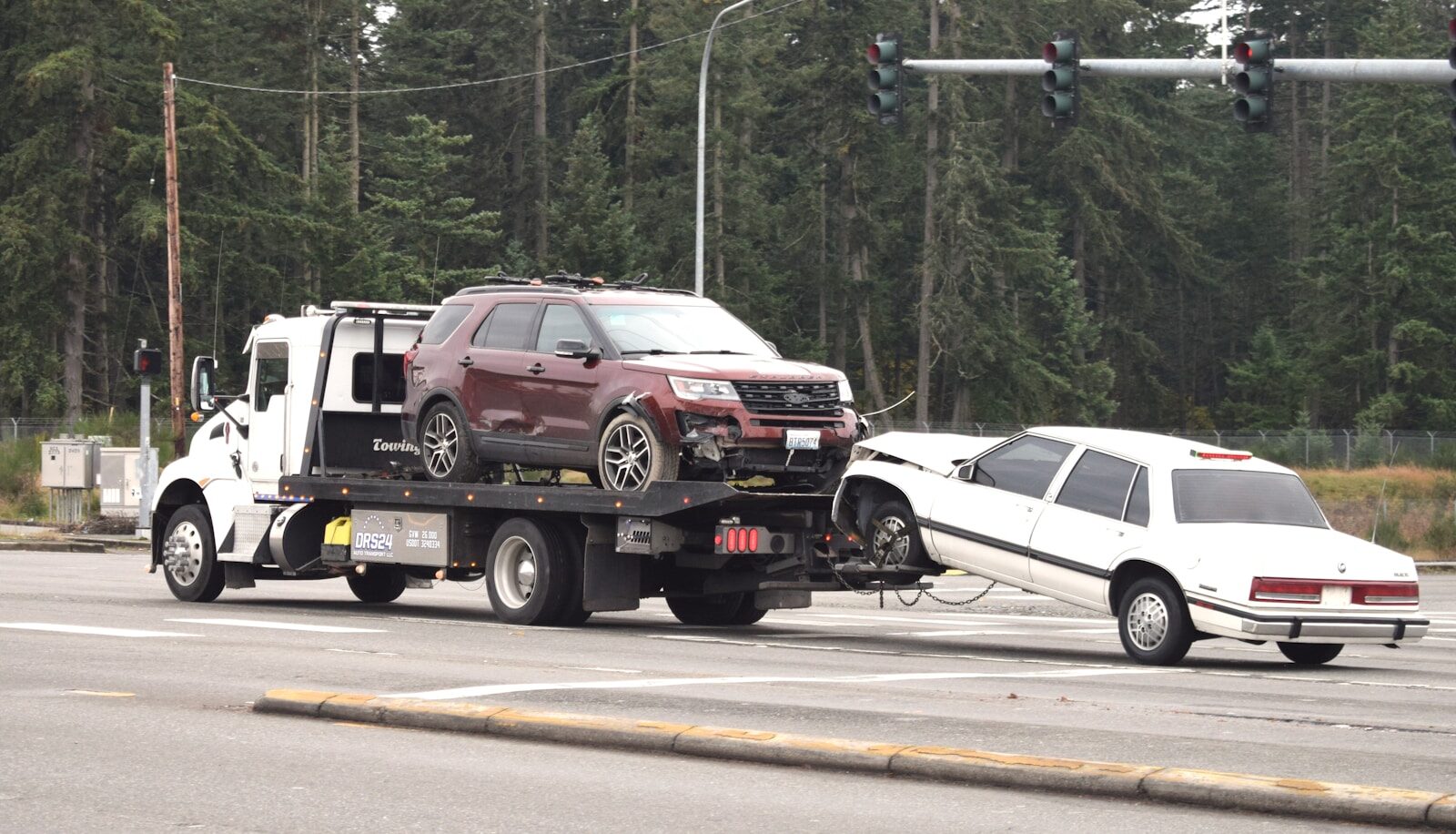
West Hollywood sheriff’s deputies flagged a tow truck near La Brea Avenue and Fountain Avenue last week for details that don’t show up on a legitimate rig: no company name, no logo, no permit number stenciled anywhere on the truck. When deputies ran the plate, the registration had been expired since 2014, a decade before this truck was supposedly still roadworthy. The driver, according to the West Hollywood Sheriff’s Station, was soliciting a motorist at the scene of a collision when deputies stepped in.
The bigger find was inside the cab: a police scanner. That detail matters more than it sounds. California Penal Code 636.5 doesn’t ban civilians from owning scanners outright, but it does make it a misdemeanor to intercept public safety radio traffic specifically to help commit a crime or dodge arrest. Deputies arrested the driver on charges of illegal towing and possession of a police scanner used for exactly that purpose: monitoring dispatch chatter to beat licensed tow companies to a crash before the vehicle’s owner has any say in who hooks up their car.
That single stop is a small sample of a much bigger operation. The LAPD has said publicly that likely hundreds of unlicensed bandit tow companies work Los Angeles County at any given time, concentrating on the corridors that produce the most collisions: the 5, the 10, the 405, and the 101, plus busy surface street intersections. Rental cars and out-of-state visitors are frequent targets, on the logic that a driver unfamiliar with California’s towing rules is far less likely to question a stranger who shows up acting like they belong there.
The mechanics of the scam are simple once you see them laid out. An operator monitors radio traffic or patrols known crash corridors, arrives before the tow company actually dispatched by insurance or law enforcement, and talks a shaken driver into signing over their vehicle on the spot. From there, the car can end up in another county or a storage yard the owner has no way of locating, with fees accumulating by the day until the owner pays up, or until the vehicle qualifies for a lien sale under the same laws written to protect legitimate repair shops.
California has been trying to close this loophole through the back door of automotive repair law rather than tow-specific legislation, the same Sacramento pipeline currently deciding whether classic cars get a bigger smog-check exemption. Assembly Bill 1263, authored by Assemblymember Marc Berman and signed into law on October 10, 2023, gave the state’s Bureau of Automotive Repair expanded authority to regulate the storage and towing fees charged by automotive repair dealers, the businesses that end up holding these vehicles once a bandit operator drops one off. It’s a fee law, not a licensing crackdown, which is exactly why the roadside half of this scam keeps working: AB 1263 makes it harder for a shady storage yard to gouge you once your car arrives, but it does nothing to stop an unmarked truck from soliciting you at a crash scene in the first place.
That fee guidance is still worth knowing before you’re standing on the shoulder of the 405 with a stranger telling you to sign something. Under the Bureau of Automotive Repair’s current guidance, security fees, dolly fees, load-and-unload fees, pull-out fees, and most administrative fees are presumptively unreasonable and shouldn’t appear on a legitimate invoice. Starting January 1, 2026, the rules tighten further: after-hours gate fees can’t inflate a towing charge by more than 10 percent, holiday storage can’t exceed the posted daily rate, and a facility that drags its feet releasing your car after you’ve paid in full can’t keep billing you for the delay. If your policy covers storage, your insurer, not you, is responsible for reasonable charges, and state regulations require insurers to inspect a wrecked vehicle within six business days of your claim.
Enforcement hasn’t been limited to roadside stops. The California Highway Patrol’s Commercial Enforcement Unit runs an ongoing initiative it calls the Bandit Tow Taskforce, conducting operations and serving search warrants against suspected predatory tow and storage operators in South Los Angeles and downtown. Those raids target the businesses on the receiving end of the scam, the ones that profit once a bandit truck has already delivered a captive vehicle and an even more captive owner.
None of this is new territory for organized vehicle crime working its way around slow-moving paperwork. We’ve covered how a Pennsylvania tag guy allegedly built a multimillion-dollar business laundering stolen supercars through clean titles, and how a stolen Porsche 911 turned up in LA reduced to a bare shell days after it vanished. Bandit towing runs on the same basic principle: exploit the gap between when a legitimate authority should show up and when a criminal one does instead.
The fix, per West Hollywood deputies, is unglamorous but effective. Only release your vehicle to a tow company named by your insurer or by the responding officer, confirm the truck displays a company name and a visible permit number before it touches your bumper, and treat a stranger with a scanner and no logo as a threat to your car’s title, not a convenience. If you’d rather laugh at tow trucks than get robbed by one, we round up the industry’s dumbest moments every week in Tow of Shame Tuesday,
Lead image: fr0ggy5 on Unsplash
About the Author