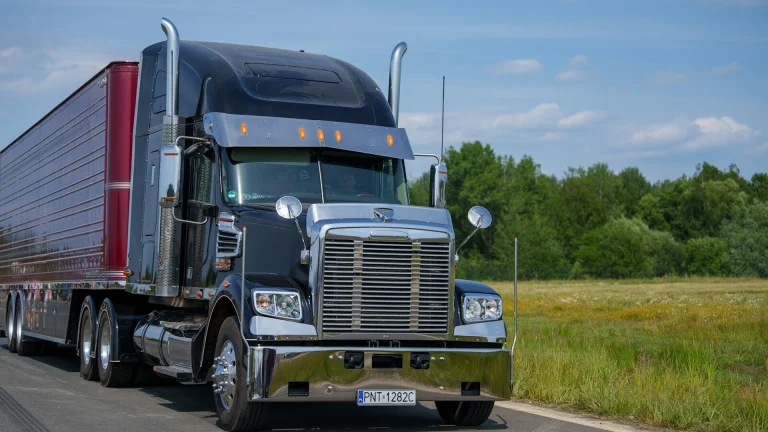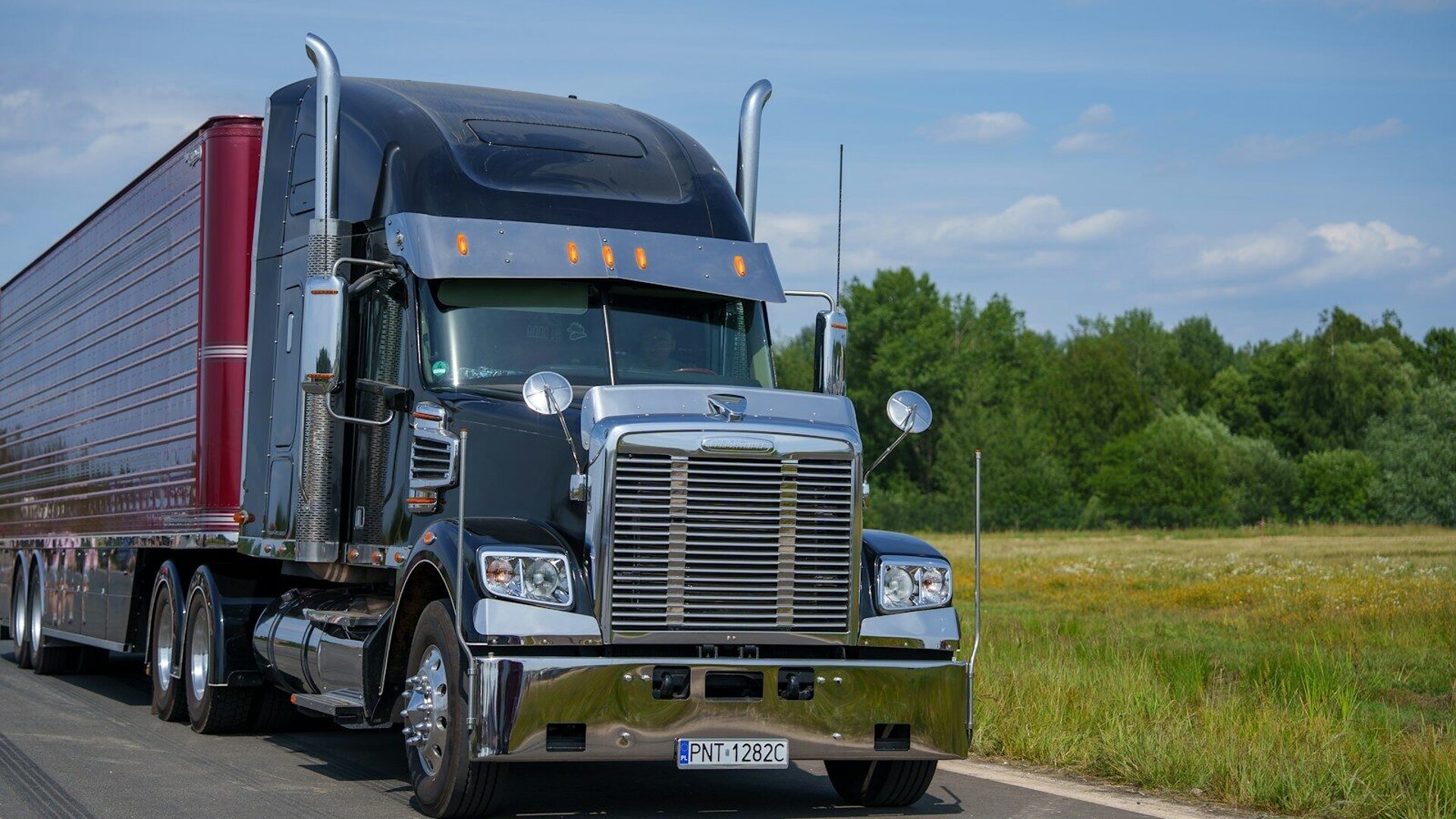
On Friday, Oct. 23, a caller told police in Bow, New Hampshire, that a tractor-trailer was blocking school buses in the town’s bus lot at 12 Robinson Road. The officers who answered the call already knew the truck. A few hours earlier, the department had searched for the same rig after a report that it was leaving a truck stop with an intoxicated driver. They hadn’t found it.
This time they did. Police identified the driver as Edgar Ramirez, 33, of Odessa, Texas. They said they determined he was driving while intoxicated, that he refused to get out of the cab when ordered, and that officers pulled him out after a brief struggle. According to the Concord Monitor, the town owns the lot, which sits in front of the public works garage. Police reported finding about 170 beer bottles in the cab and photographed the empties laid out in rows. The Monitor identified them as Bud Light and Michelob Ultra.
Related Articles
- Gunther Werks’ Brundle Edition Turbo Is an 860-HP 911 With Quirks. Here’s What Owning One Is Really Like
- Sentronics Hit Allengra With an F1 Flow Meter Patent Suit One Week Before COTA
Ramirez was charged with driving while intoxicated as a subsequent offense, having an open container of alcohol, and resisting arrest. Police said he was due for arraignment Oct. 26 in the 6th Circuit Court, District Division, in Concord. These are charges, and he hasn’t been convicted of anything.
Everyone will remember the 170 bottles. The word that matters is “subsequent.” So do the hours between the first report and the second call, when police were hunting this rig and couldn’t find it.
Why police couldn’t find the truck the first time
A big rig on the interstate isn’t tracked like a package. The federal rules don’t work that way. The electronic logging device that the Federal Motor Carrier Safety Administration requires in most long-haul trucks records hours of service. FMCSA’s guidance says that during on-duty driving it records location only to within about a 1-mile radius, and the agency’s own Q&A states the ELD rule does not require real-time tracking. Carriers can add live GPS for business purposes, but the federal device isn’t a feed police can watch. An officer reads an ELD at a roadside inspection, after the truck has already been stopped.
That leaves what Bow police would use on a drunk-driving complaint about a sedan: a description and a direction of travel, handed to whatever cruisers are nearby. By the department’s account, those weren’t enough the first time. The truck surfaced again only when it was blocking buses in a town lot.
The federal rules that can end a CDL before the criminal case does
New Hampshire’s penalties for a second DWI are serious. Under RSA 265-A:18, a second conviction within 10 years is a class A misdemeanor. It carries a fine of at least $750, a license revocation of at least three years, and a mandatory substance-use evaluation. Jail time depends on how recent the prior conviction is. If it was within two years, the minimum is 60 consecutive days with 30 suspended. If it was two to 10 years earlier, the minimum is 17 days with 12 suspended. New Hampshire can revoke only the right to drive in New Hampshire, though. Ramirez’s license comes from Texas, and the federal rules on commercial licenses follow him there.
Federal regulations under 49 CFR 383.51 disqualify a commercial driver for one year after a first conviction for driving under the influence of alcohol. That holds whether the driver was in a big rig or in a personal car. A second conviction means disqualification for life. A state may reinstate a lifetime-disqualified driver after 10 years, and only if the driver has voluntarily completed a state-approved rehabilitation program.
Police haven’t released any details about the prior offense behind the “subsequent offense” charge: where it happened, when, what vehicle he was driving, or whether he held a CDL at the time. Those facts decide whether a conviction here would count as his first federal major offense or his second. One scenario ends with a one-year suspension of his commercial license. The other bars him from driving trucks for at least a decade.
The faster consequence doesn’t depend on a conviction. Under 49 CFR 382.107, an employer gains “actual knowledge” of a driver’s alcohol use when it learns of a traffic citation charging that driver with operating a commercial vehicle under the influence. Under section 382.705, employers must report actual-knowledge violations to FMCSA’s Drug and Alcohol Clearinghouse within three business days. Since Nov. 18, 2024, a driver whose Clearinghouse status is “prohibited” loses the commercial privilege on his license until he completes a federal return-to-duty process. That process includes evaluation by a substance abuse professional and follow-up testing. If a carrier employed Ramirez and reports the charge, Texas could downgrade his CDL while the Concord case is still pending. Police haven’t named a carrier.
The trucking rules also cover the bottles regardless of what any blood test shows. 49 CFR 392.5 bars a commercial driver from drinking within four hours before going on duty. It also bars being on duty or driving while possessing beer, unless the alcohol is manifested cargo, and requires that a driver found in violation be placed out of service for 24 hours. A sleeper cab holding roughly 170 bottles would be hard to explain as freight.
How rare this is, according to federal crash data
Truck drivers are much less likely than other drivers to be drunk in a fatal crash. NHTSA’s 2024 large-truck fact sheet found that 4% of large-truck drivers involved in fatal crashes had a blood alcohol concentration of .08 or higher. The figure was 25% for passenger-car drivers and 25% for motorcyclists. The same report counted 5,340 people killed in crashes involving large trucks that year, and 70% of them were in other vehicles.
Related Articles
- Ernie Ball’s 1930 Lincoln Model L Just Sold for $29,500, and the Money Is Going to a Pediatric Kidney Charity
- A Georgia Investigator Accused of Misusing Flock Cameras for About 6 Months Resigned, Then Surrendered and Was Released on $7,500 Bond
New Hampshire has had other cases. In March 2024, state troopers arrested a Maine trucker for DUI after his loaded rig went into the I-95 median in North Hampton and traveled about 500 feet before getting stuck in mud. In March 2023, a motorist reported a tractor-double trailer traveling all over I-89 in Warner and possibly hitting a guardrail. New London police stopped that truck at Exit 11. Both of those cases began with a report from another driver, and so did Bow’s. In Bow, the first report didn’t lead to a stop.
What happens next
The Concord court will decide the state charges. If prosecutors want the subsequent-offense enhancement, they have to prove the prior conviction. Ramirez’s commercial license is a separate track. Any New Hampshire conviction gets reported to Texas, and federal rules require Texas to apply the disqualification. A Clearinghouse report from an employer could take the commercial privilege before any conviction. If you see a trucker weaving, call it in. Bow police say they knew this rig on the second call because of the first.
Police couldn’t see where a reported drunk trucker was for a few hours. Would you trade live GPS on every commercial truck to close that gap, and who should be allowed to watch the feed?
About the Author