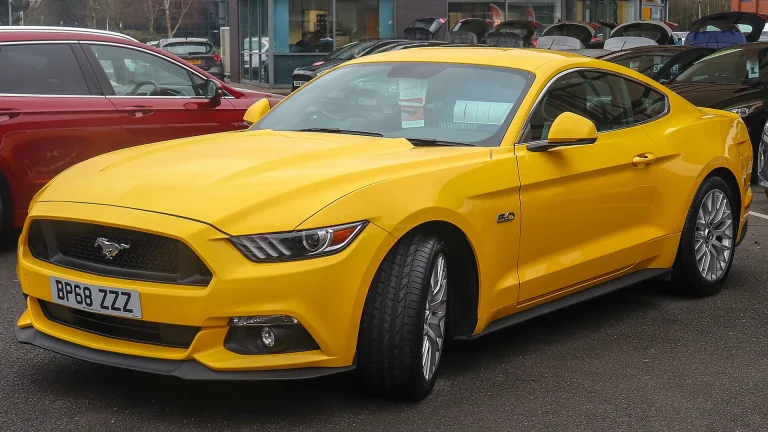
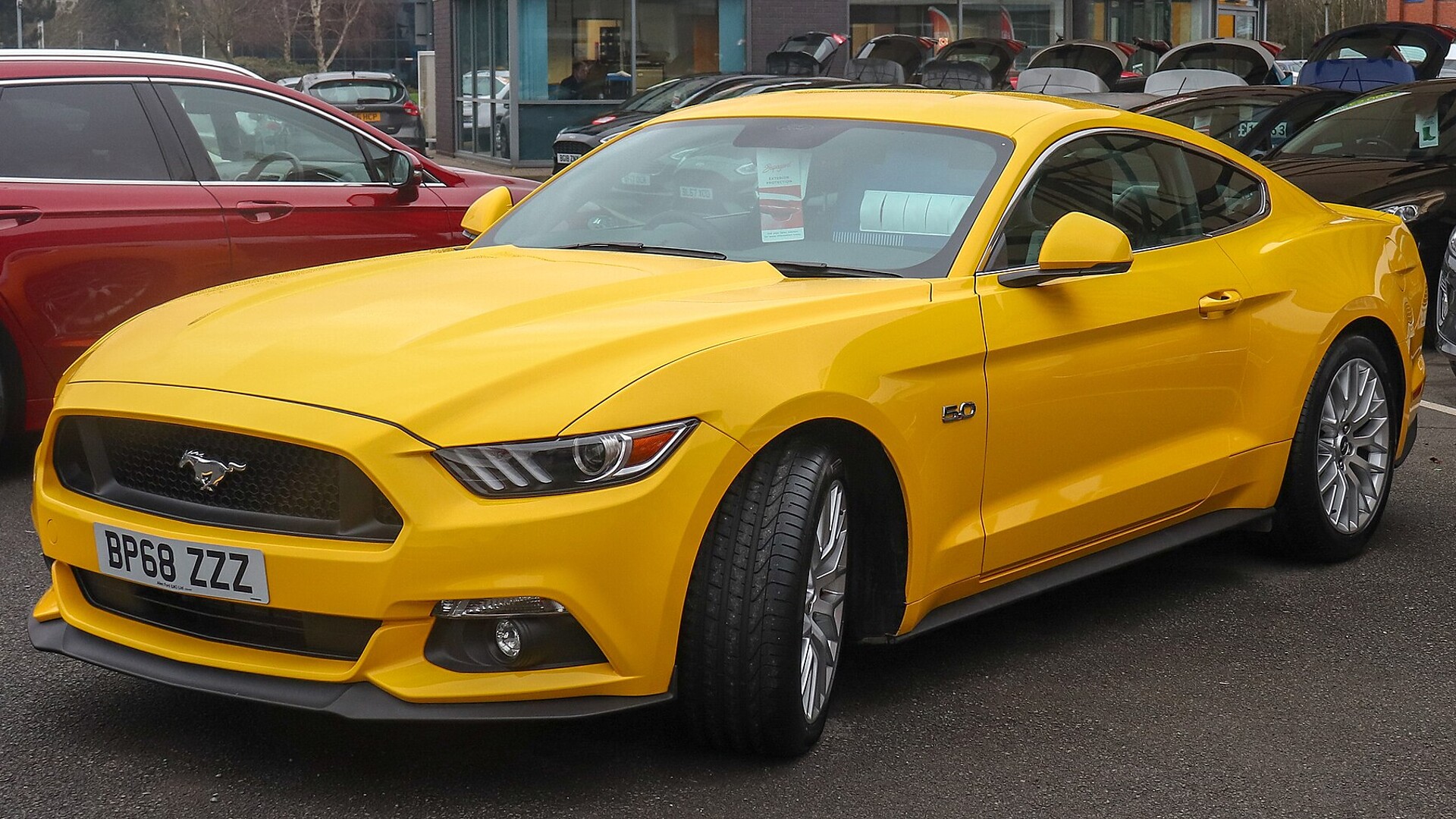
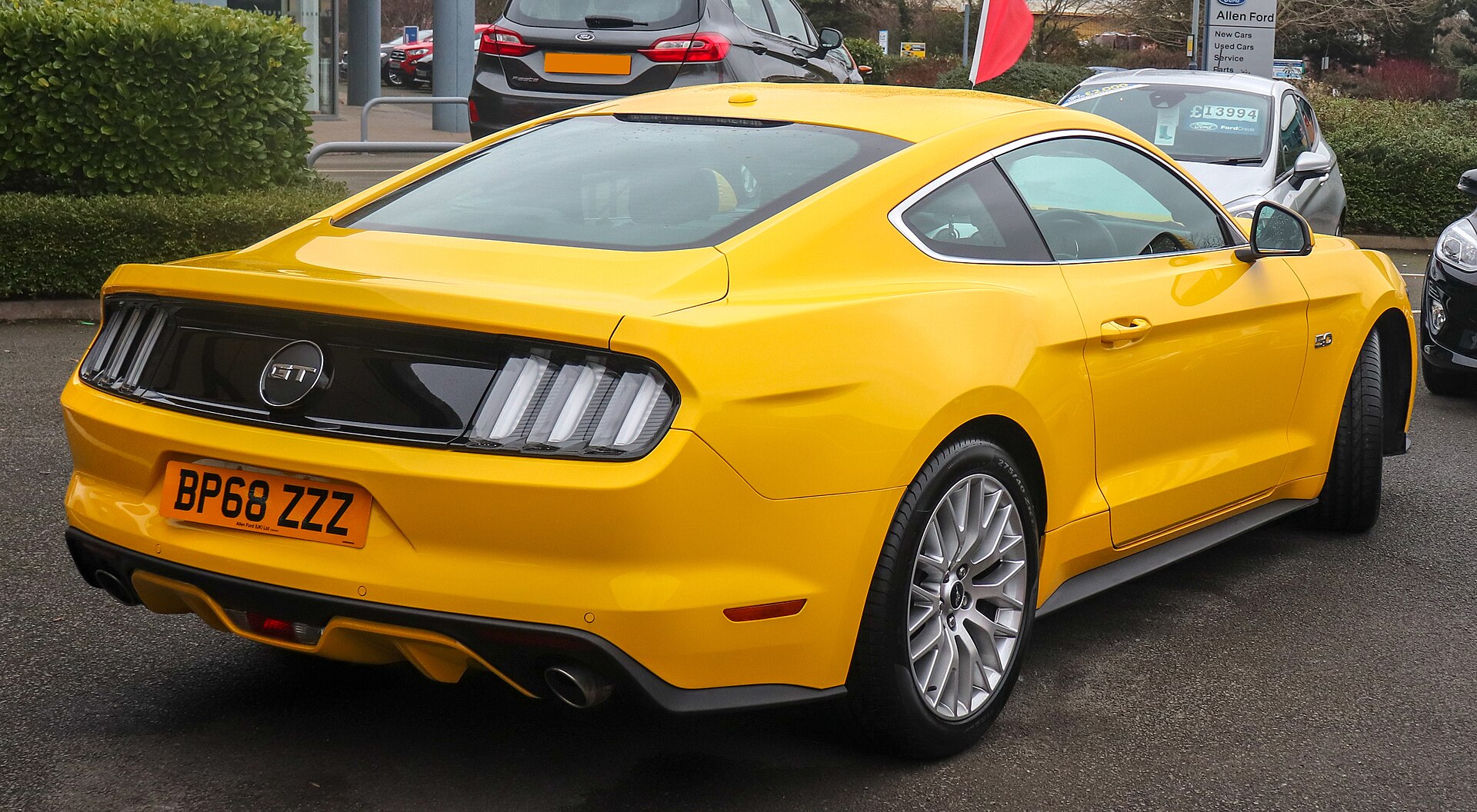
File photo of a Ford Mustang GT. Photo: Vauxford / Wikimedia Commons (CC BY-SA 4.0)
Seagoville, Texas, police said a Ford Mustang was going more than 100 mph on westbound U.S. 175 at 1:28 a.m. on Thursday, Oct. 22, after its driver ran a traffic stop. The Seagoville police chase that followed lasted about 45 minutes and wound through South Dallas, Pleasant Grove and East Dallas, according to FOX 4 Dallas, which reported that the car was running on three tires and one heavily worn wheel.
It ended when the Mustang crossed a grassy area and went into a fence near East R.L. Thornton Freeway and Bank Street, FOX 4 reported. Police said the 28-year-old driver then ran into a backyard on Garland Avenue and hid in a shed, where he tried to block the door after officers repeatedly asked him to surrender. Dallas police fired pepper-ball rounds into the shed, and the man was arrested for evading arrest. Neighbors told FOX 4 the wake-up was stressful but that they were relieved it ended peacefully.
What the evading charge covers
Everything here is an allegation, and FOX 4’s report carries no statement from the driver or a lawyer for him. The report also doesn’t say why the Mustang was stopped. Under Texas law that gap matters less than it might, because the flight is its own offense. Texas Penal Code 38.04 covers a person who intentionally flees from a peace officer he knows is lawfully trying to arrest or detain him, and a traffic stop is a detention.
On foot, evading is a Class A misdemeanor, which under Section 12.21 carries up to a year in jail and a fine of up to $4,000. Using a vehicle while fleeing moves it into felony territory. The statute as published online prints two versions of that subsection: one makes a first-time vehicle flight a state jail felony (180 days to two years, fine up to $10,000), the other a third-degree felony (two to 10 years, fine up to $10,000). FOX 4 reported only “evading arrest,” not a degree, so the charging document will show which level prosecutors picked.
Two warrants and a $50,000 bond
FOX 4 reported outstanding warrants for possession of drug paraphernalia and failure to appear, and said the man was booked into the Seagoville jail on a $50,000 bond. Paraphernalia possession under Health and Safety Code 481.125 is a Class C misdemeanor, and a Class C carries a fine of up to $500. The report doesn’t say what the $50,000 bond is tied to, and the paraphernalia warrant isn’t the obvious candidate. Warrants that predate the chase are separate cases, each with its own court date.
How pursuits end
The Bureau of Justice Statistics counted about 68,000 pursuits by general-purpose state and local agencies in 2012 and 351 deaths in pursuit-related crashes that year. From 1996 to 2015 the annual average was 355, about one a day. In a database of 115 agencies that BJS says is not necessarily representative, about 15% of pursuits ended in a collision and about 69% began with a traffic violation such as speeding, reckless driving or suspected drunk driving, according to its May 2017 report, the newest BJS pursuit study I found.
FOX 4 reported no injuries in Seagoville. A run of 45 minutes through three neighborhoods, at speeds police put above 100 mph, on a car with a failing wheel, had a lot of time to land in that 15%. Backfire News has followed what happens to the cars afterward, including a 130-MPH Mustang chase that ended with the car seized.
Which brings up inspections. Texas stopped requiring annual safety inspections for non-commercial vehicles on Jan. 1, 2025, under House Bill 3297, and the Department of Public Safety says drivers now pay a $7.50 inspection program replacement fee at registration. FOX 4’s report says nothing about this Mustang’s registration or inspection history.
What happens next
The report doesn’t list a court date. A felony booking also isn’t the same as a filed case: Backfire News reported on a Tempe case where a felony booking over a 140-MPH Corvette produced no Superior Court case a year later, so the docket is the thing to check for the Seagoville driver, who is presumed innocent until a court says otherwise.
Forty-five minutes, three neighborhoods, 100-plus mph. If you were the supervisor on the radio, when would you call it off?
About the Author