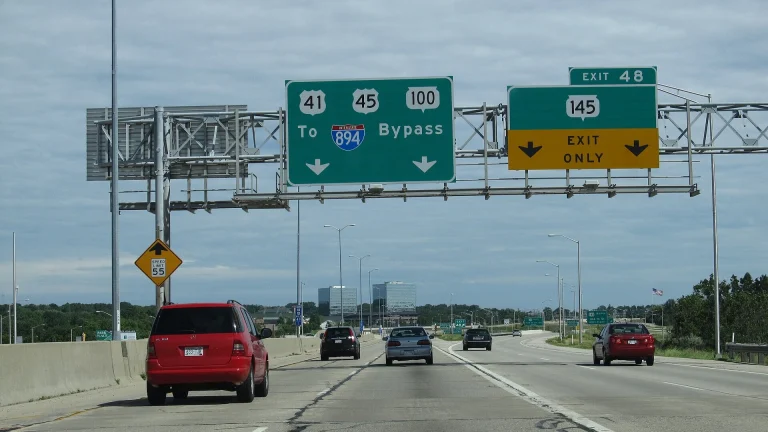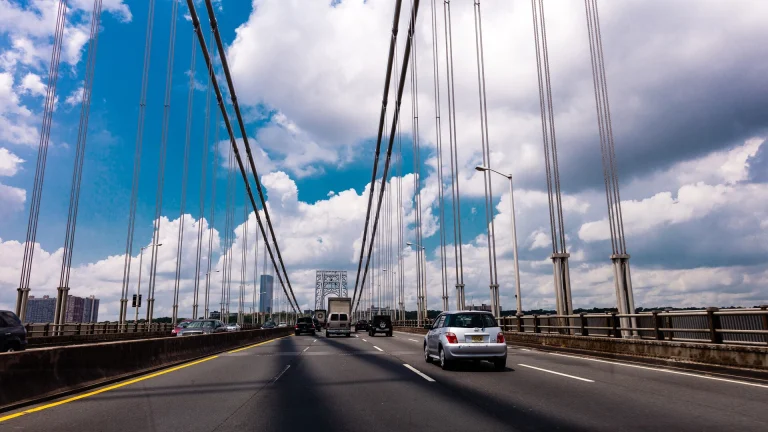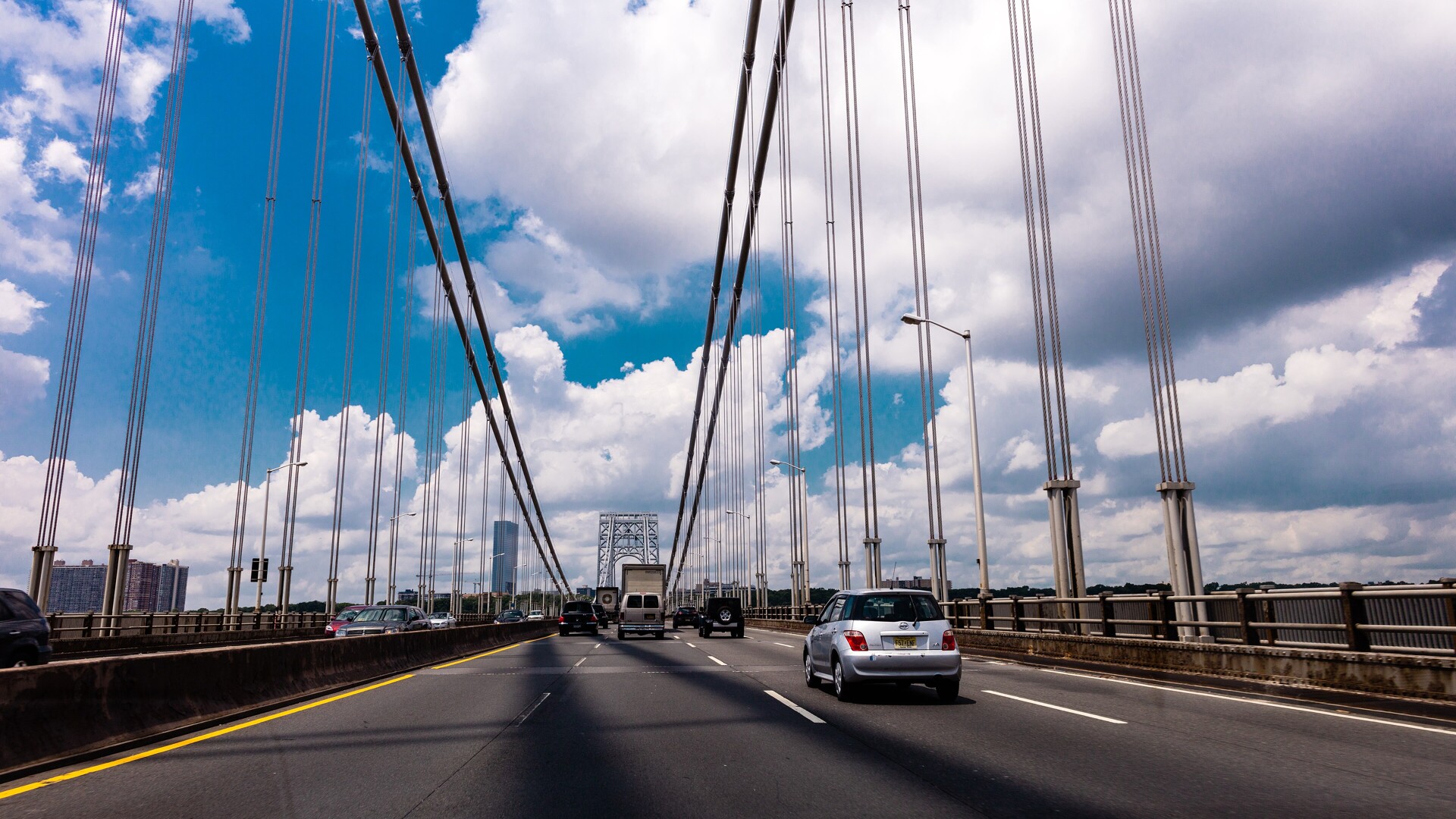
The George Washington Bridge. Photo: Michael Vadon, CC BY-SA 4.0, via Wikimedia Commons
A Manhattan grand jury indicted Victor Romero, a 62-year-old retired NYPD detective, on a second-degree murder charge on Tuesday, five days after he pleaded not guilty to first-degree manslaughter in the Oct. 20 George Washington Bridge shooting that killed Con Edison worker Koran Irvine. Romero had been out on $1 million bail since Friday. The Manhattan District Attorney’s office said the new charge followed an “extensive ongoing investigation,” according to ABC News. Romero’s attorney declined to comment on the case, telling CBS New York that they do not comment on pending litigation.
What prosecutors say the video shows
Irvine, 46, was driving home from work in a blue Volkswagen Golf. Prosecutors say he and Romero changed lanes at the same time while entering the bridge’s upper level and nearly collided, according to ABC7. A police affidavit, as ABC News described it, says Romero’s black Range Rover then sped up and followed Irvine’s car much more closely than other traffic did, and that the Range Rover is registered to a company where Romero works as a driver.
Prosecutors say surveillance video shows Romero tailgating Irvine, pulling alongside and firing. One bullet struck Irvine in the back of his right shoulder, the affidavit says. His Golf crossed four lanes and hit the center median, where first responders found he had died. Prosecutors say Romero then drove onto the Palisades Interstate Parkway toward his home in Haverstraw, ABC7 reported.
Investigators traced the vehicle to its registered owner, ABC News reported. Romero surrendered the next day at the 33rd Precinct in Manhattan and handed over a loaded revolver that, according to the affidavit, he told police he always carries. The NYPD charged him with murder. Backfire News reported on that arrest last week.
Three charges in one week
When Romero was arraigned Thursday, the charge on the record was first-degree manslaughter, not murder. He pleaded not guilty and was held on $1 million bail, which he posted the next day, Gothamist reported. His lawyer told the court Romero was a “hero police officer” with a “sterling record,” according to Gothamist. The Assistant District Attorney, Matthew Sears, told the judge that surveillance video established the moment of the shot and that the SUV on it was Romero’s, amNY reported.
In the coverage I could find, the District Attorney’s office has not said why it reduced the charge. Irvine’s family and coworkers made their objection public. His union president, Frank Morales, had written to District Attorney Alvin Bragg the Friday before the indictment urging a second-degree murder charge, CBS New York reported, and dozens of Con Edison workers lined up outside the courthouse on Tuesday.
What separates manslaughter from murder in New York
I read both charges in the Penal Law. Second-degree murder under section 125.25(1) applies when a person, “with intent to cause the death of another person,” causes that death. First-degree manslaughter under section 125.20(1) requires only intent to cause serious physical injury, with death as the result. Reports on the indictment do not say which subdivision of 125.25 the grand jury charged. Subdivision 2 covers reckless conduct “under circumstances evincing a depraved indifference to human life,” a different theory from intent to kill.
The sentences are far apart. Manslaughter in the first degree is a class B violent felony, carrying a determinate term of 5 to 25 years under Penal Law 70.02. Second-degree murder is a class A-I felony. Under section 70.00, the maximum is life in prison and the court sets a minimum between 15 and 25 years. Moving from one charge to the other lifts the shortest possible sentence from five years to fifteen, and it puts one more question in front of jurors: whether the person who fired meant to kill or meant to injure seriously. The bullet is the same either way.
Why the $1 million bail has not changed
New York’s bail statute, Criminal Procedure Law 510.10, tells a judge to make an individualized determination of flight risk and choose the kind and degree of restriction needed to assure the defendant returns to court. A crime alleged to have caused a death is on the list of qualifying offenses for which bail can be set. Danger to the public is not the question the statute asks. Prosecutors said the upgrade did not immediately change Romero’s bail status, Gothamist reported.
Keith White, the attorney for Irvine’s family, told CBS New York the family is pushing to have Romero’s bail revoked. The revocation statute, CPL 530.60, as I read it, lists things a defendant does after release: a new violent felony, witness intimidation, repeated failures to appear. A heavier charge for the same night is not on that list. Romero is due back in court Nov. 23 for arraignment on the indictment, ABC News reported, and the coverage does not say whether bail will be argued then.
An indictment is an accusation, and Romero has not yet entered a plea to the murder charge. New York’s bail law asks whether he’ll come back to court, not whether he’s dangerous. Irvine’s family wants his bail revoked anyway. Should a judge in a case like this be allowed to weigh danger?
About the Author