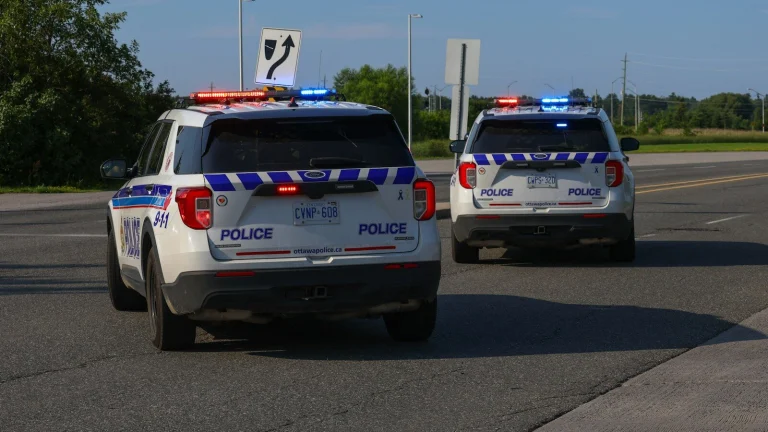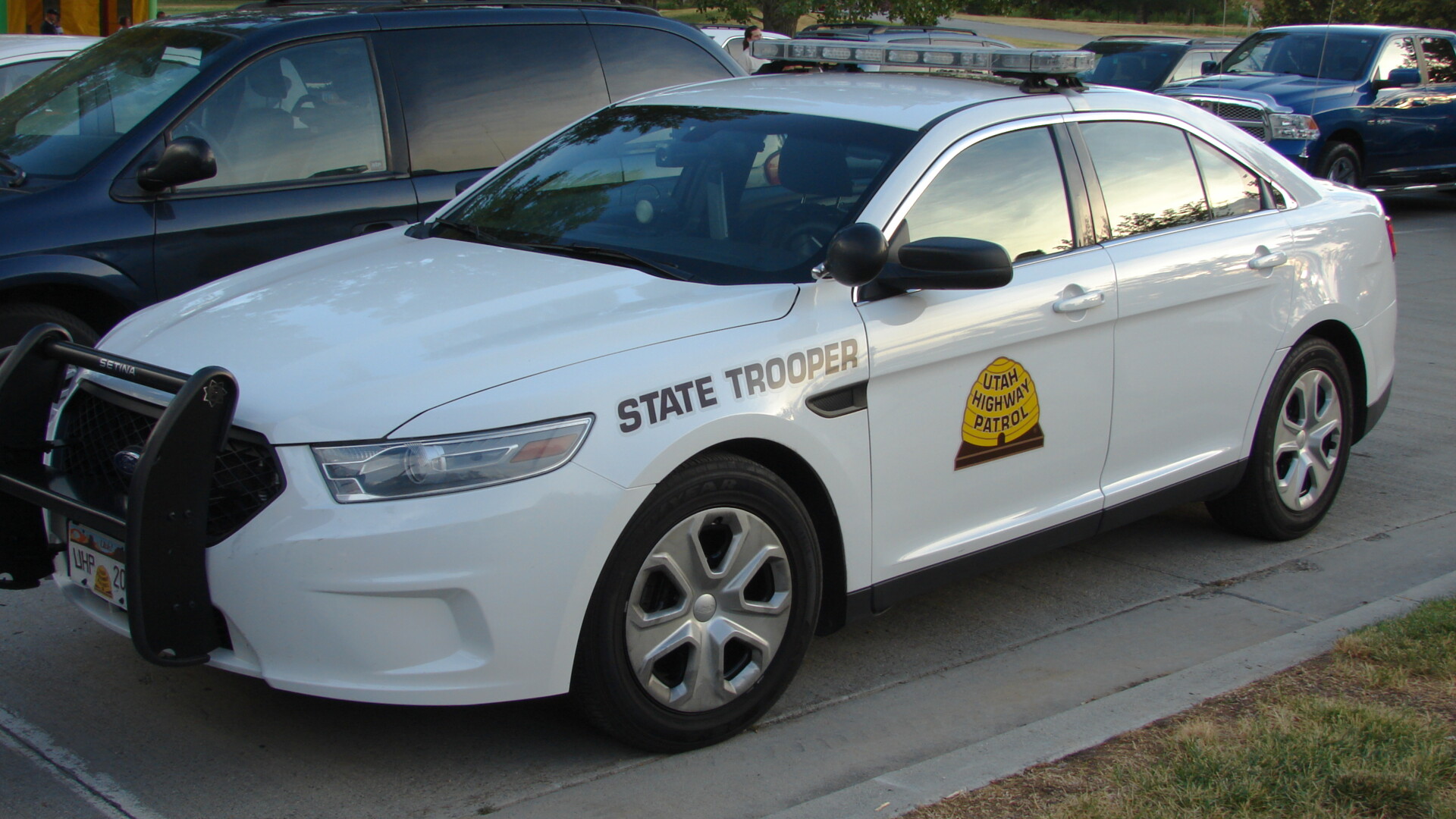
File photo of a marked Utah Highway Patrol sedan; not the vehicle involved in the Nov. 15 crash. Photo: An Errant Knight / Wikimedia Commons, CC BY-SA 4.0
A Summit County Sheriff’s Office deputy used a PIT maneuver to stop a stolen car on state Route 224 in Snyderville, Utah, on Dec. 9, 2025, and the driver has spent the months since arguing over how much of the car’s bill he owes.
Video: dash camera footage from the Summit County deputy’s vehicle, as published by KSL News Utah on YouTube.
The stop and the PIT
KSL reported, citing the police affidavit, that the deputy began a traffic stop near Bear Hollow Drive because the car had no illuminated license plate. The car accelerated when the deputy turned on emergency lights. The affidavit says the driver then made a U-turn through a red light on northbound SR-224 at more than 100 mph.
The deputy’s dash camera footage shows the PIT. KSL reported that the driver and a passenger followed commands and were arrested without further incident. The affidavit says deputies later learned the car was listed as stolen from Salt Lake City and that the driver’s license was suspended.
What the plea changed
The driver, a 33-year-old man, was booked into the Summit County Jail and charged with theft by receiving a stolen vehicle, a second-degree felony; failing to respond to an officer’s signal to stop, a third-degree felony; and reckless driving, a class B misdemeanor. According to court records KSL reviewed, he pleaded guilty. The stolen-vehicle count was reduced to a third-degree felony, attempted theft/receiving a vehicle, and the failure-to-stop count was dismissed with prejudice. KSL’s report does not say how the reckless driving count was resolved.
A dismissal with prejudice means prosecutors cannot refile the charge. Under Utah Code 41-6a-210, a driver who gets an officer’s signal to stop and tries to flee commits a third-degree felony, with higher penalties in some circumstances. With that count gone, the only conviction KSL reports is the reduced vehicle count.
On July 10, the court sentenced him to prison and jail time that it suspended, and placed him on three years of probation. He was also ordered to pay restitution to the car’s owner.
The restitution fight
Since August, court filings show, he has been fighting part of that order, KSL reported. He argues he was not convicted of stealing the car, only of possessing it when he was arrested. He does not dispute the insurance deductible or the impound fees. KSL’s report does not say which other costs are at issue or what the total is.
Utah’s Crime Victims Restitution Act gives a sentencing court two routes. Under section 77-38b-205, the court orders restitution either according to the terms of any plea agreement or for the full pecuniary damages proximately caused to each victim by the defendant’s criminal conduct.
The chapter defines criminal conduct as any offense the defendant is convicted of, plus other criminal behavior the defendant admits responsibility for to the court. That’s the 2021 wording posted on the Legislature’s site. The section has been amended since, so the current text may read differently. Pecuniary damages are all demonstrable economic injury, losses and expenses, and a victim is anyone who suffered those damages because of the criminal conduct.
Under that text, restitution follows the loss tied to what the defendant was convicted of or admitted, or the plea’s own terms, not the label on the charge. Whether possessing a stolen car leaves him owing the owner more than the deductible and the impound fees depends on what his plea agreement says, and KSL’s account does not describe its terms.
Not the first stolen-car chase on SR-224
KPCW reported that a March 23, 2025, chase began on SR-224 approaching Kimball Junction with an SUV stolen from Clearfield, and that authorities spiked its tires twice. In May, KPCW reported that deputies stopped a stolen Alfa Romeo on SR-224 with spikes after a chase on May 23. The Sheriff’s Office said that car had been reported stolen out of Orem.
What happens next
KSL reported that the court ordered an arrest warrant after Adult Probation and Parole found he violated his probation. Its report gives no hearing date for the restitution dispute. There’s no hearing date yet on the restitution fight. There is a warrant.
He admits he had the car. He says he didn’t steal it. If you were the owner, would that difference make the bill feel any smaller?
About the Author