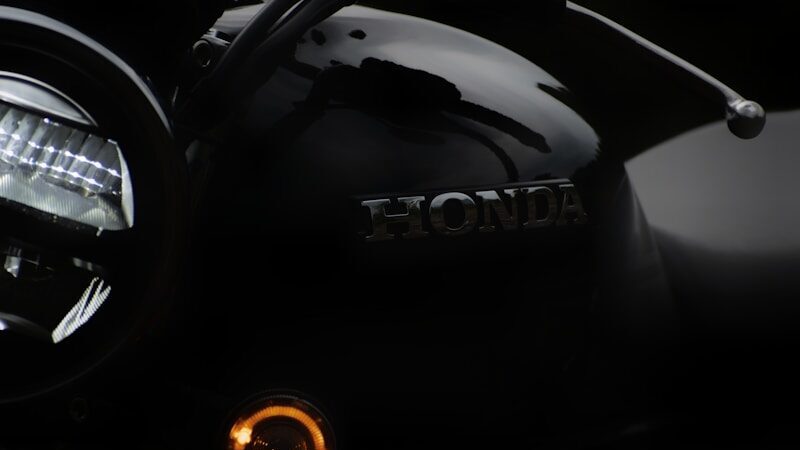
Honda just pulled back the curtain on ten new and refreshed two-wheelers for the Indian market, and buried in that lineup is a name that made plenty of enthusiasts do a double take: the CB 500. Say that badge to anyone who follows Honda’s global catalog and they’ll picture the CB500F, a 471cc parallel-twin making roughly 47 horsepower through a six-speed gearbox. That is not the bike Honda India just showed off. The CB 500 unveiled in New Delhi on July 24, 2026 is a single-cylinder machine, and the difference is a lot more than trivia.
Honda Motorcycle & Scooter India used the event to unveil a ten-product “Made-in-India” portfolio: seven all-new models and three refreshed ones, spanning cruisers, adventure bikes, roadsters, a flex-fuel scooter, and an electric commuter. HMSI President and CEO Tsutsumu Otani described it as a “multi-pathway approach,” mixing combustion, electric, and flex-fuel technology to match wherever India’s fueling and charging infrastructure happens to stand region by region. Sales and Marketing Director Mutsuo Usui put it more simply: Honda wants products that match how Indian riders actually live, not just how they commute.
Inside that portfolio, HMSI is branding the CB 500 as “The Honda Heritage Roadster.” The spec sheet backs up the retro pitch: a 501cc single-cylinder engine, air-cooled, with an oil cooler to help it survive Indian summers and traffic-jam idling. Honda hasn’t released a horsepower or torque figure, and it hasn’t named a price or on-sale date either, saying only that both will arrive “closer to” the bike’s individual launch. What is confirmed is the trim spread: an alloy-wheel version, a spoked tubeless version, and a spoked tubeless version with a graphics package.
There’s a real engineering and business logic behind skipping the twin. A parallel-twin means two cylinders, two sets of valvetrain, and usually a balance shaft or offset crank to keep vibration in check, all of which adds mass, complexity, and cost that gets passed straight to the buyer and the insurer. A big single is cheaper to cast, cheaper to assemble, and easier for a roadside mechanic to service with basic tools. It almost certainly borrows heavily from the platform under Honda’s existing CB350 family, which picked up fresh color options in this same announcement as the CB350, CB350C, and CB350RS. Stretching a proven small-displacement architecture to 501cc is a far cheaper route to a “500” nameplate than importing a twin-cylinder engine and eating India’s steep import duties on complete or semi-knocked-down motorcycles.
That single-cylinder layout also tells you exactly who Honda is aiming at. Royal Enfield’s mid-size range and the Bajaj-built Triumph Speed 400 lean on single-cylinder engines for the same reasons: cost, simplicity, and a torque delivery that suits congested city riding better than a revvy twin. Honda would rather compete on that turf than try to out-twin the segment where Triumph still sells buyers on paying a premium for two cylinders and genuine vintage character.
HMSI also confirmed that select bikes in the new lineup will get its E-Clutch system, which automates clutch actuation without turning the bike into a slushbox. Riders still work a gear lever with their left foot; the electronics just handle clutch engagement, cutting fatigue in stop-and-go traffic. Honda didn’t specify whether the CB 500 gets it, but the feature fits a wider pattern of manufacturers automating the most tedious part of riding a manual bike, the same trend that has outside suppliers building entire dual-clutch transmission systems for motorcycle makers rather than leaving it to in-house engineering.
The detail that matters most if you’re actually shopping is the difference between “unveiled” and “launched.” Nothing from this event is on a dealer floor, nobody can place a deposit, and Honda hasn’t said what any of these ten bikes cost. HMSI’s own recent record gives a rough timeline to watch: the CB125 Hornet and Shine 100 DX were unveiled on July 23, 2025, priced on August 1, and reached dealers in mid-August, roughly a three-week gap between reveal and delivery. A flagship heritage roadster carries more weight than a budget commuter, so HMSI may take longer to lock in CB 500 pricing and variant-by-variant availability.
Don’t expect this single-cylinder CB 500 to cross the ocean and sit next to the parallel-twin CB500F and CB500X in American Honda showrooms. This is an India-built, India-priced product designed around that market’s duty structure and price sensitivity, the same playbook Honda has already run with the CB350 family and the Shine commuter line, and it mirrors how Honda keeps developing region-specific two-wheelers everywhere else, right down to the boosted V3R platform that quietly showed up in Australian filings. It also fits a broader pattern of global manufacturers engineering bikes specifically for India’s two-wheeler boom rather than just badge-importing whatever sells at home, the same push behind VinFast’s own India sport bike filing earlier this year. Until Honda releases power figures and a price tag, the only fact worth repeating is the one on the spec sheet: 501cc, one cylinder, air-cooled, with an oil cooler. Anyone assuming a budget parallel-twin should reset that expectation now.
About the Author