BorgWarner just told a Chinese motorcycle manufacturer it doesn’t need to shop around for a clutch supplier, a hydraulics supplier, and a software house separately anymore. BorgWarner has secured a new dual-clutch transmission (DCT) program with an unnamed Chinese motorcycle customer, with start of production targeted for the third quarter of 2027. The scope covers two-wheeled motorcycles and four-wheeled vehicles with engines larger than 500cc, and BorgWarner isn’t just shipping a part, it’s supplying the dual clutches, the hydraulic control module, and the clutch control software as one integrated package.
That last detail is the actual story here, more than the badge on the eventual motorcycle’s tank.
A Supplier Rewriting Its Own Job Description
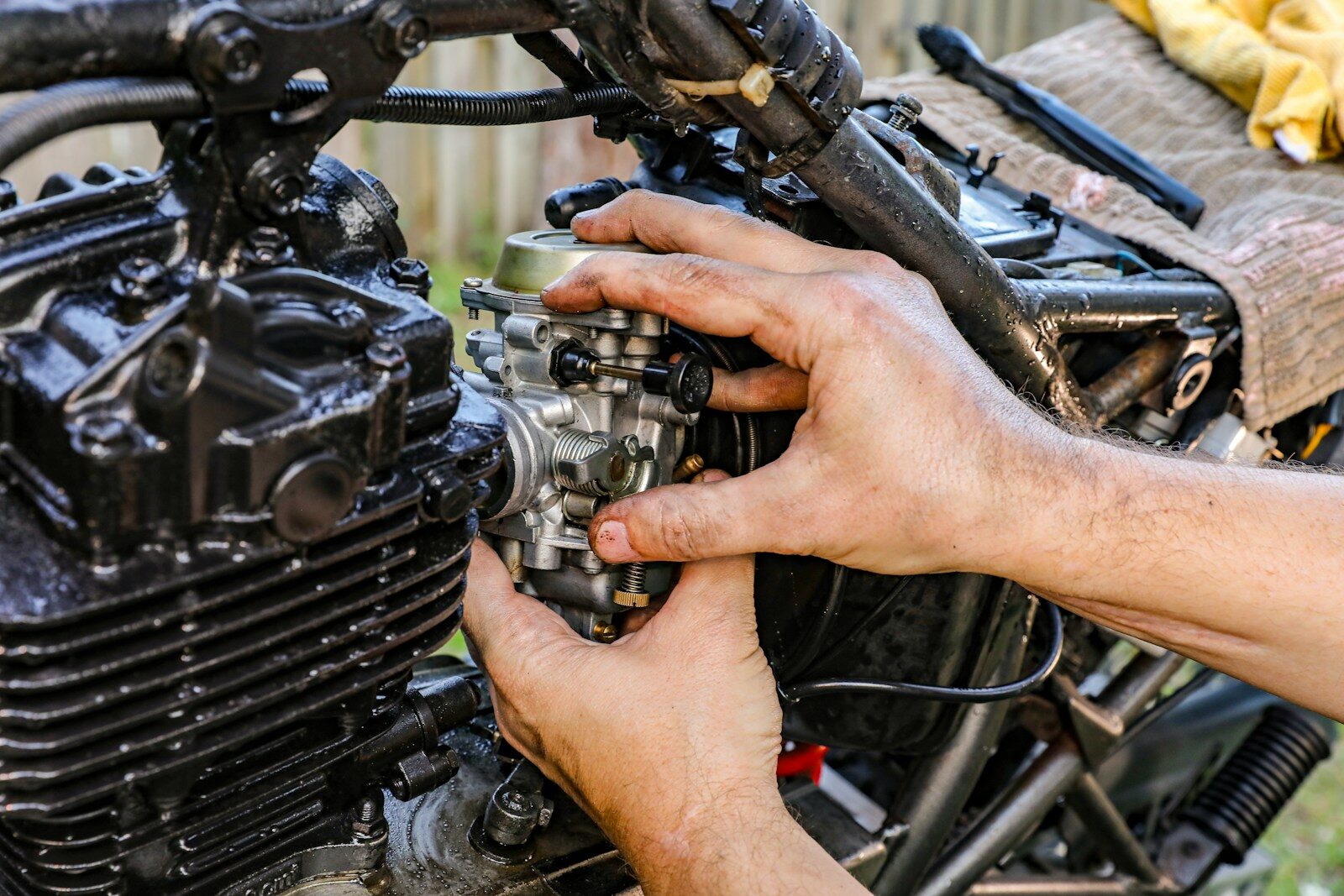
For most of BorgWarner’s history in two-wheeled applications, component suppliers have operated the same way: build the hardware, ship it to whoever’s assembling the bike, and let that manufacturer’s engineers figure out how it talks to everything else. This contract flips that arrangement. BorgWarner is now responsible for the mechanical hardware and the control logic that decides when the transmission shifts, how aggressively, and how it responds to throttle input. Henk Vanthournout, BorgWarner’s Vice President and President and General Manager of Drivetrain and Morse Systems, framed the move as leaning on the company’s passenger-car playbook, describing car transmission technology as “a strong reference point” for where motorcycle gearboxes are headed. BorgWarner backs that claim with volume: the company has built close to 10 million passenger-car DCT units, and it’s now repackaging that clutch and hydraulics expertise for handlebars instead of steering wheels.
Why Dual-Clutch Beats the Alternatives on Bigger Bikes
Motorcycles already have two popular ways to skip the clutch lever. Scooters and small-displacement commuters mostly run continuously variable transmissions, which use a belt and variable-diameter pulleys to keep the engine in its efficient rev range, cheap and smooth, but they bleed power through belt slip and don’t love high torque loads. Budget-focused manufacturers sometimes reach for automated manual transmissions instead, which bolt an actuator onto a conventional manual gearbox to handle the clutch and shift work, simple and durable, but every shift still briefly interrupts torque delivery, producing the head-nod you feel in cheaper automated-manual cars.
A dual-clutch transmission avoids that interruption by loading the next gear onto a second clutch before the shift happens, so power never fully drops out between gears. That’s why DCTs have shown up almost exclusively on performance-oriented machines in the car world, and why BorgWarner is aiming this technology specifically at motorcycles and quads above 500cc, the segment where riders actually notice, and pay for, quicker and smoother shifts.
China’s Bikes Are Getting Bigger, and So Are Its Ambitions
BorgWarner’s announcement is explicit that this program is meant to help its customer grow domestically in China while expanding into Europe, North America, and other overseas markets. That lines up with a broader shift already underway across China’s motorcycle industry, which has spent the last several years pushing beyond small-displacement commuter bikes into genuine performance and touring machines built for export. Backfire has already covered how deep China’s manufacturing footprint runs in the motorcycle world, including an Italian motorcycle brand that’s actually built there. A domestically engineered DCT system, sourced from a supplier with a decade of car-industry credibility, gives a Chinese manufacturer a legitimate technical story to tell Western buyers who might otherwise write off the badge.
What Riders Should Actually Budget For
Automatic-shifting motorcycles aren’t new. Boss Hoss has sold clutchless, two-speed semi-automatic V8 cruisers for 35 years, for the simple reason that nobody wants to modulate a hand clutch against 568 lb-ft of torque. What’s new here is bringing car-grade DCT complexity, complete with a hydraulic control module and dedicated software, down into a mainstream 500cc-plus motorcycle rather than a novelty cruiser or a flagship touring bike.
That complexity carries a real cost. In cars, dual-clutch transmissions have earned a reputation for expensive out-of-warranty repairs when the mechatronic control unit or clutch packs fail, often running well past what a comparable manual gearbox repair would cost, since the diagnostic work and parts are more specialized. There’s little reason to expect a motorcycle version to be cheaper to service once the warranty ends, hydraulic pumps, solenoids, and clutch packs crammed into a motorcycle’s smaller frame aren’t going to be a driveway fix for most owners. On the upside, riders who’ve never learned to work a clutch lever suddenly have a wider field of bigger, more powerful machines available to them, and in licensing systems that separate manual and automatic motorcycle categories, that distinction could start mattering the way it already does for automatic-only car licenses.
The Part Nobody’s Confirmed Yet
BorgWarner didn’t name its customer, and there’s no indication yet which Chinese brand will be first to market with this hardware. What’s confirmed is the timeline, start of production in the third quarter of 2027, and the scope, which runs from the clutch packs to the software deciding when they engage. Given how quickly Chinese manufacturers have been rolling out bigger-displacement machines aimed squarely at export markets, expect this transmission to land under a nameplate riders outside China will actually recognize well before 2027 is over. Whether Honda’s approach of skipping the combustion engine altogether with the WN7 or BorgWarner’s bet on a smarter automatic gearbox wins over more riders is really the more interesting question the motorcycle industry is now running two separate experiments to answer.
About the Author