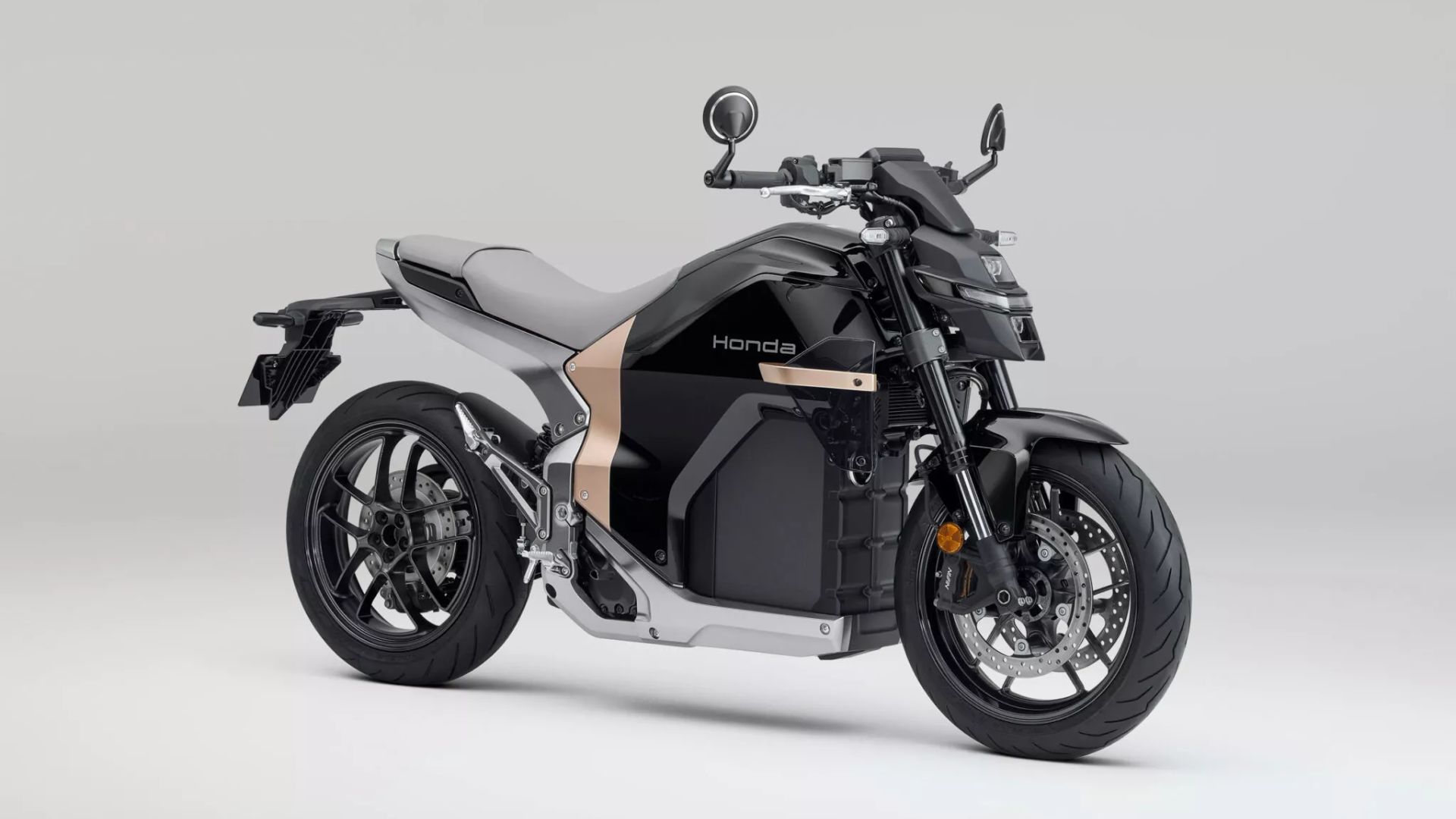
Honda’s had electric two-wheelers on sale for a while now, but they’ve all been scooters wearing e-bike ambitions. The WN7 is the first time the company has built a full-size, big-boy motorcycle around a battery instead of a combustion engine — and it’s now heading to European dealerships from June 2026 at £12,999 in the UK. Before you get excited stateside: Honda has only confirmed it for Europe, so North American riders are on the outside looking in for now.
The name decodes to “Wind, Naked, 7” — “Be the Wind” is the development slogan, “N” is the naked-bike body style, and the 7 slots it into a middleweight power class. Marketing fluff aside, the engineering underneath is where this thing earns a second look.
The battery is the frame
Here’s the part worth understanding. Most electric motorcycles bolt a battery into a conventional frame, which forces a compromise: the frame rails and the battery box fight for the same real estate, and the bike ends up fat and heavy. Honda skipped the frame entirely. The WN7 uses a frameless chassis in which the aluminum battery case itself is the structural spine. The head pipe that carries the steering bolts to the front of that case, and the swingarm pivot bolts to the rear. The 9.3-kWh pack, mounted low and central, does double duty as both energy storage and load-bearing skeleton.
Related Articles
- ENDS NOW: Win Two Ultra-Rare Mopar Dream Machines — Backfire News Readers Get More Entries!
- Skip the Limited-Slip Differential and Your Fast Car Is Basically Useless — Here’s Why
That’s clever packaging, but it carries a repair consequence nobody in the press materials wants to talk about: if you crash hard enough to damage a structural battery case, you may have compromised the frame and the most expensive component on the bike simultaneously. On a conventional bike a bent subframe is a repairable annoyance. Here, a serious hit could total the machine outright, and insurers will price that risk accordingly once they figure out what a replacement pack costs.
The horsepower math has an asterisk
Honda quotes 50 kW maximum power — roughly 67 hp — and 74 lb-ft (100 Nm) of torque, then compares the output to a 600cc gas bike and the torque to a liter bike. Electric torque arrives instantly and flat, so that comparison is doing some heavy lifting, but the launch figure is legitimately quick: 3.9 seconds to cover the first 50 meters (164 feet) from a standstill. Top speed is a governed 80 mph (129 km/h).
Now the genuinely useful thing to know. That headline “50 kW” is the peak; the bike is rated at 18 kW continuous. European motorcycle licensing categorizes electric bikes by rated (continuous) power, not peak — which is why an 18-kW-rated machine that briefly spikes to 50 kW can still be ridden on an A2 license, the tier capped at 35 kW. Honda also builds an 11-kW version (11.2 kW peak) for A1 holders, which quietly posts a longer 154 km range because the softer motor sips less energy. If you’ve ever wondered how EV bikes advertise big peak numbers while staying in a restricted license class, that rated-versus-peak distinction is the trick.
The weight nobody mentions in the ad copy
The spec sheet lists a kerb weight of 217 kg — 478 pounds. That’s heavier than most 1,000cc naked bikes and a long way from the flickable middleweight the “600cc equivalent” pitch implies. Batteries are heavy, physics is undefeated, and Honda’s low-and-central mounting is damage control for a mass penalty, not a solution to it. The upside is that the 31.5-inch (800mm) seat height and centralized weight should make it manageable at a standstill, helped by a walking-speed forward-and-reverse assist for parking-lot shuffling.
Charging is the actual headline
The WN7 uses Type 2 AC and CCS2 fast charging — the same connectors bolted to electric cars. That matters more than any acceleration number. Nearly every electric motorcycle to date has been marooned on slow home charging or proprietary plugs. CCS2 means the WN7 can roll up to public car fast-chargers and pull a 20-to-80-percent top-up in under 30 minutes. A full charge from a home wall box takes under two and a half hours. Suddenly a weekend ride beyond the 87-mile (140 km) WMTC range is at least plausible instead of a range-anxiety exercise.
What ownership actually looks like
A few practical notes buyers should file away. It runs a belt final drive, not a chain — quieter, cleaner, and far less maintenance, with no lubing or tensioning rituals. Regenerative braking is adjustable across four levels, which means less wear on the friction pads over time. But the 349-volt system is genuinely dangerous to poke at; this is not a bike you’ll be servicing in your garage, and independent shops will need trained high-voltage technicians, which narrows your service options to the dealer network for the foreseeable future.
Related Articles
- This Machine Could Pull $6 Million in Bids — and It Might Be a Bargain
- A Rare 1985 Ferrari 288 GTO Just Became Bring a Trailer’s 250,000th Auction Lot
The WN7 isn’t trying to be a range-topping performance weapon, and read honestly, it’s a competent, well-packaged commuter with a clever chassis and the first sensible charging setup on a full-size electric bike. Whether European buyers will pay near-liter-bike money for middleweight peak power and 87 miles of range is the question Honda’s dealers get to answer starting this summer.
Images Via: Honda
About the Author