Winning Best of Show at Pebble Beach is about as close as the car world gets to canonization, and like most saints, these cars tend to disappear afterward — swallowed into collections and rarely seen changing hands. So when one actually rolls across an auction block, it’s worth stopping to look. This August, one does.
The 1937 Delage D8-120 S Aérodynamic Coupe by Pourtout — the car that took Best of Show at the 2005 Pebble Beach Concours d’Elegance — is heading to RM Sotheby’s Monterey sale on August 13–15. It’s the centerpiece of the 22-car Sam and Emily Mann Collection, which RM says holds three separate Pebble Beach Best of Show winners, a concentration of the hobby’s highest honor that borders on the ridiculous. For context, across 74 editions of the concours since 1950, the top prize has been handed out just 74 times.
The car itself
Louis Delage built this one for himself. By 1937 the company bearing his name was already a ghost of the great racing marque it had been — bankrupted in the Depression and absorbed by rival Delahaye, so that a “Delage” of this era rode on Delahaye mechanicals: a Delahaye-derived straight-eight of roughly 4.75 liters riding a modified Delahaye chassis. Delage the man stayed on as an executive, and he wanted a showpiece for the new D8-120. He got Marcel Pourtout to build it and a young designer named Georges Paulin to shape it, using genuine wind-tunnel testing at a time when most “streamlining” was guesswork with a French curve.
Related Articles
- Rooftop Tents vs. Ground Tents vs. Trailers: The Complete Overland Sleep Guide
- Only 48 of These Lotus Elises Ever Existed, and One of the Rarest Just Hit the Market for £50,000
The result is one long, unbroken gesture — hand-formed aluminum, frameless side glass, a curved ribbon of a windscreen. It was finished too late to get a proper stand at the 1937 Paris Salon, so, as RM’s research tells it, Delage and Pourtout simply parked it on the pavement outside the Grand Palais and let it stop traffic. Then Delage drove it as his personal car.
The restoration is the real lesson
Here’s the part worth internalizing if you care how these cars are actually valued. In 1953 the Delage had a shunt and went to coachbuilder Saoutchik, who “improved” it — a blunter, more upright nose, a flat windshield, a single-piece rear window in place of the original split glass. In period that was just a repair. To modern eyes it was vandalism, and it’s exactly the kind of later alteration that tanks a coachbuilt car’s value today.
What made this Delage a Best of Show winner wasn’t just a shiny respray. When the Manns bought it, they had Stone Barn and Contour Metalshaping reverse the Saoutchik surgery, rebuilding the original Pourtout nose, curved screen, and twin rear windows from period photographs. That’s the whole game in this corner of the market: a top-tier concours judge is grading originality and correctness, not sparkle, and a restoration that returns a car to exactly as-delivered is worth vastly more than one that preserves decades of well-meaning “updates.” The premium on this car is a premium on authenticity, painstakingly recreated.
After the 2005 Pebble win it also took the inaugural Louis Vuitton Classic Best of the Best and has since done the museum circuit. RM’s estimate is $5 million to $6 million.
What a Best of Show pedigree is actually worth
The honest answer: a lot, but not in the way the marketing implies. A Pebble Best of Show is the single strongest line on a car’s résumé, and because so few of these cars ever sell, there’s almost no live price discovery — the pedigree itself becomes the asset. But a trophy from 2005 doesn’t come with a guarantee of future silverware. Concours judging turns over, themes change, and a car that has already been shown out at the top level is bought for what it is and where it can still go — the global rotation of Villa d’Este, Amelia, and the like — rather than as a lottery ticket for another Pebble win. Anyone paying six million on the theory that they’re buying guaranteed lawn glory is buying the wrong thing.
The quiet story: a French-streamliner glut
Zoom out and the more interesting angle isn’t this one car — it’s how many of its cousins are showing up in the same room. Alongside the Mann Delage, the same RM sale is fielding a chunk of The Jim Patterson Collection: a 1937 Delage D8-120 Coach Aérosport by Letourneur et Marchand — one of just 13 built, estimated at $2 million to $3 million — plus a 1939 Delage D8-120 S Coupe ($1.5 million to $2.5 million) and a Bugatti Type 57SC Atalante ($4.5 million to $6 million).
Related Articles
- Only 48 of These Lotus Elises Ever Existed, and One of the Rarest Just Hit the Market for £50,000
- This Guy Walked Out of Jail and Immediately Stole an SUV From the Courthouse Parking Lot
That’s an unusual amount of blue-chip pre-war French aerodynamic metal on offer at once, and it’s a real test of a thin, graying buyer pool. The universe of people who will spend Ferrari-hypercar money on a one-off 1930s Delage is small and largely knows one another. Put several exceptional French streamliners in front of them in the same week and you find out fast whether demand is broad or just a handful of very deep pockets bidding against each other. RM, for its part, is pitching these cars as a deliberate counterpoint to the performance-obsessed modern market — which is another way of admitting the audience skews traditional, and older.
Practical notes for the person who actually buys it
A car like this isn’t insured on a normal policy; it lives on an agreed-value collector plan, where the number is negotiated up front so there’s no argument after a loss — and at this level the paperwork trail and concours record do a lot of the underwriting work. It’s also not a car you thrash. To the Manns’ credit, they were known for driving their cars, but a multimillion-dollar aluminum one-off is bought to be shown and gently toured, and its value is bound up in staying exactly as correct as it is today. One bad repair and you’ve undone a two-and-a-half-year restoration and a chunk of the price.
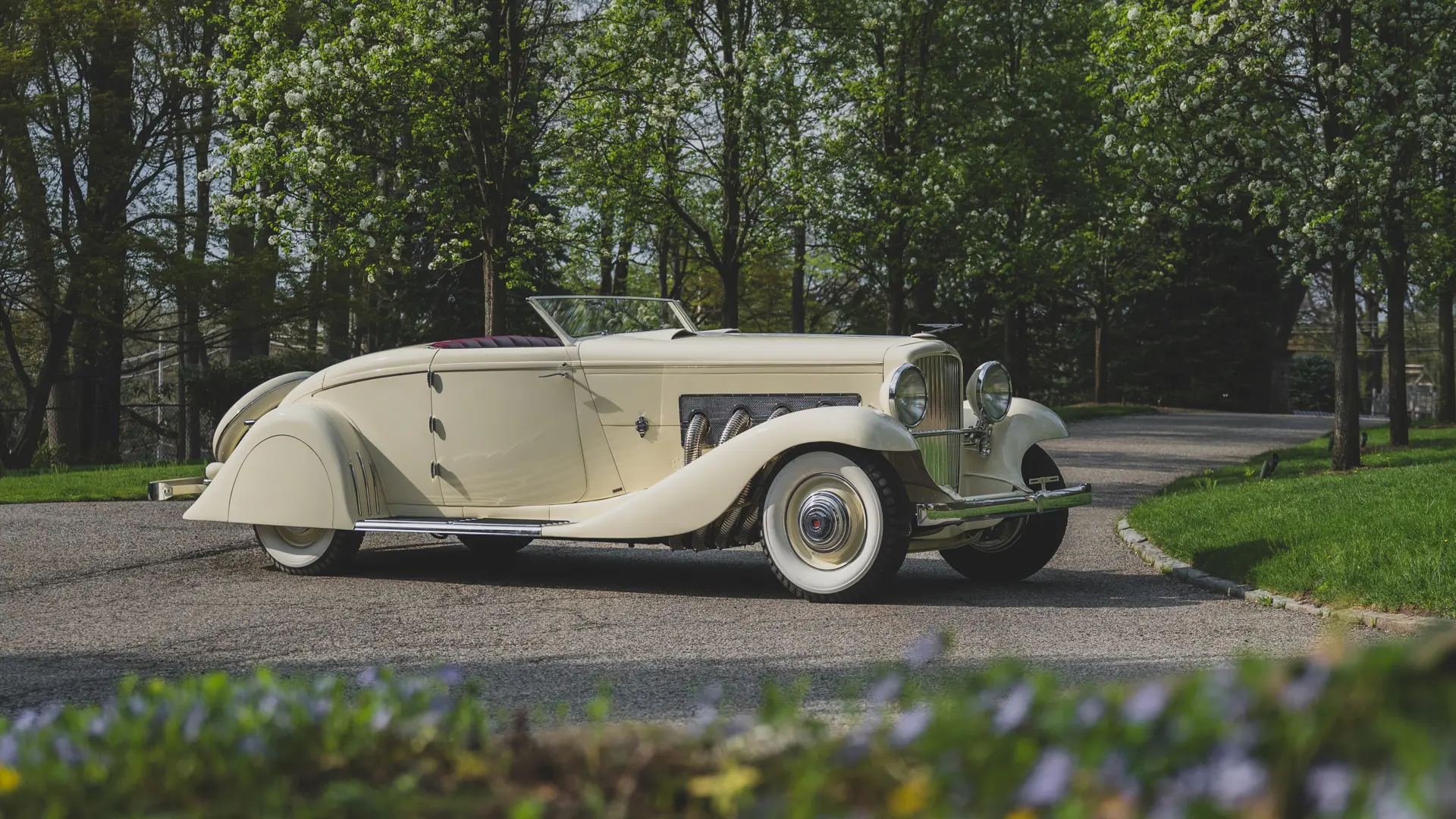
It shares the Monterey stage with the Manns’ other headliners, including Clark Gable’s 1935 Duesenberg Model JN convertible coupe, itself estimated at $5.75 million to $8 million. But the Delage is the one that matters historically — the personal car of a man watching his own company slip away, shaped into something so far ahead of its moment that it still stops traffic 88 years later. Whether it brings $5 million, $6 million, or more will say less about the car than about who’s left in the room to want it.
Images Via: RM Sotheby’s
About the Author