Toyota’s motorsport arm just quietly broke an assumption a lot of us have carried around about hydrogen racing: that it’s all engines burning the stuff like gasoline with a cleaner conscience. The DKR GR FC Hilux, confirmed for the 2027 Dakar Rally, throws that out entirely. Instead of a hydrogen-fed combustion engine, this truck runs a fuel cell stack that converts hydrogen and oxygen into electricity, then feeds an electric motor. No spark plugs, no combustion, nothing burning at all. The only thing leaving the tailpipe is water vapor.
That distinction matters more than it sounds like it should, and we’ll get to why. But the basics first, straight from Toyota Gazoo Racing: the DKR GR FC Hilux is built off the existing DKR GR Hilux, the truck that already races in Dakar’s top-tier Ultimate class on a petrol engine. For the FCEV version, engineers pulled that combustion engine and dropped in Toyota’s fuel cell system in its place. It will race in the Dakar Future Mission 1000 category, a class built specifically for teams testing unproven propulsion technology under real competitive conditions instead of a controlled demo lap.
A Fuel Cell Isn’t Just Another Hydrogen Engine
Toyota has been racing hydrogen for years, but nearly all of it has involved combustion. The 2021 ORC Rookie Corolla H2 Concept that ran Super Taikyu burned hydrogen in a modified gasoline engine. So did the GR Yaris H2 that ran demonstration stages at Belgium’s Ypres Rally in 2022, and the GR Yaris Rally2 H2 Concept that later did the same at Rally Finland and Rallye Monte-Carlo. Burn hydrogen instead of gasoline and you still have an internal combustion engine, still get some NOx from that high-temperature reaction with atmospheric nitrogen, and still have pistons, valves, and bearings wearing against each other the same way they always have.
A fuel cell skips combustion altogether. Hydrogen splits into protons and electrons at one electrode, oxygen from the surrounding air combines with those protons and electrons at the other, and the only chemical byproduct is water. The electricity generated in between drives an electric motor directly. There’s no flame, no NOx, and, more importantly for a rally program, a completely different set of engineering headaches than either a combustion engine or a battery pack.
Why Toyota Picked the Meanest Race on the Calendar
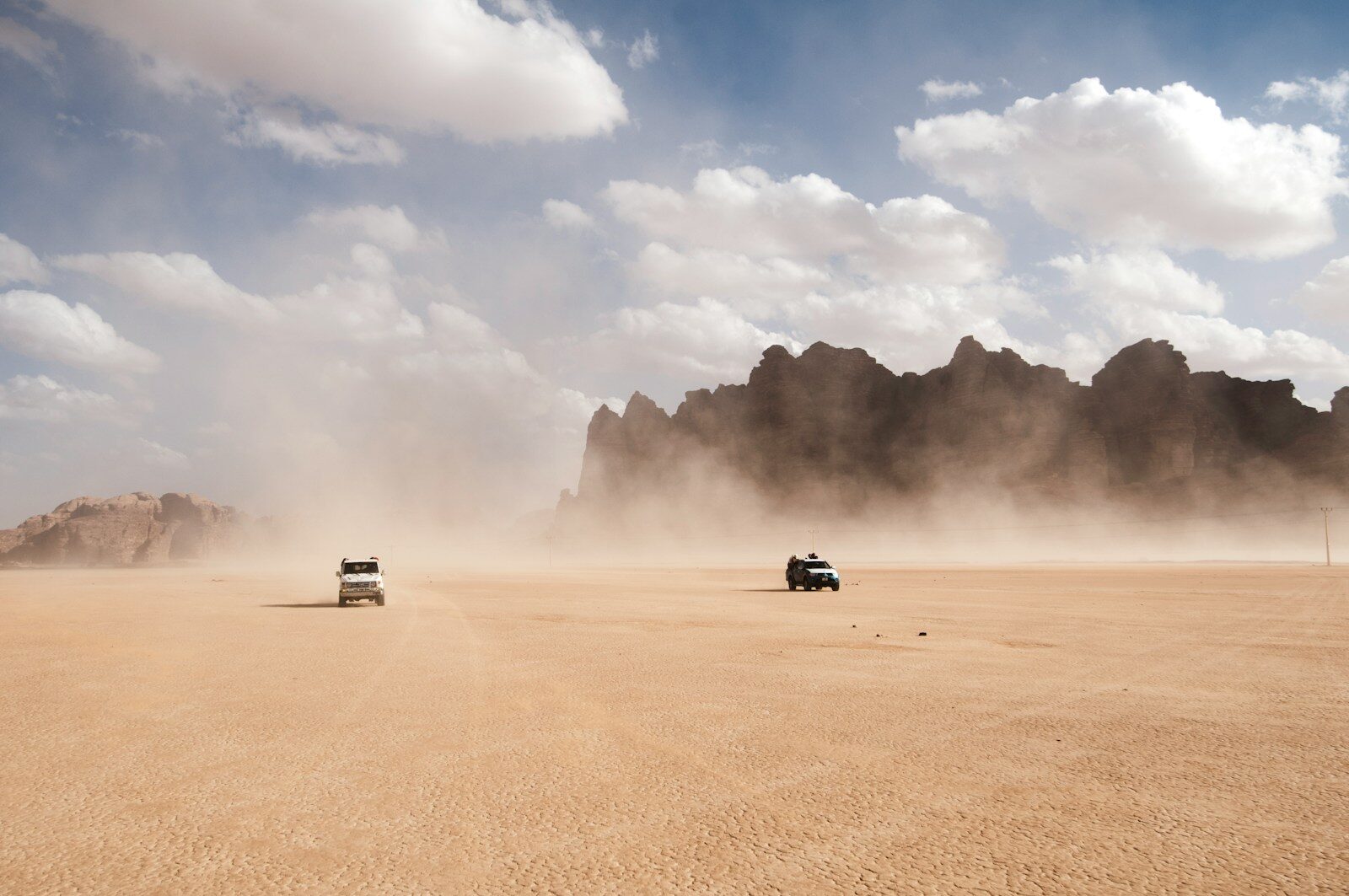
Dakar isn’t a convenient place to test anything. Thirteen stages, 1,000 competitive kilometers, temperature swings across a Saudi Arabian desert, and terrain that alternates between fine sand that clogs everything and rock fields that beat a chassis apart. Toyota’s own program notes point directly at the problems that environment creates for a fuel cell: shrinking the stack to fit inside a rally truck’s tight packaging, keeping it cool when ambient temperatures are already brutal, and keeping the whole system durable across stages that can run for hours without a service window.
Cooling is worth sitting with for a second. A fuel cell stack throws off real waste heat as a byproduct of the electrochemical reaction, and unlike a combustion engine, that heat doesn’t leave with the exhaust — it has to be pulled out through cooling loops sized for exactly this kind of punishment. Do that in desert heat, inside a vehicle already fighting to save weight and preserve suspension travel, and the packaging math gets ugly fast. It’s the same tension Toyota’s own engineers wrestle with on the street side of the business, where even a car as focused as the GR86 has had to fight the industry-wide trend of sports cars quietly gaining weight every generation. Dakar just applies that fight at a much larger scale and a much higher stake.
There’s also a practical edge over battery-electric alternatives worth pointing out, since rally raid organizers have flirted with electrification broadly over the past decade. Hydrogen refuels in minutes, not hours, which matters enormously in a discipline where service time is built into the format and every minute in the bivouac counts against the clock. A battery pack big enough to survive a Dakar stage in desert heat, then get recharged fast enough to race again the next morning, is a much heavier lift, literally, than topping off a hydrogen tank.
The Bigger Bet Toyota Is Making
Toyota has framed this as more than a racing exercise. Lessons from running and developing the DKR GR FC Hilux under Dakar-grade abuse are meant to feed back into fuel cell applications well outside motorsport, including passenger cars, trucks, buses, trains, marine use, and stationary power generators. That’s a wider net than Toyota typically casts for a rally program, and it tracks with how the company has talked about hydrogen for years under Akio Toyoda: as a bet that’s bigger than the Mirai sedan most people still associate with Toyota’s hydrogen efforts.
It’s worth noting what this program isn’t, too. It doesn’t replace Toyota’s existing Ultimate-class Hilux, which keeps racing on petrol in Dakar’s top category. The FCEV truck runs alongside it in its own experimental class, which is the entire point: Toyota gets to stress-test immature technology without gambling an overall Dakar result on it. That’s a more disciplined way to develop something this unproven than betting everything on one ambitious swing, the kind of move that can leave a project looking great on paper while carrying a catch buyers only discover later.
What Happens Next
Testing and tuning of the FCEV powertrain has already started in Belgium, with a broader test program rolling out over the coming months before the truck lines up at the start in King Abdullah Economic City on January 1, 2027. Whether the DKR GR FC Hilux finishes all 13 stages is genuinely uncertain, since that’s the nature of Mission 1000 entries. But Toyota now has hydrogen-combustion cars, a hydrogen-combustion truck concept, and a hydrogen fuel cell truck all running simultaneously across its motorsport programs, while pushing conventional electrification through models like the reinvented, all-electric Highlander. That’s a company hedging across every propulsion path it can get its engineers’ hands on rather than picking one and hoping.
For hydrogen skeptics, the DKR GR FC Hilux won’t settle the infrastructure argument. Hydrogen refueling stations remain scarce outside a handful of regions, and that’s the real bottleneck standing between any of this and a showroom. But as a test of whether a fuel cell can survive genuinely hostile conditions without being babied, Dakar is about as honest a proving ground as motorsport offers.
About the Author