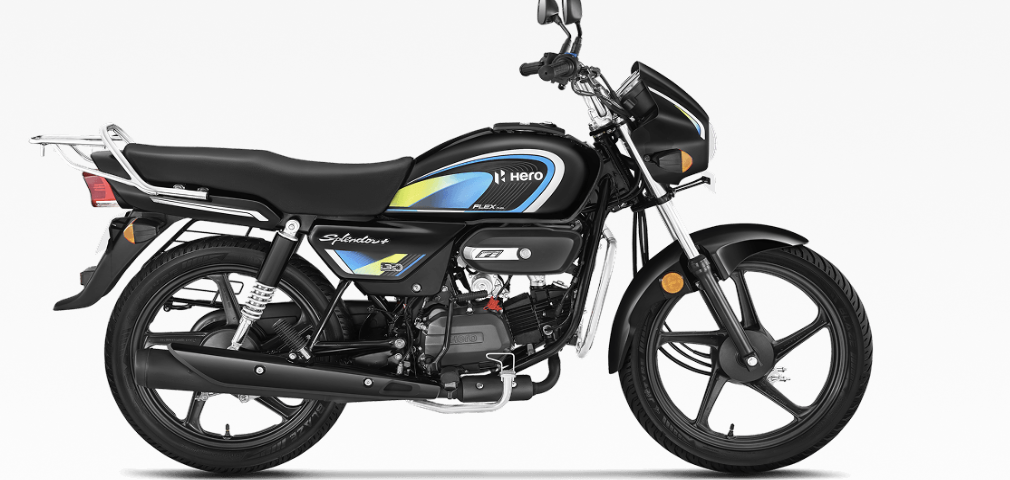
Hero MotoCorp used its first-quarter investor call on August 7 to put a date on something it has been circling for two years: an electric motorcycle, arriving in 2027, not this year. The company’s emerging mobility chief also made a point that got treated as boilerplate and shouldn’t have been — the bikes will not be built on the Vida scooter architecture. New platforms, engineered around motorcycle demands: performance, rideability, range, and gradeability.
That last word is the one worth stopping on. It sounds like a spec-sheet garnish. It is actually a homologation requirement with a number attached, and it explains more about why a scooter platform can’t simply be stretched into a motorcycle than any amount of marketing language could.
The 7-degree problem
Under AIS-049, the standard governing CMVR type approval for electric powertrain vehicles, gradeability is a mandated test. Two-wheeled EVs with net motor power at or below 1,000 W have to manage 3.81 degrees. Everything else has to manage 7 degrees.
Here’s the part that makes it interesting: the test is conducted at 60 percent state of discharge. Not on a full battery. Not at the peak of the discharge curve where pack voltage is highest and the controller can pull maximum current. The vehicle has to climb with a half-drained pack, when terminal voltage has sagged and the motor’s available torque has come down with it.
Related Articles
- NASCAR’s Spending Cap Talk Lands Right After Charters Became $100 Million Assets
- O’Reilly Says It’s Sharing Tariff Refunds With Suppliers. Its Balance Sheet Tells the More Interesting Version.
Any electric two-wheeler can look heroic on a hill for ten seconds at 100 percent charge. Sustaining it at 60 percent SOC, with cells warm from the climb itself, is a completely different engineering brief — and it’s why the gap between a scooter powertrain and a motorcycle powertrain is not just a bigger number on the motor.
Hub motors don’t scale the way people assume
Hero’s current EV volume runs on hub-motor scooters. The VX2 it launched in Europe at EICMA last November is quoted at 125 km WMTC range and a 90 km/h top speed, with twin removable IP67-rated packs and an IP68-rated PMSM drivetrain. That’s a well-sorted urban commuter package.
Take that architecture and ask it to do motorcycle work and three things go wrong at once.
Unsprung mass is the obvious one. Hanging the motor in the rear wheel makes the wheel slow to follow a broken surface, which is tolerable at 45 km/h in traffic and increasingly unpleasant as speeds rise.
Thermal headroom is the less obvious one. A hub motor sits inside a sealed drum with essentially no airflow across the windings and no practical route to liquid cooling. Its heat path is conduction through the axle and radiation off the wheel. On a sustained gradient — exactly the AIS-049 scenario — the motor heats, resistance climbs, and the controller derates to protect it. Peak power becomes a number you can only use briefly.
And gearing is the one nobody mentions. A hub motor is direct drive; the motor turns at wheel speed. You cannot select a reduction ratio to trade top speed for climbing torque. A mid-mounted motor with a reduction stage or belt final drive can spin at several thousand rpm while the wheel turns slowly, which is where the torque multiplication for hill work comes from — and where the ability to cool the thing properly comes from too.
That is the actual reason Hero can’t just fit a bigger Vida motor and call it a motorcycle.
The battery question Hero hasn’t answered
Vida’s entire consumer proposition is removable packs. Two of them, small enough to carry, chargeable off a domestic socket. It’s a genuine differentiator in a market where a large share of buyers have no reserved parking, let alone a wall box.
A performance electric motorcycle almost certainly cannot keep that. The concepts Hero showed at EICMA — the UBEX urban explorer on a modular platform, and Project VxZ, developed with Zero Motorcycles — are packaged like motorcycles, with the pack occupying the space an engine used to. Once you’re past roughly 4 kWh, a removable module stops being something a person carries upstairs and starts being something two people struggle with.
So the buyer of Hero’s first electric motorcycle probably inherits a fixed pack and a charging problem that Vida scooter owners don’t have. Whether Hero solves that with fast-charging density, home AC charging, or something else is the single most consequential unknown about this product, and it wasn’t addressed.
What it costs to own one, before anyone has priced it
Two things are already knowable.
The central purchase incentive is gone. The Ministry of Heavy Industries extended PM E-DRIVE to March 2028 but kept registered electric two-wheelers on a separate, earlier terminal date, and that window has now closed. A 2027 launch arrives into a market with no per-kWh central subsidy — and a performance motorcycle would have sat above the price ceiling regardless.
Related Articles
- Cristiano Ronaldo’s New Garage Photos Put A Ferrari, A Bugatti, And A McLaren Senna In One Frame
- Backfire News Weekly Wrap-Up: August 3–7, 2026
Insurance scales with power in a way scooter buyers never notice. Third-party premiums for electric two-wheelers are banded by kilowatts, with steps at 3, 7 and 16 kW. A Vida scooter sits in the bottom band. A motorcycle built to feel like a 400cc machine will not. That’s a recurring annual cost difference, mandated and non-negotiable, that belongs in any comparison against a petrol equivalent.
The Zero relationship is a technology deal, not a merger
Worth remembering what the VxZ collaboration actually is. Hero’s board approved an equity investment of up to US$60 million in Zero Motorcycles in September 2022, with collaboration agreements signed the following March. Zero contributes powertrain and electric motorcycle engineering; Hero contributes manufacturing scale and sourcing. Hero’s EICMA filing also lists strategic investments in Ather Energy and Euler Motors, alongside its Harley-Davidson alliance.
That’s four separate electrification bets running in parallel. It buys optionality. It does not, on its own, produce a motorcycle.
For anyone planning to buy one
Ignore peak power when the specs land. Ask for the maximum 30-minute rating — the figure measured under AIS-041 — because that’s what the bike can actually hold on a long climb or a highway stretch, and the gap between it and the headline number tells you how hard the cooling is working. Ask what the drivetrain’s wear items are: a belt final drive is low-maintenance but not no-maintenance, and it needs a parts pipeline through a dealer network that has spent forty years stocking chains and sprockets.
And treat 2027 as a window, not a date. Hero said products would begin arriving next year and that it would share more in the coming months. Between now and then, the number that matters isn’t the launch month. It’s whether the thing can climb a 7-degree grade on half a battery without flinching.
Images Via: Heromotocorp
About the Author