Photo: 350z33 / Wikimedia Commons (CC BY-SA 4.0)
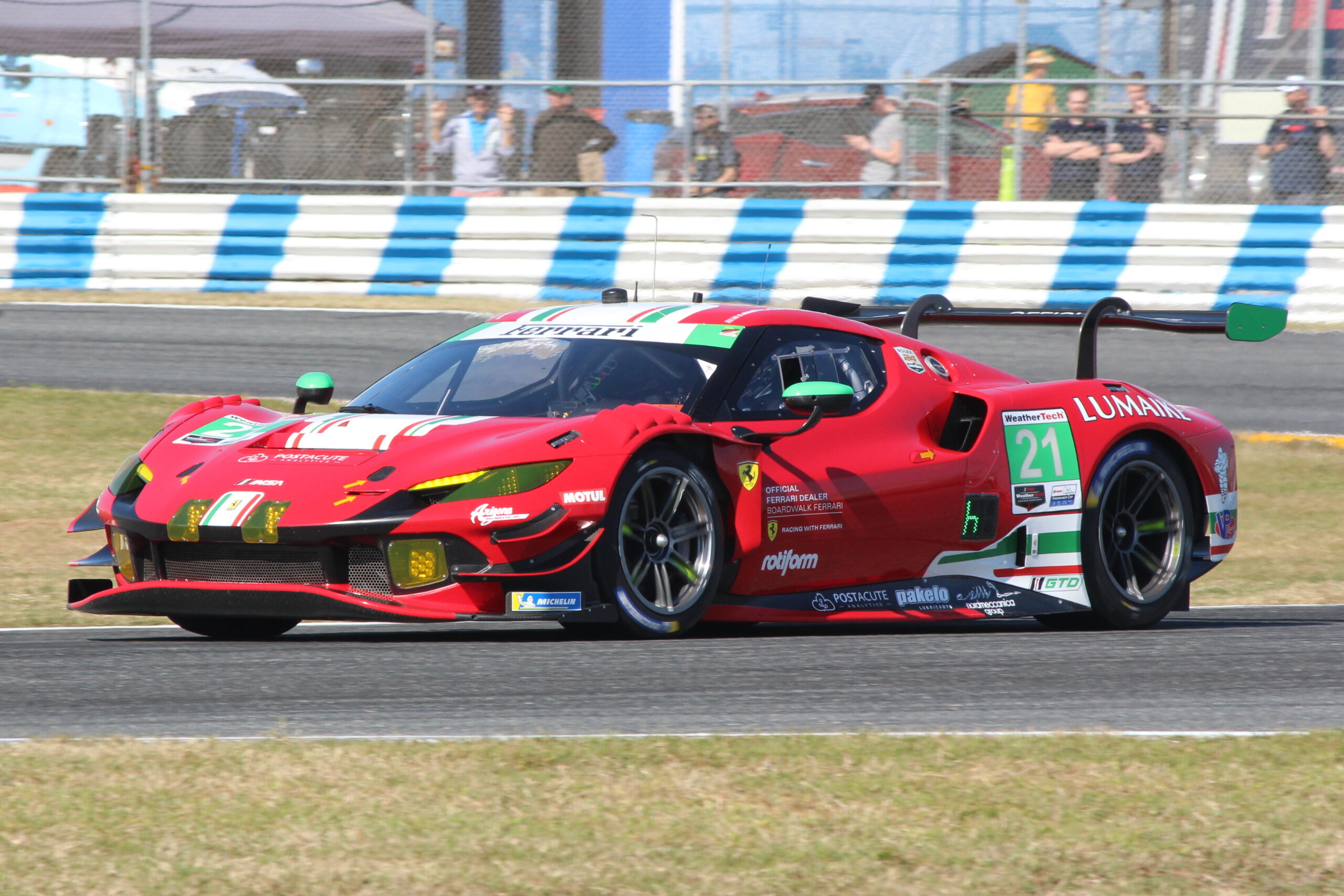
With 30 minutes left on the clock at Michelin Raceway Road Atlanta last October, Albert Costa Balboa found more grip than Loris Spinelli through the final chicane, completed a pass for the lead, and held on through lapped traffic to win the GTD class at the Motul Petit Le Mans by 0.718 seconds. It capped an eighth-to-first recovery drive for Conquest Racing’s Ferrari 296 GT3, delivered the team’s first GTD win in IMSA competition, and gave all three of its drivers their first series victory. For the Monegasque racer who’d handed the car off mid-race, it also closed out a résumé built almost entirely out of near-misses.
Cédric Sbirrazzuoli died on August 20, his 39th birthday, following a cancer diagnosis. He’s survived by his wife, Martina.
A Seat That Only Existed Four Weekends a Year
Sbirrazzuoli wasn’t a full-season IMSA driver, and that wasn’t an accident. IMSA’s GTD class requires every full-time entry to carry at least one Bronze- or Silver-rated driver under the sport’s tiered ranking system, a classification based on age, experience and results that separates career amateurs and semi-professionals from the full-time pros who fill out the rest of a lineup. For the four Michelin Endurance Cup rounds — the Rolex 24 at Daytona, the Sebring 12 Hours, Watkins Glen and Petit Le Mans — that requirement typically turns into a dedicated third or fourth driver, brought in specifically because those races run long enough to need the extra seat time, the same four-round stretch that turns America’s biggest sports car races into a showcase for everything from factory GT3 programs to homegrown Le Mans prototypes. It’s a real job, not a courtesy entry. Conquest signed Sbirrazzuoli in November 2023 to fill exactly that role in its No. 34 Ferrari 296 GT3 alongside full-season drivers Manny Franco and Albert Costa Balboa, then re-signed him for 2025 alongside Franco and new teammate Daniel Serra. It’s also a role that helps keep GT racing financially viable, since those endurance-only seats are frequently the ones that gentleman racers pay to fill, subsidizing programs that couldn’t otherwise afford to run a full season.
From Monaco’s Streets to AF Corse’s Ferrari Pipeline
Sbirrazzuoli traced his own interest in racing back to his hometown, growing up watching Formula 1 cars run the streets of Monaco every year before starting in karting and moving into single-seaters in the mid-2000s. He later stepped into GT and one-make racing, running the Porsche Carrera Cup, the Maserati Trophy and the Lamborghini Super Trofeo before AF Corse — Ferrari’s flagship customer racing outfit — put him in a factory-built GT3 car for the first time. His first results with the team came in a Ferrari 458 Italia GT3 in 2014, and he stuck with the platform through its replacements as Ferrari rolled them out: the 488 GT3 through the back half of the 2010s, and the current 296 GT3 for the final stretch of his career.
That’s not a small relationship to have. AF Corse currently runs Ferrari’s factory Hypercar program in the FIA World Endurance Championship and has won the last three runnings of the 24 Hours of Le Mans outright, and it’s the same organization that decides which gentleman drivers get access to the brand’s newest customer GT3 hardware — hardware built under the same homologation rules that just let Porsche produce a run of Nürburgring tribute cars for its own customer racers. Along the way, Sbirrazzuoli also raced in the European and Asian Le Mans Series, GT World Challenge Europe and America, and the Italian GT Championship, building the kind of well-traveled, multi-continent résumé that’s common among the sport’s career Bronze and Silver drivers but rarely gets attention outside the paddock.
The Win He’d Been Chasing for a Decade
Conquest’s No. 34 Ferrari qualified eighth for the 2024 Petit Le Mans, and Franco spent the opening stint working it as high as second before handing off. Sbirrazzuoli took over in fourth position, clawed his way back into contention, and traded stints with Franco and Costa Balboa as the race wore into the night, including a stretch where the crew swapped a door after a broken side mirror without losing track position. Costa Balboa took the final stint with two hours left, recovered after being pushed into the grass by a competitor, and made the winning pass with roughly 30 minutes remaining, fending off Spinelli’s Lamborghini lap after lap to the checkered flag.
“A Petit Le Mans win was on my bucket list for sure, and it feels so good to check that one off,” Sbirrazzuoli said afterward. “We’ve finished third, we’ve finished second, we were just missing first place.” The result pushed Conquest to fourth in the final GTD standings, one of four podiums the team collected that season alongside a GTD Pro class win at Road America.
It came on the back of two other podiums that same year — third at the Rolex 24 at Daytona and second at Sahlen’s Six Hours of the Glen, a Watkins Glen round that has produced plenty of its own late-race chaos over the years. That consistency lined up with how he described his own driving during a mid-season interview, saying he’d always preferred the fast, downforce-loaded corners the 296 GT3 rewards over the slow, technical ones.
One More Season
Conquest brought Sbirrazzuoli back for 2025 alongside Franco and new full-season signing Daniel Serra, again as the team’s dedicated Endurance Cup driver. The season included a 12th-place finish at a Rolex 24 slowed by mechanical setbacks and a strong run at the Sebring 12 Hours that kept the team in podium contention for much of the race. He also competed in the Asian Le Mans Series that winter, still racing across multiple continents in his late 30s much as he had for most of the previous two decades.
Remembered By the Paddock He Spent Two Decades In
AF Corse, the team that gave him his first Ferrari GT3 seat over a decade earlier, called him “a genuine, respectful and cheerful person” in a statement following his death. Costa Balboa, his Petit Le Mans-winning teammate, called him “an incredible friend and a great team-mate.” Iron Dames driver Michelle Gatting, who raced against him for years in European GT competition, tied his death to that of Luca Persiani, a fellow driver killed in an accident last year — a reminder of how small the pro-am end of GT racing really is, where the same few hundred drivers keep turning up in each other’s paddocks, and eventually, each other’s tributes.
Sbirrazzuoli is the second driver Backfire has covered this month whose career ended earlier than expected because of a cancer diagnosis, following longtime Lancia rally driver Alex Fiorio’s death last week. Conquest Racing hasn’t announced who will take over the Endurance Cup seat in the No. 34 Ferrari, a program that’s grown into one of the more competitive homes for factory-backed customer racing in IMSA’s GTD field. Whoever gets the call inherits a car with a Petit Le Mans trophy already in the cabinet, and a reputation that took its predecessor the better part of two decades to build.
About the Author