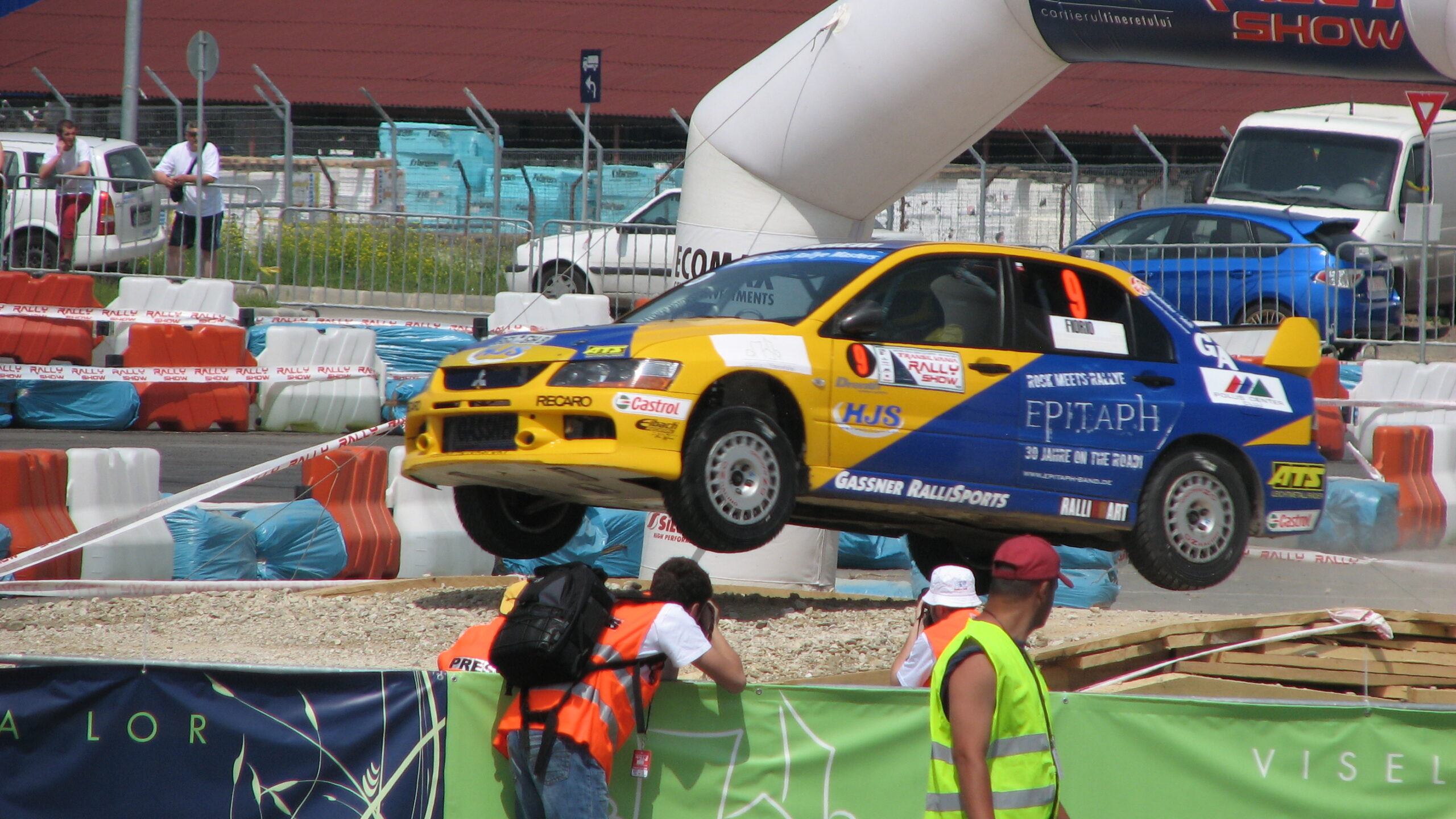
Alessandro “Alex” Fiorio, the Italian rally driver who spent the late 1980s finishing just behind some of the greatest names ever to climb into a factory Lancia, died on August 17 in Ceglie Messapica, Italy. He was 61. The cause was stomach cancer, specifically a tumor located where his stomach meets his esophagus, a diagnosis he shared publicly just ten weeks before his death.
Fiorio broke the news himself on June 8 with a raw, unscripted video posted to his own Instagram account rather than some sanitized statement drafted by a publicist. He explained he’d learned of the diagnosis only three days earlier, and asked followers to hold off on messages of comfort because he intended to fight it.
Rallying was the family trade. His father, Cesare Fiorio, ran Lancia’s factory rally operation through its most dominant era and later spent several seasons as sporting director of Scuderia Ferrari’s Formula 1 team during the sport’s chaotic turbocharged years. Growing up around that garage meant Alex never had to ask what a homologation special was, but it also meant he spent two decades racing in the shadow of a surname already carved into rallying’s biggest trophies.
A Stat Sheet That Undersells Him
Over 51 World Rally Championship starts between 1986 and 2002, Fiorio collected 10 podiums, 45 stage wins and 236 points. He never won an outright WRC round, and he never won the drivers’ title. On paper, that reads like the résumé of a competent journeyman. In practice, Fiorio spent years running near the front against factory-backed legends in cars that, by design, were never going to let him win.
He got his first real result in 1987, taking a Group N Lancia Delta HF 4WD to victory in the inaugural FIA Group N Cup, the forerunner of today’s Production World Rally Championship. Group N cars ran with far less freedom to modify than the full-house Group A and (formerly) Group B machines, so the win mattered less for outright pace and more as proof he belonged in a factory-adjacent seat.
1988: Third Overall, Four Times the Bridesmaid
Lancia handed him a proper Delta Integrale for the 1988 season, and Fiorio used it to finish second at the Monte Carlo Rally, the Rally of Portugal, the Olympus Rally in the United States, and his home round in Sanremo. He added a third place in Greece. Every one of those results lost out to a teammate. Lancia’s Delta Integrale program was so deep that season that Fiorio’s four runner-up finishes were only good enough for third in the championship, behind Miki Biasion and Markku Alén. That’s the reality of driving for a factory that stacks its rally team the way other manufacturers stack a bench of backup quarterbacks: even a strong season doesn’t guarantee the top step internally, let alone externally.
1989: Tragedy at Monte Carlo, Then the Best Season of His Career
On the fifth stage of the 1989 Monte Carlo Rally, Fiorio’s Delta Integrale left the road after cresting a hump at roughly 145 km/h and plowed into a group of spectators, killing Swedish rally driver Lars-Erik Torph and his co-driver Bertil-Rune Rehnfeldt, who were watching the stage during a break from their own reconnaissance work, and injuring three other bystanders. Fiorio and his co-driver Luigi Pirollo walked away unhurt.
The accident happened three years after Group B was banned following a string of fatal crashes, but it was a blunt reminder that Group A cars, while less extreme, were still fast enough to turn an unmarshalled hillside into a danger zone. Spectator access at closed-road rally stages has tightened considerably since then, with modern WRC events relying on designated, roped-off viewing areas, mandatory recon notes flagging hazardous sections, and stage marshals empowered to clear crowds well before cars arrive, changes that trace directly back to incidents like this one.
Fiorio kept racing that season, and delivered the best championship finish of his life: second overall, with 65 points, trailing only Biasion and finishing ahead of Toyota’s Juha Kankkunen. It remains one of the stranger footnotes in WRC history, a driver’s finest year on the stopwatch arriving in the same season as the worst day of his career off it.
The Journeyman Stretch: Sierras, Escorts, and Three Straight Cyprus Wins
Fiorio’s factory Lancia run wound down after 1990. He spent 1991 in a Ford Sierra RS Cosworth 4×4, returned to a privately-run Delta Integrale with Astra Racing for 1992 and 1993, then split 1994 and 1995 between a Delta HF Integrale and a Ford Escort RS Cosworth, the same rally-bred Escort bloodline that later inspired the kind of screaming, high-revving restomod builds still turning heads at auction today. Outside the WRC, he won the Cyprus Rally in the European Rally Championship three years running, proof that his pace never really left him even as the factory rides dried up.
A Second Act on Four Wheels, and a Third on Two
After stepping away from full WRC seasons, Fiorio returned to contest select home rounds in 2000 and 2001, then ran a full Production World Rally Championship campaign for Ralliart Italia in 2002, driving a Mitsubishi Lancer Evolution VII, the same generation of Evo that has since become a bona fide collector item. He won the production-car class at Rally Finland and finished fifth in the PWRC standings.
That same year, Fiorio also stepped into a role you don’t see many rally drivers take: team manager of the Honda Benetton Playlife Racing squad in the 125cc class of motorcycle grand prix racing, the tier that today sits beneath MotoGP’s premier class. Running a two-wheeled program is a different discipline entirely, built around rider development and engine allocation rather than pace notes and tire selection, but the organizational instincts that make a good rally team manager, reading a championship long-term, managing a budget across a season, and getting the most out of a small technical staff, translate surprisingly well across the paddock fence.
Tributes From Places the Highlight Reels Forget
Fiorio’s reach extended well past the WRC’s usual stops in Monte Carlo and Sanremo. The Automobile and Touring Club of Lebanon issued a public statement after his death noting that Fiorio had won the 1994 Rally of Lebanon, calling him a fixture in that country’s motorsport history. It’s a small detail, but it says something about how rally careers get built: not just on the handful of marquee WRC rounds that make the record books, but on regional and continental events all over the world that rarely get remembered outside the countries that hosted them.
Fiorio never got the outright win or the title his four factory seasons seemed to promise, but a career spent perpetually one step behind the best drivers of a golden Lancia era is still a career most professional racers would sign up for twice. A well-kept Delta Integrale from his prime now routinely clears six figures at auction, and the rally world’s tributes this week suggest his name will keep circulating in those sales listings for a long time yet.
About the Author