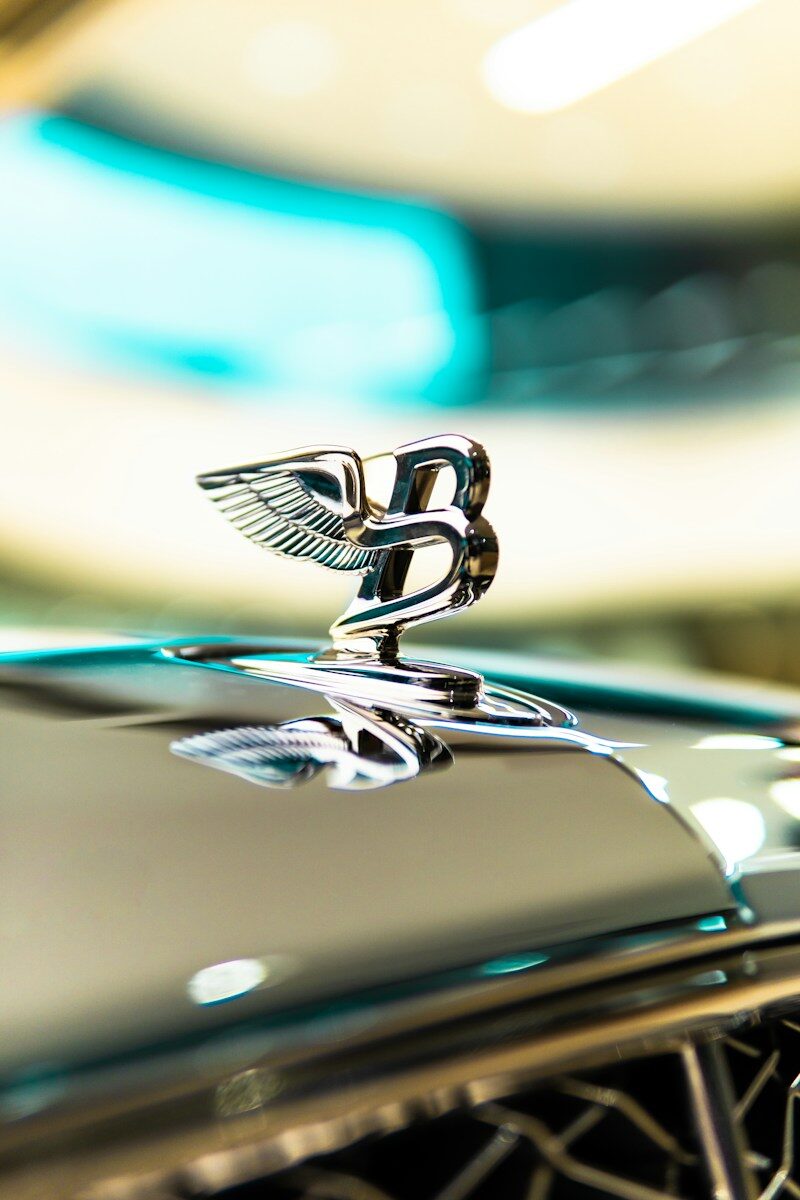
For about six decades, a big part of owning a Bentley was the sound of a 6¾-litre V8 moving two and a half tons of leather and walnut without much effort. Bentley’s first battery-electric car doesn’t have that engine, so the company recorded a drummer, a viola player and a bass guitarist to take its place.
The car is the Torcal, which debuted in London on September 23 as Bentley’s fourth model line, joining the Continental GT, Flying Spur and Bentayga. It’s a five-meter SUV, it’s the first Bentley with no combustion engine anywhere, and its soundtrack is going to get far more attention than its torque figures. That’s a shame, because the soundtrack is the least interesting thing about the car’s engineering and the easiest to misunderstand.
Not a fake V8, exactly
“Fake engine noise” is the lazy description. What Bentley actually did is a bit weirder.
In July, the company explained that its engineers recorded the V8 in a studio and concluded that its emotional appeal came mostly from rhythm, not from mechanical tone. To test the idea, they set up parabolic speakers with a Bentley V8 playing on one side and a live drummer on the other, then walked between the two. Bentley says the cadence and energy were strikingly similar. The team also pointed out that combustion engines aren’t perfectly even. Like human drummers, they drift and stumble slightly, and Bentley thinks those imperfections are part of why an engine sounds alive.
Related Articles
- He Bought Car Insurance From the Back Seat of a Police Car. The Timestamp Got Him Anyway
- Sandy Springs Police Joked About Their ‘Slowest PIT.’ That’s Exactly How a PIT Should Look
The result is branded the Bentley Dynamic Symphony. The launch release says musicians performed it on real instruments, and it’s calibrated to torque demand and road speed. It gets louder in Sport mode and can be switched off completely.
Here’s the skeptic’s footnote. Once those recordings are sampled, mapped against pedal position and played through a speaker, this is still synthesized audio. The source material is organic, but the delivery is the same thing every other EV sound system does. The difference is philosophy. Most automakers either imitate an engine or go full sci-fi. Bentley is trying to recreate the feel of an engine’s pulse without claiming there’s an engine.
Why a luxury car maker cares about noise
Bentley’s own reasoning is more practical than its press language suggests. The company frames the sound as part of the driver feedback loop: a predictable audio cue that tells you how hard the car is working, which helps you drive smoothly. That’s a real phenomenon. Drivers of silent, instant-torque EVs routinely misjudge speed because nothing in their ears tracks the acceleration. A torque-mapped sound gives you back a sense you didn’t realize you relied on.
There’s also a small legal wrinkle owners should understand. In the U.S., hybrids and EVs must emit an exterior pedestrian alert at low speeds under FMVSS No. 141. NHTSA wrote the standard under the Pedestrian Safety Enhancement Act to protect blind pedestrians in particular. That exterior alert is a compliance device, not a mood setting, and it can’t simply be turned off. Bentley’s material describes the Dynamic Symphony as aural feedback for the driver and says owners can mute it. It doesn’t specify how the soundtrack relates to whatever pedestrian warning the Torcal uses for U.S. certification. If you’re buying one expecting total silence in a parking garage, expect to be disappointed at walking pace no matter which button you press.
Bentley also went a bit further with the rest of the cabin sounds. The turn signal is a recording of a hammer tapping leather in the Crewe upholstery shop, and the touchscreen chime is a crystal glass. It’s either charming or a very expensive Easter egg, depending on how you feel about Bentley.
The hardware underneath the drum kit
Strip away the soundtrack and the spec sheet is serious. The Torcal comes in two versions. The standard car makes 821 PS and 1,194 Nm, runs 0–60 mph in 3.3 seconds and tops out at 155 mph. The Torcal S makes 888 PS and 1,350 Nm with launch control, does 0–60 mph in 2.8 seconds and reaches 162 mph. Bentley says that’s the most torque it has ever built into a car.
One detail is worth noticing. Bentley says it deliberately stopped short of more violent acceleration because most of its customers find anything harsher uncomfortable. It made the same point in a September release about keeping performance within comfort limits. Every other EV maker seems to be chasing 0–60 times that rattle your fillings. A brand choosing to hold back is either refreshingly honest or a convenient way to explain why a Bentley isn’t the quickest thing in its price range. It’s probably both.
Mechanically:
- Motors: Two permanent-magnet synchronous motors, both dry-sump and filled with oil for life. The front uses an open differential. The rear uses a locking differential with a multi-plate clutch on each output shaft, so the car can direct torque side to side without leaning entirely on brake-based torque vectoring.
- Battery: 192 lithium-ion pouch cells in series, 800-volt nominal, 113 kWh net. Bentley covers the pack for 10 years or 100,000 miles.
- Range and charging: Up to 375 miles (600 km) on the WLTP cycle. Note that WLTP figures run optimistic compared with EPA ratings, and U.S. numbers haven’t been published. Peak charging is 400 kW.
- Suspension: Fully active, a first for Bentley. Each corner can raise or lower independently, which lets Bentley delete the anti-roll bars. Rear-wheel steering is standard, with up to five degrees of angle, cutting the turning circle to 11.1 meters.
There’s also a small inconsistency in Bentley’s own document. The launch release’s summary bullets claim a 10–80% charge in 16 minutes, while the body text of the same release says just under 20 minutes. Both statements repeat the claim of roughly 100 miles in seven minutes. Real-world charging curves will settle it. Until then, plan around the slower number.
What this means for owners, insurers and future used buyers
Maintenance: “Oil for life” motors and no engine oil, spark plugs or exhaust system mean the routine service menu shrinks a lot. That doesn’t make the Torcal cheap to own. Most of the complexity now lives in the chassis electronics and the battery.
Active suspension: Removing the anti-roll bars is only possible because the actuators now do their job. That’s brilliant for ride quality and worrying for anyone planning to own one at year eight. Complex active suspension systems are exactly the kind of expensive out-of-warranty failure that lowers used values on luxury cars. If you’re shopping a Torcal secondhand someday, an extended warranty that explicitly covers the active suspension should be your first question.
Related Articles
- Darrell Waltrip Is Stepping Back From Public Life After a Brain Disease Diagnosis, and Three Championships Only Tell Half the Story
- Today in Automotive History: The Munsters Premiered, and TV Got Its Wildest Hot Rod Hearse
Insurance and collision repair: Bentley says the car carries 25 radars, sensors and cameras. It also has four radar-controlled powered doors and optional carbon-silicon-carbide brakes with 440 mm front rotors. A minor bumper tap on a car like this can turn into sensor replacement plus calibration. Expect premiums to reflect that, alongside the usual EV-specific repair questions about battery inspection after even modest impacts.
Tires: The standard car wears 21-inch wheels and the S wears 22s, with summer, winter and all-season options. A heavy SUV with instant torque and big wheels eats tires. Budget accordingly.
The bigger picture
The Torcal is being built by hand on a new line in Crewe, set up inside a building that dates to 1938. It’s part of what Bentley calls a self-funded investment of over £350 million in the site, which employs more than 4,000 people. It also arrives as the company’s corporate boilerplate still promises an all-electric lineup from 2035. That’s a target Bentley has already pushed back once, and one this single SUV can’t meet on its own.
That gives the soundtrack a strategic purpose. Bentley isn’t trying to convince existing customers that an EV sounds like a V8. It’s trying to convince them that an EV can still feel like a Bentley. Whether a sampled drummer does that better than silence is something only a test drive will answer, and conveniently, the off switch is standard.
About the Author