Ben Jones spent six seasons playing the one guy in Hazzard County who actually understood why the General Lee kept surviving jumps that should have folded its frame like a lawn chair. He died Sunday at 84, and the tributes rolling in this week say something rare for a working actor: people remember him as much for the car he stood next to as for the character he played.
Jones suffered a heart attack at his home in Virginia. His wife, Alma Viator, shared the news on Facebook Sunday evening, writing that Jones had been “resting in his favorite chair waiting for the Braves to come on” when he passed. Tom Wopat, who played Luke Duke opposite Jones for the show’s entire run, posted his own tribute on Instagram, calling his former castmate “a fine friend and a fierce advocate of all the best things” the entertainment business has to offer.
A Session Player Who Became Hazzard County’s Chief Mechanic
Jones joined “The Dukes of Hazzard” in the late 1970s as Cooter Davenport, the coverall-wearing garage owner who somehow always had the exact part needed to get the Duke cousins back on the road before the next commercial break. It could have been throwaway comic relief in lesser hands, but Jones played Cooter as the connective tissue between the show’s slapstick chases and its genuine car culture. He stuck with the role through the series’ entire run, which wrapped in 1985, making him one of the few original cast members who never left and came back for a recast.
The Charger Did More Acting Than Half the Cast
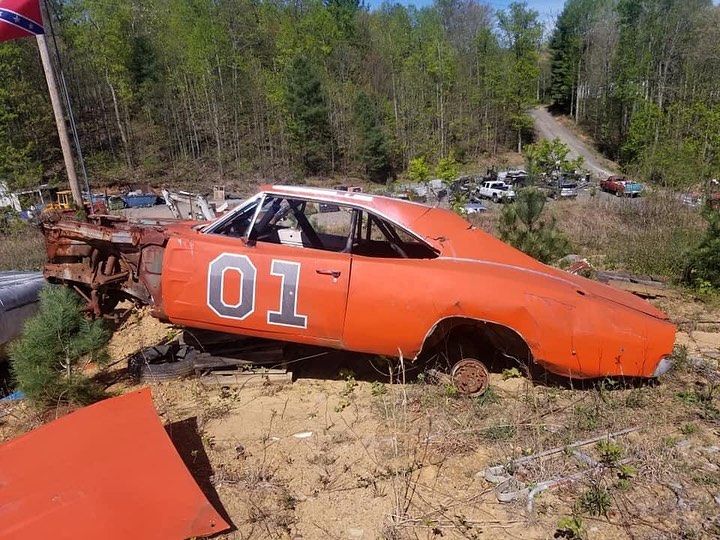
Every Dukes of Hazzard fan can spot the General Lee on sight: a Dodge Charger from the late 1960s model years, sprayed Hazzard County orange, doors welded shut so the Duke boys had no choice but to dive through the windows, with a horn blaring the opening bars of “Dixie” and a Confederate battle flag painted across the roof. What fans debate less is how many Chargers actually survived that treatment, because the honest answer is not many. Production went through them fast enough that a clean, numbers-matching Charger from that generation now counts as a genuine survivor of one of the most car-unfriendly shoots in TV history, the same body style collectors still stumble onto in barns and back lots decades later, sometimes finding two at once.
That scarcity is part of why General Lee tribute builds became their own strange corner of the collector market, and why the cars keep generating headlines completely independent of the show itself, right down to a Hollywood original getting reported stolen from its own star decades after the cameras stopped rolling.
From Cooter’s Garage to Capitol Hill
Jones’s second act had nothing to do with acting. Shortly after the show ended, he ran for the U.S. House in Georgia’s 4th Congressional District in 1985 as a Democrat, losing narrowly to Republican Pat Swindall the following year. The rematch went differently: after Swindall was indicted on perjury charges, Jones won the seat in 1988 and held it through a second term in 1990. Redistricting reshaped his district ahead of the 1994 election, and Jones lost it to a challenger who’d go on to have a rather significant career of his own, Newt Gingrich.
Cooter’s Place Made the Garage Real
After Congress, Jones returned to the screen for Dukes reunion specials and small roles in Primary Colors and Joe Gould’s Secret. The more lasting project came in 1999, when he and Viator opened Cooter’s, a museum and retail shop in Virginia built entirely around Dukes of Hazzard memorabilia and General Lee lore. It turned a fictional garage into an actual pilgrimage stop for muscle car fans, and it’s a reminder of how durable this kind of automotive nostalgia can be as a business. General Lee replicas and reproduction parts still move steadily enough that courts occasionally get involved when someone tries to hide one from creditors.
The Flag Fight Jones Wouldn’t Back Down From
In 2015, Warner Bros. stopped licensing General Lee merchandise that carried the Confederate flag, part of a broader retreat by retailers and NASCAR after the flag became a national flashpoint following that year’s Charleston church shooting. Jones went the opposite direction, publicly defending the flag’s place on the car and writing an essay for The New York Times laying out his reasoning. Whatever side of that argument you land on, it’s worth understanding as more than nostalgia. It was a real licensing decision by a real studio that changed what General Lee merchandise has been available ever since, and it’s part of why older toys and die-cast models carrying the original design now draw a premium from collectors who want the car exactly as it aired.
Jones wrote candidly about his struggles with alcoholism in his 2007 memoir, Redneck Boy in the Promised Land, a detail that rounds out a life a lot messier and more interesting than “the mechanic from that car show” ever suggested. Between the Charger, the Capitol, and the museum he built by hand, Jones spent five decades making sure Hazzard County’s garage stayed open long after the cameras stopped rolling.
About the Author