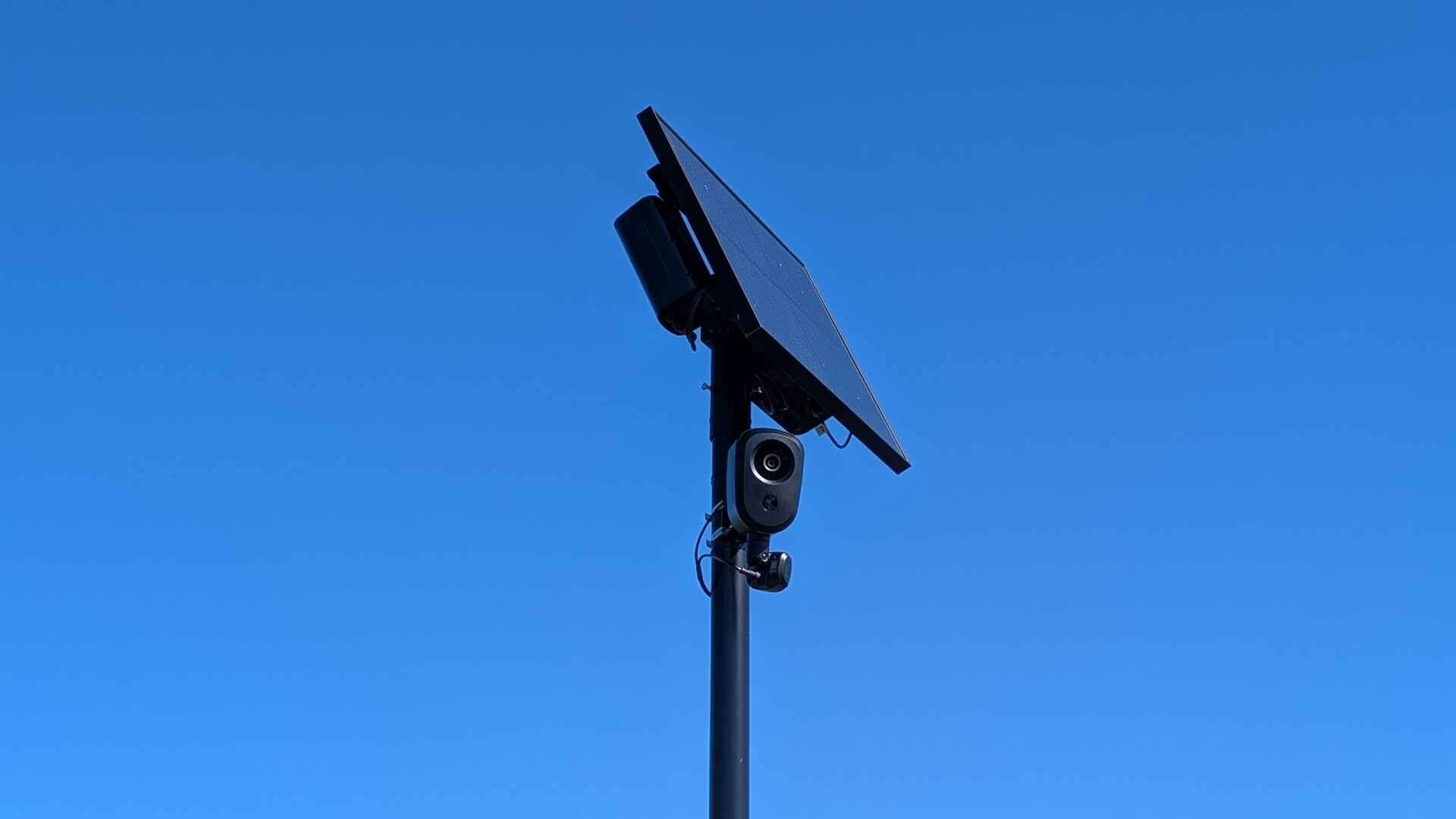
A Flock automated license plate reader. Photo: MiracleMiles via Wikimedia Commons, CC BY 4.0
A white Mercedes SUV knocked a Polk County Sheriff’s Office sergeant down and rolled over his legs Wednesday evening on Thompson Nursery Road in the Wahneta area of Winter Haven, Florida, the sheriff’s office says. He got up, got back in his patrol car and ended the chase with a PIT maneuver. It’s the same move that failed for a Florida trooper on I-95 in Fort Pierce before a Volvo driver died in the median.
The sheriff’s office says the driver, Gabriel Jimenez, 35, of Davenport, did it on purpose. Its Nov. 19 news release says Sgt. Brett Hermelbracht had blocked the SUV in traffic west of US 27 and walked up to its open passenger door when Jimenez backed into a maroon Toyota, reversed again and knocked the sergeant to the ground, then “intentionally drove over Hermelbracht’s legs.” Hermelbracht fired one shot. Jimenez was booked on attempted second-degree murder of a law enforcement officer and five other new charges. He has not been convicted of any of them, and the agency says more charges are possible.
Hermelbracht, who Sheriff Grady Judd said turned 43 last week, was treated at Lakeland Regional Health and released the same night. At a news conference Thursday, Judd said the sergeant’s legs didn’t break because he went down on a soft, muddy shoulder instead of pavement. The sheriff’s office played video of the scene and the arrest during the briefing.
A Lake Wales Publix, a wrench and a name: “Crackerjack”
The first contact came more than eight hours earlier, at a Publix on US 27 near Lake Wales. Judd said a deputy noticed the Mercedes stopped outside a parking space with its doors open and its trunk up, and a man nearby carrying a wrench or two. Asked his name, the man first answered Crackerjack, according to the sheriff. When the deputy walked back to his cruiser to run the car, Jimenez drove off in it.
Nobody chased him. Judd said that was a choice: at that point, Jimenez was a suspicious man with tools in a grocery store parking lot, and the release says that “due to the circumstances” the deputy radioed dispatch instead of pursuing. Deputies ran the plate, found the registered owner, and were told Jimenez had permission to use the car, Judd said. They then took the case to the State Attorney’s Office and a judge and came back with two warrants: loitering or prowling, a second-degree misdemeanor, and fleeing to elude, a third-degree felony. The plate went into the system as a hot plate.
Florida made the drive-off a felony before anyone chased it
The felony warrant came out of a departure nobody followed. Section 316.1935(1) of Florida law makes it a third-degree felony for a driver to knowingly and willfully refuse to stop when a law enforcement officer orders it, or to stop and then willfully flee. Lights, sirens and a chase come in at the next rungs. Fleeing a marked patrol car with its lights and siren on is also a third-degree felony. Doing it at high speed or with wanton disregard for safety is a second-degree felony, and if that driving seriously injures or kills anyone, including an officer, it becomes a first-degree felony with a three-year mandatory minimum prison term.
The statute reaches past the sentence in two ways. A conviction under any of those subsections requires the judge to revoke the driver’s license for one to five years, and the law bars courts from withholding adjudication, so a first-time defendant can’t plead to this charge and walk out without a conviction on the record. The same section declares the vehicle contraband and subject to seizure under the Florida Contraband Forfeiture Act.
That last part matters to anyone who hands a friend the keys. The Mercedes wasn’t Jimenez’s. Under section 932.703, when an agency arrests someone other than the owner, it can seize the vehicle only if the owner had actual knowledge of the criminal activity. Forfeiture also requires the agency to show, by a preponderance of the evidence, that the owner knew or should have known after a reasonable inquiry that the car was being or was likely to be used in a crime. Neither the release nor Judd’s briefing mentioned seizing the SUV, and neither accused the owner of anything.
A plate reader on County Road 540A found the Mercedes
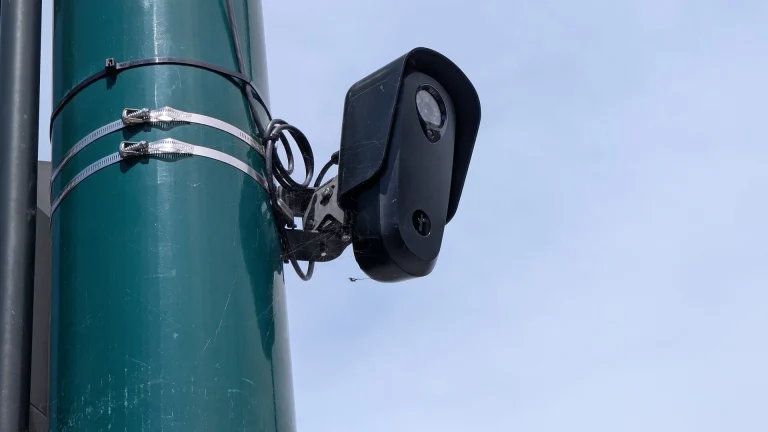
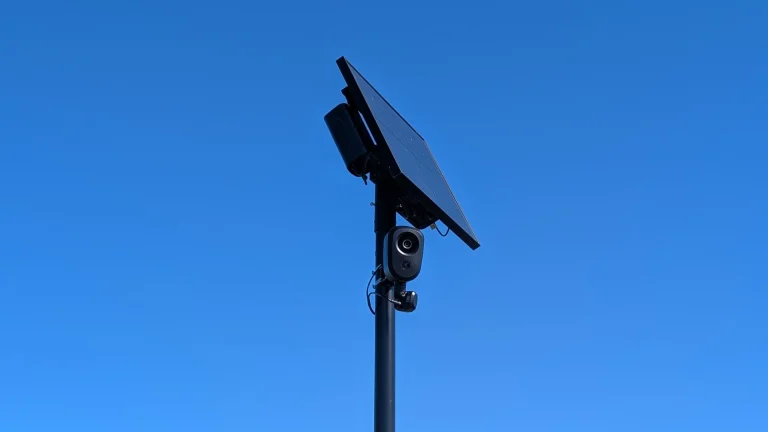
At about 5:10 p.m., a license plate reader placed the Mercedes in the area of Rifle Range Road and Eloise Loop Road, according to the release. Judd said the hit came from one of the agency’s readers on Thompson Nursery Road, near a sheriff’s district station, with the car headed east. Construction traffic at a red light held it long enough for Hermelbracht to catch up and pin it.
Judd spent much of the briefing on that camera. He said Jimenez was caught in hours instead of days because of the readers, said they don’t invade anyone’s privacy, told reporters more than 40 courts have agreed (he didn’t name the cases), and said it angers him when people try to take those tools away.
The people he was answering are in Tallahassee. On Aug. 31, the Florida Department of Transportation issued Engineering and Operations Memorandum 26-01, signed by Chief Operating Officer Will Watts, revoking the permits local agencies held for plate readers on State Highway System rights of way, giving them 30 days to remove the devices and stating that FDOT would stop approving new ones. The memo cites “concerning reports of misuse, data privacy concerns, and surveillance schemes.” Gov. Ron DeSantis had raised concerns about data privacy and misuse of the technology in August, the Florida Phoenix reported.
The memo stops at state roads, and Thompson Nursery Road is County Road 540A, according to Polk County. On Sept. 1, Judd said the sheriff’s office would “continue to use LPRs not located on state road rights-of-way,” FOX 13 reported. A camera the state order never touched found the car that ran over his sergeant, and the sheriff now has an injured sergeant to cite when he argues for the rest of the network.
Critics of the cameras have their own cases. A Harnett County, N.C., detective was indicted over his use of a Flock reader, and in North Manchester, Ind., a council critic’s plate drew 63 Flock searches before the town ended its contract. Florida’s own statute treats the data as sensitive. Under section 316.0777, images and data with personal identifying information from these cameras are confidential and exempt from the public records law. A driver can get the records tied to a plate registered to him, unless they are part of an active criminal investigation or intelligence file, and no one else’s.
Polk’s second no-chase case near Eloise this year
In February, the sheriff’s office let another fleeing car run without a pursuit in the same corner of the county. A Nissan Rogue had fled Auburndale and Lake Wales police on Feb. 9, and the agency’s release said “a pursuit was deemed too risky,” so its aviation unit tracked the car from above until it turned onto Eloise Oak Drive, a dead end in southeast Winter Haven. The driver backed into two mailboxes and a palm tree, and both men were caught in a cow pasture.
Wednesday ended differently because, the sheriff’s office says, the driver turned the SUV on the deputy who cornered it. By the sheriff’s account, Hermelbracht fired once after he was hit and stopped. Judd said the law would have allowed him to keep shooting as the SUV passed and he chose not to. Once Jimenez fled, Judd said, he drove into oncoming traffic and onto a sidewalk at up to 75 mph, and the sergeant picked his spot for the PIT because the road ahead toward Rifle Range Road was filling with drive-time traffic. The Mercedes hit two more vehicles. Two people were checked and cleared by EMS at the scene, and a third was taken to the hospital with a minor injury, the release says. Judd said Jimenez was trying to climb out the passenger window when he was arrested; he was not hurt.
A task force reviews the shot, and prosecutors decide the charges
Because a deputy fired his gun, the 10th Judicial Circuit’s officer-involved deadly incident task force is leading the review of the shooting, not the sheriff’s office, Judd said, and State Attorney Brian Haas will rule on it. Before Hermelbracht returns to duty, agency policy requires a psychological screening and firearms requalification. Judd said the sergeant asked if he could finish both the same day.
The booking charges are the sheriff’s. The State Attorney’s Office decides what it formally files. Besides the first-degree attempted murder count, the release lists aggravated battery with a deadly weapon and fleeing to elude after a crash, both second-degree felonies; resisting with violence, a third-degree felony; and two misdemeanors, resisting without violence and driving with a suspended or revoked license. It puts his record at 36 felony and 10 misdemeanor charges, seven felony convictions and five state prison sentences, the most recent ending with a release in February 2026. In the release, Judd said Jimenez “is a dangerous felon, and he proved that Wednesday.”
For drivers in Florida, the morning half of this case is the part that applies to ordinary traffic stops. Leaving after an officer orders you to stop is a felony whether or not anyone follows, the warrant can be waiting by afternoon, and in Polk the plate is read again on county roads the state order never reached. The next step for Jimenez is the State Attorney’s charging decision; the next step for the cameras is whether Tallahassee leaves the line where it drew it in August.
Florida pulled plate readers off state highways over misuse and privacy concerns, and Polk kept them on county roads and credits one with catching this driver in hours. Should sheriffs be allowed to put those cameras back on state highways, or was the state right to draw the line there?
About the Author