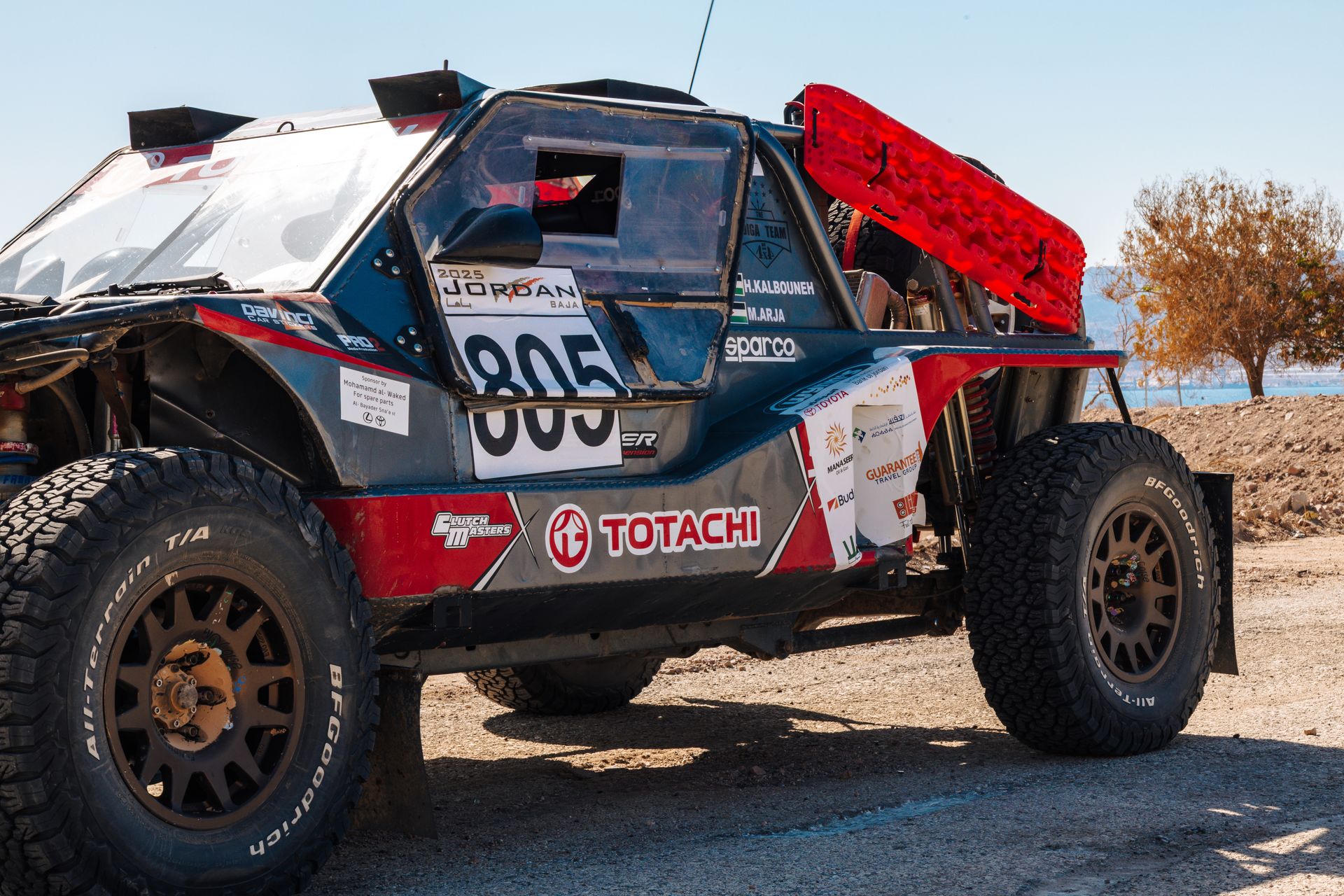
Red recovery boards ride on the flank of a desert rally car in Jordan, within reach and out of the way. Photo by Mohammed Shaheen on Pexels
Affiliate disclosure: Backfire News may earn a commission from qualifying purchases made through links in this article, at no extra cost to you. This does not influence which products we recommend.
Every off-road build eventually gets the same shopping list: bigger tires, a lift, lights, and a winch hung off the front bumper like a medal. The winch looks like the serious recovery tool. For a lot of trucks and SUVs that see sand, snow and mud more than rock, it is the second one you should buy.
The first is a pair of recovery boards. And if we were spending our own money, we would buy the MAXTRAX MKII, the Australian board that turned a piece of nylon into a category.
What it is
Per MAXTRAX USA’s own spec sheet, each MKII board measures 45 inches long, 13 inches wide and 3.5 inches tall, and weighs 7.5 pounds. They are sold as a pair, 15 pounds total, molded from what the company calls UV-stabilized, engineering-grade reinforced nylon. Both ends are shaped as shovels, there are six handles, keyhole mounting points for brackets, and the top is covered in raised cleats. A pair ships with two orange telltale leashes.
A tire spinning in place has plenty of power and not enough grip. The board goes under the tire at a shallow angle, the cleats give the tread lugs something solid to bite, and the flat body spreads the vehicle’s weight over a much larger patch of sand or snow than a single tire contact patch can. The truck climbs onto the board and rolls off on momentum, with no anchor tree, second vehicle or cable under tension involved.
Who it is for
- The solo traveler. A kinetic rope or strap needs a second vehicle, and a winch needs something to anchor to. Boards just need you and a shovel end.
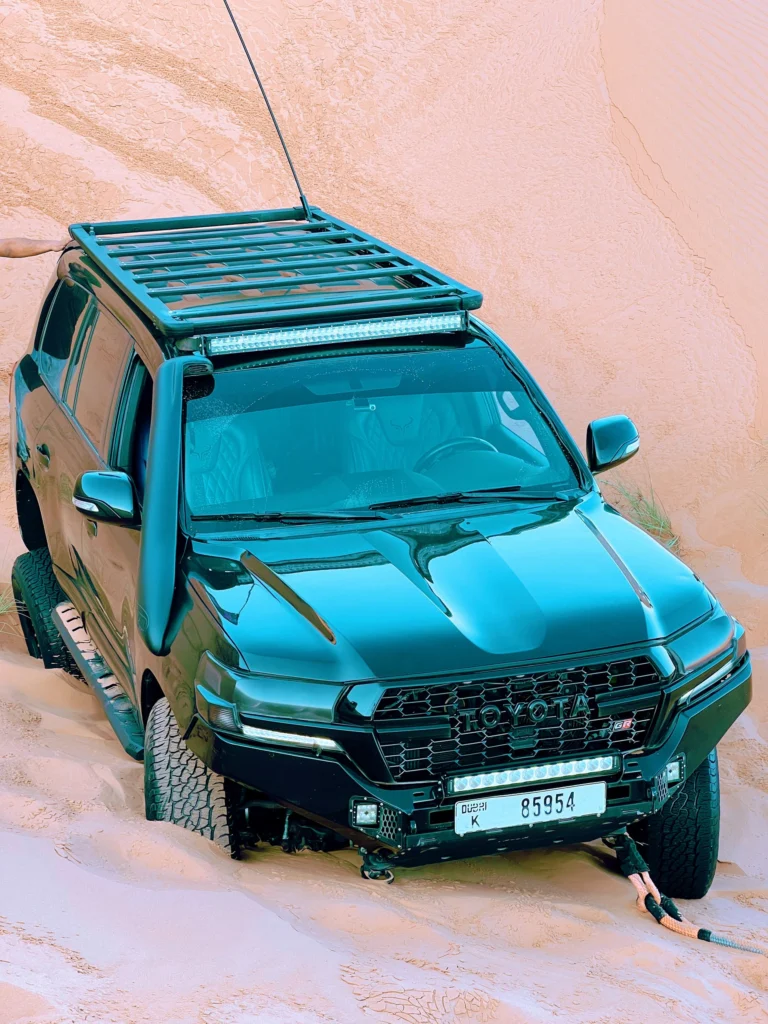
- Beach, dune and desert drivers. Open sand is the textbook case: nothing to winch to for miles, and a tire that digs itself deeper with every spin.
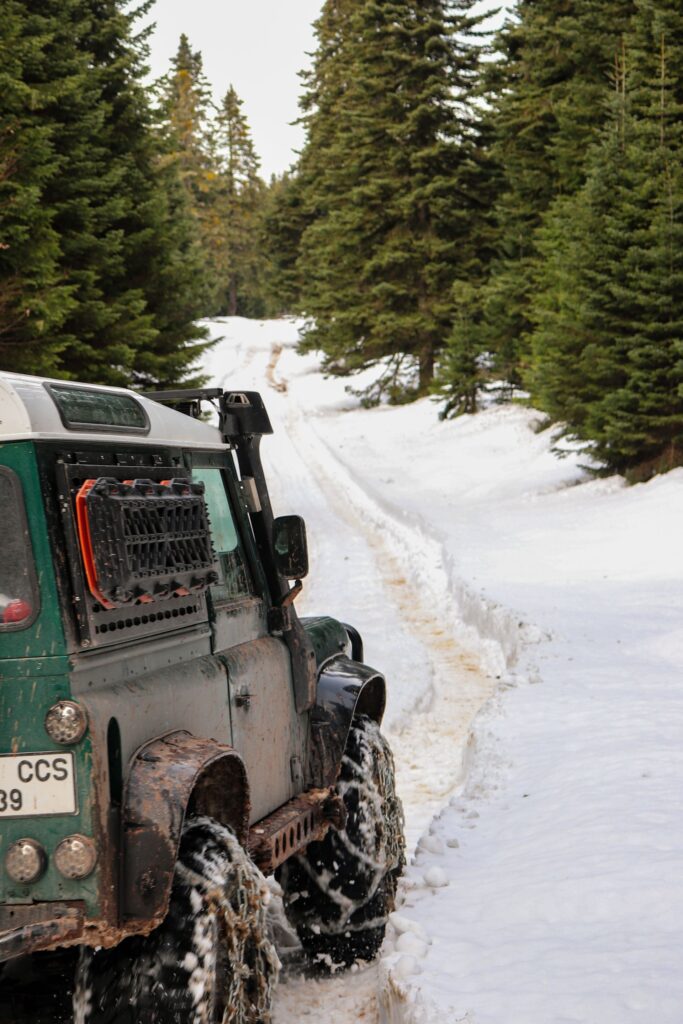
- Snow-country truck and SUV owners. An unplowed trailhead or a snow-packed ditch is the same physics as sand.
- Overlanders on stock or near-stock rigs. MAXTRAX says the full-size MKII is for anything larger than a UTV, Subaru or small 4×4 like a Jimny.
How to use them
MAXTRAX’s instructions boil down to a sequence worth memorizing before you need it: stop the moment you stop moving forward, dig out the front of the tires and anything the chassis is resting on, wedge the boards firmly against the tread at an angle, clear everyone out of the way, then ease on in low gear without spinning the wheels. Keep the momentum until you hit firm ground, then walk back for the boards. That is what the orange leashes are for. Buried boards are easy to lose.
Pair them with lower tire pressure and they get even better. Airing down lengthens the contact patch, which is why a good compressor belongs in the same kit. Our guide to the best portable tire inflators and the roundup of tire inflator accessories for airing up on the trail cover the airing-up side.
Don’t spin, don’t bridge
The most common way to ruin a set of recovery boards is impatience. MAXTRAX is blunt about it: do not spin your wheels, or you will burn the teeth off the top of the board, and that damage voids the warranty. A tire spinning against nylon generates enough heat to melt the cleats that make the board work. The technique is slow and steady, not full throttle and hope.
There is also a gap between the marketing and the manual. MAXTRAX says the boards were tested at the University of Queensland wrapping completely around a 33-inch tire without breaking, and its FAQ describes a test in which the boards spanned an 80-centimeter void under a 4WD tire and sprang back into shape. Yet the official instructions say not to use them as a bridge or a ramp. Believe the instructions. A flexible board that survives a test is not a board rated for crossing a washout with your family inside.
The limitations
- Not a rock tool. MAXTRAX says not to use them on hard or rocky surfaces. If your trails are Moab ledges, a winch and proper rock sliders matter more.
- Cold limit. The instructions rule out use below -20°C, or -4°F.
- Weight limit. Not for vehicles over 5,000 kg, roughly 11,000 pounds. A lifted, fully loaded heavy-duty diesel with a camper is closer to that line than owners think.
- High-centering. If the frame is resting on a hump of sand or snow, boards alone will not lift it off. You still have to dig.
- Bulk. Forty-five inches of nylon has to live somewhere. Inside the cargo area they get dirty and in the way; outside they need a mount.
- Warranty fine print. The lifetime warranty covers faulty materials and workmanship. It does not cover cleats you melted.
Price context
MAXTRAX USA lists the MKII at $279.99 a pair, with some colors sold out at the time of writing. That’s real money for two slabs of plastic. Compare it with the alternative, though, which is a tow truck willing to drive onto a beach or down a snowed-in forest road, if one will come at all.
Budget for the mount, too. MAXTRAX’s own flat bracket mounting kit with universal pins lists at $139.00, so a fully mounted setup from the brand runs past $400 before any roof rack. Plenty of owners start by carrying them inside and add a mount later.
The alternatives
- MAXTRAX Mini ($199.99 a pair). Shorter boards at 4.4 pounds each, aimed by MAXTRAX at UTVs, Subarus, small 4x4s and quads. Right-sized for crossovers; too short for a full-size truck.
- MAXTRAX Xtreme. Same length and width as the MKII, 10 pounds per board, and pitched by MAXTRAX at people doing a lot of recoveries or running vehicles over 10,000 pounds.
- ARB TRED Pro ($359.95 a pair). ARB USA lists a vehicle weight rating up to 9,900 pounds, a lifetime warranty, and a dual-composite construction it says resists wheelspin damage. Heavier, at just over 18 pounds a pair, and pricier, but the better bet if you know your right foot is the weak link.
- X-BULL Gen 3.0 (listed at $89.99 a pair). The budget pick. Shorter at 41.7 inches, 11.24 pounds a pair, with mounting hardware and a bag included. X-BULL advertises a “10-ton capacity,” a manufacturer figure with no independent test behind it that we could find. Fine for occasional beach trips; we would not bet a remote trip on them. Check current price on Amazon.
- A winch. Better on rock, in deep ruts and anywhere there is a solid anchor. Worse on open sand, and far more expensive once you add a bumper to hang it on.
For the rest of the kit, from straps to shackles, see our breakdown of the best off-road recovery gear. For a factory take on what a trail rig should carry, there’s Scout’s Traveler concept with its 35-inch tires, beadlocks and winch, and for the everyday stuff that belongs in any vehicle, see our list of car essentials that actually earn their keep. Last time in this column, we argued for a mid-torque impact wrench over the 1,400 lb-ft monsters.
The verdict
Buy them if you drive sand, snow or mud, especially alone. Skip them if your off-roading is mostly rock. If your rig is heavy or you expect to use them often, step up to the Xtreme. Either way, learn the slow-throttle technique before the day you need it, and clip the leashes on every time.
Eighty-six years after the first Jeep rolled into Camp Holabird, the smartest recovery tool for most off-roaders still has no motor. It has a shovel on each end.
Specifications and prices are taken from MAXTRAX USA, ARB USA and X-BULL’s official product pages and were current at the time of writing. Backfire News may earn a commission from qualifying purchases made through Amazon links. Photos: Mohammed Shaheen, Habi CR7 and Gizem Gökce via Pexels.
About the Author