Photo: Gustavo Fring / Pexels
Affiliate disclosure: Backfire News may earn a commission from qualifying purchases made through links in this article, at no extra cost to you. This does not influence which products we recommend.
Every few months another cordless impact wrench lands with a number that has a comma in it. Fourteen hundred pound-feet. Eighteen hundred. Numbers that would twist a wheel stud into a corkscrew if the tool ever actually delivered them to your lug nuts. And every few months, people buy the biggest gun on the shelf, throw a seven-and-a-half-pound brick in the truck, and slowly work out that they bought a tool designed for pipe flanges and concrete anchor bolts.
The one thing we would actually buy is a size down. A 1/2-inch mid-torque impact wrench does roughly 95 percent of what a car or truck owner needs, weighs a third less, fits behind a brake caliper, and is far less likely to hand you a snapped stud and a two-hour detour. Milwaukee’s M18 FUEL 2962-20 is the easiest one to point at, but the argument is about the category, not the badge.
What it actually is
Milwaukee rates the 2962-20 at 650 ft-lbs of nut-busting torque. It weighs 5.1 pounds with a 5.0Ah battery and measures six inches nose to tail. Four drive-control modes, and—this is the part worth circling—an auto shut-off mode that deliberately caps fastening at 35 ft-lbs.
Its big brother, the 2767-20 high-torque, does 1,000 ft-lbs fastening and 1,400 nut-busting, but it weighs 7.5 pounds and runs 8.39 inches long. That extra 2.4 inches is the difference between reaching a lower control arm bolt and lying on your back inventing new words. Once the wrench is sorted, the rest of the bench is where the money quietly disappears — The Auto Wire’s rundown of garage upgrades under $100 and Modern Car Collector’s list of garage gadgets collectors wish they had bought sooner both stick to gear that outlasts the tool of the month.
Who it is for
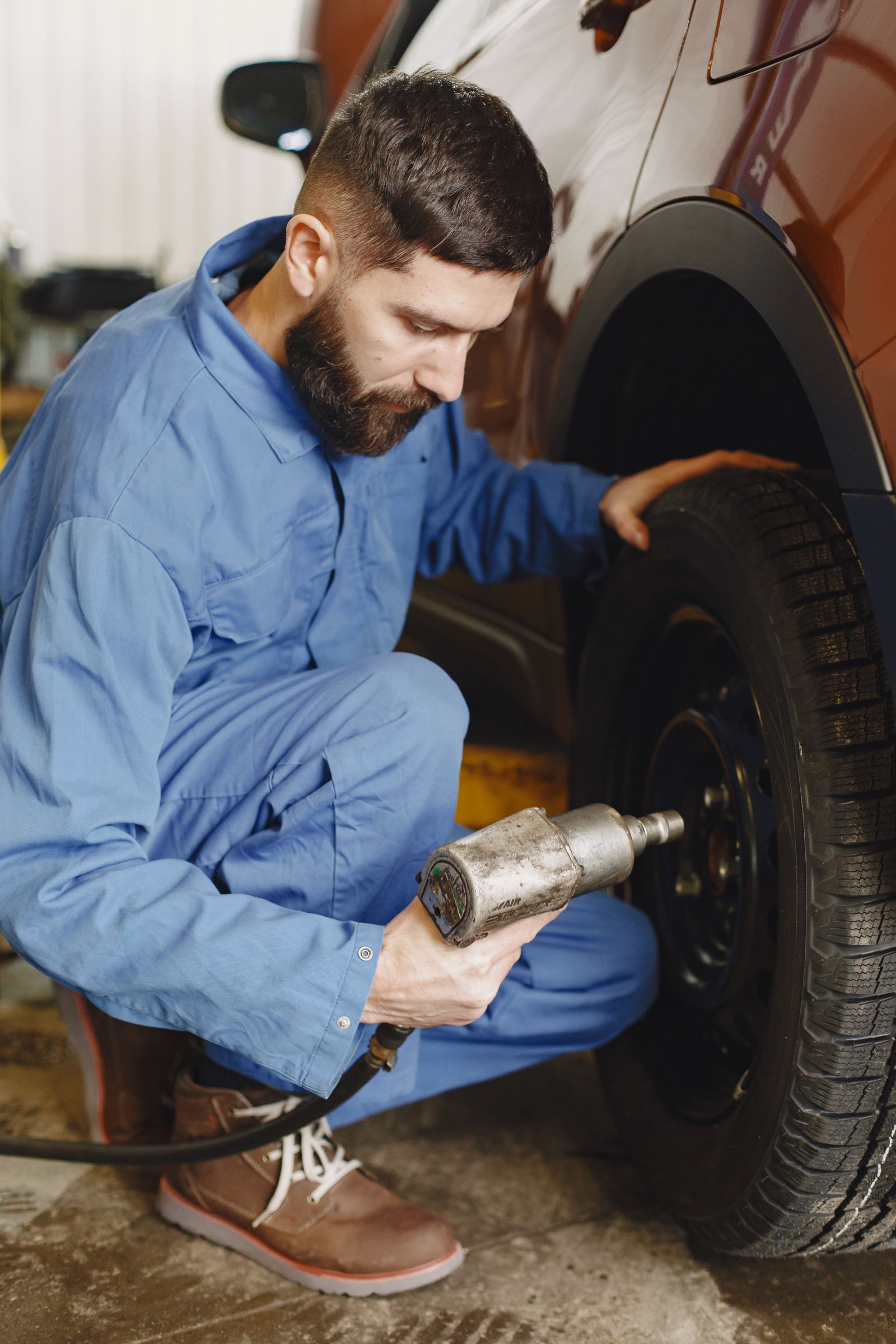
This is a tool for the person who rotates their own tires, runs a second set of wheels for winter or for the trail, pulls their own suspension apart, and occasionally has to fix something in a parking lot. If you own a truck or a 4×4 and you have ever changed a wheel with the factory scissor jack and the stamped lug wrench that came with it, you already know why this exists.
It is not for fleet work, semi lugs, or the specific misery of rust-belt hardware that has been fused to a frame since the first Obama administration. Different job, different tool.
When it actually earns its place
- Tire rotations. Eight wheels-worth of nuts off and on in the time it used to take to do one corner.
- Seasonal wheel swaps, where the alternative is paying a shop twice a year forever.
- Trail and roadside repairs, alongside the rest of your off-road recovery kit and a portable inflator for airing back up.
- Skid plates, hitch hardware, shock bolts, and anything else with a 15mm to 21mm head and a long thread.
- Sitting in the truck box next to the jump starter, doing nothing, until the day it does everything.
The part the spec sheet will not tell you
Nut-busting torque is a removal number. It is the force the tool can throw at something already tightened. It is not what the tool applies when you pull the trigger to put a wheel back on, and treating those numbers as the same thing is how people end up with stretched studs and cracked alloy seats.
Here is the number that matters: most passenger vehicles want somewhere between roughly 80 and 140 ft-lbs at the lug. Continental puts the typical range at 110 to 120 Nm, which is about 81 to 89 ft-lbs. A 650 ft-lb gun is already eight times the spec. A 1,400 ft-lb gun is absurd overkill on a job where being 20 percent over can warp a rotor.
Tire Rack is blunt about it: impact guns and torque sticks produce results ranging from dangerously loose to excessively tight, and once you have used one you cannot verify anything with a click wrench afterward. That is why Milwaukee built a mode that stops at 35 ft-lbs. The engineers know exactly what people are doing wrong.
So the workflow that keeps your wheels attached: gun off, hand-start every nut by fingers (a gun will happily cross-thread a stud at 2,500 rpm and you will not feel a thing), snug in the lowest mode, then finish with a click torque wrench in a crisscross pattern to the spec in your owner’s manual. Dry threads only—no anti-seize on threads or seats, because lubricant changes the friction the torque reading depends on and quietly over-clamps everything.
Then do the thing almost nobody does: re-torque. Tire Rack says 50 to 100 miles after fitting; Continental says after the first 50 kilometers. Wheels settle against the hub, clamping force drops, and that gap is where wheel-off incidents live. It costs five minutes and a jack.
The limitations, honestly
- Battery lock-in is the real price. The bare tool is the cheap part. If you are not already on the platform, budget for a battery and charger on top, and understand you are marrying a brand for the next decade.
- 650 ft-lbs has a ceiling. A seized axle nut or a 15-year-old rusted control arm bolt will laugh at it. That is a breaker bar, heat, and patience.
- It cannot set torque. Ever. The tool does not replace a torque wrench, it just makes the torque wrench’s job faster to get to.
- Dead battery, dead tool. A lug wrench has a 100 percent duty cycle and a service life measured in decades.
- It will wreck wheels if you are careless. Use thin-wall protective sockets. A bare chrome socket at 2,500 rpm eats alloy faces and lug caps.
- Cross-brand torque numbers are marketing. Manufacturers do not all measure the same way, so treat comparisons between brands as directional, not gospel.
Price context
The Milwaukee 2962-20 bare tool lists at $279 at Home Depot, which is a lot of money for a thing with no battery in the box. It is also on Amazon, where kit pricing moves around constantly.
The value play is Ryobi. The ONE+ HP PBLIW01B lists at $219 and claims 1,170 ft-lbs breakaway with 700 ft-lbs fastening. On paper that is more tool for less money, and if there are already ONE+ batteries on your shelf the argument is basically over. The Milwaukee earns its premium on size, service life, and resale, not on the headline number.
If you live on DeWalt’s 20V MAX platform, the DCF900B is the high-torque answer at 1,030 ft-lbs fastening and 1,400 breakaway—more gun than most people need, but the right call if your hardware is genuinely rusted solid.
And whichever you buy, budget for the thing that actually keeps the wheel on: a 1/2-inch click torque wrench covering roughly 10 to 150 ft-lbs. It is the cheapest item in this article and the only one that is non-negotiable.
The alternatives
- A breaker bar and a four-way lug wrench. About $30, works in a blizzard, works in ten years, works when the battery is flat. If you change a wheel twice a year, this is the honest answer.
- Corded electric impact. Cheaper than cordless and never dies mid-job, but you are tethered to an outlet, which rules out the driveway-at-the-cabin scenario entirely.
- Air impact and a compressor. The cheapest gun and the most expensive infrastructure. Only makes sense if you already own the compressor, or you want one anyway.
- A high-torque cordless. Correct if you are in the salt belt, tow heavy, or work on anything with a gross weight rating that starts with a comma.
- A 3/8-inch mid-torque. Smaller, lighter, better for general engine-bay wrenching—but undergunned for lug nuts on a full-size truck.
The verdict
Buy the mid-torque. The high-torque gun is a flex that costs you two and a half inches of reach, two and a half pounds of weight, and real money, in exchange for capability you will use twice. The mid-torque is the one that actually comes out of the box, and the one that lives in the truck instead of the bottom drawer.
Then spend the difference on a torque wrench and actually use it. Of everything listed here, that is the purchase with the clearest return: it is the only one standing between your wheel and the shoulder of the interstate. If you want the wider list of gear that pulls its weight, we keep one here, and the OBD2 scanner guide covers the other tool most people put off buying for too long.
So what is the one tool in your garage that earned its money the first time you used it—and the one you regret buying?
Lead image: Gustavo Fring on Pexels
About the Author