Paul Walker’s youngest brother won’t double for Brian again and says the call belongs to Paul’s daughter. California’s digital-replica statute says something remarkably similar, with a $10,000 minimum attached.
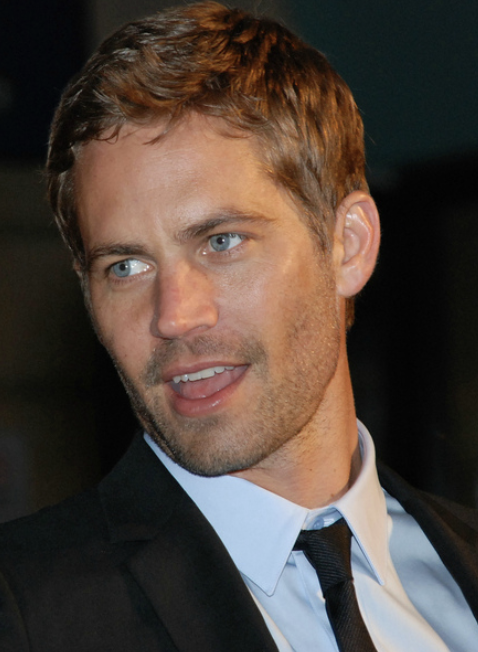
Cody Walker has handed back the keys. In an interview with Entertainment Weekly, the youngest Walker brother, who helped finish Furious 7 alongside his brother Caleb, said he has no interest in doing it again for the franchise finale and that any decision about bringing back Brian O’Conner belongs to Paul’s daughter, Meadow. “My stance is, it’s what Meadow wants to see done; it’s her father,” he said. If she wants Brian back, he added, “they don’t need me or Caleb.”
He even offered the studio a toolkit. “AI was not a thing back in 2014, so they could do that,” he said, before pointing to a second option: “There’s years of footage that was never used from these other Fast films.”
Universal has Fast Forever dated for March 17, 2028. That leaves about 18 months to figure out whether Brian shows up, and how. Cody framed AI and old footage as two routes to the same place. Under California law, they’re two very different roads, and only one of them has a toll booth.
Outtakes and AI are not the same thing
In September 2024, California’s governor signed Assembly Bill 1836, which rewrote Civil Code Section 3344.1, the state’s post-mortem right-of-publicity law. Before the change, movies and TV shows were broadly exempt from that law. Now anyone who produces, distributes, or makes available a digital replica of a deceased personality’s voice or likeness in an expressive audiovisual work without consent from the rights holder is liable for $10,000 or actual damages, whichever is greater.
The definition is where this story gets interesting. The statute defines a digital replica as a computer-generated, highly realistic representation that’s readily identifiable as a person, used where that person didn’t actually perform, or where they did perform but the fundamental character of the performance has been materially altered. It then carves out the electronic reproduction, sampling, remixing, or remastering of an audiovisual work when the copyright holder authorizes it.
Related Articles
- Porsche Cashes Out of Bugatti Rimac for $1.2 Billion, and Most of It Isn’t Going Where You’d Guess
- Clark County Wants to Name a Street After Kyle Busch. Nevada Already Has One Called Rowdy.
Translated into studio terms: cutting in outtakes of Paul Walker that Universal already owns sits largely outside the digital-replica definition, as long as nobody materially changes what he actually did on camera. Generating a new Brian performance with AI lands squarely inside it. The gray zone between “cleaning up an unused take” and “materially altering the fundamental character of the performance” is exactly where entertainment lawyers will spend their billable hours on this movie.
The law’s exceptions don’t offer much of an escape hatch either. They cover news, commentary and parody, fleeting or incidental uses, and portrayals of a person as themselves in documentary or biographical work. A scripted appearance by a fictional street racer in a big-budget action finale doesn’t fit neatly into any of those. The statute also applies to acts occurring in California and runs for 70 years after death.
There’s a bit of history that makes this especially pointed. The official committee analysis of AB 1836 used Paul Walker and Furious 7 as an example of digital replica technology being used to finish a film after an actor died. The same analysis explains that California’s post-mortem publicity right exists because the state Supreme Court ruled in 1979, in Lugosi v. Universal Pictures, that the statutory right didn’t survive death, prompting the Legislature to extend it to heirs. Universal sits at both ends of this particular legal timeline.
Who holds the pink slip on a likeness
Cody deferring to Meadow sounds like family diplomacy, and it is. It also happens to mirror the statute.
Under Section 3344.1, these rights are property that can be transferred by contract, trust, or will. If nobody transferred them, the law sets a default order. A surviving spouse takes the whole interest only if there are no surviving children or grandchildren; if there are children and no surviving spouse, the children take everything. In the default scenario, a deceased personality’s only child with no surviving spouse would control the right to say yes or no.
Two caveats matter. First, estate planning can route these rights elsewhere, and I haven’t seen Paul Walker’s estate documents. People claiming to be successors can register with the California Secretary of State, and the statute makes those registrations public records. Second, the law explicitly preserves any contract the performer signed while alive assigning rights to their name, voice, or likeness. Whatever Paul Walker agreed to in his Universal deals still counts, and those contracts aren’t public.
Hollywood’s union rules add another layer. SAG-AFTRA, which sponsored AB 1836, says in its digital replica guide that a producer still has to get consent from a deceased performer’s estate, or whoever controls the rights, before using that performer’s digital replica. Notably, the Assembly committee analysts wrote that the union’s 2023 contract protections applied only to the living. When the union and the legislature’s own staff don’t describe the rules the same way, you know the territory is still being surveyed.
The car at the center of it all
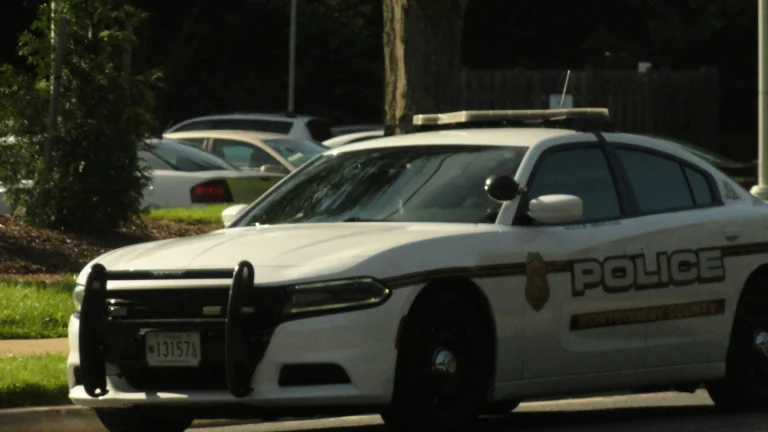
For an enthusiast audience, it’s worth remembering what put this franchise in this position. The federal court record in Rodas v. Porsche describes a single-vehicle crash in November 2013 that killed driver Roger Rodas and his passenger, Paul Walker. The car was a 2005 Porsche Carrera GT, first sold by Beverly Hills Porsche on March 12, 2005. The California Highway Patrol’s Multidisciplinary Accident Investigation Team released its report on March 17, 2014.
Rodas’s widow sued Porsche Cars North America. By the time of a March 2016 order, her case had been narrowed to four alleged defects: failure of the right rear toe adjuster rod, the absence of a crash cage, substandard side-impact protection, and the lack of a fuel cell. Porsche had moved for summary judgment, and the order notes that Meadow Walker had filed her own separate lawsuit in Los Angeles Superior Court against Porsche’s U.S. arm, Porsche AG, and the selling dealer. Those were allegations in litigation, not findings, and the federal appeals docket shows the Rodas case moved to the Ninth Circuit in September 2016.
The Carrera GT itself remains one of the most extreme analog cars Porsche ever sold. Porsche’s own technical data lists a 5,733 cc naturally aspirated V10 with 612 PS at 8,000 rpm, a 1,380 kg curb weight, an all-carbon monocoque, and a six-speed manual with a ceramic clutch. The engine grew out of the LMP 2000, a Le Mans prototype Porsche shelved before it ever raced. Just 1,270 were built between 2003 and 2006, at a 2003 price of 452,690 euros.
Related Articles
- Racing’s Safety Net Failed in Shanghai — So a Rival Driver Pulled Ollie Millroy Out of a Burning Ferrari Himself
- The Only Camaro Z28 Convertible Chevy Ever Built Was a Company Car for Its Own General Manager
There’s a useful owner lesson buried in Porsche’s more recent support for the car. The Carrera GT originally rolled on Michelin Pilot Sport PS2 tires, moved to Pilot Super Sports in a 2013 update, and in 2024 got a newly developed Michelin Pilot Sport Cup 2 carrying Porsche’s N0 marking. Porsche says the new tire shortens stopping distance by 2.5 meters from 100 km/h and by 12 meters from 200 km/h, and it’s available through Porsche Classic partners and Porsche Centers. When a manufacturer re-engineers rubber for a car that’s been out of production for nearly two decades, it tells you how much tire technology and tire condition matter on these machines. If you own anything in this class, read the date codes on your tires, not just the tread depth, and ask whether a current manufacturer-approved fitment exists.
What the finale can realistically do
Put the pieces together and the options get clearer. The legally cleanest Brian is one built from footage Paul Walker actually shot, handled lightly enough that nobody could argue the performance was materially altered. Anything more ambitious, from a de-aged face to a new line of dialogue in his voice, needs a signature from whoever controls his likeness rights, plus whatever his original contracts allow. Cody Walker’s position, whether he meant it this way or not, lines up almost perfectly with how California now handles the question.
Furious 7 ended with two cars splitting at a fork in the road. Fast Forever’s version of that moment may come down to a consent form.
Images Via: Wikipedia
About the Author