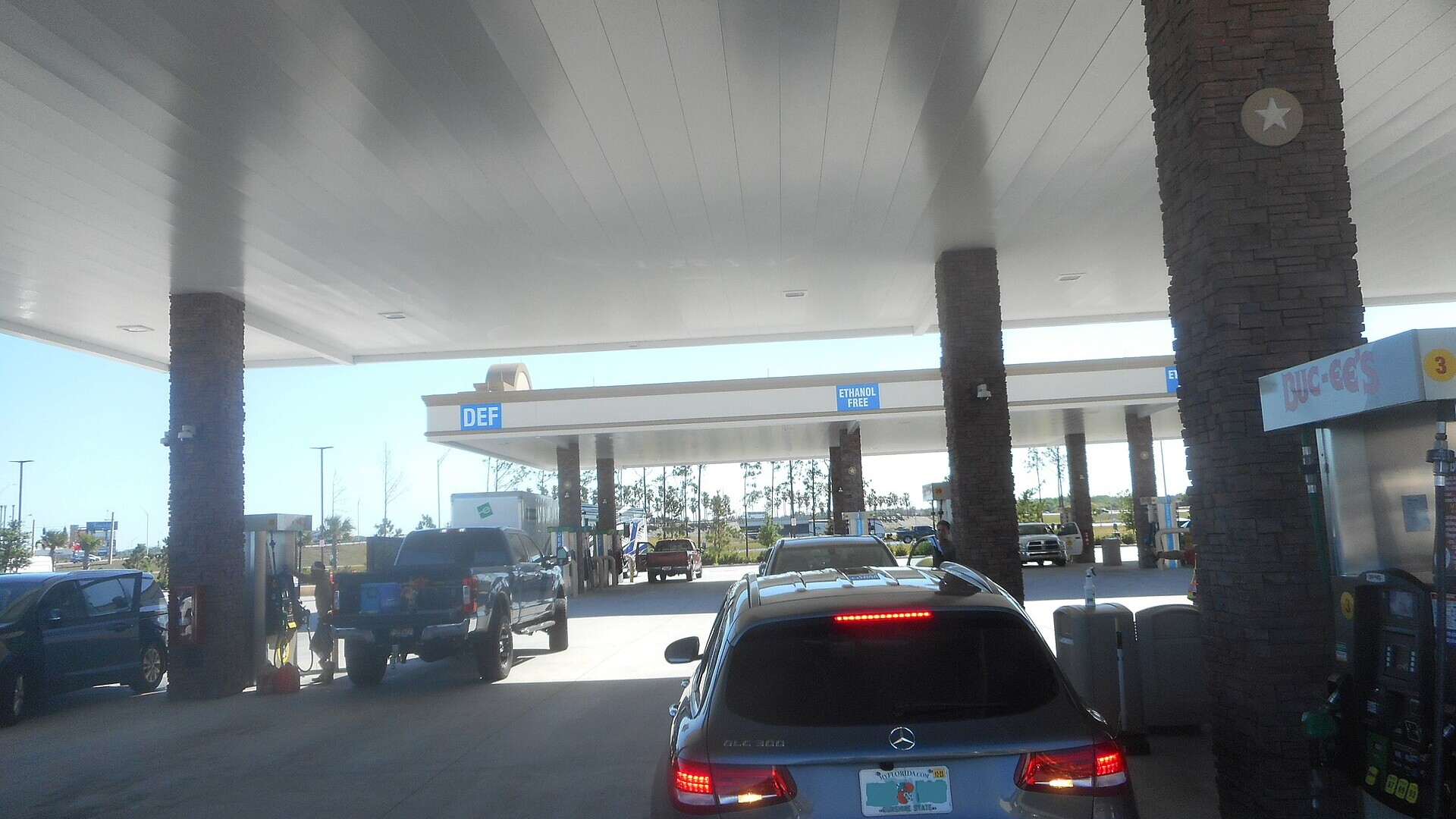
Diesel exhaust fluid pumps at a Buc-ee's travel center. Photo: DanTD via Wikimedia Commons, CC BY-SA 4.0
The alarm EPA wants to put in place of the diesel exhaust fluid derate would run for 90 seconds, and the agency chose that length because studies found a 90-second reminder gets more people in passenger cars to buckle their seatbelts.
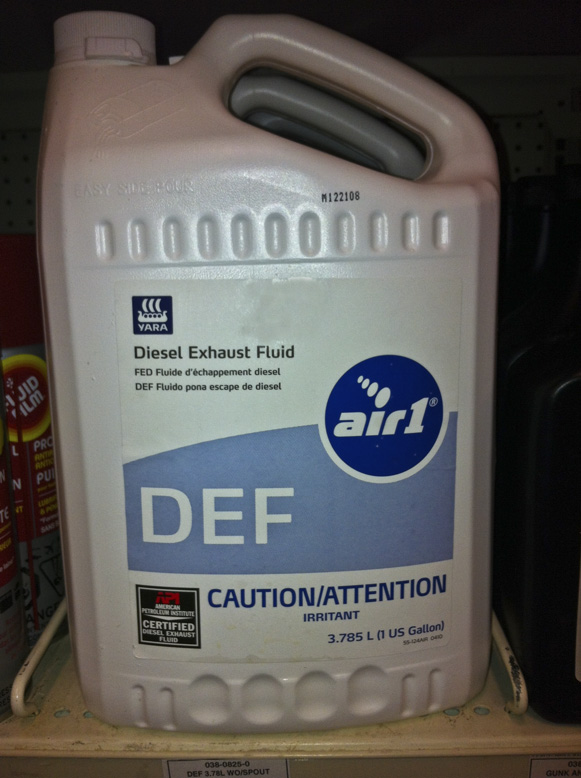
That reasoning is in the preamble of EPA’s July 14 proposed rule (docket EPA-HQ-OAR-2026-0728), which would stop requiring SCR-equipped diesels to cut power or top speed when the DEF tank runs dry, the fluid is bad or the system looks tampered with. The comment period closed August 29. We’ve already covered what the proposal means for 2027 truck buyers and why it doesn’t help the diesel already in your driveway. Since then, EPA’s impact analysis and comments from California and 17 other states have landed in the docket.
The alarm schedule
For a low tank, the audible alert would sound three hours before the DEF runs out (or at 2.5 percent full), again when it’s empty, again 30 and 60 minutes after that, then once an hour until someone fills it. A DEF quality or tampering fault gets a slower schedule: once at detection, again at 30 and 90 minutes, then every three hours. The dash warnings drivers see today stay. Nothing slows the truck.
EPA justifies the gentler tampering schedule with shop backlogs, citing commenters on the 2023 rule who said a repair appointment can take three days. For the DEF-level schedule it points to federal hours-of-service breaks and its own estimate that fuel stops are about 50 miles, or roughly an hour, apart. The agency acknowledges that truck drivers aren’t the passenger-car occupants in the seatbelt research and argues they pay closer attention to warning lights because they’re licensed professionals, often paid by the mile and thousands of miles from home. The 90-second figure itself still rests on the seatbelt studies.
A rule no truck has run under
The derate schedule EPA wants to retire hasn’t taken effect. The 2023 heavy-duty rule already loosened the old four-hour countdown, which the California Air Resources Board’s comment describes as now running 30 to 164 hours depending on vehicle speed, and those provisions start with model-year 2027 engines. The preamble concedes that owners “have not yet experienced the inducement requirements” of the 2023 rule.
Under the proposal, those requirements would stay in force for MY2027 and 2028, and heavy-duty makers would have to switch to alerts no later than MY2029. They can switch sooner. EPA asked whether the deadline should slip to MY2030 or 2031. Light- and medium-duty diesels and nonroad engines get the same MY2029 deadline. The first MY2027 engines are close: Cummins starts limited X15 and X10 production in January. Unless manufacturers switch early, two model years of trucks would be built to the 2023 derate schedule that EPA is now proposing to drop.
What EPA cites instead of experience with the new rule is Administrator Lee Zeldin’s account of hearing DEF complaints from truckers and farmers in all 50 states, objections from Iowa, Alaska and Nebraska, and a bill in Congress on cold-weather derates. Its strongest argument is technical: an engine’s diagnostics compute a probability that tampering happened and can mistake a corroded connector or a crystallized DEF line for sabotage, then derate the truck either way.
The warranty data
On February 3, EPA used its Clean Air Act Section 208(a) authority to demand warranty claims, failure rates and repair records for model years 2016, 2019 and 2023 from the 14 highway and nonroad engine makers that account for more than 80 percent of SCR-equipped products. The proposal says EPA “has received this data and is evaluating it.”
The only result it shares is preliminary: urea quality sensor failures are “a significant source” of warranty claims and DEF-related inducements. That finding backed EPA’s March guidance letting manufacturers replace those sensors with NOx-sensor software, including by reflashing existing engines. No failure rates, derate counts or false-derate percentages from the 14 manufacturers appear in the rulemaking record.
The March announcement credited the sensor guidance with $13.79 billion a year in savings, using Small Business Administration estimates. The proposed rule gives no savings figure for dropping derates. It asks commenters to supply one.
What EPA didn’t model
EPA’s draft regulatory impact analysis says the agency “has also not projected an emissions impact” from the inducement changes, because it can’t accurately predict how often SCR systems would stop working from low DEF, bad DEF or tampering. The NOx increase it did calculate, 36,673 tons in calendar year 2055, comes from the proposal’s other changes: shorter emissions warranties, delayed useful-life requirements and a production-volume allowance.
CARB filed numbers for the part EPA left blank. Its technical appendix says a truck running water instead of DEF emits as much NOx as 100 compliant trucks. It assumes California’s heavy-truck SCR tampering rate rises from 2 percent to 4.4 percent without derates and projects 141,658 additional tons of NOx from MY2027-and-later trucks in California from 2027 through 2050, plus 38,601 tons from 2013-2026 engines. It ties those emissions to 1,521 premature deaths in the state. The tampering rates are CARB’s assumptions, not measurements.
CARB’s comment also describes the workaround it expects, a low-tech cousin of the delete kits at the center of this year’s enforcement fight: fill the tank with water, then clear codes with a generic scan tool or put up with a 90-second warning every hour. California Attorney General Rob Bonta, joined by 17 other states, the District of Columbia and four cities, called the proposal illegal in comments filed August 28.
Older trucks
The proposal covers new engines only. For the existing fleet, EPA says it is “considering a process” to issue guidance letting manufacturers reflash in-use engines from derates to alerts, while calling widespread retrofits unrealistic because of the development and testing each would take. No such guidance has been issued. The next document to watch is the final rule, which would have to answer the comment record, including CARB’s tampering estimate, before any engine is certified to the alert-only schedule.
Would an hourly 90-second alarm keep you buying DEF, or is a derate the only thing that makes people fill the tank?
Sources: EPA proposed rule, Federal Register document 2026-14112 (July 14, 2026); EPA draft regulatory impact analysis EPA-420-D-26-002; EPA guidance letter IACD-2026-05 (March 26, 2026); EPA news releases of February 3 and March 27, 2026; CARB technical appendix to comments on docket EPA-HQ-OAR-2026-0728 (August 27, 2026); California Attorney General press release (August 31, 2026). Featured photo: DanTD via Wikimedia Commons, CC BY-SA 4.0.
About the Author