Photo: 350z33 / Wikimedia Commons (CC BY-SA 4.0)
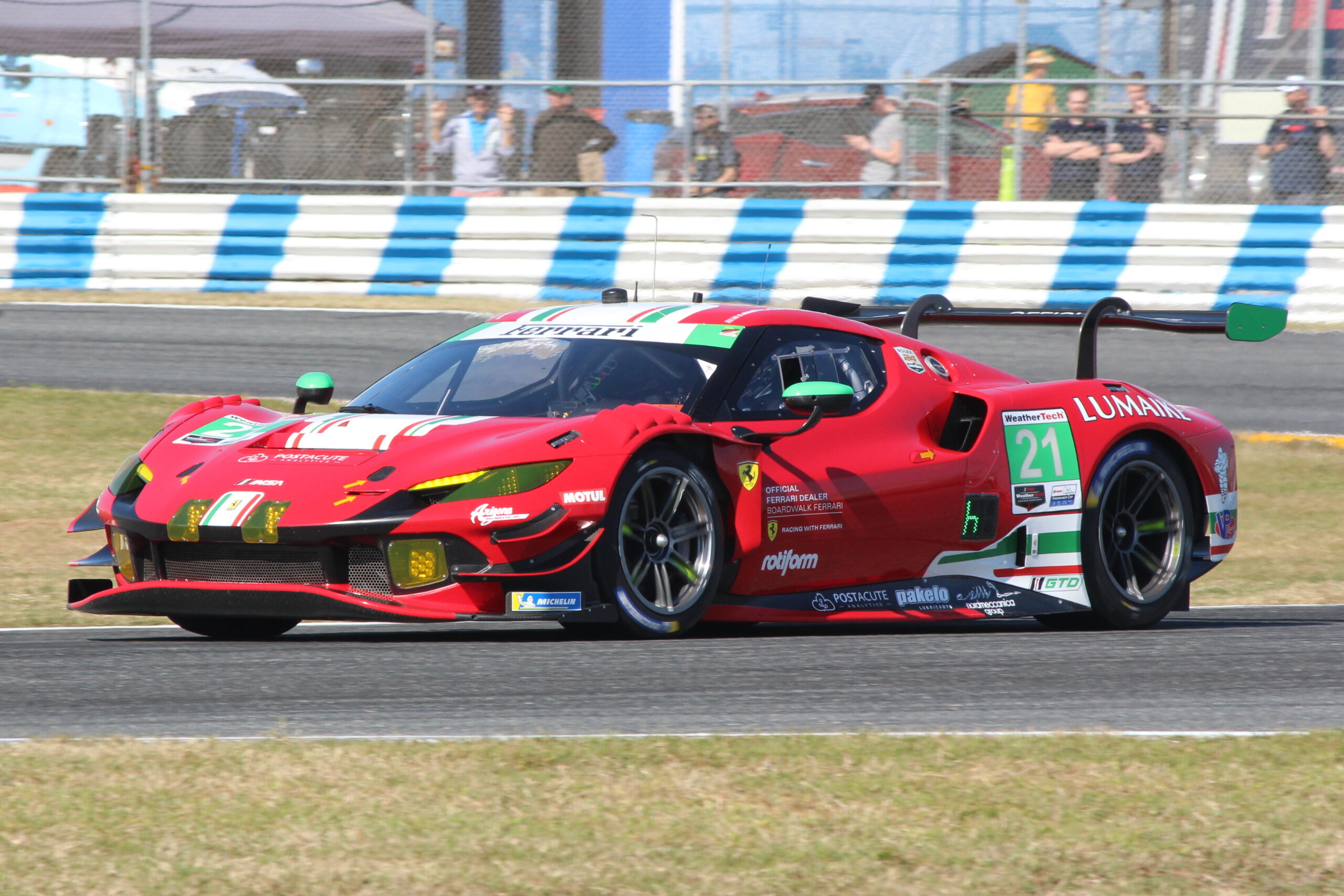
A GT3 Ferrari doesn’t catch fire because engineers did a bad job. These cars run FIA-spec safety cells, quick-drain fuel cells, and onboard extinguisher systems specifically because motorsport learned decades ago that impact plus fuel plus hot exhaust equals fire. What isn’t engineered into the car is what happens in the sixty seconds after the flames start, and that’s exactly where the China GT Championship failed British driver Ollie Millroy on September 5 at Shanghai International Circuit.
Millroy’s No. 91 AAI Motorsports Ferrari got caught up in a five-car accident during the race. The impact set the car alight, and by his own account, Millroy has no memory of the thirty seconds before the wreck or the hour after it. What he’s pieced together since is that nobody in a marshal’s uniform got him out. A competitor did.
Loek Hartog, driving the No. 79 Phantom Team entry, stopped his own race car, grabbed a fire extinguisher, and pulled Millroy from the burning wreckage himself. “I am still alive tonight, entirely thanks to one man,” Millroy wrote on Instagram once he was well enough to post. “Loek Hartog stopped instantly with no flag marshals or fire crews in sight and risked his own life to get me out of the car.” Hartog waved off the hero label when Millroy thanked him publicly: “I wish to live in a world where this would not be considered as bravery, but as the instinct of others, too. I am so grateful to have been at the place I needed to be.”
That instinct came at a cost most GT3 grids assume trained personnel will cover, not a rival driver giving up his own race to do the job. Millroy’s injury list reads like a catalog of what a fuel-fed fire and blunt trauma can do to a body strapped into a carbon tub: six broken ribs, a broken collarbone, a broken hand, and a punctured lung. He needed four hours of surgery in a Shanghai hospital to have plates and screws installed, plus a drain line to relieve fluid and gas building up around the damaged lung. A flail-chest injury like that typically means weeks in a hospital bed and months before a driver can even think about strapping back into a seat designed to compress the ribcage under harness load.
AAI Motorsports didn’t take the incident quietly. In a statement, the team called the response “grossly negligent in its emergency response and safety rescue arrangements, with serious deficiencies in the rescue response that nearly resulted in a tragedy.” The team went further, accusing race broadcasters of actively misreporting what happened live on air by claiming Millroy had climbed out of the car under his own power when he clearly hadn’t. AAI says it won’t run another China GT round until organizers complete an “independent and transparent investigation” into the rescue failure and issue the team a formal response.
Race organizers apologized for the “incident and the distress” it caused and offered “sincere sympathy” to Millroy, but stopped well short of admitting a systemic problem. Their preliminary review found that “the event’s overall staffing and resources met the standards required for a national-level motorsport event,” while conceding there was “room for improvement in detailed operational management.” That’s bureaucratic phrasing for: the checklist was technically satisfied, and a driver nearly burned alive anyway, which tells you plenty about the checklist.
Here’s the part that doesn’t get enough attention outside the paddock: FIA-sanctioned series don’t just mandate a GT3 car’s onboard safety equipment, they mandate marshal post spacing, response-time targets, and dedicated fire crews stationed around the circuit specifically so a burning car gets attended to within seconds, ideally by someone whose full-time job is putting out that fire rather than a competitor sacrificing his own race to do it. China GT Championship is a national-level series, not an FIA-sanctioned one, which means it sets its own safety staffing requirements instead of adopting the international standard that many visiting teams simply assume will be in place. That gap between what a GT3 car is engineered to survive and what the local sanctioning body actually staffs to support it is the real story here, and it carries consequences well beyond one bad Saturday in Shanghai.
This isn’t the only time in 2026 that motorsport has been forced to reckon with how it handles emergencies. NASCAR faced its own hard questions after Kyle Busch became unresponsive in a racing simulator before his sudden death, and the racing world was still processing that loss when Indy 500 veteran Rick Treadway was killed in a motorcycle crash weeks later. None of those incidents caused what happened to Millroy, but they’re part of the same conversation happening in garages and team meetings all year: who is actually responsible when the worst happens, and how fast can help realistically arrive.
AAI’s demand for an independent investigation follows a pattern seen across plenty of high-profile crashes: the story broadcast live rarely matches what a full accounting later reveals, whether that’s on a professional racetrack or, as with ESPN broadcaster Matt Miller’s Ford Bronco wreck, a Missouri highway. Official statements issued in the first 24 hours are almost never the last word, and teams that push for a formal report tend to get a very different picture than the one that aired.
For any team weighing whether to campaign in China’s expanding GT scene, this crash is now a data point that belongs in the risk assessment right next to lap times and freight costs. Motorsport insurance covering international rounds is typically priced against a sanctioning body’s documented safety infrastructure, not just the discipline itself, and a public rescue failure like this one tends to get flagged the next time a policy comes up for renewal. It’s a liability question for organizers, too. China GT’s national-level classification may keep it out of FIA’s jurisdiction, but it doesn’t insulate the series from the financial and reputational fallout that comes when a paying international entrant walks away in public.
Millroy is facing an extended recovery before he’s back in a race seat. AAI Motorsports says it isn’t returning to China until it gets real answers. And the rest of the GT3 world just got a reminder that surviving the crash is only half the safety equation. The other half still depends on who’s standing trackside when it happens.
Lead image: 350z33 / Wikimedia Commons (CC BY-SA 4.0)
About the Author