A Missouri State Highway Patrol crash report is now the most detailed record of the wreck that cost ESPN NFL Draft analyst Matt Miller his left arm, and it paints a clearer picture than the viral video alone: a properly restrained driver, a two-lane rural highway, and a semi-truck that never had a chance to avoid the impact.
Miller was driving his blue 2023 Ford Bronco on a Jasper County roadway, not far from his home base of Joplin, Missouri, around 3:50 p.m. on June 17 when the SUV drifted across the centerline into oncoming traffic. The semi driver tried to steer clear, but the two vehicles collided anyway. Miller’s Bronco skidded off the pavement and came to rest in the grass along the shoulder; the truck driver walked away without a scratch.
Troopers listed the probable cause as “improper lane usage/change” — official shorthand for a driver crossing a line he had no business crossing. What triggered that drift remains an open question. The report noted it was unknown at the time whether alcohol or marijuana played a role for Miller, while confirming the truck driver was not impaired.
The detail that stands out to anyone who has read a few crash reports is what happened to Miller’s restraint system. He was properly buckled in, but the structural damage to the Bronco was severe enough that the seatbelt webbing itself gave way during the impact, and Miller was ejected from the vehicle. That’s a meaningfully different failure mode than the familiar story of an unbelted occupant being thrown clear. It points to a crash violent enough to compromise the belt’s anchor points or tear through the B-pillar the belt is mounted to — the kind of structural failure that only shows up when the energy involved exceeds what the restraint system, and the body of the vehicle around it, was engineered to manage.
That energy problem starts with simple math. A four-door 2023 Bronco, even in its heavier Sasquatch-package trim, weighs in somewhere around 4,500 to 5,000 pounds. A semi-tractor pulling a loaded trailer can legally run up to 80,000 pounds on the interstate system, roughly fifteen to twenty times what Miller was driving. In a head-on or near head-on collision, that mass disparity dictates most of the outcome no matter how many airbags or how strong the safety cage is on the lighter vehicle. It’s the same physics that keeps pushing regulators to tighten underride-guard requirements on trailers and to lean harder on lane-departure warnings and automatic emergency braking as standard equipment rather than options.
Miller has said publicly that he underwent several successful surgeries after the crash and is stepping away from his on-air role indefinitely to focus on his recovery, thanking supporters in a statement he posted to social media on July 10.
There’s a practical lesson here for anyone who drives, not just NFL Draft analysts. When a driver is found at fault in a wreck severe enough to cost a limb and multiple surgeries, standard liability coverage — even well above a state’s minimum requirements — routinely falls far short of the actual medical bill. That gap is exactly why catastrophic, at-fault crashes so often turn into crowdfunding campaigns regardless of the driver’s profile or income, and it’s a good reminder that umbrella liability policies and higher personal-injury-protection limits are worth pricing out long before anyone needs them.
Backfire News has covered plenty of Broncos that met bad ends through no fault of their own, including one totaled by a falling tree and a very different Bronco headache that landed Jenson Button in court. Miller’s crash belongs on a growing list of athletes and media personalities whose wrecks turned out far less severe than they looked on video, from Trevor Bauer’s violent T-bone in a borrowed McLaren to Eljero Elia walking away from a four-car pileup in the Netherlands. This one is a reminder that the Bronco’s rugged reputation doesn’t rewrite the laws of physics once a two-and-a-half-ton mismatch enters the equation.
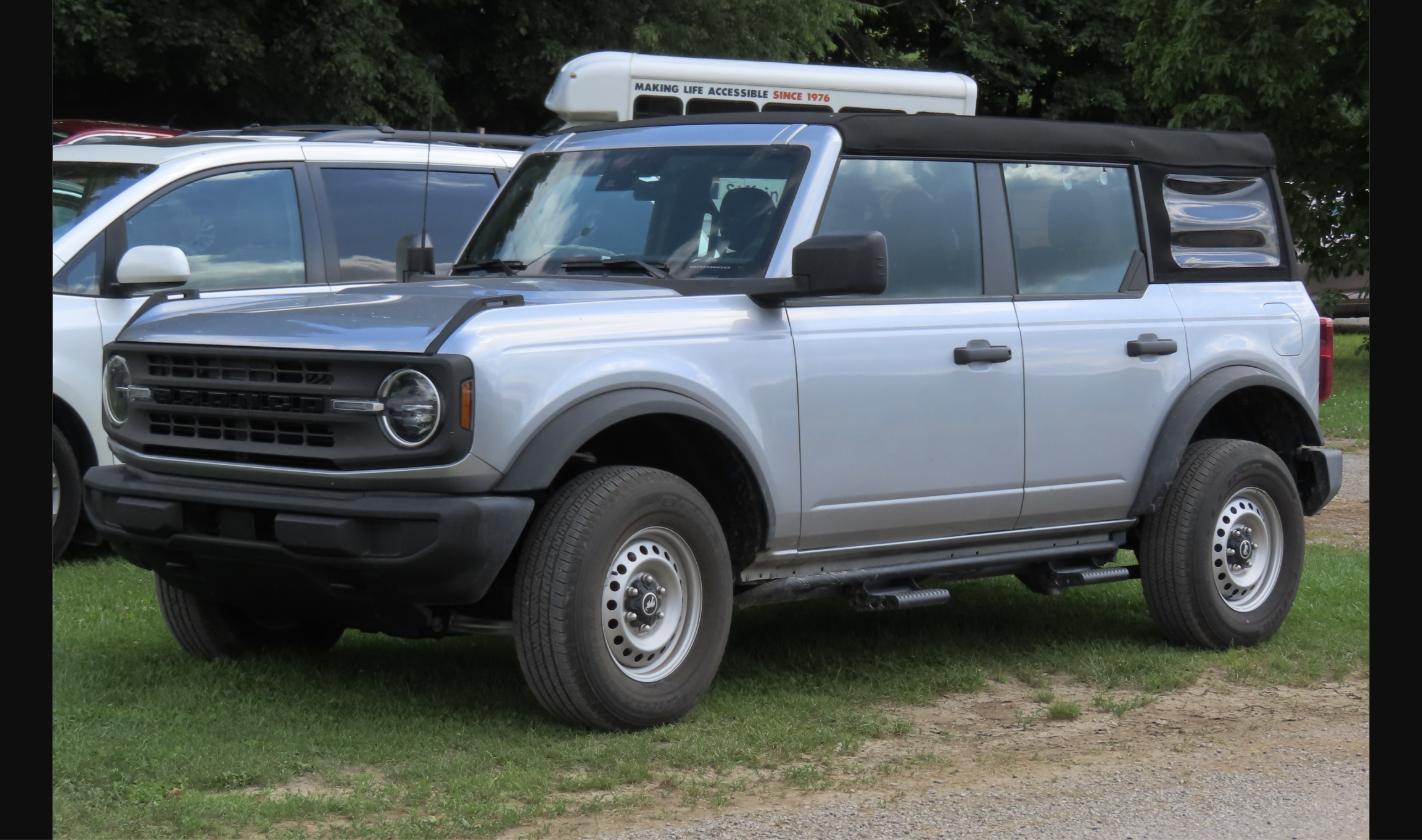
Photo: 2023 Ford Bronco Base 4-door (representative model). MercurySable99, CC BY-SA 4.0, via Wikimedia Commons.
About the Author