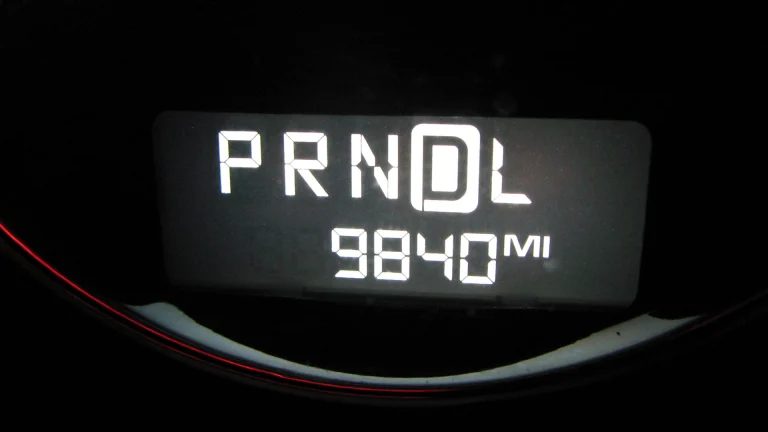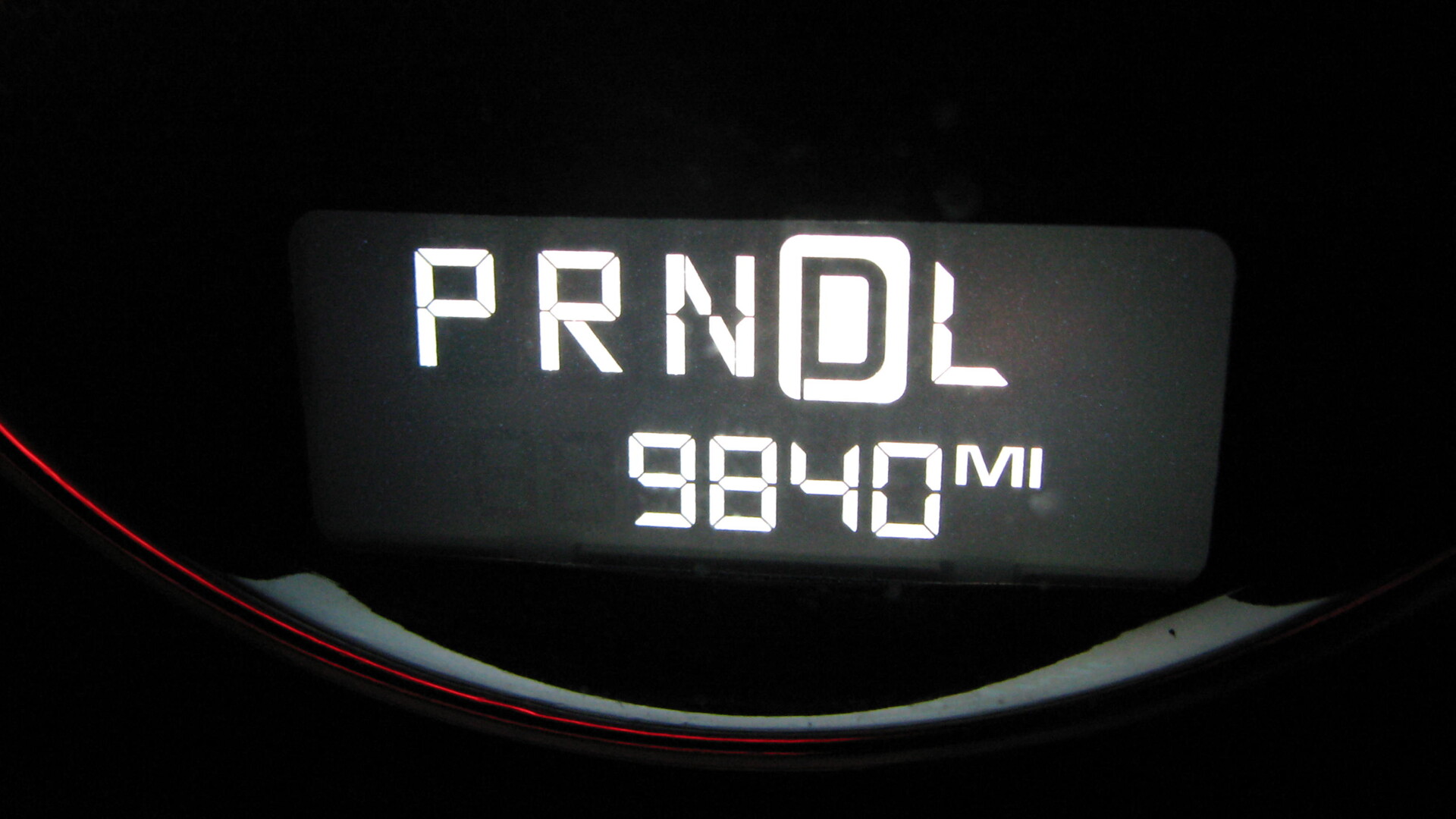
A dashboard odometer, the figure buyers rely on at sale. File photo: CMBJ / Wikimedia Commons (CC BY-SA 2.5)
Florida Highway Patrol investigators say a 2016 Kia Sedona had more than 182,000 miles on it when a Lake Worth Beach dealership acquired it and about 68,000 on the odometer when a woman bought it, a gap of roughly 114,000 miles, according to a 36-page warrant affidavit described by CBS12. FHP arrested the lot’s owner, Anthony Rodriguez, 33, on Friday and charged him with organized fraud involving property valued at $50,000 or more, plus multiple felony counts tied to tampered odometers, CBS12 reported. Rodriguez has not been convicted, and the station’s report included no statement from a defense attorney.
Two laws most buyers never read will decide how heavy this odometer fraud case gets: Florida’s organized-fraud statute, which lets prosecutors add many sales together into a single first-degree felony, and a federal odometer law that lets a defrauded buyer sue for three times the loss.
What the affidavit alleges
According to CBS12, investigators reviewed 139 vehicles that Brother’s Best Deal Auto Sales sold in 2024 and 2025 and found mileage discrepancies in more than half of them, which works out to at least 70 cars by Backfire News’s count. A Kia Forte with 251,000 miles was allegedly sold showing 125,000, and a Nissan Altima with more than 235,000 miles was sold showing about 125,000. The Altima’s buyer told investigators she spent more than $5,000 on repairs and would not have bought the car had she known its real mileage.

FHP alleges the dealership bought high-mileage cars at auction and had the odometers altered by a man employees called the “electrician” or the “key guy.” One former employee estimated that roughly 13 of every 20 cars had fraudulent mileage. Investigators identified the man, who denied manipulating odometers and said he only made keys for the dealership, CBS12 reported.
Rodriguez allegedly told investigators he altered paperwork after customers had signed it, without telling them. He reportedly said the mileage manipulation was for financial reasons, to keep the business afloat, and acknowledged that higher-mileage cars sell for less. He denied personally rolling back the odometers. Investigators also described allegedly fraudulent temporary license plates and seized eight vehicles with suspicious mileage during searches of two dealerships.
How a third-degree felony becomes a first-degree charge
Florida’s odometer statute, section 319.35, makes it a crime to knowingly tamper with, set back or disconnect an odometer, to give a written odometer statement known to be false, and to sell or offer for sale a vehicle knowing its odometer was tampered with. A knowing violation is a third-degree felony, which section 775.082 caps at five years in prison. The paperwork allegation matters because the statute separately covers knowingly false odometer information on the forms required for titling and registration, so a changed document is its own offense, apart from whatever happened to the dashboard.
The organized-fraud charge is where the exposure grows. Under section 817.034, a scheme to defraud is a systematic, ongoing course of conduct with intent to defraud, and the value of what was obtained is added up across the scheme. Under $20,000 is a third-degree felony, $20,000 to under $50,000 is second degree, and $50,000 or more is first degree, which the sentencing statute caps at 30 years. Prosecutors have five years from when the cause of action accrues to bring it, which covers sales from 2024 and 2025 comfortably. CBS12’s report does not say how the $50,000 figure was reached.
The odometer statute also treats a vehicle possessed or sold with intent to defraud as contraband, subject to seizure and forfeiture under Florida’s forfeiture act. CBS12 reported that FHP seized eight vehicles; the reports I found do not say under what authority.
What a defrauded buyer can sue for
The criminal case belongs to the state. A buyer’s own claim runs through 49 U.S.C. 32710, which makes anyone who violates the federal odometer chapter with intent to defraud liable for three times the actual damages or $10,000, whichever is greater. A court must award costs and a reasonable attorney’s fee when the buyer wins, and the suit has to be filed within two years after the claim accrues, a term the statute does not define.
On the Altima buyer’s $5,000 in repairs alone, tripling gives $15,000, which clears the $10,000 floor. That is Backfire News’s arithmetic, not a claim anyone has filed, and a court would decide what counts as actual damages. The fee-shifting is what makes a case over a cheap used car worth a lawyer’s time.
How buyers can check a car’s mileage
NHTSA estimates that more than 450,000 vehicles are sold each year with false odometer readings, and the Florida Department of Highway Safety and Motor Vehicles says that costs buyers more than $1 billion. The department tells buyers to run its Motor Vehicle Information Check, look for worn brake and gas pedal pads and loose dashboard screws, ask for maintenance records and have their own mechanic inspect the car. Suspected fraud can be reported on form HSMV 80122 to its Motor Vehicle Fraud Unit. Backfire News has a longer used-car inspection checklist for the lot visit.
Dealer fraud cases get built from paperwork, not from what a dashboard says. Backfire News has covered a Georgia surgeon facing 40 felony counts in a VIN-swapped rental-car case and a Virginia Beach dealer co-owner sentenced to 74 months in a straw-buyer loan scheme.
The calendar is empty for now
The reports I found list no court date for Rodriguez. The affidavit and the formal charging document will show how prosecutors laid out the counts and valued the scheme, and a defense filing will show how he answers the statements attributed to him. Buyers who believe they were sold a rolled-back car have a federal clock running, whatever the criminal case does.
Florida lets prosecutors add a dealer’s sales together into one first-degree felony. Is that the right way to punish odometer fraud, or should each rolled-back car stand as its own third-degree count?
About the Author