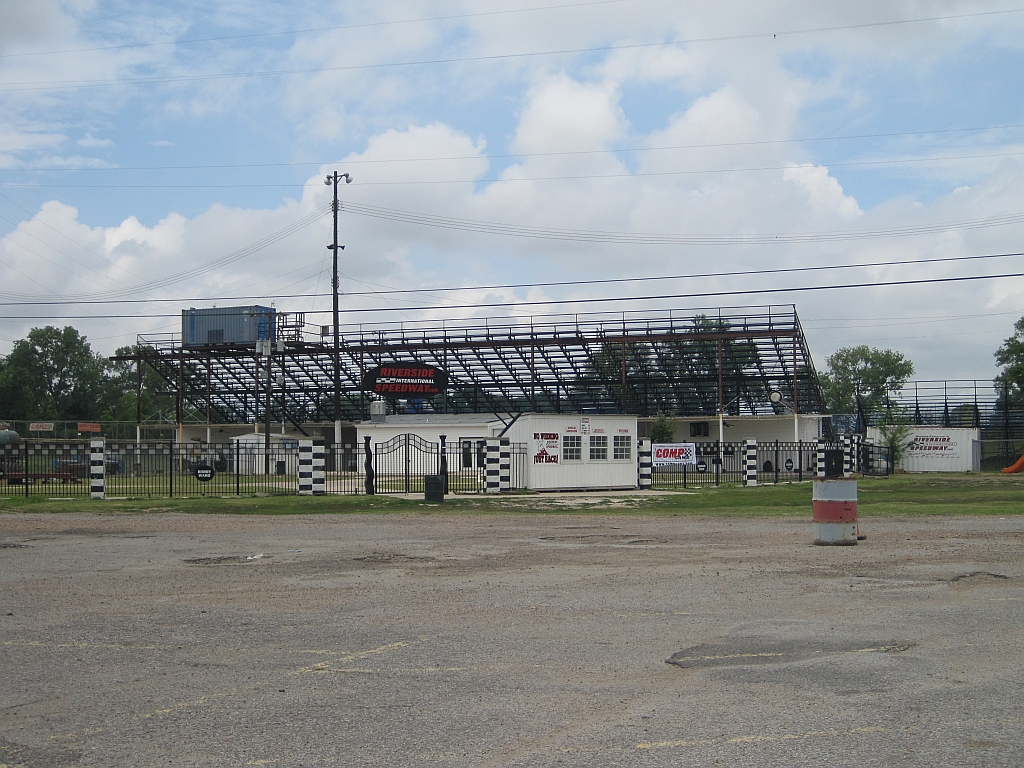
The first confirmation that a racer had died at Riverside International Speedway in West Memphis, did not arrive as an agency press release or a line item in a crash report. It came from the man who owns the West Memphis, Arkansas track, speaking into a camera on a Sunday morning.
Owner Clayton Allen said in a social media video statement that driver Scott Frazier was rushed to a hospital after a severe crash during Saturday night’s King of the Ditch event, and that Frazier later died there. Allen said the race was canceled and will be rescheduled, and that Frazier’s family had begun making funeral arrangements. Of Frazier, Allen said he “was doing something that he loved.” That account was reported by Memphis station WMC Action News 5 on Sept. 21.
What is established, and what is not
Here is the honest inventory. The track’s owner has confirmed a fatal outcome, a date, an event name, and the driver’s name. Nothing beyond that has been publicly documented. No official record has described the crash sequence. No agency has released a report. The class of car Frazier was driving has not been publicly identified, nor has the number of cars involved, the point of impact, or the medical cause of death. No on-board or grandstand video has been released by the track.
If you have spent any time around short-track racing, you already know that the blanks will get filled in anyway — by rumor in the pits, by armchair analysts freeze-framing whatever cellphone clip surfaces, by people who were three corners away and certain they saw everything. Resist it. A single camera angle can show you what was visible. It cannot tell you what a suspension component did a half-second before the car turned, what a belt or a seat or a head-and-neck restraint absorbed, or what happened inside the car.
The information gap is structural, not a cover-up
This is the part worth understanding, because it explains why a track owner ends up being the primary source for a death.
When someone is killed in a wreck on a public highway, an entire bureaucracy activates. A law enforcement agency works the scene, a standardized crash report gets filed, the incident lands in a state database, and it eventually becomes a data point in federal highway-fatality statistics. Reporters can request the report. Attorneys can subpoena it. The record exists.
Inside the fences of a private racing facility, almost none of that machinery exists. Federal crash reporting is built around public roads, so a competition crash on private property generally never enters it. There is no motorsport equivalent of the NTSB dispatching investigators the way it does for an airplane. What typically happens instead is narrow and local: a county coroner or medical examiner determines cause of death, local deputies may or may not generate a report depending on the circumstances, and any meaningful technical review — seat, belts, cage, containment, barrier, safety crew response time — is conducted internally by the track or the sanctioning body, with no obligation to publish a word of it.
That is not unique to Arkansas and it is not evidence that anyone is hiding anything. It is simply how American grassroots motorsport is governed. The upside is that a Saturday-night track can exist at all without a federal compliance department. The downside is that lessons learned from a fatal crash often stay inside one promoter’s office rather than circulating through the sport. Professional racing is not immune to gaps either, as the Shanghai GT3 fire showed when a rival competitor got to a burning car before the safety crew did. At the local level, there is usually nobody publishing the after-action report at all — a pattern visible in how little verified detail emerged after a catastrophic dirt-track crash in Sri Lanka.
The part every local racer should already have read
There is a practical takeaway here that has nothing to do with this particular crash and everything to do with anyone who buys a pit pass.
Personal auto policies almost universally exclude damage and liability arising from organized competition, timed events, or speed contests. Many health plans carry similar exclusions for injuries sustained in racing. What usually backstops an injured local racer is the accident-medical coverage carried by the track or sanctioning body, and those policies have limits and deductibles that can be modest compared with the real cost of an air ambulance, a trauma center stay, and a long rehabilitation. The release you sign at the gate is not decorative either; assumption-of-risk waivers are broadly enforceable in motorsport, and courts generally uphold them absent gross negligence.
None of that is a comfortable topic on a Saturday afternoon when the heat races are about to start. It is, however, the single most useful thing a weekly competitor can spend twenty minutes on: read the certificate of insurance, ask the promoter what the per-incident medical limit and deductible actually are, and find out whether your own health plan has a competition exclusion. Ask before you need the answer.
Why people keep showing up anyway
Events with names like King of the Ditch exist because bracket-style, come-one-come-all local racing is the last genuinely accessible form of the sport. No licensing ladder, no seven-figure budget, no sponsor deck. A trailer, a car you built in your own shop, and a gate fee. It is also the layer of racing where the talent pool actually lives — the reason professional drivers still treat a night on a rough local surface as a legitimate test of car control, something visible any time open-wheel stars get handed a stock car on a dirt track.
That accessibility is inseparable from the risk, and the racing community understands the arithmetic better than any outsider does. It is a community that turns out for its own with startling speed, whether the loss happens on a racing surface or, as with longtime competitor Robert Wolk, somewhere far more ordinary and senseless.
For now, the record consists of one owner’s video statement, a canceled race that will be run on some later date, and a family in West Memphis planning a funeral. Anything past that is speculation, and Scott Frazier deserves better than speculation.
Source: WMC Action News 5, Sept. 21, 2026, reporting statements made by Riverside International Speedway owner Clayton Allen.
About the Author