Screenshot
Two Firebirds, eighteen years apart, and the receipt for everything the repair economy quietly took away.
Something got repossessed in this country over the last two decades, and nobody sent the notice. It wasn’t a house or a car. It was the ability to just fix the thing yourself, and I’ve got two Firebirds and eighteen years of receipts proving exactly how it happened. My son got to build one with me. I don’t know yet if he gets to build one with his kid.
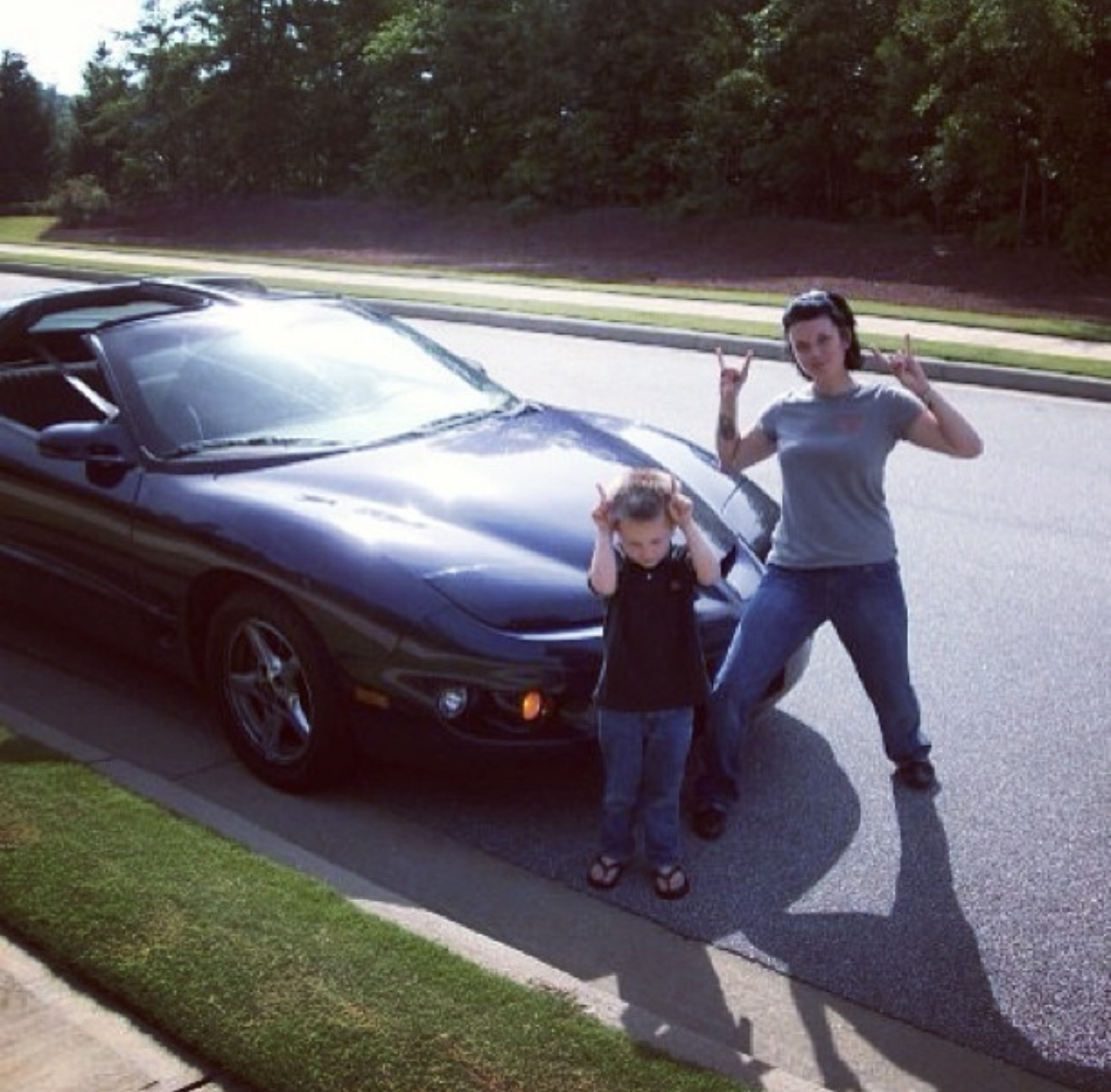
In 2004, my son was born and I bought a low-mileage, stock 1998 Pontiac Firebird Formula: LS1, 4L60E, the whole uncomplicated late-fourth-gen recipe.
That car turned into a real performance build slowly, the way it used to work for regular people with a driveway and a credit card. We kept it bolt-on for a long time, and that was fine — the point was never how fast we got there. The point was that the car was still ours to work on. Alternator dies? Parts store. Need a bracket, a sensor, a gasket, a bolt, a used service part? Somebody had one, or knew somebody who did, and if the local guys came up empty there was still Summit or Jegs. No locked-out PCM standing between you and your own engine. No $10,000 in specialty tools just to change a cam. The country had enough F-bodies, enough GM parts, enough junkyards, and enough small businesses hustling to sell you what you needed that a broken part was an inconvenience, not a dead end.
The go-fast parts were a different animal entirely — camshafts, heads, intake, suspension, all of it expensive, confusing, and genuinely hard to track down. There wasn’t much competition yet, and nobody had flooded the market with twelve versions of the same part in three finishes to choose from. We eventually swapped the Formula over to a T56, and even that wasn’t too bad — the parts turned up, a few odds and ends had to get custom-made, and the only real hard part was making the car better. Getting the parts wasn’t the fight. That fight came later.
Eighteen years later, my son got his own Firebird: a stock 1999 V6 automatic. Then the engine blew up while he was autocross racing at his first event.
That should have been the easy part. It was a 3800 V6. In the mythology of American cars, a 3800 ought to be a dime-a-dozen engine—the kind of engine every junkyard has leaning against a fence. Instead, trying to find one was insane. Eventually we got a takeout from a wrecked Camaro. It was a piece of junk and it blew up too. We could not find another engine that was remotely reasonable. The pullouts cost more than replacing the whole car.
Then a friend from my car building past offered my son an LS1, and later a T56. Those were the lifesavers. The big, irresponsible-sounding project became possible because of car friend friendship and the enthusiast grapevine. The ordinary repair became impossible because the parts economy had evaporated.
That inversion is what I can’t shake. In 2004, everyday service parts were cheap and everywhere, and the exotic hot-rod stuff was the actual hunt. Eighteen years later, that math had completely flipped: chasing a swap was easier than keeping a stock 1999 Firebird alive on factory parts. A starter. An alternator. A gasket. A bolt. A bracket. A decent used core. Every single “minor” item came with the price tag and the wait time of a special order. Even the cheap stuff wasn’t cheap anymore.
And that’s not an inflation gripe. That’s what happens when the material foundation of car culture gets pulled out from under it.
Sure, people will tell you the 3800 was everywhere — technically true, and it doesn’t matter. A front-wheel-drive 3800 out of a Buick is not, in any way that matters on a lift, the same as a rear-wheel-drive F-body 3800 package. Oil pan, accessory drive, mounts, exhaust, wiring, computer, transmission interface, brackets — all those “boring” pieces turn a common engine into a specific donor car. We didn’t need some abstract 3.8-liter V6 floating around out there. We needed a decent, fairly priced 1995–2002 Camaro/Firebird unit specifically. That market was thin, and thin markets don’t forgive you.
And it had been thinning for years before we ever went looking. The fourth-gen Camaro and Firebird died in 2002. Pontiac itself got killed off in 2010. Once a platform’s gone, nothing in the laws of physics — or federal law — says the parts keep coming. There’s no requirement that automakers keep churning out replacement parts once a model’s discontinued. NHTSA has said flat out: there is no universal federal “ten-year rule.” Nobody’s coming to save your parts bin.
That should bother more people than it does. An old car isn’t worthless just because it’s old — it can be a kid’s first car, a cheap commuter, a family project, or literally the thing that teaches somebody the physical world can be understood and fixed with their own two hands. But the second the original business case for a part disappears, its survival comes down to dusty warehouse shelves, remanufacturers, private stashes, and whatever hasn’t been crushed yet.
And yes, we have to talk about Cash for Clunkers.
It would be easy — and lazy — to blame every missing engine and empty junkyard row on that one 2009 program. It’s not that simple, and it’s not entirely true. The Car Allowance Rebate System was a short-lived, recession-era push to move new cars off lots and get people into something more fuel-efficient. Trade in an eligible older vehicle, get $3,500 or $4,500. It didn’t single-handedly create today’s parts shortage, and it wasn’t aimed at Firebirds specifically.
But its rules made a choice, and enthusiasts are still allowed to be furious about it. The program required every trade-in engine to be killed, and dealers were barred from selling the engine, the cylinder heads, or the rolling chassis afterward. Translation: a policy built around cleaner new-car sales deliberately fed a finite supply of perfectly good drivetrains into the crusher. Some parts could still be harvested. The engines and heads? Gone. On purpose.
That’s not proof Cash for Clunkers single-handedly killed car culture. It’s proof of something worse: when politicians tally up a program’s benefits, the cheap donor-car ecosystem never even shows up on the spreadsheet. A seized engine is scrap in one column and a rebuildable core — or somebody’s kid’s entire project — in another, and nobody in Washington was counting that second column.
The rest of the slide has been slower and, honestly, more pervasive. The salvage yard business changed because the market changed. A usable old car can now be repaired, exported, snapped up by another enthusiast, or parted out for pieces that sell at national — not local — prices online. Inventory doesn’t wait around for the guy down the road anymore. Great if you’re hunting a rare trim panel at 1 a.m.; brutal for everyone else, because that local $100 part just became a globally priced commodity. The yards aren’t the villains here — they’re just responding to the incentives sitting in front of them. The result is the same either way: fewer cheap mistakes left on the table for anyone trying to learn how cars actually work.
Meanwhile, Americans are holding onto their vehicles longer than ever, according to the Bureau of Transportation Statistics — which should make a strong repair economy more important, not less. Instead, people driving older cars keep running into the same ugly math: a $2,500 car stranded by a $1,500 engine pull, not because the job is hard, but because the supply chain decided the part is rare.
Then there’s the newer, uglier flavor of scarcity: access. It’s not just that a kid can’t find a bracket anymore — a kid with a cheap, ten-year-old economy car often can’t even get inside their own engine computer. Want to drop in a cam, swap an intake, or just tune around a bolt-on and have the car run right? Good luck. The PCM is locked, the calibration files are proprietary, and legitimate access to any of it can run into the thousands of dollars — assuming the manufacturer will sell you access at all. The cars that followed ours aren’t just machines with more sensors bolted on. They’re networked computers wrapped in sheet metal, with repair procedures, calibration files, subscription services, immobilizers, telematics, and software gatekeeping every layer. The right-to-repair fight has shifted almost entirely onto whether owners and independent shops can even get the mechanical data coming out of their own vehicle. Massachusetts’s law is a good example of what “progress” looks like right now: owners of model-year 2022-and-newer vehicles with telematics get a legal right to access mechanical data — through a mobile app. That’s the win. That’s how low the bar is.
And even that win is half a win. You can hand someone a diagnostic portal and still lock them out of the physical parts, the affordable tuning software, or the ability to touch the calibration at all without tripping over a wall of emissions and anti-tampering rules. And let’s be honest about who that wall actually stops. The same regulatory apparatus that treats a guy correcting fueling for a cam swap in his own driveway like a rolling federal case has spent decades letting grandfathered power plants, heavy industry, and off-road and marine equipment run on looser, slower-phasing standards, while private aviation barely registers on the enforcement radar at all. Somewhere between “stop selling illegal cheat tunes” and “you can’t legally touch your own PCM,” the regulatory net got aimed almost entirely at the guy with the least money and the least lobbying power. Emissions compliance has quietly become the all-purpose excuse for welding owners out of their own vehicles, while the biggest sources of actual pollution get the benefit of the doubt, a longer runway, or a permanent carve-out. The lesson is that the on-ramp into cars is becoming less mechanical, less local, and a lot more permissioned — and it’s the everyday driveway mechanic footing the bill for a fight that mostly happens somewhere else entirely.
None of this is a call to romanticize the old days too hard. Those days also had bad information, sketchy parts, unsafe cars, filthy exhaust, and no shortage of guys handing out terrible advice with total confidence. Nobody’s asking to go back to leaded gas and zero catalytic converters. But clean air shouldn’t mean the enforcement always lands hardest on the person with the least power to fight back while the biggest sources of the problem get a longer leash and a friendlier phone call. If the goal is genuinely cleaner air, the guy trying to keep a $2,500 project car alive was never the priority target. He’s just the easiest one to catch.
But we should be honest about what got lost along the way. The most democratic version of car culture never lived at auction houses, on sponsored YouTube channels, or in catalogs full of billet parts. It lived in the gap between a salvage yard and a driveway — the ability to buy a tired car, fix one thing, break another, ask around, make a bracket, and come back next Saturday with a better idea. It ran on access to usable things, not abundance in the abstract.
My son’s Firebird is still a car culture story. He got an LS1. He got a T56. He got the kind of help that’s still the best part of this whole world: somebody who had a part, knew what it was worth, and chose to help a young guy keep going. That’s the part I want him to get to hand down someday — not the car itself, necessarily, but the experience: a kid, a garage, a problem, and a way to actually solve it. I’m not sure that part survives another eighteen years.
But it’s also a warning shot. If the entry fee for the next generation of enthusiasts isn’t skill, patience, and a few hundred dollars in honest mistakes — if instead it’s a rare-engine auction, a nationally priced pile of service parts, and software somebody else controls — then car culture survives as a spectator sport for people who already have money. That’s it. That’s the whole future if nothing changes.
It’s not dead. It’s being priced out of its own garage.
I’m asking the next part for a selfish reason. My son is going to have kids of his own someday, and I’d like there to still be a garage version of this story left for them to inherit — not a museum piece, an actual project car they can wreck and learn from.
So what would actually move this? Right-to-repair laws are the obvious first swing, and they matter — access to diagnostic codes, service information, and now (slowly, painfully) telematics data are the baseline requirements for an independent shop or a driveway mechanic to even diagnose a modern car. But be honest about what right-to-repair, as written in most states, actually covers: it’s aimed at diagnostics and service information for repair shops, not at unlocking a PCM so a kid can safely tune around a cam swap. Those are cousins, not the same fight. Win every right-to-repair bill on the table tomorrow and you still haven’t touched parts availability, and you still haven’t handed anyone legal tuning access. It’s necessary. It is nowhere close to sufficient.
Does it change at the automaker level? Yes — and here’s the uncomfortable part: it already has, once, without a single federal law forcing it. Back in 2014, automakers signed a voluntary agreement with the aftermarket industry guaranteeing independent shops the same diagnostic access as dealers, specifically to head off a state-by-state legislative mess. That’s the playbook: automakers move when the alternative is fifty different sets of rules, or when the PR cost of fighting outweighs the revenue they protect by not moving. Massachusetts forced the same calculation on telematics data, and the response wasn’t cooperation — it was a multi-year legal fight and automakers quietly disabling features statewide rather than complying. So yes, the automakers hold the actual keys. They just don’t reach for them unless the cost of not moving gets high enough.
Emissions enforcement adds a second layer, and it’s less about malice than about who’s an easy target. Regulators don’t literally order manufacturers to weld a PCM shut, but manufacturers know they’re on the hook if a modified consumer car gets traced back to a defeat device, so the reflex is to lock everything down hard on the cars driven by regular people — while grandfathered industrial sources, off-road and marine equipment, and aviation have historically gotten looser standards, longer phase-in windows, and comparatively little enforcement attention. The message that sends isn’t subtle: the little guy’s camshaft gets treated like a crisis, and the big guy’s smokestack gets a compliance schedule.
Did Cash for Clunkers and its cousins just do this in for good? No — and treating it that way is exactly the kind of resignation that lets the current setup coast. One program didn’t do this; it’s the accumulation of a hundred smaller decisions where nobody with a spreadsheet was counting the value of a $50 driveway fix. That means there’s no single lever that undoes it either. It takes right-to-repair laws that keep expanding past diagnostics into parts and calibration access, aftermarket and remanufacturing industries that keep pushing because they have skin in the game, and owners who show up to public comment periods and spend money on companies that actually support repairability instead of shrugging and buying whatever’s easiest. Slow, unglamorous, multi-front pressure is genuinely how the 2014 agreement and the Massachusetts law both happened. Nihilism is just another way of letting the people who benefit from the status quo win by default.
Reviving car culture doesn’t mean turning back the clock to 2004. It means treating repairability as a design requirement, not an afterthought lawyers negotiate away after the fact — real access to diagnostic and calibration data, remanufacturing support instead of forced scrapping, parts-retention rules that outlast a model’s production run, and regulation that can tell the difference between a rolling emissions violation and a kid trying to keep a $2,500 car on the road. Not every car deserves saving. But a system that makes it needlessly hard to save any of them isn’t protecting the environment — it’s protecting a business model, and betting that we’ll all get tired of asking for something better. That’s the real question underneath all of it: not whether a 1998 Firebird survives, but whether my son ever gets to hand his own kid a wrench and say start here. Right now, I honestly don’t know. That should scare more of us than it does.
About the Author