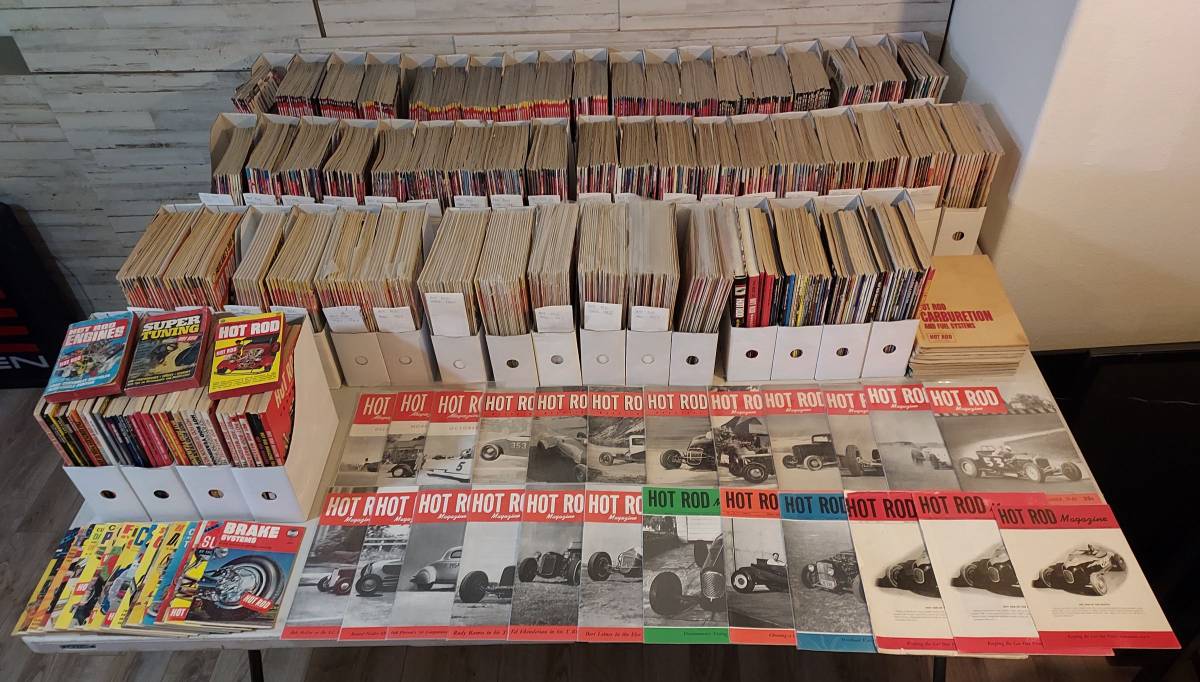
A complete run of Hot Rod Magazine going back to 1948 just hit the market, and this is no shoebox of yellowed back issues somebody found in the garage. It’s a 25-year obsession bundled into one $4,995 listing, and it reads like a blueprint of American car culture.
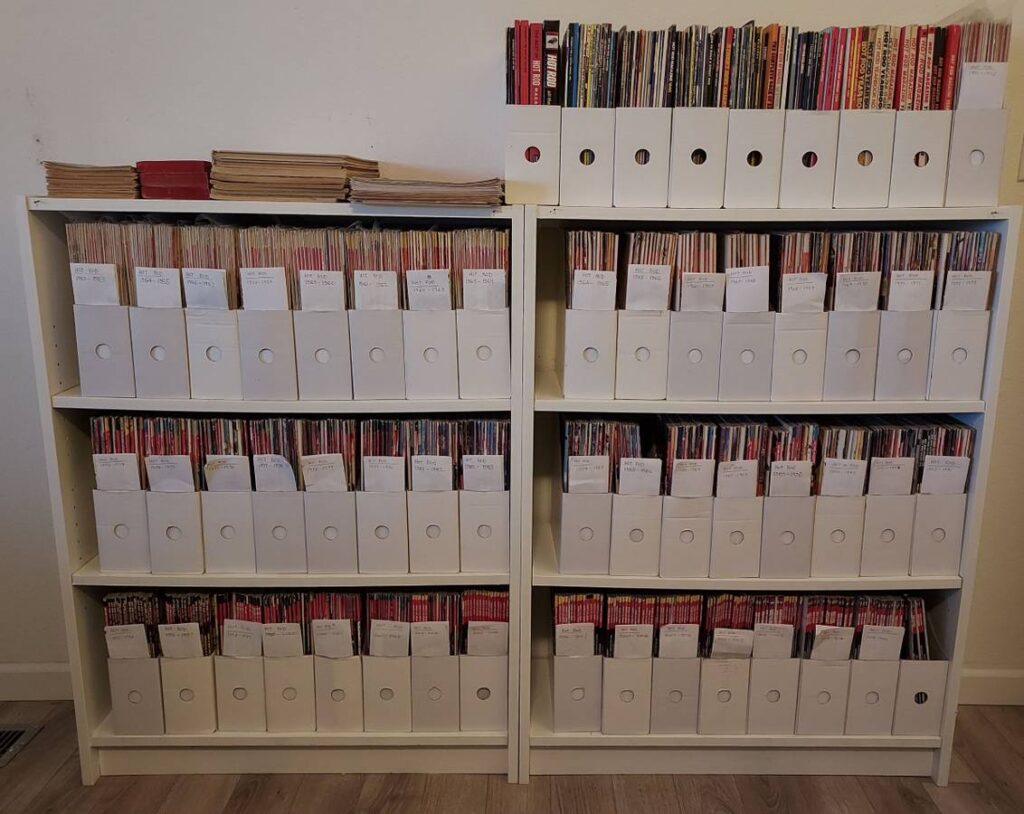
A 66-Year Run, Curated Issue by Issue
The set covers every issue from the magazine’s debut in January 1948 through December 2014. That alone would turn heads, but it doesn’t stop there, piling on specialty publications, rare technical books, and extra issues that push it well past a standard archive. This wasn’t pulled together by accident — it’s a curated set built issue by issue, with the owner hunting down better-condition copies for decades. Weak copies got swapped out, the best ones stayed, and that kind of patience shows.
The core sits at 804 issues, a continuous run of Hot Rod Magazine across more than six decades. It opens with the original first issue and includes later reprints, both full-size and standard format, a mix that matters to collectors since original printings carry historical weight while reprints fill gaps and keep things readable.
More Than Just Magazines
The main run is only half the story. Alongside the magazines sit 78 extra pieces that bump this collection into another category entirely. That includes 13 Hot Rod Yearbooks starting with the first edition from 1961, plus nine annuals published between 1983 and 1995, snapshots that captured exactly where the performance scene stood at the time. There’s a deep bench of books tied to the brand and the era too — hardcover and softcover compilations covering key periods, from early postwar builds to broad “best of” selections across the decades. These aren’t filler; they were editorial attempts to define what mattered most in hot rodding.
Then comes the technical side, which is the good stuff. The collection includes 21 technical digests from the early 1960s, from when hot rodding was shifting from backyard experimentation into something more structured. Written by recognized names in the field, they cover engine performance, bodywork, and customization, with Don Francisco and George Barris among the guides that shaped how people actually built cars, what ended up on the street, at the strip, and in garages across the country. Add in 26 more full-size technical books and special issues from the 1960s onward, and you’ve got a working mechanical library documenting how techniques and thinking changed over time.
Preservation, Not Just Nostalgia
That’s the real pitch here: not nostalgia, but preservation. Print like this doesn’t get replaced once it’s gone. Digital archives exist, but they don’t replicate the physical experience or the completeness of a full run, and completeness is the whole point. Building a set like this is brutal — early issues are scarce, condition varies wildly, and gaps are the norm. The seller spent more than two decades chasing down replacements and upgrades, a level of dedication most buyers will never match.
Now it’s all being offered as one package in Buckeye, Arizona, with regional delivery available, which tells you something about the scale, because moving this is no small job. The $4,995 price tag will split the room. Some will call it steep for printed material in a digital world. Others will look at the sheer volume, the completeness, and the rarity of certain pieces and see a bargain.
Why This Collection Matters
Hot Rod Magazine was never just another title on the rack. It helped define an entire segment of car culture, documenting the evolution of performance in real time, from early flathead builds to muscle cars, from drag racing to street machines. Owning every issue from 1948 through 2014 means owning that history in a way few collections can match.
Complete runs are rare. Plenty of people start collecting and never finish; missing years, damaged issues, and incomplete sets are the norm. A fully assembled run that’s been refined for condition stands out. The catch is that this is a niche market — not everyone has the space, the interest, or the appetite to invest in a physical archive this big, which thins the buyer pool even if the appeal is obvious. Still, the timing feels right. As the automotive world tilts toward digital platforms and electric vehicles, there’s growing interest in preserving the analog side of car culture, and old magazines, technical manuals, and print archives are becoming artifacts. This collection sits right in the middle of that shift, capturing everything from early hot rods to later performance trends in one place, the stories, the builds, the ads, and the technical knowledge that shaped generations of enthusiasts.
For the right buyer, this isn’t a purchase so much as a takeover of someone else’s decades-long project: inheriting the work of tracking down hundreds of issues, upgrading them, and keeping only the best. That doesn’t come along often, because collections like this usually get broken apart over time. Pieces get sold off, sets go incomplete again, and history scatters. This one is still intact, at least for now.
About the Author