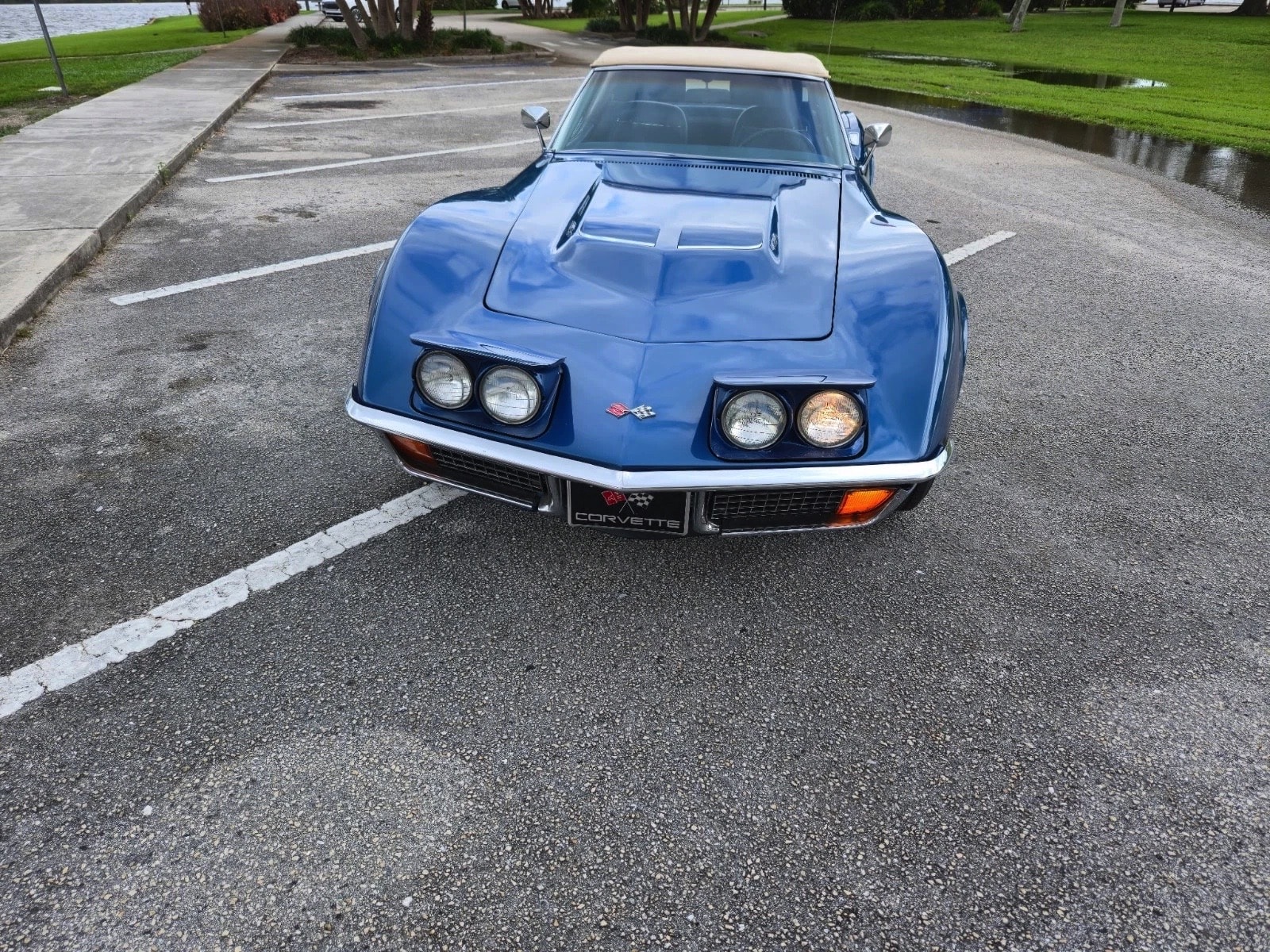
A 1971 Corvette with a 454 under the hood has been sitting quietly for years, and now it’s heading toward the final hours of a no-reserve auction with more than 200 people watching and upward of 20 bids already logged. No reserve means no safety net for the seller: whatever the top bid is when the clock hits zero, that’s the sale price. That structure tends to pull in bidders who might otherwise sit out a listing, since there’s no minimum lurking behind the scenes to kill a deal late.
1971 was a transition year for Corvette power, and Chevrolet wasn’t just offering different trim levels, it was offering genuinely different cars depending on which engine buyers chose. The base L48 350 made 270 horsepower and was the default pick for most customers. Step up to the LT1, a higher-strung 350, and output jumped to 330 horsepower, though fewer than 9 percent of buyers went that route. It was the enthusiast’s engine, not the volume seller.
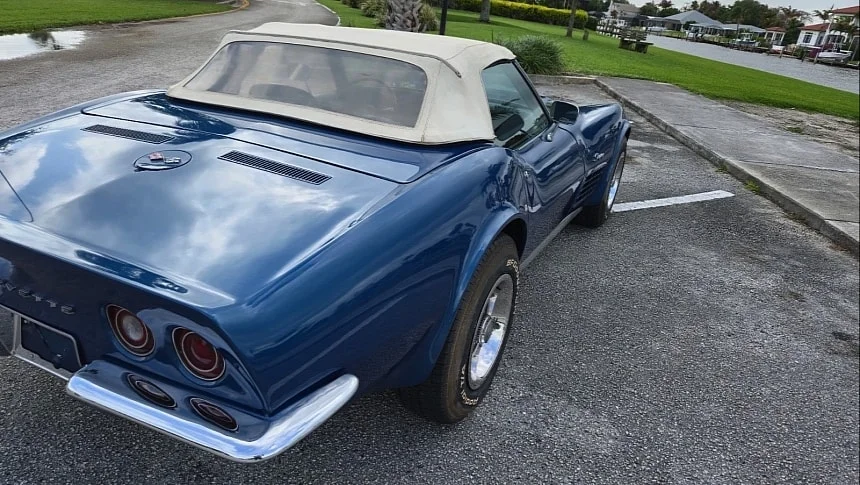
The real draw for most Corvette buyers that year, though, was the big block. Chevrolet built two versions of the 454 cubic inch V8 for 1971: the LS5, rated at 365 horsepower and the more common of the pair, and the LS6, rated at 425 horsepower and built in just 188 units. The LS6 is the one that shows up at the top of auction results decades later. This particular car is an LS5, which puts it a notch below the rarest of the rare but still squarely in serious muscle car territory.
That’s also where the questions start. It isn’t clear whether the engine currently sitting in the car is the numbers-matching original, and that ambiguity matters more than it might seem. On a big block Corvette, whether the block, heads, and casting numbers trace back to the original build sheet can swing value substantially, sometimes by tens of thousands of dollars between a numbers-matching example and a car running a replacement or later-model 454. Anyone bidding seriously on this car should be treating that as a research project before treating it as a driving project.
The car’s history compounds the uncertainty. It’s been sitting for an extended period, and long-term storage is rarely kind to a car this old. Rubber perishes, fluids break down, and small mechanical problems tend to stack up quietly in the background. The tires are a clear example: they’re dated to 2005, which makes them well past safe service life regardless of how much tread is left. Anyone planning to actually drive this car needs to budget for a full new tire set before it goes anywhere. Whether the engine even turns over and runs is a bigger open question, and there’s no confirmation either way in the listing. That uncertainty is a meaningful part of what’s driving the tension around the sale.
At the time of writing, the top bid sits at $24,600, which looks low for a big block 1971 Corvette, even one with unresolved questions. That’s fairly typical no-reserve auction behavior, though. Bidding often stays quiet for most of the listing, then jumps sharply in the closing hours as serious buyers reveal themselves. With more than 200 watchers already tracking this one, a late surge in the final minutes is likely, and it’s the kind of moment that can catch casual bidders off guard if they aren’t refreshing the page.
The car is located in Vero Beach, Florida, which gives local bidders the option of an in-person inspection before the auction closes. On a car with this many open questions, that’s not just a nice-to-have, it’s close to essential. A firsthand look, or a pre-purchase inspection from a specialist familiar with early ’70s big block Corvettes, is the only real way to confirm engine originality and running condition before money changes hands. Buying sight unseen on a car like this means buying the uncertainty along with the horsepower.
Someone is going to own this Corvette by the time the auction closes. Whether they end up with a genuine bargain or a longer-term project than they bargained for depends entirely on what’s actually under that hood and how much work it takes to get the car safely back on the road. Either way, the bidding isn’t likely to stay quiet for long.
About the Author